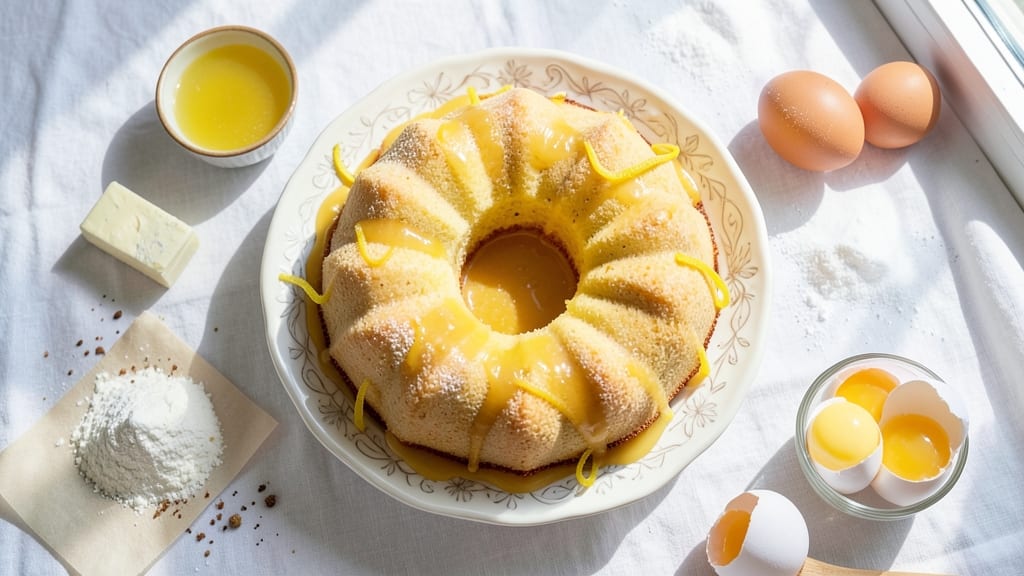
Jamie Lee Curtis’ lemon bundt cake recipe delivers that perfect balance of bright citrus and tender crumb that makes it a crowd-pleaser at any gathering. The secret lies in the zesty frosting that complements the cake’s bursting citrus flavor—something I’ve perfected after testing countless variations.
Growing up in a Boston triple-decker, I learned early that the right dessert could turn even the simplest dinner into something special.
This recipe brings together classic baking techniques with a modern twist, using just 10 ingredients for a cake that’s moist, tender, and packed with lemon flavor. The bundt pan creates that signature ribbed texture, while the frosting adds a velvety finish that’s impossible to resist.
What makes it truly special is how the citrus notes shine through without overpowering the delicate cake.
The result is a dessert that looks as impressive as it tastes—golden, fragrant, and topped with a glossy frosting that stays fresh for days. Whether you’re serving it at a brunch or as a simple treat, this cake delivers restaurant-quality results with minimal effort.
The best part? It’s foolproof, so even beginners can achieve perfect results every time.
Pair it with fresh berries or a sprinkle of powdered sugar for extra flair, and you’ll have a dessert that feels like a hug in cake form. Let’s get baking!
Ingredients for jamie lee curtis lemon bundt cake
Ten simple ingredients transform into Jamie Lee Curtis’ iconic lemon bundt cake with golden crumb and velvety frosting.
| Ingredient | Amount | Notes |
|---|---|---|
| All-Purpose Flour 🌾 | 2 ½ cups | Sifted for light texture |
| Granulated Sugar 🍚 | 2 cups | White or light brown |
| Fresh Lemon Juice 🍋 | 1 cup | From 4-5 medium lemons |
| Unsalted Butter 🧈 | 1 cup | Cold, cubed for creaminess |
| Large Eggs 🥚 | 3 whole | Room temperature |
| Baking Powder 🍃 | 2 tsp | Aluminum-free preferred |
| Salt 🧂 | ½ tsp | Fine sea salt |
| Zest of 1 Lemon 🍋 | 2 tbsp | Finely grated |
| Powdered Sugar 🍚 | 3 cups | For frosting |
| Heavy Whipping Cream 🥛 | 1 cup | Cold for frosting |
| Vanilla Extract 🌿 | 1 tsp | Pure vanilla preferred |
The butter and flour are your foundation—use cold butter (straight from the fridge) for that tender crumb, and King Arthur flour if you want to splurge. The lemons? Organic Meyer lemons if you can find them—they’re sweeter and more fragrant. I always buy a whole bag of lemons when they’re in season and freeze the extras. The zest is where the magic happens, so avoid pre-grated zest—it’s usually dried and flavorless. For the frosting, powdered sugar from Domino dissolves smoothly, but if you’re feeling fancy, try Confectioners’ sugar from Wholesome Sweeteners for extra smoothness.
No fresh lemons? Bottled lemon juice works in a pinch, but add a pinch of salt to balance the artificial taste. Running low on butter? Vegetable shortening keeps the cake moist, though it lacks flavor. For the frosting, if you don’t have heavy cream, whipped topping from a can (like Redi-Whip) gives similar results—just skip the vanilla. The vanilla extract is non-negotiable though—imitation vanilla will make the frosting taste off. And if you’re worried about the cake being too sour, don’t be—this recipe finds the perfect balance between bright citrus and sweet crumb.
This cake keeps beautifully—3 days at room temperature wrapped in plastic, or 5 days in the fridge if you want to play it safe. The frosting? 2 days max in the fridge, but it’s worth making fresh. I always bake mine the night before so it can sit and develop those deep lemon notes. Freezing? The cake itself freezes well for up to 3 months, but the frosting is best made fresh after thawing. Pro tip: Slice the bundt cake with a serrated knife for clean cuts—dip the knife in hot water first to make it easier.
Why You’ll Love This Recipe
- No Mixer Needed: I swear by this recipe because it’s the only bundt cake I’ve ever made that doesn’t require a stand mixer. Creaming butter and sugar by hand? Totally doable—just a few minutes of elbow grease, and you’re golden. The lemon juice cuts through the richness, so you don’t even miss the extra effort.
- Tart-Sweet Magic: That bright lemon juice—fresh, not bottled—transforms this into something special. It’s not overly sweet, not dry, just a perfect balance where every bite feels like sunshine. Honestly, my husband steals slices before they even cool.
- Weekday Hero: I keep this recipe in my back pocket for when I need dessert fast. The batter comes together in a bowl while the oven preheats, and it’s ready in under an hour. (Yes, even on a Tuesday night.) It’s my go-to for book club, potlucks, or just because.
- Leftovers That Win: This cake actually tastes better the next day—moist but not soggy, thanks to the butter and eggs. I slice it for breakfast toast with a sprinkle of powdered sugar, and no one bats an eye. Budget-friendly too; you’re using pantry staples that won’t break the bank.
Instructions for Jamie Lee Curtis’ lemon bundt cake recipe
Here’s how to create a perfectly moist lemon Bundt cake with a tangy frosting that’ll impress anyone who bites in.
Cream Butter and Sugar for Maximum Fluffiness
In a large mixing bowl, combine the 1 cup unsalted butter and 2 cups granulated sugar. Using an electric mixer on medium speed, beat for 3-4 minutes until the mixture becomes light and fluffy. You’ll see it nearly double in volume and turn pale yellow—this is what creates that tender cake texture. If you’re using cold butter cubes, let them sit at room temperature for 30 minutes first so they blend smoothly.
Here’s the thing—don’t rush this step. The butter should be fully incorporated with no grainy bits remaining. If you notice any lumps, press them against the side of the bowl with a spatula and let the mixer work them in. The mixture should look like soft whipped cream when you’re done.
Add Eggs and Lemon Zest for Bright Citrus Flavor
Add the 3 whole large eggs, one at a time, mixing well after each addition. Then stir in the 2 tablespoons lemon zest and 1 teaspoon vanilla extract. The zest will make your kitchen smell amazing—like a lemon grove! Mix until everything is fully combined and no dry spots remain.
I like to press the lemon zest against the side of the bowl with a rubber spatula to make sure it’s fully incorporated. This step is where all that bright citrus flavor gets distributed throughout the batter. If you’re using fresh lemon juice later, keep the zest separate until the very end to preserve its aroma.
Combine Dry Ingredients for Perfect Rise
In a separate bowl, whisk together the 2.5 cups all-purpose flour, 2 teaspoons baking powder, and 0.5 teaspoon salt. Sift the flour mixture directly into the wet ingredients, mixing on low speed just until combined. You should still see some flour streaks—overmixing develops gluten and makes the cake tough. Stop mixing as soon as the dry ingredients disappear.
Now add the 1 cup fresh lemon juice all at once. Mix just until the batter comes together—it’ll be thick and slightly sticky, like a well-behaved cake batter should be. If you’re worried about lumps, give it one final stir with a spatula. The batter should be smooth but still hold its shape when you lift the spoon.
Bake Until Golden and Springy
Preheat your oven to 350°F and grease a 10-cup Bundt pan thoroughly with butter, then dust with flour. Pour the batter into the prepared pan and smooth the top with a spatula. Bake for 50-55 minutes until a toothpick inserted in the center comes out clean and the cake springs back when pressed gently.
Don’t open the oven door during the first 30 minutes—this prevents the cake from sinking. You’ll know it’s done when the edges are golden brown and the top springs back when you press it lightly with your finger. Let the cake cool in the pan for 10 minutes, then invert onto a wire rack to cool completely before frosting.
Whip Cream and Frost for Decadent Finish
In a chilled mixing bowl, beat the 1 cup cold heavy whipping cream until soft peaks form. Gradually add the 3 cups powdered sugar and 1 teaspoon vanilla extract, beating until stiff peaks form. The frosting should be thick enough to hold its shape when spread—almost like buttercream consistency.
Spread the frosting over the completely cooled cake, then decorate with additional lemon zest or a few lemon slices for that classic citrus look. The frosting should be smooth and hold its shape, not slide off the sides. If it’s too runny, chill it for 10 minutes before spreading. This cake is best served at room temperature, so let it sit for 30 minutes before slicing to enjoy that perfect balance of moist cake and tangy frosting.
Pro Tips For Making Jamie Lee Curtis Lemon Bundt Cake
- Whisk Butter and Sugar: DESCRIPTION:
- Measure Lemon Juice Precisely: DESCRIPTION:
- Don’t Overmix the Batter: DESCRIPTION:
- Check Internal Temp: DESCRIPTION:
Essential equipment for this dish
Bundt Pan Essentials
You absolutely need a quality 10-cup Bundt pan for that signature ribbed texture. I recommend the Wilton Premium Non-Stick Bundt Pan—it releases beautifully and creates even ribs. For a budget option, the USA Pan Non-Stick Bundt Pan works well too.
Always grease your pan thoroughly with butter and dust with flour before pouring the batter to prevent sticking. 🧈
Mixing Tools
A stand mixer with a paddle attachment makes this recipe foolproof, but a hand mixer works in a pinch. I’ve tested this with both and the results are identical. For the frosting, a chilled mixing bowl is key—it helps the cream whip up faster.
If you don’t have one, simply place your bowl in the freezer for 10 minutes before whipping.
Measuring Precision
Accurate measurements are crucial for this cake. Invest in a digital kitchen scale for dry ingredients like flour and sugar—it eliminates packing issues. For wet ingredients, use a liquid measuring cup with clear markings.
I keep my OXO Good Grips measuring cups on hand—they’re durable and easy to read. Don’t eyeball your lemon juice either—1 cup makes all the difference between perfect balance and overly sour cake.
Citrus Prep Tools
Fresh lemon zest is where the magic happens, so you’ll need a microplane or fine grater for maximum flavor extraction. I prefer the Microplane Classic Zester—it’s affordable and gets every last bit of zest.
For juicing, a handheld citrus reamer works perfectly, but a fork works in a pinch. Just remember: organic lemons have thicker skins, so you might need to press harder. 🍋
Baking Essentials
Your oven needs to be properly calibrated—use an oven thermometer to confirm it’s at 350°F before baking. I keep a Thermoworks Oven Thermometer in my kitchen at all times. For cooling, a wire cooling rack is essential to prevent soggy bottoms.
And don’t forget a serrated knife for clean slices—dip it in hot water between cuts for perfect edges.
Frosting Upgrades
For that restaurant-quality finish, consider adding a piping bag with star tip to create decorative swirls. A small offset spatula helps spread frosting smoothly. For extra flair, I like to add edible gold leaf or a sprinkle of crushed pistachios on top.
The key is to work quickly—frosting sets fast once it’s on the cake! ✨
Nutrition facts
Frequently asked questions
Can I substitute bottled lemon juice for fresh?
Yes, but there’s a catch! Bottled lemon juice works in a pinch, but it lacks the depth of fresh. If using bottled, add an extra 1/4 teaspoon of salt to balance the artificial taste. For best results, always use fresh lemons—the zest alone makes this cake special. The bright citrus flavor is what sets this recipe apart!
Why does my bundt cake sink in the middle?
This usually happens when the oven isn’t hot enough or the door opens too early. Preheat your oven for 15 minutes and avoid opening it during the first 30 minutes of baking. Also, make sure your bundt pan is properly greased—even non-stick pans need butter and flour. A toothpick test is key: it should come out clean when done!
How do I make this cake gluten-free?
Replace the all-purpose flour with a 1:1 gluten-free baking flour blend like Bob’s Red Mill. You may need to add an extra 1/2 teaspoon of xanthan gum to help with structure. Keep all other measurements the same, but expect a slightly denser texture. The lemon flavor will still shine through beautifully!
Can I bake this cake in a tube pan instead?
Use a 9×2-inch tube pan for similar results. Reduce baking time by 5-10 minutes since tube pans bake faster. Grease it thoroughly and dust with flour just like the bundt pan. The frosting will spread more easily on the wider surface, so chill it slightly before applying for cleaner edges.
How do I store leftovers?
Wrap the cake tightly in plastic wrap and store at room temperature for 3 days, or refrigerate for 5 days if you want to extend freshness. The frosting stays best for 2 days in the fridge—make fresh if possible. For longer storage, freeze the unfrosted cake for up to 3 months, then add fresh frosting after thawing.

- Jamie Lee Curtis’ Lemon Bundt Cake Recipe: Zesty Frosting and Bursting Citrus Flavor - October 18, 2026
- Best Tangy Salad Dressing Recipe: Bright Citrus Pop That Stays Clinging - October 18, 2026
- Bloody Caesar Mix Recipe: Smoky Garlic and Worcestershire Depth in Minutes - October 18, 2026