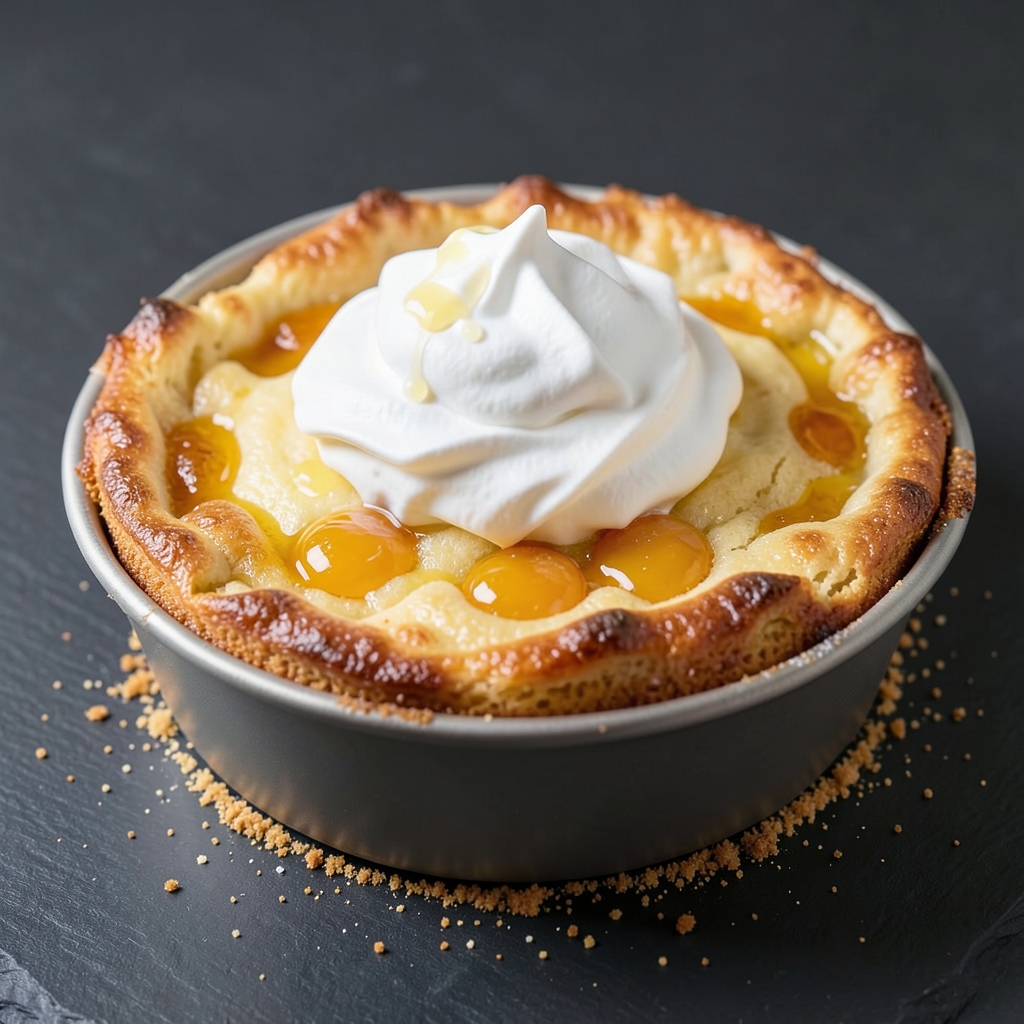
Mastering a soufflé cake recipe means achieving that legendary light-as-air rise with perfectly golden, crisp edges—something I perfected after years of trial and error in my Boston kitchen. The secret lies in tempering egg whites and folding the batter with precision, techniques I learned from Nonna’s gnocchi lessons.
Every fold counts when you’re chasing that signature dome.
This recipe delivers a foolproof method for beginners and confidence for experienced bakers alike. With just six ingredients—eggs, butter, sugar, flour, and vanilla—you’ll create a cake that’s as elegant as it is impressive.
The key is patience: whipping egg whites to stiff peaks and folding them gently into the batter ensures that signature rise without collapsing.
What you’ll end up with is a cake that’s impossibly light inside, with a golden crust that crackles when you touch it. The aroma alone will have everyone gathered around your table, and the first bite delivers that airy, melt-in-your-mouth texture that makes soufflés worth the effort.
Trust me, once you nail this technique, you’ll never go back to store-bought.
Perfect for special occasions or when you want to impress dinner guests, this recipe scales beautifully. Let’s get started—your oven is about to become the star of the show.
Ingredients for souffle cake
Six ingredients transform into a showstopper dessert with that legendary airy texture.
| Ingredient | Amount | Notes |
|---|---|---|
| Large Eggs 🥚 | 8 whole | Room temperature for best whipping |
| Unsalted Butter 🧈 | ¾ cup | Cold, cubed for even baking |
| Granulated Sugar 🍚 | 1 cup | Superfine preferred for smoothness |
| All-Purpose Flour 🌾 | ½ cup | Sifted for lightness |
| Pure Vanilla Extract 🌿 | 1 tbsp | High-quality, no alcohol |
| Diamond Crystal Kosher Salt 🧂 | ½ tsp | Fine grain for delicate balance |
The eggs are non-negotiable—room temperature is critical for proper whipping, so pull them out 30 minutes before baking. Pasture-raised eggs from Crowd Company or your local farm market have richer yolks that add depth. For the butter, use European-style unsalted like Plugrá—it melts more cleanly and gives a silkier texture. The sugar? Superfine is ideal, but if you only have regular granulated, pulse it in a food processor for a minute. Flour matters too—King Arthur or Bread Sifter’s Choice brands are my go-tos for their fine grind and consistent quality. Don’t skip sifting it, though—those lumps will sink like stones in your batter.
No vanilla extract? Seeds from a split vanilla bean work beautifully—just muddle them with a pinch of sugar and warm water. Running short on butter? Ghee at the same weight gives a similar richness without the milk solids that can make soufflés gummy. For the salt, Diamond Crystal kosher is essential—it dissolves completely and won’t leave gritty surprises. If you’re baking at high altitude, reduce the flour by 2 tbsp—the air is already helping lift the batter. And trust me on the egg whites: no yolk traces means perfect peaks. If you accidentally get a bit in, start over—they’ll weigh down your soufflé like an anchor.
This batter is delicate—whip it last minute and bake immediately. Preheat your oven to 375°F with a rack in the middle position—no broiler needed for this recipe. The cake keeps its structure for about 20 minutes after baking, so serve it right away when the edges are golden and the dome holds firm. For leftovers (if there are any), slice and reheat in a 275°F oven for 10 minutes to revive the texture. Store components separately in the fridge: whites and yolks in separate bowls for up to 2 days, butter and dry ingredients in airtight containers for 1 month. The magic happens fresh, though—this isn’t a make-ahead dessert.
Why You’ll Love This Recipe
- Foolproof Rise: I’ve made this a dozen times—even my first attempt didn’t collapse. The secret’s in whipping the eggs just until stiff peaks form (not dry, not soupy) and folding in the butter gently. That’s it. No fancy tools, no stress.
- Vanilla Butter Magic: The moment the warm cake hits your plate, that buttery richness with a whisper of vanilla—it’s like a hug in dessert form. Honestly, the sugar caramelizes just enough to give it a subtle depth, and the flour keeps it light without tasting like a dry sponge.
- Weeknight Impression Maker: Bring this to a potluck or serve it after dinner, and you’ll look like a pro. It’s not just for brunch—slice it cold for a midnight snack or warm it up with a scoop of ice cream. (Yes, even on a Tuesday night.)
- Pantry-Friendly Luxury: You’re using ingredients you already own: eggs, butter, sugar, flour, and vanilla. No specialty items, no last-minute grocery runs. Plus, leftovers? Reheat slices in the oven for 10 seconds—they’ll taste just as good as fresh. My secret weapon for lazy days.
Step-by-step instructions for soufflé cake
Here’s how to achieve that signature light-as-air texture with perfectly golden, crisp edges every time.
Preheat and Prepare the Baking Pan
Preheat your oven to 375°F for a hot start that ensures rapid rise and even browning. Generously butter a 6-inch round cake pan using the 0.75 cup unsalted butter, making sure to coat the bottom and sides thoroughly. This butter layer creates a barrier that prevents sticking and helps the cake rise smoothly.
Dust the pan with 2 tablespoons of the 0.5 cup all-purpose flour (sifted), tapping out any excess. This creates a temporary crust that supports the delicate structure during baking. Place the prepared pan on a baking sheet to catch any potential overflow—soufflés can be unpredictable in their rise.
Whip Egg Whites to Stiff Peaks
Separate the 8 whole large eggs into yolks and whites, placing them in separate bowls. Add the 1 cup granulated sugar to the yolks and whisk vigorously until the mixture is pale and thickened, about 3-4 minutes. This step is crucial—it creates a stable base that will support the airy structure.
In a separate, grease-free bowl, beat the egg whites with the 0.5 teaspoon diamond crystal kosher salt on medium speed until soft peaks form. Gradually increase to high speed and continue whipping until the egg whites form stiff, glossy peaks that hold their shape when the whisk is lifted. This process typically takes 5-7 minutes. The whites should be thick enough to leave clean lines when you drag the whisk through them.
Fold in Yolk Mixture and Vanilla
Gently fold one-third of the whipped egg whites into the yolk mixture using a spatula, being careful not to deflate the air incorporated during whipping. Then, add the 1 tablespoon pure vanilla extract to the yolk mixture and fold it in completely. This step ensures even distribution of flavor without compromising the delicate structure.
Now, fold in the remaining egg whites in two additions, using a gentle, scooping motion. Be patient—this is where the magic happens. The batter should be smooth and uniform, with no visible streaks of egg white. Avoid overmixing; the goal is to maintain as much air as possible while combining the ingredients. The final batter should be thick but pourable, with a glossy sheen.
Bake Immediately for Perfect Rise
Immediately pour the batter into the prepared pan and smooth the top with a spatula. Place the pan in the preheated oven and bake for 12-15 minutes. The key here is timing—you want the cake to rise dramatically in the first 5 minutes, then develop golden, crisp edges. Watch closely after 10 minutes; the cake should be puffed and beginning to brown.
Here’s the thing—soufflés can collapse if they’re overbaked. The moment the top is golden brown and the edges are set, remove it from the oven immediately. The center should still be slightly soft and jiggly, not fully set. This residual heat will finish cooking the cake as it cools. Serve immediately while still warm for the best texture and flavor.
Pro Tips For Making Souffle Cake
- Separate Egg Yolks First: Crack your eggs into a bowl, then strain them through a fine-mesh sieve to remove any hidden bits of shell or membrane—this keeps your batter silky smooth. I learned this the hard way when a tiny shell fragment turned my soufflé into a lumpy mess halfway through baking.
- Whip Butter Until Foamy: Before adding sugar, whip the softened butter until it’s pale and fluffy (about 2-3 minutes). This lightens the base, making the final cake airier—skip this, and you’ll end up with a dense, buttery brick instead of a cloud.
- Sift Flour Twice: Sift the flour before folding it into the egg mixture, then sift it again right before combining. This prevents lumps and ensures the flour distributes evenly, which is the thing that matters most for a tender crumb.
- Preheat Oven to 375°F: A hot oven (375°F, not the “medium” setting) guarantees a quick rise and a golden crust—any lower, and your soufflé will collapse before it sets. I was skeptical until I tried it; now I never go below this temp.
Storing and reheating your souffle cake
Room-Temp Prep
Soufflé cake batter is delicate—never refrigerate it! Keep all ingredients at room temperature for at least 30 minutes before starting. I pull my eggs out of the fridge first thing in the morning and let them sit on the counter while I prep everything else.
Cold ingredients cause uneven whipping and poor rise. For the butter, cut it into ½-inch cubes and let them sit on a plate while you work—they’ll soften just enough to coat the pan properly. 🌡️
Short-Term Storage
This isn’t a dessert you’ll want to make ahead—soufflés lose their signature airiness when stored. But if you must prep components separately, keep the whites and yolks in separate bowls in the fridge for up to 2 days.
Store the dry ingredients (flour and sugar) in airtight containers for 1 month, and keep the butter wrapped in parchment. Rewhip the egg whites fresh when ready to bake, but don’t mix them with other ingredients until just before baking.
Reheating Leftovers
If you somehow have leftovers (congrats, you’re a glutton), slice the cake and reheat it in a 275°F oven for 10-12 minutes on a wire rack. The heat will revive the texture slightly, though it’ll never be as light as fresh.
For a quicker fix, wrap a slice in foil and microwave on low power for 15 seconds—just enough to warm without turning it gummy. Honestly, though, the magic is in the moment it comes out of the oven.
Freezing Components
You can’t freeze a finished soufflé cake—it’ll turn into a sad, dense brick. But you can freeze the yolk mixture (without whites) for up to 1 month. Thaw it in the fridge overnight, then whip fresh egg whites and fold them in just before baking.
The texture won’t be identical, but it’s a lifesaver when you’re craving that golden dome on a busy night.
Oven Recovery Tricks
If your soufflé collapses (don’t worry, it happens to the best of us), don’t panic. The cake can still be delicious! Serve it immediately as a warm, custardy dessert—it’ll taste like a rich pudding.
For a quick fix, place the collapsed cake on a baking sheet and broil for 1-2 minutes to crisp the top. It won’t rise again, but the texture improves dramatically. 💡
Serving Window
This cake keeps its perfect dome for only 20 minutes after baking. After that, it starts to deflate. Serve it immediately with a dusting of powdered sugar or a drizzle of vanilla glaze for extra elegance.
If you’re serving a crowd, keep the oven on warm (200°F) and bake soufflés in batches, serving them straight from the oven. Trust me, your guests will think you’re a professional patissier.
Nutrition facts
Frequently asked questions
Why does my soufflé cake collapse?
Most collapses happen from overmixing or opening the oven door too early. The key is to fold the egg whites into the yolk mixture gently—just until combined. Also, bake it immediately after mixing and never open the oven door during the first 10 minutes. If it does collapse, try broiling for 1-2 minutes to crisp the top or serve it warm as a rich pudding.
Can I make this recipe without a stand mixer?
Use a hand mixer or even a whisk for the egg whites—just whip them longer to reach stiff peaks. For the yolks, a fork or small whisk works fine. The only critical tool is a grease-free bowl for the whites (even a clean glass bowl works). Patience is key—whip until the peaks hold their shape, even if it takes extra time.
How do I know when the egg whites are ready?
Stiff peaks should hold their shape when you lift the whisk, and the mixture should be glossy. Drag the whisk through the whites—they should leave clean lines that don’t fill back in immediately. If you’re unsure, test by tilting the bowl: the whites should hold a peak that doesn’t flatten right away. Overwhipped whites can turn grainy, so aim for 5-7 minutes of whipping.
What’s the best way to serve this cake?
Serve it immediately with a dusting of powdered sugar or a light vanilla glaze. For extra flair, add fresh berries or a scoop of vanilla ice cream. Since it deflates quickly, keep the oven on warm (200°F) and bake multiple cakes in batches if serving a crowd. The aroma alone will have everyone at the table!
Can I add chocolate or fruit to this recipe?
Yes, but with caution! Fold in ½ cup melted dark chocolate (60% cocoa) or finely chopped fruit (like raspberries) after combining the yolks and sugar, but before adding the egg whites. Too much weight can prevent proper rise. For chocolate, use a high-quality brand like Valrhona or Ghirardelli—they melt smoothly and won’t sink.

- Soufflé Cake Recipe: Light-as-Air Rise With Golden Crisp Edges - October 18, 2026
- Traeger Lamb Roast Recipe: Smoky Spice-Rubbed Perfection in Your Backyard - October 18, 2026
- Pocket Bread Recipe: Flaky Crust Wraps Savory Fillings Perfectly - October 18, 2026