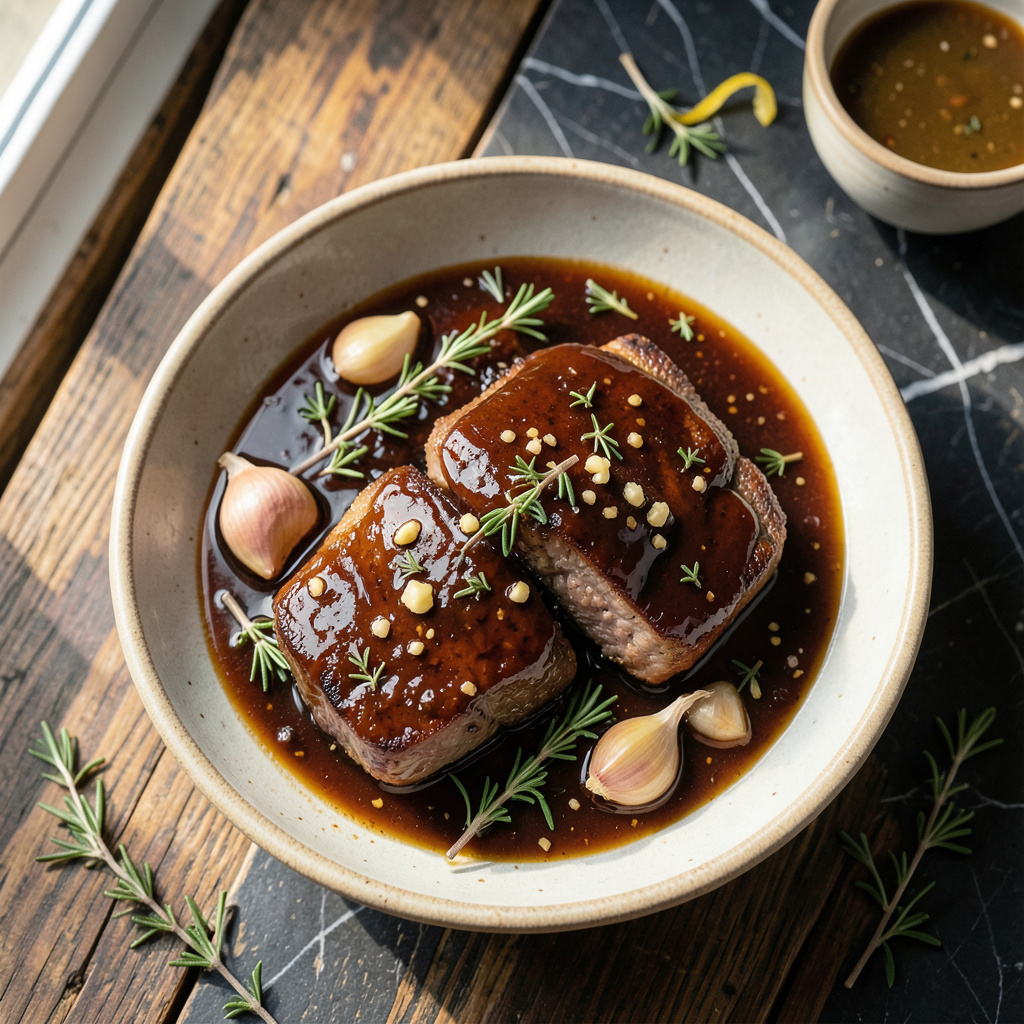
A good marinade can transform pork steak from ordinary to extraordinary. I’ve spent years perfecting my marinade recipe, and I’m excited to share it with you. This blend of ingredients creates a flavorful and tender result that’s hard to beat.
The secret to this marinade is the combination of savory spices, aromatic herbs, and a touch of acidity. By using this marinade, you’ll achieve tender pork steak that’s full of flavor. It’s perfect for grilling or pan-searing, and can be adjusted to suit your taste preferences.
Ingredients for Pork Steak Marinade
Simple pantry staples blend into a marinade that makes pork steak shine.
| Ingredient | Amount | Notes |
|---|---|---|
| Olive Oil 🫒 | ½ cup | Extra-virgin for richness |
| Soy Sauce 💧 | ¼ cup | Low-sodium preferred |
| Apple Cider Vinegar 🍎 | ¼ cup | Or white wine vinegar |
| Brown Sugar 🍮 | 2 tbsp | Packed for best results |
| Garlic Cloves 🧄 | 4 cloves | Minced for best flavor |
| Dried Thyme 🌿 | 1 tsp | Or 1 tbsp fresh thyme |
| Black Pepper 🌶️ | ½ tsp | Freshly ground preferred |
| Smoked Paprika 🌶️ | ½ tsp | For smoky depth |
The balance of savory and sweet is key here. Soy sauce brings umami while apple cider vinegar adds brightness. Most grocery stores carry low-sodium soy sauce, which is ideal. If you’re using a different vinegar, adjust to taste. I like to use La Choy or Kikkoman for consistency.
No smoked paprika? Regular paprika works, but you’ll lose that smoky depth. Penzeys has great smoked paprika if you want to splurge. Fresh thyme is ideal, but dried works in a pinch—just use one-third the amount. If you’re out of brown sugar, a bit of honey or maple syrup can substitute.
This marinade keeps for up to 2 weeks in the fridge. Store it in an airtight container and give it a good stir before using. I like to make a double batch and freeze half for later—just thaw overnight in the fridge when you’re ready.
Step-by-Step Instructions for Pork Steak Marinade
Creating this marinade is straightforward and yields tender results every time.
Step 1: Combine Wet Ingredients
Start by whisking together the 0.5 cup Olive Oil, 0.25 cup Soy Sauce, and 0.25 cup Apple Cider Vinegar in a medium bowl. I like to use a fork for this as it gives me better control over the emulsion. You’ll notice the mixture starts to come together in about 30 seconds of whisking.
The key here is to create a smooth base that will evenly coat your pork steaks. If you find the mixture separating, don’t worry – a quick whisk will bring it back together.
Step 2: Add Dry Ingredients and Aromatics
Add the 2 tbsp Brown Sugar, 1 tsp Dried Thyme, 0.5 tsp Black Pepper, and 0.5 tsp Smoked Paprika to the wet mixture. Then, incorporate the 4 cloves Garlic Cloves that you’ve minced – the finer you mince them, the better they’ll distribute throughout the marinade.
Whisk everything together until the sugar has dissolved and the mixture is well combined. You’ll be able to smell the aromatic thyme and garlic melding with the other ingredients, which is a good sign that your marinade is coming together.
Step 3: Marinate the Pork Steaks
Place your pork steaks in a large zip-top plastic bag or a shallow dish. Pour the marinade over them, turning to coat evenly. If using a bag, press out as much air as possible before sealing – this helps the marinade stay in contact with the meat.
Refrigerate for at least 2 hours, though I find that 4-6 hours yields even better results. The acid in the Apple Cider Vinegar will work to tenderize the meat during this time, while the Smoked Paprika and Dried Thyme infuse it with deep, complex flavors.
Step 4: Prepare for Cooking
When you’re ready to cook, remove the pork steaks from the marinade, letting any excess drip off. Pat them dry with paper towels – this step is crucial for achieving a good sear when you cook them.
Your pork steaks are now ready to be grilled, pan-seared, or cooked however you prefer. The marinade has done its job, ensuring they’ll be tender and full of flavor.
Dietary Considerations for This Recipe
Gluten-Free Considerations
This marinade recipe is naturally gluten-free thanks to its simple ingredient list. The soy sauce is the only potential source of gluten, but using a gluten-free soy sauce or tamari makes it safe for gluten-free diets. I always check labels to ensure the brand I choose is certified gluten-free.
Dairy-Free Status
There’s no dairy in this marinade, making it suitable for dairy-free diets. The ingredients focus on oil, vinegar, and spices, creating a dairy-free and vegan-friendly marinade that’s perfect for various dietary needs.
Low-Sodium Adjustments
For those watching sodium intake, using low-sodium soy sauce is a great option. You can also reduce the amount of soy sauce to 2 tablespoons and supplement with extra olive oil to maintain the marinade’s volume while lowering sodium content.
Sugar-Free Variations
To make a sugar-free version, replace the 2 tablespoons brown sugar with a natural sweetener like 1-2 tablespoons honey or 1 tablespoon maple syrup. Keep in mind that honey has a stronger flavor, so start with 1 tablespoon and adjust to taste.
Paleo and Whole30 Compatibility
This marinade can be adapted for Paleo or Whole30 diets by making a few simple swaps. Use coconut aminos instead of soy sauce, and ensure your apple cider vinegar is free from added sugars. The rest of the ingredients are naturally compliant with these diets.
Storage and Safety
Always store leftover marinade in an airtight container in the refrigerator for up to 2 weeks. When reusing, give it a good stir and check that it hasn’t developed any off smells or mold. If in doubt, it’s better to make a fresh batch.
Nutrition Facts
120kcal
Frequently Asked Questions
How long should I marinate pork steaks?
For best results, marinate pork steaks for at least 2 hours, though 4-6 hours yields even better flavor penetration. If you’re short on time, even 30 minutes can make a difference. The acid in the marinade helps tenderize the meat during this time.
Can I use this marinade for other meats?
Yes, this marinade works well with chicken, beef, or lamb. The flavors complement many proteins, making it versatile for different meals. Just adjust the marinating time based on the meat’s thickness and type. For delicate fish, use a shorter time.
How should I store leftover marinade?
Store leftover marinade in an airtight container in the refrigerator for up to 2 weeks. Give it a good stir before reusing, and check for any off smells or mold. If in doubt, make a fresh batch for food safety.
Can I freeze the marinade?
Yes, you can freeze this marinade for later use. Transfer it to an airtight container or freezer bag, leaving some space for expansion. It will keep for up to 3 months in the freezer. Thaw overnight in the refrigerator before using.

- Dixie Stampede Creamy Vegetable Soup Recipe: Velvety Potato and Corn Velouté - October 18, 2026
- Old-Fashioned Biscuit or Cookie Recipe Using Ginger and Karo Syrup: Spiced Molasses Crunch With Buttery Layers - October 18, 2026
- Tibetan Bread Recipe: Fluffy Butter-Kissed Loaves with Secret Yeast Trick - October 18, 2026