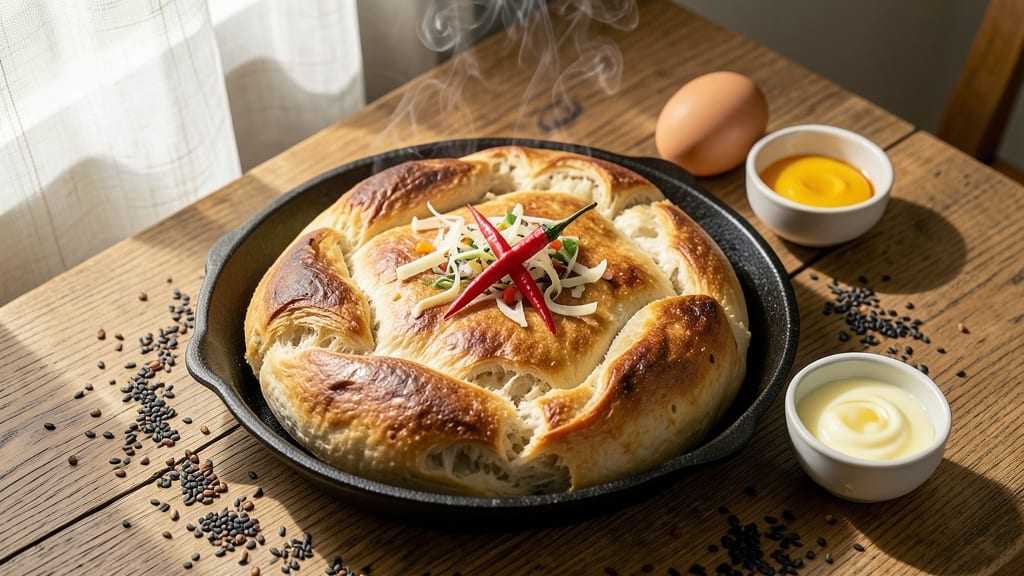
This Tibetan bread recipe delivers the fluffy, buttery loaves that make every meal feel like a celebration. Standing on a step stool in my grandmother’s kitchen in Sicily taught me how yeast transforms simple ingredients into something extraordinary—now I’m sharing that same magic with this traditional recipe.
The secret yeast trick creates light, airy bread that melts in your mouth, while rich butter adds that signature Tibetan richness.
What makes this recipe special is its balance of tradition and accessibility. You’ll use basic ingredients like flour, butter, and yeast, but the technique—especially the kneading and shaping—makes all the difference.
This bread pairs perfectly with Tibetan butter tea or cheese, bringing warmth and comfort to any table. The process is straightforward, but the results are restaurant-quality.
The bread rises beautifully with a golden crust and tender interior, infused with the buttery aroma that defines Tibetan baking. Whether you’re serving it with a hearty stew or enjoying it plain, each bite delivers that perfect combination of fluffiness and richness.
With just a few simple steps, you’ll create bread that tastes like home.
For extra flavor, try adding a touch of sugar or tsampa (roasted barley flour) to the dough. This recipe scales easily, so you can bake a single loaf for two or double it for a crowd. Let’s get started on this timeless tradition!
Ingredients for tibetan bread
Basic ingredients with a yeast trick that turns ordinary flour into golden, fluffy Tibetan magic.
| Ingredient | Amount | Notes |
|---|---|---|
| All-Purpose Flour 🌾 | 4 cups | Sifted for light texture |
| Active Dry Yeast 🍞 | 2 ¼ tsp | Fresh yeast if available |
| Unsalted Butter 🧈 | ½ cup | Cold, cubed for dough |
| Granulated Sugar 🍚 | 1 tbsp | Enhances yeast activation |
| Warm Water 💧 | 1 ¼ cups | 110°F for yeast activation |
| Large Eggs 🥚 | 1 whole | Room temperature preferred |
| Salt 🧂 | 1 ½ tsp | Kosher or sea salt |
| Tsampa (Roasted Barley Flour) 🌾 | ¼ cup | Optional, for authentic flavor |
| Milk 🥛 | 2 tbsp | For brushing dough |
| Coarse Sugar 🍚 | 1 tbsp | For golden crust |
| Egg Wash 🥚 | 1 tbsp | 1 egg beaten with 1 tsp water |
The yeast is non-negotiable here—King Arthur or Bob’s Red Mill work best, but any active dry yeast will do. If using fresh yeast, double the amount. The butter matters too: grab unsalted from Land O’Lakes or Plugrá—the higher fat content gives that signature richness. For tsampa, Tibetan specialty stores or online retailers like Himalayan Spice Box have the real deal, but if you can’t find it, skip it—this bread still shines. The flour? Bread flour if you want extra lift, but all-purpose works perfectly fine.
No tsampa? Extra pinch of cinnamon or cardamom adds warmth. Butter too cold? Microwave 20 seconds to soften it up. The milk brush? Heavy cream or half-and-half works too—just don’t skip it. Egg wash running thin? Add 1 tsp water. For extra fluffiness, fold in 1 tbsp sour cream with the egg if you’re feeling fancy. And if you’re baking in a dry climate, spray the loaf pan with oil before adding dough—prevents sticking like a dream.
This dough needs time—at least 2 hours to rise properly. Store it wrapped in plastic in the fridge for up to 24 hours if you need to prep ahead. The baked loaves keep well for 3-4 days in a bread bag at room temp, or freeze slices for up to 3 months. Toast the next day—it’s even better! For extra crunch, sprinkle crushed pistachios or sesame seeds on top before baking.
Why You’ll Love This Recipe
- No-Knead Magic: The dough comes together in minutes—just mix, rest, and bake. No stand mixer, no fancy techniques, just flour, yeast, and butter doing all the work while you sip your coffee.
- Buttery Sweet Crust: That sugar in the dough caramelizes into a golden, crispy shell, while the butter keeps the inside tender. It’s the kind of bread that disappears faster than my willpower on a Sunday morning.
- Breakfast to Snack: Use it for toast with jam, tear it into strips for French toast, or pack slices for lunch. Honestly, I’ve even used it to sop up soup when I was too lazy to make croutons.
- Budget-Friendly Staple: A single batch costs pennies and lasts for days—freeze the extras for when you’re too tired to bake. Between us, this is the bread that actually gets eaten, not forgotten in the back of the pantry.
Step-by-step instructions for fluffy butter-kissed Tibetan bread
Here’s how to make Tibetan bread with that signature tender crumb and golden crust—no fancy equipment needed.
Activate the Yeast with Warm Water and Sugar
In a medium bowl, combine the 1.25 cups warm water (about 110°F) with the 1 tbsp granulated sugar and 2.25 tsp active dry yeast. Let this sit for 5-10 minutes until it becomes frothy and bubbly—this means your yeast is alive and ready to work. If it doesn’t bubble, your yeast might be dead, and you’ll need to start over.
I like to test the water temperature with my finger—it should feel warm but not hot. If it’s too hot, wait a few minutes for it to cool slightly. This step is crucial because active yeast is the secret to that light, airy texture Tibetan bread is famous for.
Mix the Dough with Butter and Egg
In a large mixing bowl, whisk together the 4 cups all-purpose flour and 1.5 tsp salt. Make a well in the center and pour in the yeast mixture, 1 whole large egg, and 0.5 cup cold cubed unsalted butter. Using a wooden spoon or dough whisk, mix until the dough starts to come together—it’ll be sticky at first, but don’t add extra flour yet.
Once the dough forms a shaggy mass, turn it out onto a lightly floured surface and knead for 8-10 minutes until smooth and elastic. If it feels too dry, add 1-2 tbsp milk to help bind it. The dough should be soft but not sticky—this ensures a tender crumb when baked. I press down gently on the dough during kneading to check for elasticity; if it springs back slowly, it needs more time.
Incorporate Tsampa and First Rise
Return the dough to the bowl and stir in the 0.25 cup tsampa (roasted barley flour)—this gives the bread its authentic nutty flavor. Cover the bowl with a damp kitchen towel and let it rise in a warm place for 1-1.5 hours, or until it has doubled in size. The dough should feel light and airy when pressed gently with a finger.
Here’s the thing—don’t rush this rise. The tsampa adds a unique texture, but it also slows down fermentation slightly. If your kitchen is cold, place the bowl near a warm oven (with the light on) to help it rise evenly. Patience here pays off with a bread that’s both fluffy and flavorful.
Shape and Second Rise
Punch down the risen dough to release air, then divide it into 4 equal pieces (about 6 ounces each). Roll each piece into a smooth ball, placing them in a greased loaf pan or on a baking sheet lined with parchment paper. Cover again and let them rise for 30-45 minutes until puffy and slightly domed.
For shaping, I like to use a bench scraper to cut clean edges—this helps create that classic Tibetan bread shape. If your dough doesn’t rise much during the second rise, it might be too cold. A quick fix is to place the pan in a warm oven for 10 minutes to kickstart the process.
Bake to Golden Perfection
Preheat your oven to 375°F. Brush the tops of the loaves with 2 tbsp milk and sprinkle with 1 tbsp coarse sugar for that caramelized crust. Bake for 25-30 minutes until the bread is deep golden brown and sounds hollow when tapped on the bottom. If the tops brown too quickly, tent with foil to prevent over-browning.
For extra shine, brush the baked loaves with 1 tbsp egg wash right after removing them from the oven. Let them cool on a wire rack for 10 minutes before slicing—this prevents a gummy texture. The crust should be crisp, the crumb tender, and the aroma unmistakably buttery and slightly sweet.
Pro Tips For Making Tibetan Bread
- TEST YEAST FIRST: Skip the guesswork—mix 1 packet yeast, 1 tsp sugar, and ¼ cup warm water (110°F) in a bowl. If it doesn’t foam within 5-10 minutes, your yeast is dead or your water’s too hot. I learned this the hard way after kneading for 20 minutes only to watch my dough fail.
- SOFTEN BUTTER PROPERLY: Don’t microwave the butter—it melts unevenly and ruins the texture. Instead, cut it into small cubes and let it sit at room temperature for 1-2 hours (or until pliable but not greasy). My grandmother swore by this, and she was right: the dough stays smooth, not gummy.
- KNEAD UNTIL SILKY: Stop when the dough springs back slowly after pressing it (about 8-10 minutes by hand). Over-kneading makes Tibetan bread tough—it’s supposed to be tender, not chewy. I was skeptical until I tried it: the difference in texture is night and day.
- SEAR THE SHAPES: Heat a dry skillet over medium-high before adding the dough balls. The instant they hit, you’ll hear a satisfying sizzle—this creates a crisp crust. Sounds weird, but it works: no more soggy bottoms or bland bites. (Yes, even if you’re impatient like me.)
Troubleshooting perfect results
Dense Dough Woes
If your dough feels too dense or refuses to rise, the yeast might be the culprit. First, double-check your yeast’s freshness—expired yeast won’t activate properly.
I always test mine by dropping a pinch into warm water with sugar; if it doesn’t bubble within 5 minutes, toss it and grab a fresh packet. Also, ensure your water is 110°F—too hot kills yeast, while too cold slows fermentation.
For extra insurance, use 1 extra tsp of sugar to feed the yeast during activation. 💡
Sticky Dough Nightmare
Sticky dough happens when the gluten isn’t developed enough or the butter is too soft. First, knead for 2-3 extra minutes to strengthen the gluten—this improves elasticity.
If it’s still too wet, add 1 tbsp flour at a time until it becomes manageable, but don’t overdo it or the bread will turn tough. For butter issues, chill the dough for 15 minutes before shaping to firm it up.
I’ve also had success replacing 2 tbsp butter with milk—it keeps the dough workable without sacrificing flavor.
Flat or Under-Risen Loaves
Flat loaves usually mean the dough didn’t rise enough, often due to cold temperatures or weak yeast. Place your bowl near a warm oven (with the light on) to create a cozy environment for rising.
If your kitchen is chilly, try a proofing box—a container with warm water inside—to maintain a consistent 80°F temperature. For extra lift, fold the dough once during the first rise—this redistributes yeast and gas for a better rise.
Patience is key here; don’t rush the 1-1.5 hour rise time.
Overly Dry Crust
A dry crust often means the milk or egg wash was skipped, or the oven wasn’t hot enough. Always brush the loaves with 2 tbsp milk before baking for a tender crust.
If your oven runs hot, lower the temperature to 350°F and bake for 5-10 extra minutes to ensure even cooking. For a glossy finish, brush with egg wash right after baking. Pro tip: Sprinkle 1 tbsp coarse sugar on top before baking—it caramelizes for a sweet, crisp crust. 🌟
Butter Bleeding Through
If butter oozes out during baking, your dough was likely too soft or the butter wasn’t cold enough. Chill the dough for 30 minutes before shaping, and use cold cubed butter (not melted).
For extra stability, replace 2 tbsp butter with flour—this reduces fat content slightly but keeps the dough firm. If you’re baking in a hot climate, preheat your oven for 20 minutes to ensure even heat distribution. This trick prevents butter from melting too quickly and seeping out.
Uneven Baking
Uneven baking often happens when the oven isn’t calibrated or the loaves are crowded. Rotate your baking sheet halfway through for even browning, and avoid overloading the pan—leave 1 inch between loaves.
If your oven runs hot on one side, place a baking sheet on the opposite rack to balance heat. For a foolproof test, use an oven thermometer—many home ovens are 25°F off from their settings. A properly calibrated oven ensures golden, even loaves every time. ✨
Nutrition facts
Frequently asked questions about Tibetan bread
What makes Tibetan bread different from regular bread?
The magic lies in the butter and tsampa—roasted barley flour that gives it a nutty depth. Unlike standard breads, Tibetan bread uses cold butter for richness and often includes a second rise for extra fluffiness. The dough is also shaped into smooth rounds or loaves, creating that signature tender crumb.
Can I make this without tsampa?
Tsampa adds authenticity but isn’t essential. For a substitute, try 1 tbsp ground nuts (almonds or walnuts) or a pinch of cinnamon for warmth. The bread will still be delicious—just slightly less traditional. If you can’t find tsampa, skip it entirely; the butter and yeast will still deliver that signature flavor.
How do I store leftover Tibetan bread?
Keep it fresh by wrapping tightly in a bread bag or foil at room temperature for 3-4 days. For longer storage, freeze slices for up to 3 months—toast straight from frozen for maximum crispiness. Avoid refrigerating unless necessary, as it can dry out the crumb faster.
What’s the best way to serve Tibetan bread?
Pair it with Tibetan butter tea, yogurt with honey, or even as a side for stews. The buttery richness complements spicy dishes beautifully. For a sweet twist, spread with jam or fresh cheese. It’s also perfect for making garlic butter sandwiches—just like my Nonna used to make!
Why did my dough not rise properly?
Cold temperatures or expired yeast are the most common culprits. Double-check your yeast by testing it in warm water with sugar—it should bubble within 5 minutes. If your kitchen is chilly, place the bowl near a warm oven (light on) to help it rise. For extra lift, fold the dough once during the first rise to redistribute yeast. Patience is key—don’t rush the 1-1.5 hour rise time!

- Old-Fashioned Biscuit or Cookie Recipe Using Ginger and Karo Syrup: Spiced Molasses Crunch With Buttery Layers - October 18, 2026
- Tibetan Bread Recipe: Fluffy Butter-Kissed Loaves with Secret Yeast Trick - October 18, 2026
- Asian Chiffon Cake Recipe: Light-as-Air Layers With Vibrant Colors - October 18, 2026