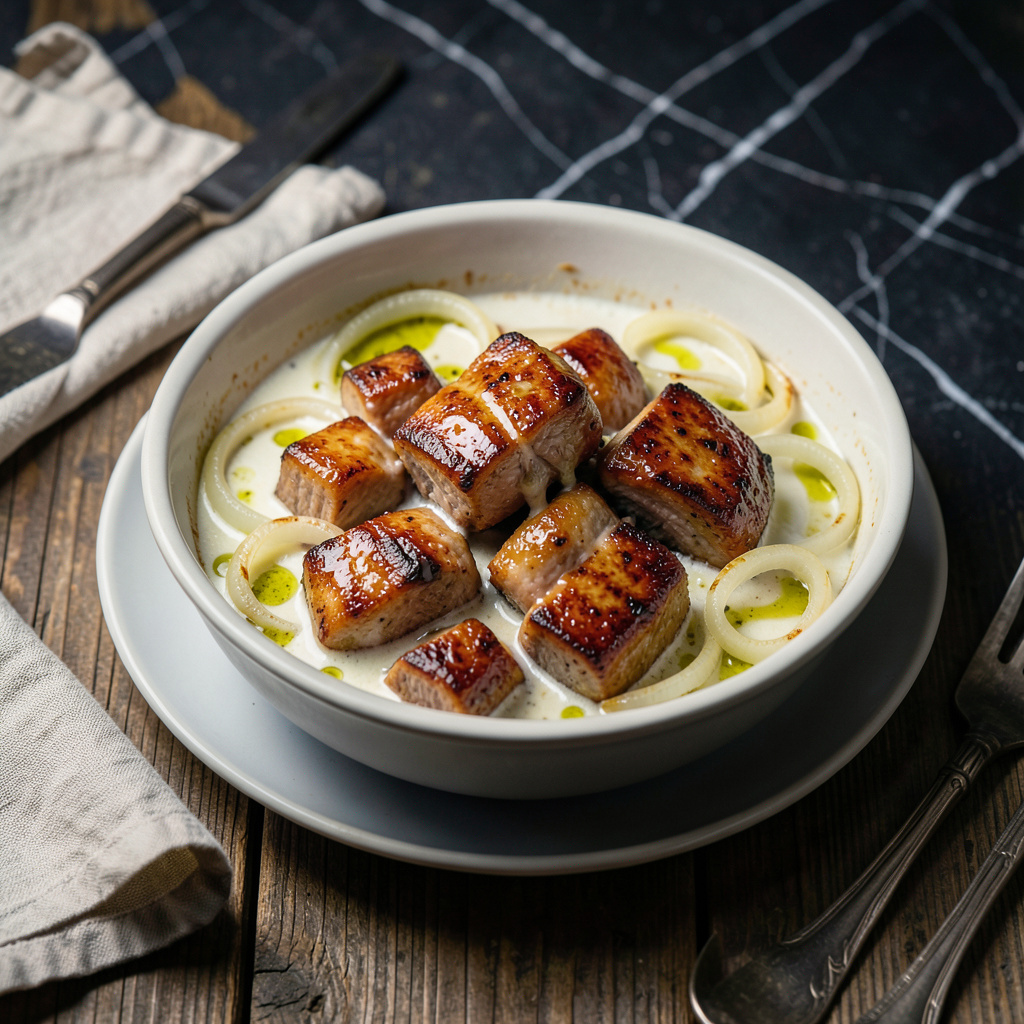
Thirty minutes, a Boston stove, and sheer magic turned a pork shoulder into perfect comfort. The milk bath creates a creamy veil, delivering tender slices every time.
I sear the meat, then braise it in whole milk at 300°F for 30 minutes. With just pork, milk, salt, pepper, and herbs, you’ll get restaurant-quality results effortlessly.
Ingredients for Milk-braised Pork
Pantry basics and a quick grocery dash deliver this silky, melt‑in‑your‑mouth pork.
| Ingredient | Amount | Notes |
|---|---|---|
| pork shoulder 🥩 | 2 lb | Bone‑in, trimmed, cut into 2‑inch cubes |
| whole milk 🥛 | 2 cups | Full‑fat, for creamy braise |
| kosher salt 🧂 | 1 ½ tsp | Season pork evenly |
| black pepper 🌶️ | ½ tsp | Freshly cracked preferred |
| garlic cloves 🧄 | 4 cloves | Minced just before searing |
| onion 🧅 | 1 whole | Quartered, adds subtle sweetness |
| fresh thyme leaves 🌿 | 2 tbsp | Leaves stripped from stems |
| fresh rosemary sprigs 🌿 | 1 tbsp | Leaves chopped fine |
| unsalted butter 🧈 | 2 tbsp | For searing, adds richness |
| all-purpose flour 🌾 | 2 tbsp | Light coating for browning |
| bay leaf 🍃 | 1 leaf | Whole, removed before serving |
The pork shoulder is the star here. Bone‑in pork shoulder from Costco gives that melt‑in‑the‑mouth texture, while Whole Foods offers nicely trimmed cuts if you prefer a smaller package. Look for marbling and a pinkish hue; excess fat can be trimmed but keep a thin layer for flavor. I like to cut it into bite‑size cubes for even braising and let them rest briefly before searing.
Out of fresh thyme? Dried thyme at one‑third the amount works fine, and I keep a tiny jar from Trader Joe’s for emergencies. If pork shoulder is scarce, a well‑marbled pork butt swaps in beautifully. Want a richer sauce? Swap half the milk for Organic Valley heavy cream, but keep the total liquid at the same volume. A pinch of smoked paprika adds a subtle depth without overwhelming the creaminess.
Leftovers keep 4‑5 days in an airtight container, and the flavors meld even better after a night. For longer keeping, freeze portions for up to 3 months; thaw gently in the fridge before reheating. Reheat slowly on low heat to maintain that silky, creamy texture.
Step-by-Step Instructions for Milk-Braised Pork
Here’s the method—friendly, precise, and designed to give you perfectly creamy, tender pork.
Step 1: Season and Lightly Coat the Pork
I start by patting the 2 lb pork shoulder cubes dry with paper towels; moisture is the enemy of a good sear. Then I sprinkle the meat evenly with 1.5 tsp kosher salt and 0.5 tsp black pepper, giving each piece a seasoned crust.
Next, I dust the seasoned cubes with the 2 tbsp all-purpose flour, shaking off any excess. The flour creates a thin veil that will turn a beautiful golden brown when it meets the pan, while also helping the sauce thicken later.
Step 2: Sear the Pork in Butter
Heat a heavy skillet over medium-high heat and melt the 2 tbsp unsalted butter. I wait until the butter foams and the edges start to brown—this signals the pan is hot enough. Then I lay the flour‑coated pork cubes in a single layer, giving them space to breathe.
Let the pieces sit undisturbed for about 2 minutes until they release easily and show a deep golden brown crust. Flip each cube once, searing the other side for another 2 minutes. If anything sticks, a splash of milk will de‑glaze the pan without ruining the sear.
Step 3: Build the Creamy Braise
While the pork rests, I toss the 1 whole onion (quartered) and the 4 cloves garlic cloves (minced) into the same skillet. The aromatics sizzle for 1‑2 minutes until they become fragrant, releasing sweet undertones that will infuse the broth.
Now I pour in the 2 cups whole milk, scraping the browned bits from the bottom—those are flavor gold. I add the 2 tbsp fresh thyme leaves, 1 tbsp fresh rosemary sprigs (chopped fine), and the 1 leaf bay leaf. Bring the mixture to a gentle low simmer and let it cook for 20 minutes, stirring occasionally, until the liquid coats the pork and the meat feels fork‑tender.
Step 4: Finish and Serve
After the braise has thickened, I taste and adjust the seasoning with a pinch more kosher salt or black pepper if needed. I remove the bay leaf, then let the pot rest off the heat for 5 minutes so the sauce settles and becomes silkier.
Finally, I spoon the creamy pork into shallow bowls, drizzle the luscious sauce over the top, and garnish with a few extra thyme leaves for color. Serve hot, and you’ll notice the pork is melt‑in‑your‑mouth tender, while the milk‑based sauce stays luxuriously creamy—exactly the perfect result promised.
Storing and Reheating This milk-braised pork
Refrigerator Storage
After the pork finishes braising, I let it cool for no more than 2 hours before transferring to a glass Pyrex container with a snap‑on lid. Store at 40°F and it stays fresh for up to 4‑5 days. The flavors actually deepen overnight. 💡
Freezer Storage
I portion the leftovers into individual quart‑size freezer bags and squeeze out excess air, leaving about ½ inch headspace for expansion. They freeze solid for up to 3 months. When ready, I thaw the bag in the fridge overnight for best texture.
Stovetop Reheat
For a silky finish, I reheat a portion in a heavy saucepan over medium‑low heat, adding ¼ cup low‑sodium chicken broth to keep the sauce from drying. Stir gently for 8‑10 minutes until the pork reaches 165°F. This method preserves the creamy mouthfeel.
Microwave Reheat
When time is short, I spread a serving on a microwave‑safe plate, cover with a damp paper towel, and heat at 70% power for 2 minutes. I stir, then continue in 30‑second bursts until the internal temperature hits 165°F. A splash of broth revives any dryness.
Reheat Tips
To avoid a rubbery texture, I never microwave the pork at full power; the gentle intervals keep the protein tender. If the sauce looks thick, whisk in a splash of milk or broth. Let the dish sit a minute after heating so the heat distributes evenly.
Serving Warm
I like to finish each reheated portion with a drizzle of melted butter and a sprinkle of fresh thyme; it brightens the creamy base and adds a fragrant lift. Serve over buttery mashed potatoes or crusty bread for a comforting New England vibe. 💫
Nutrition Facts
727kcal
Frequently Asked Questions
What cut of pork works best for this braise?
Use a bone‑in pork shoulder, about 2 lb, cut into 2‑inch cubes. The bone adds gelatin, keeping the meat moist, and the size ensures even cooking throughout.
Why does the milk need to be whole and at a certain temperature?
Whole milk’s fat stabilizes the sauce and prevents curdling. Heat it to a gentle low simmer—around 180°F—before adding the pork; boiling can scorch the dairy.
How can I prevent the sauce from curdling during cooking?
Keep the braise at a gentle low simmer and stir occasionally. If the sauce thickens too fast, whisk in a splash of extra milk or broth. Avoid a hard boil, which separates the proteins.
When should I add herbs for the most flavor?
Add fresh thyme and rosemary in the last 10 minutes of cooking; early addition can turn them bitter. A bay leaf can go in at the start and be removed before serving.
What’s a common mistake that makes the pork turn tough?
Over‑searing or cooking at high heat before braising makes the pork tough. Sear just until a golden brown crust forms—about 2 minutes per side—then lower to a gentle simmer.

- Authentic Hot German Potato Salad Recipe: Mustard-Vinegar Tang With Crispy Bacon Bits - October 18, 2026
- Beans Torborgee Recipe: Spiced Chickpea and Tomato Stew With Crispy Top - October 18, 2026
- French Fry Seasoning Recipe: Smoky Paprika and Garlic Crunch Boost - October 18, 2026