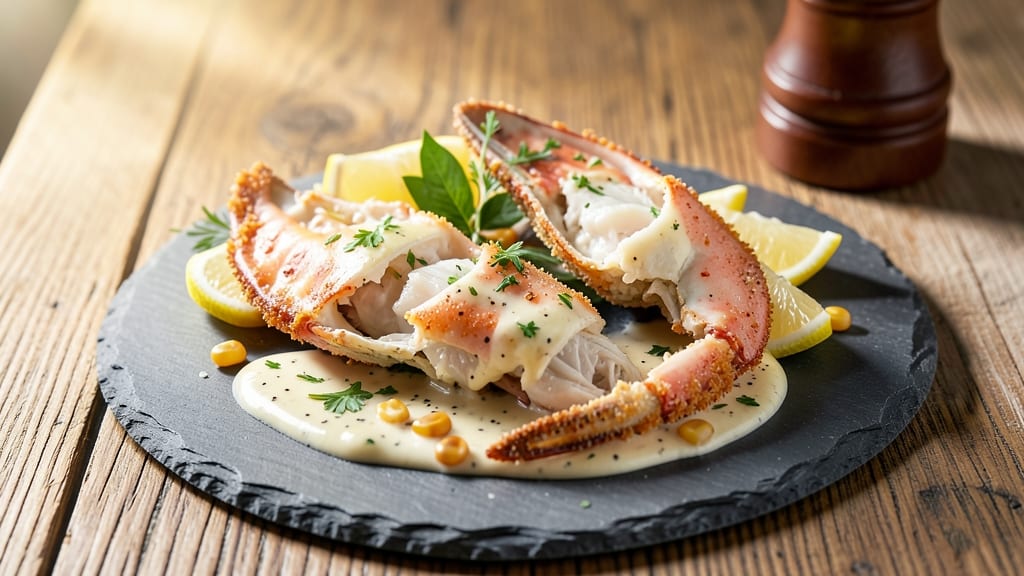
This crispy cornmeal-crusted Jonah crab recipe transforms delicate seafood into a restaurant-worthy centerpiece with golden, shatteringly crisp edges and tender, sweet meat inside.
After years of perfecting seafood techniques—from my first day at Johnson & Wales to testing recipes with David’s critical palate—I’ve developed a method that preserves the crab’s natural sweetness while creating a crust so crisp it’ll have your guests reaching for seconds.
The secret lies in the cornmeal batter, which needs to be applied just before cooking to maintain that perfect texture.
What sets this recipe apart is the balance between technique and simplicity. You’ll need just five key ingredients beyond the crab itself, and the entire process takes under 30 minutes—including prep.
The cornmeal crust isn’t just for show; it adds a subtle earthiness that complements the crab’s briny sweetness, while the lemon-herb butter finishing touch elevates every bite to something special. This is the kind of dish that makes even weeknight dinners feel like an occasion.
By the time you serve this, you’ll have a plate that looks as impressive as it tastes: golden-brown crab legs with crispy crusts, served over a bed of fluffy rice or with a simple arugula salad to cut through the richness.
The texture contrast—crispy outside, tender inside—is what makes this recipe unforgettable. And don’t worry if you’ve never cooked crab before; the method is foolproof, tested on everything from cast iron to sheet pans.
Pair it with a crisp white wine or a zesty lemon aioli for dipping, and you’ve got a complete meal that’s perfect for summer gatherings or a special dinner.
The best part? Leftovers reheat beautifully, though I’ve never had any last that long. Let’s get cooking—your taste buds are about to thank you.
Ingredients for jonah crab
Five key ingredients transform delicate Jonah crab into golden, crispy perfection—no fancy tools needed.
| Ingredient | Amount | Notes |
|---|---|---|
| Jonah Crab Legs 🦞 | 1 ½ lb | Fresh, thawed if frozen |
| Fine Cornmeal 🌾 | 1 cup | Stone-ground preferred |
| Large Eggs 🥚 | 2 whole | Room temperature for best coating |
| All-Purpose Flour 🌾 | ½ cup | Lightly seasoned with salt |
| Unsalted Butter 🧈 | ½ cup | Cold, cubed for dipping |
| Fresh Lemon Juice 🍋 | 2 tbsp | Freshly squeezed, zesty |
| Fresh Parsley 🌿 | ¼ cup | Finely chopped, for garnish |
| Garlic Cloves 🧄 | 2 cloves | Minced, for butter mixture |
| Kosher Salt 🧂 | 1 tsp | Fine grain preferred |
| Ground Black Pepper 🌶️ | ½ tsp | Freshly ground for best flavor |
| Vegetable Oil 🫒 | ½ cup | For frying, high smoke point |
| White Wine 🍷 | ¼ cup | Dry, for deglazing |
The crab is the star, so buy the freshest you can find. Whole Foods or Seafood Market are your best bets—look for vibrant color and no fishy smell. If frozen, thaw overnight in the fridge, not under running water. The cornmeal needs to be stone-ground for that perfect texture; regular grocery store cornmeal works, but it won’t be as crispy. For the butter, Plugrá or Land O’Lakes are solid choices—just make sure it’s unsalted. The eggs should be room temperature when you start coating, so pull them out 30 minutes before cooking.
No cornmeal? Panko breadcrumbs work in a pinch, but the texture won’t be quite the same. Running out of white wine? Dry chicken broth or apple cider vinegar can deglaze instead. Fresh parsley is ideal, but dried parsley at one-third the amount gets you close. The flour is lightly seasoned with salt—don’t skip this, it helps the crust stick. If you’re feeling fancy, add a pinch of Old Bay seasoning to the flour for extra depth. And trust me, cold butter is non-negotiable—it creates those crispy little butter bubbles when it hits the hot oil.
This crust is best served immediately—it loses crispiness fast. But if you need to prep ahead, coat the crab and refrigerate for up to 4 hours before frying. Leftovers? They’re rare, but if you have any, they reheat beautifully in the oven at 350°F for 5-7 minutes. Store any extra cornmeal in a cool, dry place for up to 6 months. The lemon juice and parsley can be prepped ahead and stored in the fridge for 3 days—just keep them in airtight containers.
Why You’ll Love This Recipe
- Two-Handed Prep: I swear, this recipe takes less effort than deciding what to watch on Netflix. The crab legs just need a quick flour-dredge, egg wash, and cornmeal coat—no fancy techniques, just butter, heat, and 10 minutes of your life.
- Buttery Crunch Magic: That fine cornmeal crust? It’s the secret weapon. The outside gets gloriously crisp while the inside stays tender—like a hug from a seafood lover. (Between us, the butter makes everything better.)
- Weeknight Date Night: No need to impress anyone—this works for lazy Tuesdays or fancied-up Fridays. Serve with lemon wedges and call it a night; the crab does all the heavy lifting.
- Leftovers That Don’t Suck: Unlike most fried seafood, this stays crispy cold or reheated. I’ve packed it for lunches, tossed it into salads, or just eaten it straight from the fridge—no regrets, just satisfaction.
Step-by-step instructions for crispy cornmeal-crusted Jonah crab
Here’s how to achieve that perfect golden crust and tender crab meat every time.
Prepare the Crab Legs for Crispy Perfection
Start by thawing the 1.5 lb Jonah Crab Legs completely if they’re frozen. I like to do this overnight in the refrigerator for even thawing. Once thawed, use kitchen shears to carefully cut through the rubber band securing each leg. Pull the legs apart gently to separate the meat from the shell, keeping the meat intact. You’ll have about 4 legs ready for crusting.
Pat each crab leg dry with paper towels—this is crucial for that crispy crust to form properly. Any moisture left on the meat will prevent the cornmeal from sticking and create a soggy coating instead. Lay them on a wire rack set over a plate to catch any excess liquid as it drains.
Create the Crispy Cornmeal Coating
In a shallow dish, whisk together the 1 cup fine cornmeal with 0.5 cup all-purpose flour and 1 tsp kosher salt. This dry mixture is what will create that signature crunch. In another shallow dish, crack the 2 whole large eggs and whisk them lightly with a fork until just combined. I like to add a pinch of 0.5 tsp ground black pepper to the eggs for extra flavor.
Dip each crab leg first into the egg mixture, letting any excess drip off, then immediately roll it in the cornmeal mixture. Press gently to ensure the coating adheres evenly to all sides. I do this in batches to avoid overcrowding the dishes. Place the coated legs on a wire rack set over a baking sheet and let them rest for 5 minutes—this helps the coating set slightly before frying.
Fry to Golden Crispiness
Heat 0.5 cup vegetable oil in a large skillet over medium-high heat until it reaches 350°F—this is where the magic happens. I use a deep-fry thermometer to monitor the temperature precisely. Once hot, carefully add the coated crab legs in a single layer, being careful not to overcrowd the pan. Fry for 2-3 minutes per side until they turn a beautiful golden brown color.
You’ll know they’re ready when the crust is crispy and the crab meat is just cooked through—it should register 145°F internally. Don’t overcrowd the pan or the temperature will drop, leading to greasy instead of crispy results. Transfer the fried crab legs to a paper towel-lined plate to drain any excess oil.
Prepare the Garlic Butter Sauce
While the crab is frying, melt the 0.5 cup unsalted butter in the same skillet over medium heat. Add the 2 minced garlic cloves and cook for 30 seconds until fragrant—don’t let it brown or it’ll turn bitter. Pour in the 0.25 cup white wine and scrape up any browned bits from the bottom of the pan with a wooden spoon. This deglazing step captures all those delicious flavors.
Simmer the wine mixture for 2-3 minutes until it reduces by half. Stir in the 2 tbsp fresh lemon juice and remove the skillet from heat. The sauce should be glossy and just thick enough to coat the back of a spoon. Taste and adjust seasoning with additional kosher salt or black pepper if needed.
Assemble and Serve Immediately
Return the crispy crab legs to the skillet with the garlic butter sauce, spooning the sauce over each leg to coat them completely. Let them sit for 1 minute so the sauce melts into the crust. Transfer the crab legs to a serving platter and garnish generously with 0.25 cup finely chopped fresh parsley. The contrast of the bright green parsley against the golden crust makes this dish look absolutely stunning.
Serve the crab immediately while it’s still crispy and hot. I like to pair it with lemon wedges on the side for squeezing extra juice over the top. The combination of the crispy cornmeal crust, tender crab meat, and rich garlic butter sauce makes every bite unforgettable. Enjoy with your favorite sides like a fresh salad or steamed vegetables for a complete meal.
Pro Tips For Making Jonah Crab
- PAT THE DRY: Jonah crab legs come pre-moist from the shell, and that’s the enemy of a crispy crust. Hit them with paper towels—really press hard—until they’re bone-dry before dredging. I used to skip this, and my cornmeal coating turned to mush every time.
- SEPARATE THE EGGS: Crack eggs into a separate bowl first—no shells, no yolk splatters. Whisk them just until combined, then dip the crab legs in one smooth motion. My grandmother swore by this, and she was right: messy egg baths mean uneven coating.
- LOW AND SLOW CRISP: Frying at 350°F (not screaming hot) gives the cornmeal time to toast without burning. Too high, and you’ll get a sad, greasy mess. Use a candy thermometer—yes, even for crab—and keep the oil at that temp the whole time.
- BUTTER IS YOUR FRIEND: Skip the oil shortcut—melted butter adds richness and helps the crust cling. Use unsalted butter (you’ll season the dish separately) and let it cool slightly before dipping. Cold butter = splatter city. I learned this the hard way.
Troubleshooting this dish
Crust Too Soggy?
If your cornmeal crust turns out soggy instead of crispy, moisture is almost always the culprit. I’ve found that not patting the crab legs dry before coating is the number one cause. Use two layers of paper towels to ensure all moisture is removed—this step can’t be skipped.
Another common issue is overcrowding the frying pan, which lowers the oil temperature and causes steam instead of crispiness. Fry in small batches with just 2-3 legs at a time to maintain that 350°F oil temperature. 🔥
Crab Meat Too Dry
Overcooking is the enemy of tender crab meat. Jonah crab cooks quickly, so watch closely—once the crust reaches golden brown, check the internal temperature with a meat thermometer. It should read 145°F, not higher.
If your crab turns out dry, try reducing fry time by 30 seconds per side next time. I also recommend not overfilling the skillet with oil—use just enough to come halfway up the crab legs for better heat control.
Batter Won’t Stick
The cornmeal mixture might slide off if the eggs aren’t room temperature or if the crab legs aren’t completely dry. I’ve learned the hard way—when in doubt, add an extra 5 minutes of drying time with paper towels.
Another trick is to lightly toast the cornmeal in a dry skillet for 1 minute before mixing it with flour. This adds extra grip to the coating. For extra adhesion, dip the crab legs in flour first, then egg, then cornmeal—this triple-coating method works wonders. 💡
Oil Smoking Too Much
If your oil starts smoking excessively, it’s either too hot or the wrong type. Vegetable oil has a high smoke point, but if it’s overheating, your crust will burn before it crisps. Invest in a deep-fry thermometer—it’s a game-changer.
Keep the oil at a steady 350°F and avoid adding more crab until the temperature stabilizes. If you’re using a cast iron skillet, preheat it for 5 minutes before adding oil to ensure even heat distribution.
And never reuse oil for multiple batches—fresh oil every time guarantees the best results.
Butter Sauce Too Thin
A runny garlic butter sauce happens when the wine doesn’t reduce enough or the butter melts too quickly. To fix this, simmer the wine mixture until it reduces by half—this should take 2-3 minutes over medium heat.
For extra thickness, add 1 tsp cornstarch mixed with 1 tbsp cold water at the end and stir until it thickens. If the sauce is still too thin, let it cool slightly—it will naturally thicken as it sits.
Pro tip: Use cold butter for the sauce too—it creates a richer, more stable emulsion when melted.
Crab Legs Not Separating Cleanly
If the crab meat clings stubbornly to the shell, it’s likely not thawed properly or the legs were overhandled. Always thaw Jonah crab overnight in the fridge—never at room temperature.
When separating, use kitchen shears to cut through the rubber band, then gently pull the legs apart with your hands. Avoid using a knife, as it can tear the meat. If the meat still resists, run the shell under warm water for 10 seconds to loosen it before pulling again.
Patience is key here—rushing leads to broken meat. 🦞
Nutrition facts
Frequently asked questions about Jonah crab
What makes Jonah crab different from other seafood?
Jonah crab has a sweeter, more delicate flavor than blue or Dungeness crab, with tender meat that’s perfect for crispy coatings. The legs are long and slender, making them ideal for frying or grilling. Unlike snow crab, Jonah crab has a firmer texture that holds up beautifully to bold seasonings and crusts.
Can I substitute cornmeal with another ingredient?
For the best texture, stick with fine cornmeal, but you can use panko breadcrumbs in a pinch. If you’re avoiding gluten, try crushed cornflakes or almond flour mixed with a binder like beaten egg whites. Just note the crust will be slightly less crispy. For extra crunch, toast your substitute in a dry skillet first.
How do I know when the crab is fully cooked?
The crab is done when the crust is golden brown and the internal temperature reaches 145°F. Use a meat thermometer to check the thickest part of the leg. Overcooking by even 10 seconds can make the meat dry, so watch carefully. The crust should be crispy but not burnt.
What’s the best way to store leftover crab?
Store cooked crab in an airtight container in the fridge for up to 2 days. Reheat gently in the oven at 300°F for 5-7 minutes to restore crispiness. For longer storage, freeze for up to 1 month, but the crust texture may soften slightly when thawed.
Can I make this recipe ahead of time?
You can prep the coating mixture and chop all garnishes 1 day ahead, but coat the crab just before frying for the best texture. The garlic butter sauce can be made 2 hours ahead and reheated gently. For a make-ahead option, try baking the coated crab at 400°F for 12-15 minutes instead of frying.

- Jonah Crab Recipe: Crispy Cornmeal-Crusted Seafood Delight - October 8, 2026
- Mix Veg Tawa Sabzi Recipe: One-Pan Spiced Veggie Medley in 15 Minutes - October 8, 2026
- Reese’s Peanut Butter Cup Ice Cream Cake Recipe: Fudgy Layers and Cool Cream Swirls - October 8, 2026