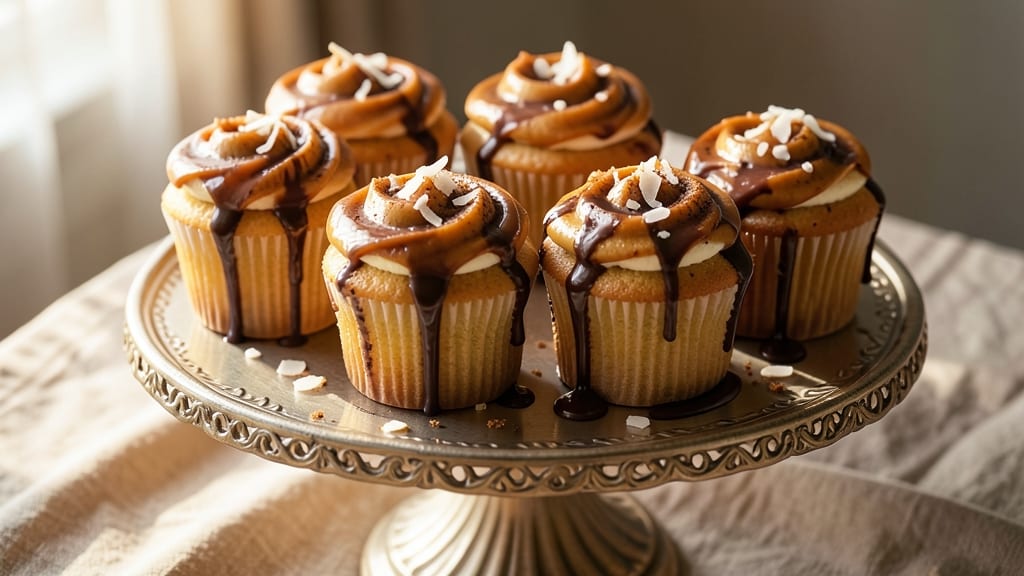
This condensed milk cupcake recipe delivers the kind of ultra-moist texture that makes every bite feel like a hug—rich, tender layers with a caramelized top that’s impossible to resist.
I perfected it after years of testing, because nothing ruins a cupcake faster than dryness, and condensed milk is the secret weapon that keeps them perfectly tender. The first time I made these, my kitchen smelled like childhood memories and caramel dreams.
The magic happens when condensed milk replaces some of the liquid in the batter, creating a denser, moister crumb that stays soft even after baking. These cupcakes bake at 350°F for 18-20 minutes, yielding a golden top with a crackly caramelized crust that hides a velvety interior.
The recipe is straightforward—just 9 ingredients—but the flavor is anything but basic.
What you’ll end up with is a batch of cupcakes so moist they practically melt in your mouth, with a caramelized top that’s crisp enough to hold frosting without sinking.
The condensed milk adds a subtle sweetness that pairs perfectly with vanilla or chocolate frosting, making these ideal for birthdays, potlucks, or just because. Trust me, once you try them, you’ll never go back to dry cupcakes again.
These cupcakes also reheat beautifully—just a quick zap in the microwave to restore that tender texture. Ready to bake? Here’s everything you need to make them from scratch.
Ingredients for condensed milk cupcake
Nine simple ingredients transform into ultra-moist cupcakes with caramelized magic.
| Ingredient | Amount | Notes |
|---|---|---|
| All-Purpose Flour 🌾 | 2 ½ cups | Sifted for light texture |
| Granulated Sugar 🍚 | 1 ½ cups | White or light brown |
| Sweetened Condensed Milk 🥛 | 1 ½ cups | Unopened can for best flavor |
| Unsalted Butter 🧈 | 1 cup | Cold, cubed for baking |
| Large Eggs 🥚 | 2 whole | Room temperature |
| Vanilla Extract 🌸 | 2 tsp | Pure, high-quality |
| Baking Powder 🍞 | 2 tsp | Aluminum-free preferred |
| Salt 🧂 | ½ tsp | Fine sea salt |
| Whole Milk 🥛 | ½ cup | Room temperature |
The condensed milk is non-negotiable here—Carnation is my go-to, but any good brand works. Grab the unopened can from the baking aisle, not the pantry. The butter should be cold and cubed (trust me on this), and the eggs need to be room temperature for even mixing. For the flour, I always sift it first—King Arthur or Bob’s Red Mill are my favorites, but any all-purpose will do. The baking powder? Check the expiration date—old powder loses its lift, and you’ll end up with flat cupcakes. If you’re in a pinch, Trader Joe’s sells pre-sifted flour in little bags, which saves time.
No condensed milk? Substitute equal parts evaporated milk and heavy cream, but the texture won’t be quite the same. Running low on vanilla? Vanilla bean paste adds flecks of real vanilla and works 1:1. The milk can be swapped for buttermilk or heavy cream, but whole milk keeps it classic. For a richer flavor, add 1 tbsp melted butter to the dry ingredients. The sugar can be swapped for turbinado or coconut sugar, but white sugar ensures the caramelized top. Pro tip: if your butter is warm, chill the bowl in the fridge for 10 minutes before mixing.
Store baked cupcakes in an airtight container at room temperature for 3 days or in the fridge for 1 week. Freeze them for 3 months—just thaw at room temperature before frosting. The caramelized tops soften when reheated, so a quick 10-second microwave zap restores that crackly texture. These cupcakes also freeze beautifully unfrosted, so bake a batch ahead for birthdays or potlucks. I always make extras—they disappear faster than you can frost them.
Why You’ll Love This Recipe
- No Mixer Needed: I swear by this recipe because it’s actually foolproof—just fold the condensed milk into the dry ingredients until it’s crumbly, then add melted butter and eggs. The texture is so tender, you’d never guess it didn’t come from a stand mixer.
- Caramel-Kissed Magic: That sweetened condensed milk? It’s the secret weapon—it keeps the cupcakes moist for days while giving them a subtle caramel depth. The butter and sugar combo makes them rich but not heavy, like a hug in bite form.
- Party in a Box: These are my go-to for birthdays, potlucks, or even a lazy Sunday. Frost them with whipped cream, drizzle with chocolate, or serve plain—they disappear fast. (Yes, even my picky nephew asks for seconds.)
- Pantry Staple Power: You’re using ingredients you already own: flour, sugar, butter, eggs. No specialty items, no last-minute grocery runs. And if you bake a batch? They stay fresh for five days in the fridge—perfect for when life gets busy.
Step-by-step instructions for ultra-moist condensed milk cupcakes
Here’s how to create cupcakes with a velvety crumb and caramelized crown—every bite stays moist.
Cream Butter and Sugar for Maximum Fluffiness
In a stand mixer fitted with the paddle attachment, beat the 1 cup unsalted butter and 1.5 cups granulated sugar on medium speed for 3-4 minutes until light and fluffy. You’ll notice the mixture nearly doubles in volume and becomes pale—this incorporates air that creates the signature tender crumb. Scrape down the sides of the bowl every 30 seconds to ensure even mixing.
I like to press my finger into the butter-sugar mixture at this stage—it should leave a slight indentation but hold its shape. This consistency ensures proper aeration without becoming too stiff. The sweetened condensed milk will come next, and its thickness is why we need this light texture to begin with.
Incorporate Condensed Milk and Eggs
Add the 1.5 cups sweetened condensed milk to the butter-sugar mixture and mix on low speed for 1 minute until fully combined. The condensed milk will look like it’s disappearing into the creamed butter—this is normal and exactly what we want. Then add the 2 whole large eggs, one at a time, mixing just until each is fully incorporated after each addition.
Here’s where the magic happens: the condensed milk’s natural sweetness and fat content create an ultra-moist batter. The eggs bind everything together while adding structure. After adding the eggs, stir in the 2 teaspoons vanilla extract and 0.5 teaspoon salt until just combined—overmixing at this point develops gluten and can make the cupcakes dense.
Combine Dry Ingredients and Fold Gently
In a separate bowl, whisk together the 2.5 cups all-purpose flour and 2 teaspoons baking powder until evenly distributed. The flour should be sifted first for a lighter texture—this prevents dense cupcakes. With the mixer on low speed, gradually add the dry ingredients to the wet mixture, mixing just until combined. You’ll see small flour streaks remain—this is perfect.
Finally, pour in the 0.5 cup whole milk and mix on low speed for another 30 seconds until the batter is smooth. The milk helps balance the richness of the condensed milk while keeping the batter fluid enough to pipe easily. Here’s the thing—don’t overmix. The moment the batter comes together is when you stop mixing. Overmixing develops gluten, which leads to tough cupcakes instead of tender ones.
Pipe and Bake for Perfect Texture
Preheat your oven to 350°F and line a cupcake pan with 12 liners. Divide the batter evenly among the liners, filling each about ⅔ full. The batter will be thick but pipeable—if it seems too stiff, let it sit at room temperature for 5 minutes to relax the gluten. Bake for 18-20 minutes, until a toothpick inserted into the center comes out clean with just a few moist crumbs clinging to it.
I always check for doneness at the 18-minute mark—the cupcakes should be golden brown on top with slightly domed centers. The condensed milk prevents them from drying out, so they’ll stay moist even if slightly underbaked. Let them cool in the pan for 5 minutes before transferring to a wire rack to cool completely. This resting period prevents them from sinking as they cool.
Caramelize the Tops for Extra Flavor
Once completely cool, place the cupcakes back in the oven (no need to preheat) and broil for 1-2 minutes, watching closely. You’re looking for the tops to develop a golden caramelized crust—this adds depth of flavor and a beautiful finish. Remove them immediately when they start to turn golden, as they’ll continue cooking from residual heat.
Serve immediately for the ultimate experience—these cupcakes stay moist for 2-3 days when stored in an airtight container, but they’re best enjoyed fresh. The caramelized tops soften slightly as they cool, but the interior remains wonderfully tender. Each bite delivers that perfect balance of sweetness, moisture, and subtle caramel notes that make these cupcakes unforgettable.
Pro Tips For Making Condensed Milk Cupcake
- MIX THE BATTER COLD: Condensed milk cupcakes are forgiving, but if your butter melts into a gloopy mess, you’re stuck with dense cupcakes. Whisk the butter and sugar first—then fold in the condensed milk and eggs. Keep everything chilled until the last minute, even the flour. I learned this the hard way after a batch turned out like a brick.
- USE ROOM-TEMP EGG WHITES: Cold eggs? Skip it. Room-temperature egg whites blend smoother and whip up lighter, giving your cupcakes that signature airy crumb. Crack them into a bowl 10 minutes before mixing—no need to go full sous vide. Your future self will notice the difference in texture.
- STOP WHEN CENTERS JIGGLE: These cupcakes bake fast, but overbaking turns them gummy. Test with a toothpick—it should come out clean and the center should jiggle slightly. If you wait for a fully dry toothpick, you’ll end up with a sad, dense cupcake. Trust the wiggle.
- FOLD IN FLOUR LAST: Dumping flour all at once makes tough cupcakes. Sift it in gradually while mixing on low speed, then fold it in by hand at the end. This keeps the condensed milk’s moisture locked in instead of fighting with dry flour. It’s extra work, but worth it for that melt-in-your-mouth texture.
Wine and beer pairings for this dish
Sweet Cream Pairings
These ultra-moist cupcakes pair beautifully with vanilla bean ice cream—the creamy contrast balances the caramelized tops perfectly. I like to serve them with a scoop of Häagen-Dazs vanilla or Ben & Jerry’s for that classic dessert experience.
For a lighter option, try coconut sorbet to cut through the richness without overpowering the delicate flavors. 🥥
Coffee Lovers’ Twist
A shot of espresso or cold brew elevates these cupcakes to café-quality indulgence. The bitterness of coffee cleanses the palate between bites, making each one taste even more decadent. I often drizzle a little vanilla syrup over the frosting before serving for an extra layer of flavor.
For a boozy touch, add a splash of Kahlúa to the frosting or serve with a cappuccino on the side.
Wine Pairings
Light dessert wines like Moscato d’Asti or Riesling complement the caramelized sweetness without competing. The slight fizz of Moscato cleanses your palate, while a dry Riesling from Germany adds a refreshing acidity that balances the richness.
Avoid heavy reds—they’ll overpower the delicate cupcake flavors. For a fun twist, try a sparkling rosé with berry notes to highlight the vanilla and caramel undertones.
Beer Pairings
Surprisingly, a Belgian-style witbier like Stella Artois Wit works wonderfully—its citrusy notes and light effervescence contrast the cupcakes’ sweetness. For a stronger option, a honey-brown ale (like New Belgium’s Fat Tire) adds a malty depth that pairs beautifully with the caramelized tops.
Avoid heavy IPAs or stouts, as their bitterness clashes with the dessert’s sweetness. A Belgian tripel with its crisp finish is another great choice for balancing flavors.
Creamy Frosting Options
Pair these cupcakes with Swiss meringue buttercream for a luxurious finish—the airy texture contrasts the dense cupcakes beautifully. For a lighter option, cream cheese frosting adds tanginess that cuts through the sweetness. I also love a simple vanilla glaze drizzled over the tops for a clean, elegant look.
The key is to keep the frosting smooth and not too heavy, so it doesn’t overwhelm the tender cupcake texture.
Seasonal Adaptations
In summer, serve these cupcakes with a scoop of mint chip ice cream or a sprinkle of toasted coconut flakes for a tropical vibe. For fall, add a pinch of cinnamon to the frosting and top with caramelized pecans for a cozy twist.
In winter, pair them with spiced rum or eggnog for a festive touch. The cupcakes’ versatility makes them perfect for any occasion—just adjust the toppings to match the season. 🍂
Nutrition facts
Frequently asked questions
Why do these cupcakes stay so moist longer than regular ones?
The secret is the sweetened condensed milk—it replaces some of the liquid while adding fat and sugar, which keeps the crumb ultra-tender. Unlike regular cupcakes, these won’t dry out overnight when stored properly in an airtight container. The condensed milk also adds natural sweetness, so you can reduce the sugar slightly if you prefer.
Can I make these cupcakes without condensed milk?
Yes, but the texture will differ. For a substitute, mix 1 cup evaporated milk with ½ cup heavy cream to mimic the thickness. However, you’ll lose some of the caramelized depth and moisture. The condensed milk also adds a subtle buttery richness that’s hard to replicate. If you’re avoiding dairy, try coconut condensed milk for a similar effect.
How do I prevent my cupcakes from sinking after baking?
Let them cool in the pan for 5 minutes before transferring to a rack—this helps them set properly. Also, avoid overfilling the liners (fill to ⅔ full) and don’t open the oven door too soon. The condensed milk makes them slightly denser, so they’re less prone to sinking than regular cupcakes. If they do sink slightly, the caramelized top will still look beautiful!
What’s the best frosting for these ultra-moist cupcakes?
I recommend Swiss meringue buttercream or vanilla glaze—both complement the tender crumb without making them soggy. For a lighter option, try whipped cream cheese frosting. Avoid overly heavy frostings like chocolate ganache, as they can overwhelm the delicate flavor. A simple dusting of powdered sugar also works beautifully.
Can I make these cupcakes ahead of time?
Bake them 1 day ahead and store in an airtight container at room temperature. They actually taste better the next day as the flavors meld. For longer storage, freeze unfrosted cupcakes for up to 3 months. Thaw at room temperature before frosting. The caramelized tops soften slightly when reheated, but a quick 10-second microwave zap restores their texture.

- Condensed Milk Cupcakes Recipe: Ultra-Moist Layers With Caramelized Top - October 8, 2026
- BigMac Sauce Recipe: Secret Sauce That Copies the Iconic Flavor - October 8, 2026
- Michigan Salad Recipe: Crispy Potato and Apple Comfort Bowl - October 8, 2026