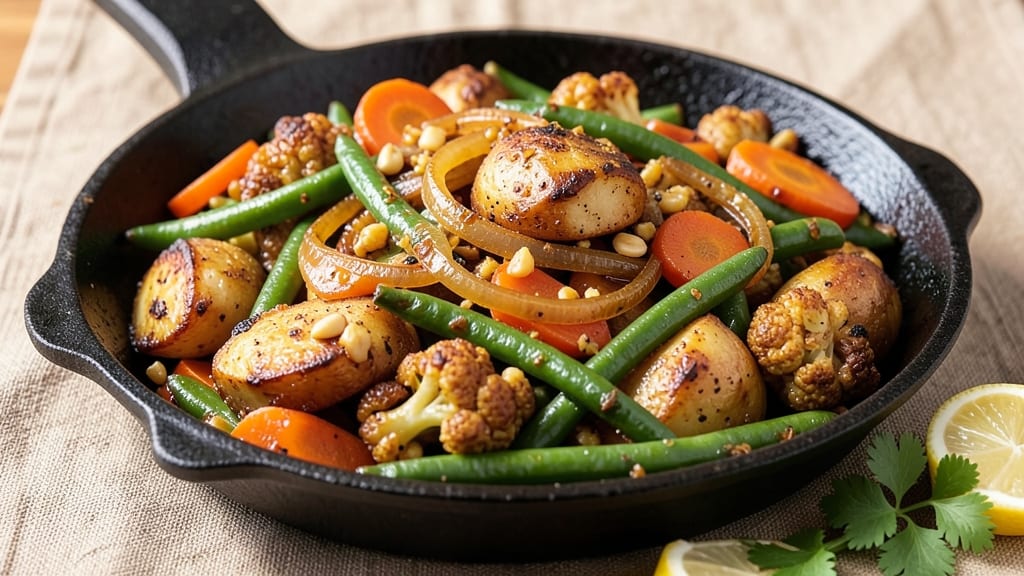
This mix veg tawa sabzi recipe transforms everyday vegetables into a fragrant, one-pan masterpiece in just 15 minutes—a staple of Indian street food that brings bold flavors to your table.
The key lies in high-heat sautéing that caramelizes the spices and preserves the vegetables’ natural crunch, all while keeping the method simple enough for weeknight dinners.
I first discovered this dish at a bustling Mumbai chai stall, where the aroma of cumin and turmeric filled the air, and it became my go-to for quick, satisfying meals.
The beauty of tawa sabzi is its versatility—you can use whatever vegetables are on hand, from potatoes and cauliflower to green beans and carrots. Traditional spices like cumin, coriander, and garam masala create that signature depth, while a splash of lemon at the end brightens the dish.
This recipe delivers restaurant-quality results without requiring special equipment—just a sturdy skillet and a few minutes of attention. The vegetables come out tender-crisp with a golden crust, infused with warm, earthy spices that make every bite unforgettable.
What makes this dish truly special is how it elevates simple ingredients into something extraordinary. The spices bloom in the hot oil, releasing their aromas and creating a fragrant base that coats every vegetable.
Serve it with warm roti, steamed rice, or a dollop of yogurt to balance the richness, and you’ve got a complete meal that’s both hearty and light. It’s the kind of dish that feels like a hug—comforting, flavorful, and impossible to resist.
Whether you’re feeding a family or cooking for one, this tawa sabzi adapts effortlessly. Add paneer or tofu for extra protein, or keep it strictly vegetarian for a plant-forward meal. The recipe scales perfectly, so you can make a small batch for two or double it for a crowd.
Let’s bring the flavors of the subcontinent to your kitchen—quickly, easily, and deliciously.
Ingredients for mix veg tawa sabzi
Simple vegetables meet bold spices for this fragrant, one-pan tawa sabzi that’s restaurant-quality in 15 minutes.
| Ingredient | Amount | Notes |
|---|---|---|
| Potatoes 🥔 | 1 ½ lb | Yukon gold or red, cut into even chunks |
| Cauliflower 🧄 | 1 lb | Cut into small florets |
| Green Beans 🌱 | 1 lb | Trimmed, cut into 2-inch pieces |
| Carrots 🥕 | 1 lb | Peeled, sliced into thin rounds |
| Onions 🧅 | 1 whole | Red or yellow, thinly sliced |
| Garlic Cloves 🧄 | 6 cloves | Minced, fresh preferred |
| Cumin Seeds 🌶️ | 1 tbsp | Toasted for aroma |
| Ground Cumin 🌶️ | 1 tbsp | For depth |
| Ground Coriander 🌿 | 1 tbsp | Earthy flavor |
| Turmeric Powder 🧂 | ½ tbsp | Brightens the dish |
| Garam Masala 🌶️ | ½ tbsp | Warm finishing spice |
| Red Chili Powder 🔥 | ½ tbsp | Adjust for heat |
| Extra-Virgin Olive Oil 🫒 | ½ cup | High smoke point |
| Lemon Juice 🍋 | 2 tbsp | Freshly squeezed |
| Salt 🧂 | 1 ½ tsp | Diamond Crystal preferred |
| Fresh Cilantro 🌿 | ¼ cup | Chopped, for garnish |
The vegetables are the stars here, so pick firm, fresh produce—Yukon gold potatoes hold their shape better than russets, and Indian grocery stores often carry the perfect mix of seasonal veggies. I usually grab cauliflower and green beans from Whole Foods’ organic section, but any local farmers’ market will have what you need. Look for brightly colored carrots and onions—vibrant hues mean fresher flavor. For the spices, MDH or Everest brand garam masala delivers that authentic warmth, but any quality brand works. Toast your cumin seeds in the same oil you’ll cook the veggies—their aroma will infuse everything.
No cauliflower? Zucchini or bell peppers work beautifully—just adjust cooking time since they soften faster. Running low on green beans? Snap peas or broccoli florets add a nice texture contrast. The garam masala can be tricky to find outside Indian markets, but a mix of cinnamon, cardamom, and cloves makes a decent substitute if you’re in a pinch. For heat lovers, Kashmiri red chili powder adds color without the burn, while regular cayenne brings the fire. Fresh cilantro is ideal, but dried works at one-third the amount if you’re out.
This dish tastes even better the next day—store leftovers in an airtight container for up to 3 days. For longer storage, freeze portions for up to 3 months, though the texture gets slightly softer. I like to reheat it in a skillet with a splash of water to revive the crispiness. Serve with warm roti or basmati rice to soak up all those spiced juices. The lemon juice should be added just before serving—it brightens everything up instantly.
Why You’ll Love This Recipe
- One-Pan Magic: I swear by this—just toss chopped veggies on a hot tawa with a drizzle of oil, and let the magic happen. No pans, no mess, and honestly? The crispy edges on those potatoes and cauliflower florets are worth every second.
- Craving-Worthy Crunch: That perfect balance of soft potatoes and carrots with the satisfying crunch of green beans? It’s the kind of texture combo that makes you reach for seconds without even thinking. (Yes, even on a Tuesday night.)
- Meal Prep MVP: Between us, this is my go-to for lunches all week. Cook a big batch, store it in containers, and reheat it—still tastes fresh. My college kid calls it “the only veggie dish he’ll eat,” so there’s that.
- Pocket-Friendly Pantry Hero: Potatoes, cauliflower, and onions? Those are the kind of ingredients that don’t break the bank. I’ve made this for 6 people for under $10, and somehow, it always disappears faster than I can say “more rice, please.”
Step-by-step instructions for mix veg tawa sabzi
This one-pan wonder delivers vibrant, aromatic vegetables in record time—perfect for quick weeknight dinners.
Prep and Toast the Spices for Maximum Flavor
Heat a large cast-iron skillet or heavy-bottomed tawa over medium heat. Add the 1 tablespoon cumin seeds and toast for 30-45 seconds until they release their nutty aroma and begin to sizzle. Here’s the thing—this step is non-negotiable for building that authentic, toasty foundation.
As soon as the cumin seeds darken slightly and you catch that unmistakable aroma, immediately add the 1 whole sliced onions. Cook for 3-4 minutes until they soften and turn translucent at the edges. This is where the sweetness develops, so don’t rush it. The onions should caramelize just enough to form a light golden base.
Add Aromatics and Build the Spice Base
Push the onions to one side of the pan and add 6 minced garlic cloves to the empty space. Sauté for 30 seconds until fragrant—you’ll know it’s ready when the kitchen fills with that pungent garlic aroma. Real talk: this is the moment that matters, so don’t walk away.
Now combine all the ground spices: 1 tablespoon ground cumin, 1 tablespoon ground coriander, 0.5 tablespoon turmeric powder, 0.5 tablespoon garam masala, and 0.5 tablespoon red chili powder. Stir continuously for 1 minute until the spices bloom and release their oils. This creates the aromatic backbone of your dish—don’t skip this crucial step.
Sauté the Vegetables in Stages for Even Cooking
First, add the 1 pound sliced carrots and 1 pound trimmed green beans. Toss them with the spice mixture and cook for 4-5 minutes until they begin to soften slightly. The carrots should start to develop a faint golden hue at the edges, while the green beans will maintain their vibrant color but become slightly tender.
Next, add the 1.5 pounds potatoes (cut into even chunks) and 1 pound cauliflower florets. Stir well to coat everything evenly with the spice mixture. Cook for another 5-6 minutes until the potatoes begin to soften at the edges. Here’s where it gets fun—toss in 0.5 cup extra-virgin olive oil and mix thoroughly. The oil will help create a glossy finish and prevent sticking.
Finish with Acid and Fresh Herbs
Pour in 2 tablespoons lemon juice and 1.5 teaspoons salt, then toss everything together. Cook for another 3-4 minutes until the vegetables are tender but still hold their shape—you want them al dente with a slight bite. The lemon juice brightens the flavors and cuts through the richness of the oil.
Remove the pan from heat and immediately stir in the 0.25 cup chopped fresh cilantro. Let the sabzi rest for 2-3 minutes to allow the flavors to meld together. The final dish should be vibrant, aromatic, and bursting with layered spices. Serve immediately with warm naan or basmati rice for the ultimate experience.
Pro Tips For Making Mix Veg Tawa Sabzi
- CUT POTATOES EVENLY: Use a mandoline or sharp knife to slice potatoes into ½-inch chunks—no thicker, no thinner. I learned this the hard way when uneven pieces burned on the outside while staying raw inside. (Yes, even if you’re impatient like me, take the extra 2 minutes.)
- SOAK CAULIFLOWER FIRST: Toss cauliflower florets in cold water for 10 minutes before cooking—this removes bitterness and keeps them from turning mushy. My grandmother swore by this, and she was right: the texture stays crisp even after 15 minutes on the tawa.
- DON’T OVERCROWD THE PAN: Cook in batches if needed—packing the tawa too tight steams the veggies instead of caramelizing them. I used to rush this and ended up with soggy onions and undercooked carrots. Space them out like you’re arranging jewels.
- SEAR ONIONS FIRST, LOW HEAT LATER: Start onions on medium-high until golden, then drop heat to low for the rest. This locks in their sweetness before the other veggies join. After burning three batches, I finally figured out: patience here makes all the difference for flavor.
Storing and reheating this mix veg tawa sabzi
Refrigerator Storage
Let your tawa sabzi cool to room temperature before transferring to an airtight container—I use glass Pyrex bowls with snap-on lids to preserve freshness.
Store in the fridge at 40°F or below for up to 3 days, though I’ve found the flavors actually deepen overnight as the spices meld further. The vegetables retain their vibrant colors and slight crunch, making it perfect for quick lunches. 🥬
Freezer-Friendly Tips
For longer storage, freeze portions in single-serving containers or ziplock bags with 1 inch headspace to prevent freezer burn. This dish keeps well for up to 3 months, though the texture becomes slightly softer after thawing.
I recommend reheating in a skillet over medium heat with a splash of water to revive the crispiness and restore that golden crust. 🧊
Reheating Like a Pro
My preferred method is stovetop reheating—pour the sabzi into a nonstick skillet over medium heat and add 2 tablespoons water to prevent sticking. Cover and cook for 5-7 minutes, stirring occasionally, until heated through.
The steam helps restore some of the original texture. For microwave reheating, cover with a damp paper towel and heat in 1-minute intervals on 70% power until hot. 🔥
Reviving Day-Old Texture
If your sabzi loses its crispness after storage, don’t worry—toss it back in the skillet with 1 teaspoon olive oil and cook for 2-3 minutes until the edges crisp up again. The spices will sing even louder the second time around, making it taste like it was just made.
This trick works especially well with potatoes and cauliflower, which tend to soften more over time. ✨
Portioning for Meals
Divide leftovers into individual containers before storing to make reheating easier. I like to pack half portions for lunches and freeze the rest. When reheating, add a pinch of salt and a squeeze of lemon to brighten the flavors—this is my secret to making day-old sabzi taste fresh again.
The key is even heating to avoid dry spots. 💡
Serving Suggestions
Serve reheated sabzi with warm roti, naan, or basmati rice to soak up all those spiced juices. For extra freshness, garnish with chopped cilantro and a drizzle of lemon just before serving.
The contrast of warm, spiced vegetables with cool yogurt or raita on the side makes every bite feel like a balanced meal. 🍽️
Nutrition facts
Frequently asked questions
What makes this tawa sabzi different from regular stir-fried vegetables?
The key lies in the high-heat sautéing technique and layered spices. Unlike standard stir-fries, this dish uses a tawa (griddle) to create a caramelized crust on the vegetables while keeping their centers tender. The spices—especially toasted cumin and garam masala—bloom in the hot oil, creating that signature aromatic depth. Plus, the lemon finish balances the richness uniquely.
Can I use frozen vegetables for this recipe?
Fresh vegetables work best for texture, but you can use frozen in a pinch. Thaw them completely first, then pat dry thoroughly to prevent excess moisture from steaming the veggies instead of sautéing. For frozen mixes, reduce cooking time by 2-3 minutes since they’re pre-cooked. The flavor won’t be identical, but it’s a great option when fresh isn’t available.
How do I adjust the spice level for kids or sensitive stomachs?
Simply reduce or omit the red chili powder and use ½ teaspoon instead of the full amount. For extra mildness, skip the garam masala and add an extra pinch of turmeric for color. The cumin and coriander provide plenty of flavor without heat. Always taste as you go—you can’t take spices out once they’re in!
What’s the best pan to use for authentic tawa sabzi?
A cast-iron skillet or heavy stainless steel tawa is ideal—they retain heat evenly and create that perfect crust. If you don’t have either, a nonstick pan works too, though it may lack the same texture. The key is medium-high heat throughout cooking. Avoid aluminum pans as they can react with acidic ingredients like lemon.
Can I make this dish ahead of time for a party?
Yes! Prepare it up to 1 day ahead and store in an airtight container. Reheat gently in a skillet with 1 tablespoon oil and 2 tablespoons water over low heat for 5-7 minutes. For parties, serve it in a large platter with warm naan and yogurt raita on the side. The flavors actually improve overnight as the spices meld.

- Mix Veg Tawa Sabzi Recipe: One-Pan Spiced Veggie Medley in 15 Minutes - October 8, 2026
- Reese’s Peanut Butter Cup Ice Cream Cake Recipe: Fudgy Layers and Cool Cream Swirls - October 8, 2026
- Chicken Leg Steak Recipe: Pan-Seared Crispiness with Juicy Centers - October 8, 2026