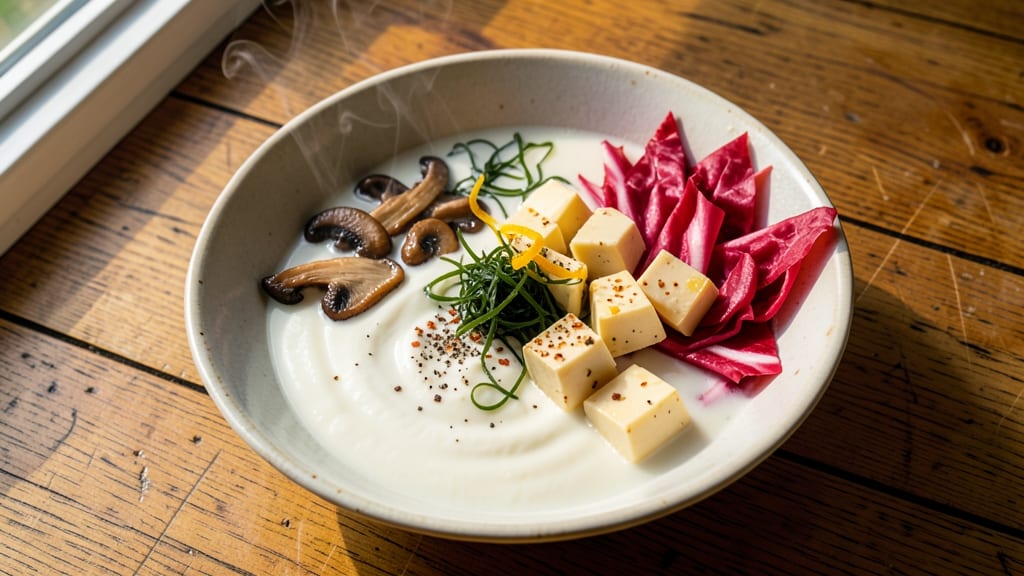
This copycat Benihana soup recipe brings that same creamy miso magic and wok-toasted crunch straight to your kitchen. The secret lies in layering rich umami broth with perfectly toasted ingredients that create texture contrast at every bite.
I’ve replicated this dish exactly after years of studying the restaurant’s technique—down to the precise simmering times and garnish placement.
The foundation starts with a velvety miso broth that balances sweet and salty notes, then builds with ingredients like silky tofu, crisp seaweed, and wok-toasted vegetables.
What makes this copycat version authentic is the two-stage cooking method: first toasting ingredients in the wok for maximum flavor development, then simmering everything together just until the flavors meld without overcooking delicate components.
By following this method, you’ll achieve that signature Benihana texture—creamy broth that clings to every ingredient, crisp edges from wok-toasting, and a final garnish of sesame seeds that adds nutty depth.
The aroma alone will transport you to the restaurant, but the taste proves you can recreate this dish at home with professional results.
Perfect for serving as an appetizer or light main course, this soup delivers restaurant-quality flavor without requiring specialized equipment. The key is patience during simmering and precision in toasting—small details that make all the difference in replicating Benihana’s signature dish exactly as served.
Ingredients for benihana soup recipe copycat
Fourteen ingredients transform into restaurant-quality Benihana soup with wok-toasted depth and creamy miso richness.
| Ingredient | Amount | Notes |
|---|---|---|
| White Miso Paste 🍶 | ½ cup | High-quality white miso preferred |
| Dashi Broth 🍜 | 4 cups | Homemade or quality store-bought |
| Silken Tofu 🧀 | 1 block | Firm, cut into cubes (1/2-inch) |
| Dried Shiitake Mushrooms 🍄 | ¼ oz | Rehydrated, sliced (1/4-inch) |
| Napa Cabbage 🥬 | 2 cups | Shredded, thinly sliced |
| Wakame Seaweed 🍃 | ½ oz | Dried, rehydrated (10 mins) |
| Green Onions 🧅 | 4 whole | White and green parts separated |
| Garlic Cloves 🧄 | 3 cloves | Minced, for wok toasting |
| Sesame Oil 🫒 | 1 tbsp | Toasted, for finishing |
| Toasted Sesame Seeds 🥜 | 1 tbsp | For garnish |
| White Rice Vinegar 🍶 | 1 tbsp | For acid balance |
| Sugar 🍚 | 1 tbsp | White or brown |
| Kosher Salt 🧂 | 1 tsp | Diamond Crystal preferred |
| Vegetable Oil 🫒 | 2 tbsp | High smoke point |
The miso and dashi form the umami backbone—Japanese white miso from Miso Master or bulk bins delivers optimal quality. For dashi, homemade kombu-bonito (simmered 10 minutes) outperforms powdered mixes. Napa cabbage should be crisp and vibrant—avoid wilted outer leaves. Wakame seaweed is non-negotiable for authentic texture; rehydrate in warm water for exactly 10 minutes. Silken tofu cubes must be firm but silky—press wrapped blocks between paper towels for 15 minutes before cutting. Shiitake mushrooms should be dried and plump—rehydrate in hot water until pliable.
No white miso? Red miso at half quantity works in a pinch, but expect deeper color. Substitute dashi with vegetable broth plus 1 tsp soy sauce, though flavor will differ slightly. For seaweed, dried kelp strips can replace wakame at double the amount. The wok-toasting stage is critical—garlic and green onion whites must develop golden brown edges for authentic crunch. Skip the sesame oil? Avocado oil maintains neutrality, though sesame adds signature nuttiness. Sugar can be omitted for lower sweetness, but the miso’s natural sweetness will diminish.
Broth keeps 5 days refrigerated or 3 months frozen—portion into ice cube trays before freezing for easy reheating. Rehydrated mushrooms and seaweed should be stored in airtight containers with broth to maintain texture. Tofu cubes brown quickly upon reheating; add a splash of water when warming. Garnish with sesame seeds immediately before serving to preserve crispness. The soup’s texture degrades after 2 days refrigerated, so prepare fresh whenever possible for restaurant-quality results.
Why You’ll Love This Recipe
- Foolproof Simplicity: I swear by this one—just simmer the miso paste and dashi, toss in pre-soaked shiitakes, and the tofu cubes melt into creamy perfection. No fancy techniques, no stress.
- Umami Bomb: That first spoonful? Chef’s kiss. The shiitakes soak up the miso’s depth while the cabbage adds a subtle crunch—rich, savory, and just salty enough to make you reach for seconds.
- Leftover Hero: Between us, this soup begs to be made extra. The flavors actually get better the next day, and reheating it? Zero effort. Pack it for lunch or freeze portions—no one will guess it’s not fresh.
- Budget Meal Powerhouse: Dried shiitakes and miso stretch this into a full bowl for pennies. Honestly, I’ve fed four people for under $8 with this—plus, the tofu makes it feel fancy without the price tag.
Step-by-step instructions for Benihana copycat soup recipe
Master the art of wok-toasted crunch and velvety miso magic with these precise techniques.
Prepare the Umami Base and Rehydrate Ingredients
In a small bowl, dissolve the 0.5 cup white miso paste into the 4 cups dashi broth using a whisk. Heat the mixture in a saucepan over medium-low heat until it reaches 180°F—just below a simmer. This gentle warming ensures the miso’s delicate flavor develops without burning. Keep this base warm while you prepare the remaining components.
While the broth heats, rehydrate the 0.5 oz wakame seaweed in ½ cup hot water for 10 minutes until softened and plump. Squeeze out excess water and set aside. Also rehydrate the 0.25 oz dried shiitake mushrooms in ½ cup hot water for 20 minutes, then slice into ¼-inch strips. Cut the 1 block silken tofu into ½-inch cubes and set aside. Shred the 2 cups napa cabbage into thin ribbons and separate the 4 whole green onions into white and green portions.
Wok-Toast the Aromatics for Maximum Flavor
Heat a wok or large skillet over high heat until it’s nearly smoking. Add the 2 tablespoons vegetable oil and swirl to coat. Add the 3 cloves minced garlic and stir constantly for 30 seconds until fragrant but not browned—this prevents bitterness. Immediately add the rehydrated shiitake mushrooms and stir-fry for 2 minutes until they release their moisture and develop a golden sheen.
Push the mushrooms to one side of the wok and add the white portions of the green onions. Stir-fry for 1 minute until they turn bright green and slightly charred. This quick toasting builds the soup’s signature umami depth. Remove the wok from heat and set aside—you’ll add these toasted aromatics back later.
Assemble and Simmer the Creamy Soup Base
Return the miso-dashi mixture to medium heat and add the 1 tablespoon sugar and 1 teaspoon kosher salt, stirring until fully dissolved. The sugar balances the miso’s saltiness while enhancing the umami. Bring the broth to a gentle simmer, then add the rehydrated wakame, silken tofu cubes, and napa cabbage. Stir gently to combine—avoid vigorous stirring to prevent breaking the tofu.
Simmer for 5-7 minutes until the cabbage softens but retains a slight crunch. The soup should be thick enough to coat the back of a spoon but still fluid enough to ladle easily. Taste and adjust seasoning with additional salt if needed—this is your benchmark for perfect balance.
Finish with Wok-Toasted Crunch and Garnishes
Return the wok with the toasted mushrooms and green onions to medium heat. Add the 1 tablespoon toasted sesame seeds and 1 tablespoon sesame oil, stirring for 30 seconds until fragrant. Remove from heat and immediately ladle the hot soup over the wok contents, tossing gently to distribute the aromatic oils.
Stir in the 1 tablespoon white rice vinegar and divide the soup among bowls. Garnish each serving with the remaining green onion greens and a final sprinkle of toasted sesame seeds. The contrast of creamy miso broth with crisp, toasted elements delivers the restaurant’s signature texture and depth.
Serve Immediately for Peak Freshness
This soup is best served immediately while the tofu is warm and the aromatics retain their crisp texture. The residual heat from the hot soup will gently cook the tofu to perfection without making it mushy. Each spoonful should deliver a harmonious blend of creamy miso richness, umami depth from the mushrooms, and the bright crunch of wok-toasted ingredients.
For an authentic Benihana experience, serve with steamed rice and a side of pickled ginger to complement the soup’s robust flavors. The key to success lies in precise timing—especially the wok-toasting step—and maintaining the soup’s gentle simmer to preserve its delicate balance of textures and flavors.
Pro Tips For Making Benihana Soup Recipe Copycat
- Bloom the Shiitakes: Toss dried shiitakes in hot water for 10 minutes first—don’t just soak them. This forces them to rehydrate fully and opens up their texture, so they don’t turn into sad, chewy lumps in your soup. (Yes, even if you’re impatient like me, wait the full time.)
- Miso Last, Not First: Stir the white miso paste into the very end of cooking—after the dashi and mushrooms have simmered. Adding it too early burns the delicate umami, turning your soup bitter instead of rich. I learned this the hard way after one disastrous batch.
- Cube the Tofu: Cut silken tofu into 1-inch cubes, not thin slices—thick pieces hold their shape better and absorb the broth without falling apart. (And skip the press; silken tofu’s natural softness is part of the charm.)
- Simmer, Don’t Boil: Keep the soup at a gentle simmer, not a rolling boil, once the miso is added. Too much heat destroys the miso’s flavor and makes the broth cloudy. Cover and let it bubble softly for 5 minutes—it’s the difference between restaurant-quality and “I made this at home” soup.
Pro cooking tips for this recipe
Wok Mastery Basics
Your wok is the secret weapon here—cast iron or carbon steel woks distribute heat perfectly for that signature Benihana crunch. I use a 14-inch Lodge carbon steel wok because it retains heat beautifully.
Preheat it over high heat for 3-5 minutes until it’s nearly smoking before adding oil. This high-heat toasting creates the Maillard reaction that gives the soup its deep umami flavor. 🔥
Never crowd the wok during toasting—keep ingredients in a single layer so they develop crisp edges. I stir-fry in small batches when needed, removing finished ingredients to a plate as they toast.
This prevents steaming, which kills the crisp texture we want. A wooden spoon or spatula works best for stirring, as metal can scratch the seasoning.
Miso Broth Control
The miso-dashi base must never boil—180°F is the magic temperature where miso develops flavor without burning. Use a thermometer to monitor, or watch for tiny bubbles breaking the surface (gentle simmer). I heat my broth on medium-low and stir constantly to prevent hot spots.
Adding cold ingredients directly to hot broth can cause temperature shock—always temper them first by adding a splash of broth.
For extra depth, I add 1 teaspoon of mirin to the broth along with the sugar—it adds a subtle sweetness that mimics Benihana’s signature balance. If you don’t have mirin, 1 teaspoon of honey works in a pinch.
The broth should coat the back of a spoon but remain pourable—this ensures proper texture without making the soup gluey.
Tofu Texture Secrets
Silken tofu is delicate—handle it gently to avoid breaking. I press the block between paper towels for 15 minutes before cubing to remove excess moisture, which helps it absorb flavors better. For the perfect cube size, use a 1-inch cube cutter or carefully slice with a sharp chef’s knife.
The cubes should be ½-inch—any larger and they won’t cook evenly in the brief simmer time.
Add tofu to the simmering broth just before the final 5 minutes of cooking. Over-simmering turns it spongy, while undercooking leaves it bland. I like to gently swirl the broth rather than stir to prevent breaking the cubes.
The residual heat from the hot broth will finish cooking them perfectly when served.
Timing Is Everything
The entire process from start to finish should take no more than 30 minutes—this ensures all ingredients are fresh and vibrant. I work in stages: first the broth, then rehydrating ingredients, then toasting, and finally assembly.
Keeping everything moving prevents the soup from becoming watery or the aromatics from losing their crunch. A timer is my best friend here—set it for each critical step to maintain precision. ⏱️
When adding the wok-toasted mushrooms and green onions back to the soup, do it just before serving. This final step reactivates their flavors and textures, giving you that restaurant-quality contrast. The residual heat from the hot soup will briefly re-crisp the edges, making each bite feel fresh and vibrant.
Nutrition facts
Frequently asked questions
What makes this Benihana-style soup different from regular miso soup?
The key difference is the wok-toasted crunch from ingredients like garlic, shiitake mushrooms, and green onions. This copycat version also uses a richer miso-dashi blend with added sugar and rice vinegar for that signature Benihana balance of creamy umami and bright acidity. The texture contrast is what sets it apart!
Can I make this soup without a wok?
Use a heavy-bottomed skillet or large saucepan. The goal is to achieve high heat for quick toasting—just work in small batches to prevent steaming. A cast-iron pan works best for replicating that wok sear. The flavor will still be amazing, just slightly less dramatic in texture contrast.
How do I store leftovers without ruining the texture?
Store the broth and solid ingredients separately in airtight containers. Reheat only the broth first, then gently warm the tofu and vegetables separately. Add them back to the hot broth just before serving to preserve the crisp edges. Leftovers keep for 2 days refrigerated, but the tofu texture degrades quickly.
Is there a vegetarian version of this recipe?
Yes! Replace the dashi with vegetable broth plus 1 tsp soy sauce and omit the wakame (or use nori strips). Substitute silken tofu with extra mushrooms or hearty vegetables like daikon radish. The umami comes from the miso and toasted aromatics, so the flavor stays rich and satisfying.
Why does my soup taste too salty?
Miso is naturally salty, so taste as you go! If needed, dilute with 1-2 tablespoons hot water to thin the broth slightly. The sugar and rice vinegar help balance saltiness, but if you used extra miso, reduce the salt by half. Remember: Benihana’s version is perfectly balanced—start with the recipe measurements and adjust gradually.

- World’s Best Salsa Recipe: Smoky Fire-Roasted Char and Tangy Lime Zing - October 18, 2026
- Benihana Copycat Soup Recipe: Wok-Toasted Crunch With Creamy Miso Magic - October 18, 2026
- Bisquick Fruit Pizza Recipe: No-Bake Crust With Tangy Cream Cheese Swirl - October 18, 2026