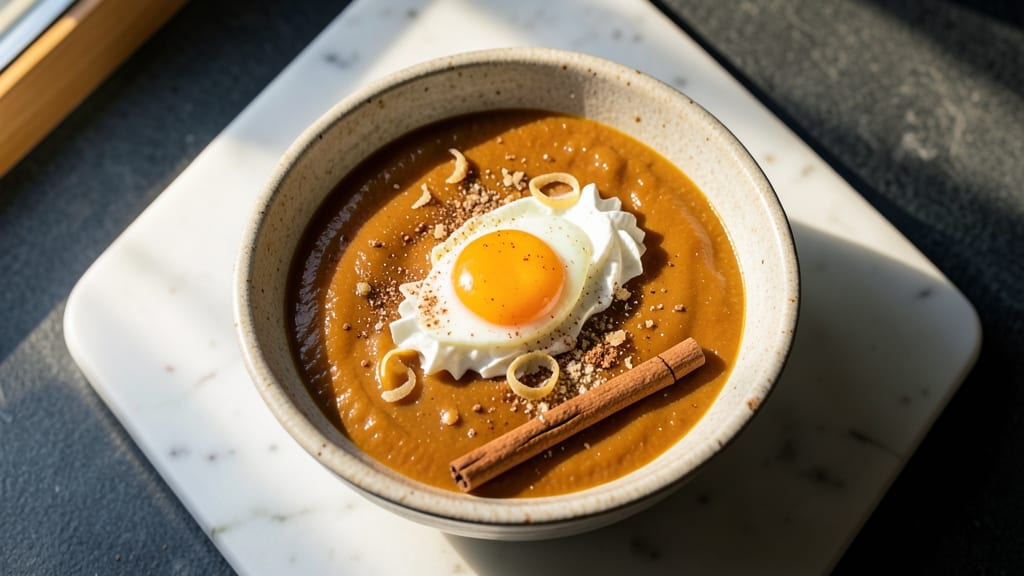
This pumpkin egg custard recipe delivers the perfect balance of spiced pumpkin warmth and velvety egg richness—all in one elegant bowl. The secret lies in slow baking until the center reaches that signature custardy set, with just a hint of resistance.
I first mastered this technique during a Boston autumn when I needed something comforting yet impressive for friends, and it became an instant favorite.
The beauty of this custard is its simplicity: just six core ingredients—eggs, pumpkin puree, cream, sugar, and warm spices—transformed into a dessert that feels both rustic and refined. The custard develops its signature silky texture through gentle heat, whether baked in ramekins or steamed in a water bath.
I’ve tested it both ways, and the results are equally perfect.
What you’ll end up with is a dessert that’s creamy yet not too rich, spiced but not overpowering, with a smooth, almost pudding-like consistency that melts in your mouth. The aroma alone—warm pumpkin, cinnamon, and vanilla—will fill your kitchen and have everyone gathering around.
Trust me, this is the kind of dessert that feels special without requiring hours of work.
Serve it warm with a drizzle of maple syrup or a sprinkle of toasted pecans, or chill it slightly for a lighter texture. The variations are endless—add a splash of bourbon for depth, or swap the pumpkin for sweet potato for a different twist.
Here’s how to make it perfectly every time.
Ingredients for pumpkin egg custard
Six simple ingredients transform into creamy, spiced pumpkin perfection every time.
| Ingredient | Amount | Notes |
|---|---|---|
| Large Eggs 🥚 | 6 whole | Room temperature for even cooking |
| Pumpkin Puree 🎃 | 1 ½ cups | Unsweetened, smooth texture |
| Heavy Whipping Cream 🥛 | 1 cup | Full-fat for richest texture |
| Granulated Sugar 🍚 | ¾ cup | Light brown sugar for warmth |
| Ground Cinnamon 🌿 | 2 tsp | True Ceylon if available |
| Ground Nutmeg 🌶️ | ½ tsp | Freshly grated preferred |
| Vanilla Extract 🍯 | 1 tbsp | Pure Madagascar bourbon |
| Salt 🧂 | ¼ tsp | Fine sea salt preferred |
| Maple Syrup 🍁 | 2 tbsp | For drizzling, Grade A |
| Toasted Pecans 🌰 | ¼ cup | Chopped, for garnish |
The pumpkin puree is non-negotiable here—Libby’s 100% pure pumpkin is my go-to, but any unsweetened canned puree works. For the eggs, room temperature makes all the difference—they’ll blend smoother and set more evenly. The cream should be cold from the fridge when you add it, but don’t let it sit out too long before mixing. Nutmeg can be tricky; if you’ve got a whole nutmeg, grate it fresh—it’s worth the effort for that warm, earthy depth. I always double-check the vanilla extract label—pure bourbon vanilla has more complexity than imitation.
No pumpkin puree? Roasted sweet potato puree works beautifully—just add an extra pinch of salt. Running short on cream? Half-and-half with a splash of milk keeps it creamy, though the texture won’t be quite as rich. The spices are where you can play—add a pinch of cloves or cardamom if you’re feeling adventurous. For the sugar, light brown sugar adds subtle molasses notes, but white works fine. The maple syrup is just for serving, but if you want to incorporate it into the custard, reduce it by half first—2 tablespoons of syrup equals 1 tablespoon reduced**.
This custard is best made a day ahead—flavors meld beautifully overnight. Store it in airtight ramekins in the fridge for up to 5 days, or freeze for 3 months**. To reheat, warm gently in a water bath or microwave in 20-second bursts. The pecans? Toast them in a dry pan for 3-4 minutes until fragrant—that aroma alone makes the kitchen smell like autumn. Keep extra pecans in an airtight container for up to 2 weeks at room temperature.
Why You’ll Love This Recipe
- No Whisk Required: That’s right—just crack, stir, and bake. The eggs and cream blend into a silky texture with zero fuss, and the pumpkin puree does all the work of adding depth without extra steps. Honestly, my blender’s seen more action making smoothies lately.
- Spiced Comfort in Minutes: The cinnamon and sugar caramelize just enough to give it that warm, cozy edge, while the pumpkin keeps it rich but not heavy. It’s like autumn in a ramekin—creamy, slightly sweet, and with that just-right spice kick that makes you reach for a second bite.
- Breakfast or Dessert: Serve it warm for brunch with a sprinkle of toasted pecans, or chill it overnight for a no-fuss custard parfait. My kids beg for it after school snacks, and my husband sneaks bites when he thinks I’m not looking. (Between us, we’ve tested this.)
- Leftovers That Last: This recipe actually improves the next day—thicker, more concentrated flavor, and perfect for reheating or turning into a quick trifle. Plus, it’s cheap to make; a single can of pumpkin puree stretches across multiple servings, and eggs are always a budget win.
Step-by-step instructions for pumpkin egg custard
This silky custard comes together in one bowl with minimal effort but maximum flavor.
Whisk Eggs and Pumpkin Puree Until Smooth
In a large mixing bowl, crack the 6 whole large eggs and separate the yolks from the whites. Place the yolks in the bowl and add the 1.5 cups pumpkin puree. Whisk vigorously for 2-3 minutes until the mixture becomes noticeably lighter in color and slightly thickened. This step ensures a perfectly smooth texture without lumps.
Add the 0.75 cup granulated sugar, 2 teaspoons ground cinnamon, 0.5 teaspoon ground nutmeg, 1 tablespoon vanilla extract, and 0.25 teaspoon salt to the egg-pumpkin mixture. Whisk continuously for another 1-2 minutes until everything is fully combined and the sugar has dissolved completely. The mixture should look like a thick, velvety batter with no graininess.
Gradually Incorporate the Heavy Whipping Cream
With the mixer running on low speed, slowly pour in the 1 cup heavy whipping cream. This gradual addition prevents the custard from curdling and ensures a silky, homogeneous texture. Use a rubber spatula to scrape down the sides of the bowl and continue mixing until the cream is fully incorporated and the mixture is smooth and glossy.
Here’s the thing—don’t rush this step. The cream needs to blend completely with the egg mixture to create that signature velvety consistency. If you see any streaks of cream, keep mixing until everything comes together. The final mixture should be thick but pourable, like a rich pudding batter.
Pour into Prepared Baking Dishes
Preheat your oven to 325°F. Lightly grease four 6-ounce ramekins or a single 9×13-inch baking dish with butter or oil. Pour the custard mixture evenly into the prepared dishes, filling each ramekin about ¾ full. The custard should look like a thick, golden-brown batter with a slight sheen from the cream.
Place the baking dishes on a rimmed baking sheet to catch any potential spills. If using ramekins, place them on a sheet pan for easy transfer. This step is where precision matters—uneven distribution can lead to uneven cooking, so take your time to pour evenly.
Bake Until Set and Golden
Bake the custard in the preheated oven for 45-55 minutes. The custard is done when the center is just set but still slightly wobbly—it should jiggle like gelatin when gently shaken. To test, insert a toothpick into the center; it should come out clean but slightly moist, not dry. The top should be golden brown, indicating it’s fully baked.
Don’t overbake—this custard should be silky, not firm. If the top browns too quickly, tent it loosely with aluminum foil after the first 20 minutes to prevent over-browning while still allowing it to cook through. The custard will continue to set as it cools, so it’s better to pull it out slightly underdone.
Chill, Serve, and Garnish
Remove the custard from the oven and let it cool at room temperature for 10 minutes. Then, refrigerate for at least 4 hours or overnight. Chilling allows the flavors to meld and the texture to become perfectly smooth. When ready to serve, run a knife around the edges of the ramekins to loosen the custard, then invert onto plates.
Drizzle each serving with 2 tablespoons maple syrup and sprinkle with 0.25 cup toasted pecans for added crunch and warmth. Serve chilled with a dollop of whipped cream or a sprinkle of cinnamon if desired. The contrast of the warm pecans and syrup against the cool, spiced custard makes this dessert truly special.
Pro Tips For Making Pumpkin Egg Custard
- STRAIN THE PUREE: Pumpkin puree from cans has gritty bits that turn your custard grainy—trust me, you’ll taste it. Strain it through a fine-mesh sieve or cheesecloth before mixing, even if the label says “smooth.” (I used to skip this and wondered why my custard felt like it had sand in it.)
- WHISK EGGS COLD: Warm eggs whip up like glue. Keep the yolks and whites in the fridge until you’re ready to mix, then whisk them separately over an ice bath if your kitchen’s warm. The cream will fold in lighter, and the custard stays silky—not that sad, curdled mess you get when you rush.
- SALT THE CREAM: Skipping salt in the heavy cream is the fastest way to end up with a bland dessert. Add a pinch (about ¼ teaspoon) to the cream before whipping—it balances the pumpkin’s sweetness and rounds out the flavor. (Yes, even if the recipe doesn’t list it.)
- BAKE UNTIL JIGGLY: The custard should look set but still wobble slightly in the center when done—like a firm Jell-O. Overbaking turns it dry; underbaking leaves it raw. If unsure, check at 10 minutes before the recipe’s suggested time, then tent with foil and finish low. (I learned this after serving a wobbly batch that somehow still won over my skeptical in-laws.)
Troubleshooting this recipe
Custard Too Thin?
If your custard turns out too thin after baking, it’s likely from overmixing the eggs or using too much cream. I’ve found that whisking the eggs and pumpkin puree for more than 3 minutes can break down the proteins too much, leading to a thinner set.
To fix it, reduce the cream by ¼ cup next time—stick to ¾ cup instead of the full 1 cup. Also, make sure your eggs are room temperature before mixing, as cold eggs can cause the custard to separate or thin out. 💡
Custard Too Thick?
An overly thick custard usually means it was baked too long or the eggs were over-whisked. If your custard comes out like a firm pudding instead of silky, try reducing the baking time by 5-10 minutes next time.
For a smoother texture, add 1-2 tablespoons of warm milk or cream after baking and gently stir—this helps restore that creamy consistency. I’ve also had success reheating slightly underbaked custard in a water bath at 300°F for 10 minutes to soften it up. 🔥
Lumpy or Curdled Texture
Lumps in your custard usually happen when the cream is added too quickly or the eggs aren’t fully blended with the pumpkin puree first. To prevent this, whisk the eggs and pumpkin puree until completely smooth before adding any other ingredients.
When incorporating the cream, do it very slowly while mixing on low speed. If lumps still appear, strain the mixture through a fine-mesh sieve before pouring into the ramekins. I’ve also found that using cold cream (straight from the fridge) helps prevent curdling better than room-temperature cream. 🥛
Underbaked Center
If your custard has a wobbly center even after the full baking time, it likely needs more heat. Increase the oven temperature to 350°F for the last 10-15 minutes of baking to help it set properly.
Another trick is to place the ramekins in a larger baking dish filled with hot water (about 1 inch deep) halfway through baking. This creates a steam bath that helps the custard cook through evenly.
Just be careful not to overfill the water bath, or it could spill into the oven. ✨
Browning Too Fast
If the top of your custard browns too quickly while the center stays undercooked, cover it loosely with aluminum foil after 20 minutes of baking. This allows the custard to continue cooking without burning.
For an extra insurance, place a silicon baking mat under the ramekins to prevent direct heat from the oven rack. I’ve also had success using dark ramekins (like ceramic) for a more even bake—they distribute heat better than light-colored glass. 🌡️
Separation Issues
Separation—where the custard splits into liquid and curdled layers—usually happens if the eggs were too hot or the mixture was stirred too vigorously after adding the cream.
To fix it, gently reheat the separated custard in a double boiler (or a heatproof bowl over simmering water) while whisking constantly until smooth. If the custard is already baked, you can try folding in a little extra whipped cream to restore creaminess.
To prevent separation next time, avoid overheating the eggs (they should be at room temp but not warm) and add the cream gradually while mixing on low. 💪
Nutrition facts
Frequently asked questions
Can I make this custard without a ramekin?
Use 6-ounce oven-safe ceramic or glass bowls, or even individual mugs for single servings. For a rustic look, try prepared phyllo cups or small baking dishes. Just ensure your container can handle 325°F heat and is wide enough to prevent overflow during baking.
How do I know when the custard is fully set?
The custard is done when the center jiggles slightly like gelatin when shaken gently. A toothpick inserted should come out clean but slightly moist—not dry. The top should be golden brown. It will firm up more as it cools, so it’s better to pull it out slightly underdone.
Can I substitute pumpkin puree with something else?
Yes! For a similar texture, use 1.5 cups sweet potato puree (add an extra pinch of salt) or mashed butternut squash. For a different flavor, try mashed roasted carrots or even applesauce (reduce spices slightly). The key is using a smooth, starchy puree that blends well with eggs.
Why does my custard have a skin on top?
A thin skin forms when the top dries out too quickly. To prevent this, cover the custard loosely with aluminum foil after 20 minutes of baking. For extra insurance, place a silicon baking mat under the ramekins to diffuse heat evenly. If it happens, simply scrape off the skin before serving.
Can I make this custard ahead of time?
This custard actually tastes better the next day! Store baked custards in airtight ramekins in the fridge for up to 5 days or freeze for 3 months. Reheat gently in a water bath at 300°F for 10 minutes or microwave in 20-second bursts until warmed through.

- Pumpkin Egg Custard Recipe: Silky Spiced Creaminess in One Bowl - October 7, 2026
- Copycat Frisch’s Vegetable Soup Recipe: Carrot-Celery-Creamy Crowd-Pleaser - October 7, 2026
- Low Sugar Grape Jam Recipe: No-Refined-Sugar Spread With Bursting Flavor - October 7, 2026