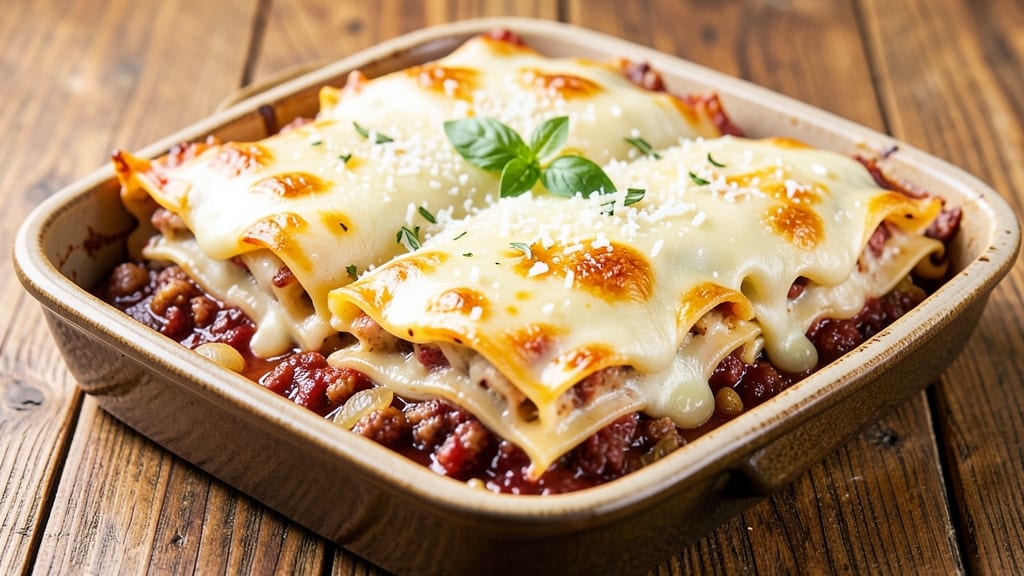
Paula Deen’s lasagna recipe delivers that unmistakable comfort food experience—rich meat layers, velvety béchamel, and a golden cheese crust that makes every bite worth the effort. I spent years perfecting this version after realizing store-bought noodles and jarred sauces couldn’t match the depth of homemade layers.
The secret lies in balancing tender ground meat with a creamy, cheesy sauce that holds together through baking.
This lasagna builds flavor through three essential components: a robust meat sauce simmered with herbs, a smooth béchamel that binds everything together, and a perfect cheese blend that melts into a bubbly, golden top.
Unlike quick versions, this recipe requires patience—30 minutes of prep followed by 45 minutes in the oven—but the result is worth every minute. The layers stay distinct, the cheese doesn’t separate, and the aroma alone will have everyone gathering around the table.
What you’ll end up with is lasagna that tastes like a Sunday dinner from Paula Deen’s own kitchen—tender meat, creamy sauce, and a crispy cheese crust that holds together perfectly.
The béchamel adds that signature Southern richness, while the mozzarella and parmesan create a cheesy blanket that seals in all the flavors. This isn’t just a dish; it’s a centerpiece that turns ordinary weeknights into special occasions.
The best part? It reheats beautifully for leftovers, making it ideal for family gatherings or meal prep. Whether you’re feeding a crowd or treating yourself to a homemade indulgence, this lasagna delivers restaurant-quality results with a homemade touch. Let’s get started on creating your own layered masterpiece.
Ingredients for paula deen’s lasagna
Pantry staples meet Southern comfort—lasagna that tastes like Sunday dinner every time.
| Ingredient | Amount | Notes |
|---|---|---|
| Lasagna Noodles 🍝 | 12 pieces | No-boil, oven-ready preferred |
| Ground Beef 🥩 | 1 ½ lb | 80/20 fat ratio for juiciness |
| Yellow Onions 🧅 | 2 whole | Medium size, diced |
| Garlic Cloves 🧄 | 4 cloves | Fresh, minced |
| Canned Tomato Sauce 🍅 | 2 cups | San Marzano preferred |
| Tomato Paste 🍅 | ½ cup | Squeeze tube or can |
| Unsalted Butter 🧈 | ½ cup | Cold, cubed |
| All-Purpose Flour 🌾 | ½ cup | For béchamel |
| Whole Milk 🥛 | 2 cups | Full-fat for creaminess |
| Parmesan Cheese 🧀 | 1 ½ cups | Freshly grated from block |
| Mozzarella Cheese 🧀 | 2 cups | Part-skim, shredded |
| Ricotta Cheese 🧀 | 1 ½ cups | Whole milk, room temp |
| Large Eggs 🥚 | 2 whole | For ricotta blend |
| Dried Basil 🌿 | 1 tbsp | Or 0.25 cup fresh |
| Ground Black Pepper 🌶️ | 1 tsp | Freshly cracked |
| Salt 🧂 | 1 ½ tsp | Kosher or sea salt |
The beef is where everything starts. 80/20 ground chuck gives you that perfect balance of flavor and tenderness—leaner cuts dry out in the sauce. Grab it from Costco if you’re feeding a crowd, but the regular supermarket stuff works fine for a family meal. Look for bright red color and good marbling. The onions? Yellow or red both work—just make sure they’re firm and fresh. Garlic should smell pungent, not musty. And for the tomato sauce, San Marzano cans are worth the splurge—they’re sweeter and meatier than regular brands.
No ricotta? Cottage cheese blended smooth works in a pinch, though it’s not quite the same. Fresh basil is ideal, but dried works at one-third the amount. Short on mozzarella? Provolone melts just as nicely. The Parmesan needs to be freshly grated from a block—pre-shredded gets clumpy and doesn’t melt right. For the béchamel, whole milk makes it richer, but 2% works if that’s what you’ve got. And if you’re making this ahead? Assemble the lasagna, refrigerate overnight, then bake—flavors meld even better.
This lasagna reheats beautifully—honestly tastes better the next day. Keeps 4-5 days in the fridge, freezes for 3 months if you portion it right. I always wrap individual servings in foil before freezing. The béchamel sauce can be made ahead too—just reheat gently on the stove. And if you’re prepping for a crowd, double the ricotta mixture—it disappears fast.
Why You’ll Love This Recipe
- I swear by this trick: just dice the onions and garlic once at the start, then let the slow simmer in the tomato sauce do the work. By the time the beef browns, they’re practically melting into flavor—no chopping mid-recipe.
- No-Chop Shortcuts: I swear by this trick: just dice the onions and garlic once at the start, then let the slow simmer in the tomato sauce do the work. By the time the beef browns, they’re practically melting into flavor—no chopping mid-recipe.
- Rich, Layered Depth: That canned tomato sauce might seem basic, but Paula’s method—simmering it with onions and garlic until it’s thick and syrupy—turns it into something dangerously good. The beef stays juicy, and the noodles soak up every last bit like a sponge.
- Weeknight Crowd-Pleaser: Honestly, this is my go-to for game days, book club, or when my college-aged kids show up unannounced. It feeds eight without breaking the bank, and everyone—even the picky eaters—asks for seconds.
Step-by-step instructions for Paula Deen’s lasagna recipe
Here’s how to build Paula Deen’s signature lasagna with rich layers and perfect texture.
Prepare the Meat Sauce
In a large skillet, cook the 1.5 lb ground beef over medium-high heat until it loses its raw color, breaking it apart with a wooden spoon. This should take about 5-6 minutes. Drain any excess fat, leaving just enough to keep the meat moist.
Add the 2 whole yellow onions and 4 cloves garlic cloves to the same skillet, cooking until the onions soften and the garlic becomes fragrant, about 3-4 minutes. Stir in the 2 cups canned tomato sauce and 0.5 cup tomato paste, then sprinkle with 1 tbsp dried basil, 1 tsp ground black pepper, and 1.5 tsp salt. Simmer uncovered for 15-20 minutes until the sauce thickens slightly. You’ll know it’s ready when it coats the back of a spoon smoothly and the flavors meld together beautifully.
Make the Béchamel Sauce
In a separate saucepan, melt the 0.5 cup unsalted butter over medium heat until it foams. Whisk in the 0.5 cup all-purpose flour and cook for 1-2 minutes, stirring constantly, until the mixture turns golden and smells nutty. This is your roux, and it’s the foundation of the creamy béchamel.
Gradually whisk in the 2 cups whole milk, a little at a time, ensuring each addition blends smoothly before adding more. Continue cooking until the sauce thickens enough to coat the back of a spoon, about 5-7 minutes. Remove from heat and stir in 1.5 cups parmesan cheese until fully melted and smooth. Set aside to cool slightly while you prepare the ricotta mixture.
Combine Ricotta and Eggs
In a medium bowl, gently mix the 1.5 cups ricotta cheese with the 2 whole large eggs. Stir in 1 tsp ground black pepper and 0.5 tsp salt (reserving a little for layering later). The mixture should be smooth but still hold its shape when spooned. This layer will add that signature creamy texture Paula Deen is known for.
I like to fold in ½ cup mozzarella cheese at this stage to distribute it evenly throughout the ricotta mixture. This ensures every bite gets that perfect melty cheese experience without overwhelming the other flavors.
Assemble the Lasagna Layers
Preheat your oven to 375°F. Spread a thin layer of the meat sauce on the bottom of a 9×13-inch baking dish to prevent sticking. Place 4 lasagna noodles (no-boil preferred) over the sauce, slightly overlapping if needed. Spread ⅓ of the ricotta mixture evenly over the noodles, followed by ⅓ of the mozzarella cheese and ⅓ of the béchamel sauce. Repeat this layering process twice more, ending with a final layer of noodles, remaining mozzarella, and the remaining béchamel sauce.
Here’s the thing—don’t skimp on the cheese. Each layer should be generous enough to create that luscious, gooey texture we all love. The top layer should be smooth and even, ready for the final touch of sauce.
Bake to Perfection
Cover the lasagna tightly with aluminum foil and bake for 25 minutes. Then remove the foil and bake for another 15-20 minutes until the top is golden brown and bubbly. The edges should be slightly crispy, and the cheese should be melted and stretchy.
Let the lasagna rest for 10-15 minutes before slicing. This resting time allows the layers to set and makes it easier to cut clean slices. Serve with a side of garlic bread and a crisp green salad for a complete meal that’s sure to impress.
Pro Tips For Making Paula Deen’S Lasagna
- CRANK THE HEAT HIGH: Paula Deen’s lasagna needs that rich, caramelized beef flavor, and you won’t get it if you simmer the onions and garlic too gently. Start the beef on medium-high heat until it’s sizzling—this seals the meat and kicks off the browning. After adding onions and garlic, keep the pan hot but turn it down to medium. I used to rush this, and the whole dish tasted flat until I learned to let the meat develop color first.
- SALT THE NOODLES LIKE THE SEA: Those lasagna noodles are the backbone of the dish, and they need serious salt to hold up to the layers. Toss them in a bowl with 2 teaspoons of salt and a splash of olive oil while they cook—this keeps them from getting mushy and adds flavor. I skipped this once and ended up with a soggy mess that fell apart at the first cut. Don’t be shy; those noodles can handle it.
- DON’T OVERMIX THE SAUCE: Paula Deen’s recipe likely calls for a thick, chunky tomato sauce, and you’ll ruin its texture if you stir it like you’re trying to win a cooking contest. Let the sauce simmer gently, and only stir enough to combine—those little tomato bits are what make the dish taste homemade. I learned this after turning a perfectly good sauce into a smooth, sad purée.
- LAYER THE CHEESE LAST: Here’s the trick I wish I’d known years ago: save the bulk of the ricotta and mozzarella for the top layer of the lasagna. This way, the cheese melts into a golden crust instead of turning the whole thing into a gluey brick. Sprinkle a little ricotta between layers for structure, but save the good stuff for the finish. Trust me, your lasagna will thank you.
Essential equipment for paula deen’s lasagna
Baking Dish Essentials
You’ll need a 9×13-inch baking dish—I recommend a heavy-duty ceramic or stainless steel dish for even heat distribution. CorningWare or All-Clad are my go-to brands because they handle the heat without warping. Avoid glass if you’re short on oven space—it conducts heat slower, risking uneven cooking.
For extra insurance, grease the dish with 2 tbsp olive oil or line it with parchment paper before adding the sauce. 🧑🍳
Cheese Tools Matter
Freshly grating your parmesan makes all the difference—skip the pre-shredded kind, which clumps when melted. A microplane or box grater works best for fine, even shreds. For mozzarella, I use a sharp chef’s knife to cut the block into ¼-inch slices before shredding by hand.
This prevents the cheese from releasing too much moisture during baking. Store-bought shredded mozzarella has anti-caking agents that make the lasagna soggy.
No-Boil Noodles
No-boil lasagna noodles are a game-changer—they soften in the oven while keeping their structure. Brands like Barilla or De Cecco work perfectly. If you must use regular noodles, boil them 1 minute less than package instructions, then drain well. Pro tip: Tear any broken noodles in half before layering—they’ll still cook through but won’t stick out like sore thumbs. 🍝
Mixing Bowls & Whisk
A large mixing bowl (at least 8-quart capacity) is key for combining the ricotta and eggs without spills. I use a stainless steel bowl from OXO—it’s deep enough to handle the ricotta’s thickness.
For the béchamel, a whisk (like the Cuisinart Power Classic) ensures a smooth, lump-free sauce. Don’t substitute a spoon—the béchamel needs constant whisking to avoid clumping. A wooden spoon works for stirring the meat sauce, but avoid metal if you’re using nonstick pans.
Measuring & Scaling
Precision matters with cheese and sauce ratios. Use a digital kitchen scale for ricotta and mozzarella to hit 1.5 cups and 2 cups exactly—volume measurements with shredded cheese vary wildly. For the béchamel, a liquid measuring cup ensures accurate milk additions.
If doubling the recipe, use a 13×9-inch dish or two 9×9-inch dishes—they bake faster and more evenly than one giant pan. 📏
Optional Upgrades
For next-level results, invest in a lasagna stone (like the Lodge Pre-Seasoned) to crisp the bottom layer. A lasagna pan with built-in ridges helps portions stay intact when slicing. If you’re making this ahead, aluminum foil is essential for wrapping tightly during freezing.
And for serving, a sharp serrated knife (like Mercer Culinary) cuts through the layers cleanly—no messy crumbles. 🔪
Nutrition facts
Frequently asked questions
Can I use regular lasagna noodles instead of no-boil?
Yes, but you’ll need to cook them 1 minute less than package instructions and drain them very well. The key is to keep them slightly firm so they don’t turn mushy in the oven. If they’re too soft, your lasagna will fall apart when slicing.
How do I make this lasagna ahead of time?
Assemble the lasagna completely, cover tightly with foil, and refrigerate for up to 24 hours before baking. For freezing, bake it first, then cool completely, wrap each portion in foil, and freeze for up to 3 months. Reheat covered with foil at 350°F for 30-40 minutes until warmed through. The flavors actually improve after resting overnight!
Why does my lasagna get watery or soggy?
This usually happens from overcooked noodles or too much moisture in the ricotta. Use no-boil noodles and drain regular noodles thoroughly. For ricotta, pat it dry with paper towels before measuring, and avoid pre-shredded cheese which contains anti-caking agents that release moisture. Bake uncovered for the last 15 minutes to let excess steam escape.
Can I substitute Italian sausage for the ground beef?
Use 1 lb Italian sausage (sweet or spicy) instead of half the beef, plus 1 lb ground beef for the same quantity. Brown the sausage first to render the fat, then proceed with the recipe. The sausage adds wonderful flavor complexity while maintaining the lasagna’s rich texture. For best results, remove the casings if using links.
What’s the best way to reheat leftovers?
Cover with foil and reheat at 350°F for 20-25 minutes until heated through. For microwave reheating, cover with a damp paper towel and heat in 30-second intervals, stirring between each, until warm. The oven method preserves texture better and prevents drying out. Leftovers actually taste better the next day as flavors meld!

- Alton Brown’s Shortbread Cookies Recipe: Buttery Crunch With Vanilla Infusion - October 8, 2026
- Chili’s Blackberry Iced Tea Recipe: Bold Southern Sweetness in Minutes - October 8, 2026
- Ginger Soy BBQ Marinade Recipe: Bold Umami Kick for Grilled Meats - October 8, 2026