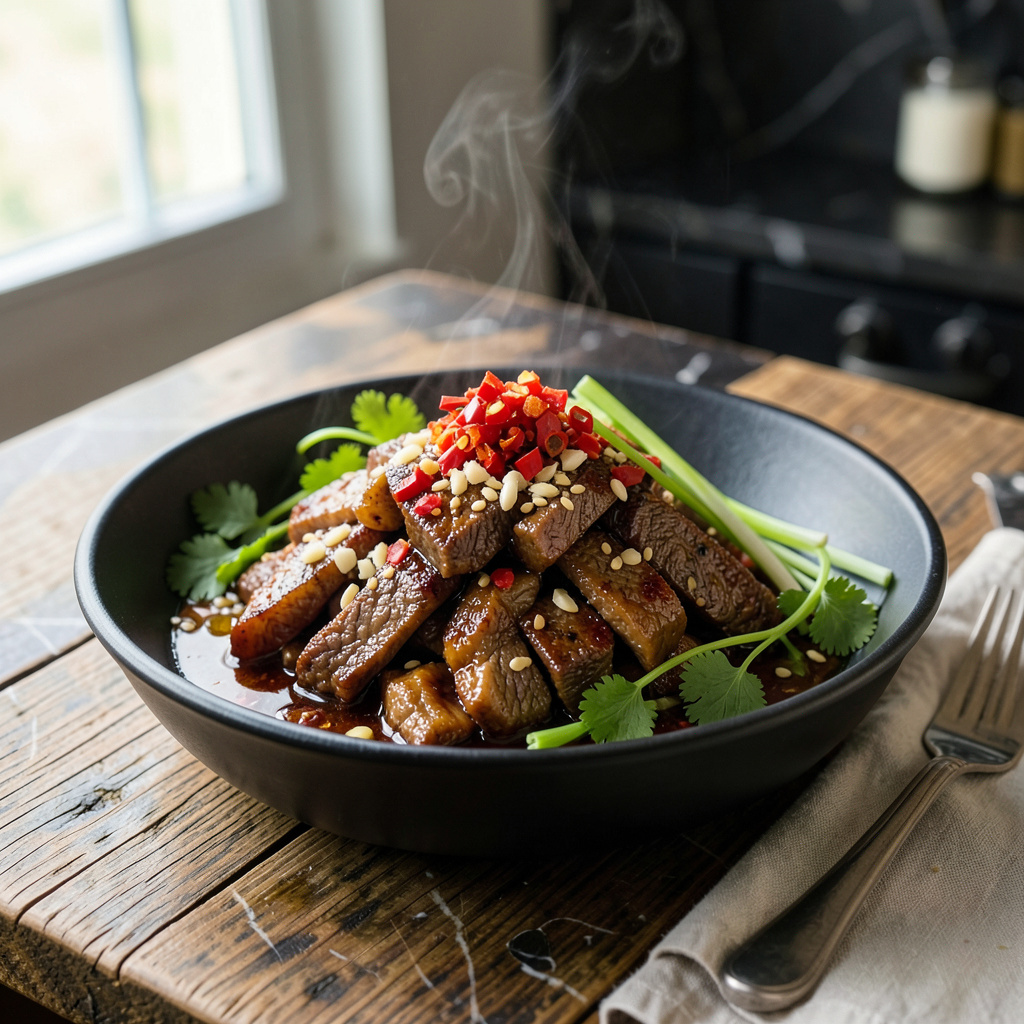
Five minutes, a skillet, and a daring flavor explosion. Honestly, I’ve burned this more times than I’d like to admit, but the chili paste and soy turn thin beef into restaurant-quality magic.
I tossed it together after that 2019 pot pie disaster, proving my cramped Boston kitchen can whip a foolproof sauce in 5 minutes.
Ingredients for Lao Gan Ma Beef
Quick skillet magic: these bold ingredients turn thin beef into restaurant‑quality sauce in minutes.
| Ingredient | Amount | Notes |
|---|---|---|
| Lao Gan Ma Classic Spicy Chili Crisp 🌶️ | 2 tbsp | Crunchy, smoky, oil‑rich |
| Low‑sodium soy sauce 🧂 | 2 tbsp | Salty umami base |
| Rice vinegar 🍋 | 1 tbsp | Bright acidity, unfiltered |
| Brown sugar 🍯 | 1 tsp | Adds subtle caramel |
| Garlic cloves 🧄 | 2 cloves | Minced, fragrant, fresh |
| Fresh ginger 🫚 | ½ tsp | Grated, peppery zing |
| Sesame oil 🌰 | 1 tsp | Nutty finish, toasted |
| Water 💧 | 2 tbsp | Thin sauce, adjust consistency |
The chili crisp is the heart of this sauce. Lao Gan Ma Classic Spicy Chili Crisp delivers that smoky, crunchy kick I love (the good stuff, not the cheap knock‑off). I usually snag a jar from the Asian aisle at Whole Foods or the local Asian market, where the packaging stays fresh and the beans stay crunchy. Look for a dark oil base and whole chili flakes.
If you can’t find the authentic crisp, a mix of crushed red pepper flakes and vegetable oil (about half the amount) works surprisingly well. Swap soy sauce for tamari when you need gluten‑free, and replace brown sugar with maple syrup for a subtle depth. A splash of rice vinegar balances the heat, and a pinch of sesame oil adds nutty richness.
The sauce stores well—just pour it into a clean jar, seal, and refrigerate. It stays vibrant for 2 weeks and even improves as flavors meld (the good stuff). For longer keep in the freezer; ice‑cube trays make single‑serve portions that thaw in seconds.
Step-by-Step Instructions for Lao Gan Ma Beef
Here’s the quick, reliable method that turns pantry staples into a restaurant‑level chili glaze.
Step 1: Mince Garlic and Grate Fresh Ginger
I start by gathering the aromatics. I mince the 2 cloves Garlic cloves until they form a fine, fragrant paste. While the knife works, I grate the 0.5 tsp Fresh ginger, feeling the tiny specks release a peppery zing.
I let the minced garlic and grated ginger rest for 30 seconds; this brief pause coaxes the raw heat into a mellow aroma. You’ll notice the mixture becoming slightly glossy, a sign that the essential oils are beginning to mingle.
Step 2: Combine Wet Components
Next I whisk together the 2 tbsp Low‑sodium soy sauce, 1 tbsp Rice vinegar, and 1 tsp Brown sugar in a shallow bowl. The soy sauce provides a salty umami foundation, while the vinegar injects bright acidity that balances the forthcoming heat.
I drizzle the 1 tsp Sesame oil into the mixture, watching it swirl into a nutty sheen. Then I add the 2 tbsp Water, which thins the blend just enough to coat a spoon without pooling.
Step 3: Incorporate Chili Crisp and Emulsify
Now the star arrives: I spoon the 2 tbsp Lao Gan Ma Classic Spicy Chili Crisp into the bowl. Its crunchy, smoky oil‑rich texture immediately darkens the sauce, promising that signature heat and depth.
Using a whisk, I beat the sauce for 45 seconds until the chili crisp fragments are fully suspended and the liquid becomes glossy. You’ll know it’s ready when the sauce clings to the whisk without separating.
Step 4: Toss Sauce with Cooked Beef and Serve
Assuming you have seared or stir‑fried beef strips ready, I pour the hot sauce over the meat in the same pan. The residual heat finishes emulsifying, allowing the sauce to coat each piece evenly.
I toss for 1 minute, watching the beef glisten with the golden‑brown specks of chili crisp. If the coating looks too thick, I splash in a splash of the reserved 2 tbsp Water to loosen it to a silky sheen.
Finally I plate the beef, drizzle any remaining sauce, and garnish with a pinch of extra Lao Gan Ma if you crave more crunch. Serve immediately; the contrast of tender meat and fiery sauce is what makes this dish restaurant‑quality in just five minutes.
Step 5: Taste, Adjust, and Store
Before serving, I taste the sauce. If the heat feels shy, I stir in an extra half‑teaspoon of Lao Gan Ma Classic Spicy Chili Crisp; if it leans too salty, I balance with a drizzle of the remaining 2 tbsp Water.
I transfer any leftover sauce to an airtight container and refrigerate. It mellows overnight, becoming even more cohesive; a spoonful the next day still coats beef beautifully after a quick reheating in a skillet for 30 seconds.
Serving Suggestions for This Recipe
Rice Base
I love spooning the sauce over a steaming bowl of jasmine rice; the fluffy grains soak up the chili‑infused glaze perfectly. I use 1 cup cooked rice per serving and let the heat mingle for a minute. 🌟
For extra texture I toss the beef into leftover fried rice; the caramelized bits add a smoky depth. I stir in 2 tbsp peas and a splash of soy, then finish with a quick sizzle.
Noodle Twist
Thin rice noodles are a light alternative; I cook 8 oz noodles, drain, and coat them instantly with the sauce. The noodles stay silky while the chili crisp stays crunchy.
Mix in a handful of bean sprouts and a drizzle of 1 tsp toasted sesame oil for bright crunch. A quick toss on high heat locks in flavor.
Fresh Crunch
Bright vegetables lift the richness; I top the beef with thinly sliced cucumber, shredded carrots, and a splash of lime juice. The acidity cuts through the oil‑rich sauce beautifully.
Finish with a handful of fresh cilantro and a pinch of ½ tsp crushed red pepper for an extra kick. The herbaceous scent makes the plate pop.
Bold Garnish
A final drizzle of extra Lao Gan Ma crisp adds texture; I sprinkle 1 tbsp toasted sesame seeds and sliced scallions for visual flair. The contrast of colors is as satisfying as the flavor.
Serve the dish hot, paired with a cold glass of crisp lager or a light pilsner; the carbonation brightens the heat and makes each bite feel refreshing. 💡
Frequently Asked Questions
How can I dial the heat up or down?
Start with the base 2 tbsp of chili crisp and add extra in ½‑tsp increments. For milder sauce, stir in a splash of water or a pinch of sugar. Taste after each tweak.
Is this sauce good on chicken or pork?
The sweet‑savory profile pairs with sliced chicken breast or pork tenderloin after a quick sear. Toss the meat in the warm glaze for 2‑3 minutes until glossy, then serve over rice or noodles.
How should I refrigerate any leftover sauce?
Transfer the sauce to a clean airtight container and chill within 2 hours of cooking. It keeps fresh for up to 2 weeks in the fridge; give it a quick whisk before reheating.
Why does the glaze become thicker when it cools?
The oil and soy base solidify as temperature drops, creating a richer mouthfeel. Gently warm the sauce for 30 seconds on low heat to restore its pourable texture without losing flavor.
Is freezing the sauce a good option for meal prep?
Yes—you can portion the sauce into ice‑cube trays, freeze, then transfer to a zip‑top bag. Thaw a cube in the microwave for 10 seconds or stir directly into a hot pan. It stays tasty for up to 3 months.

- Buffet Salads Recipe: Layered Party Platter That Feeds a Crowd - October 18, 2026
- Fried Scorpion Recipe: Crispy Crunch With Spicy Kick - October 18, 2026
- Starbucks Pumpkin Spice Creamer Recipe: Homemade Creamy Spice That Sticks to Coffee - October 18, 2026