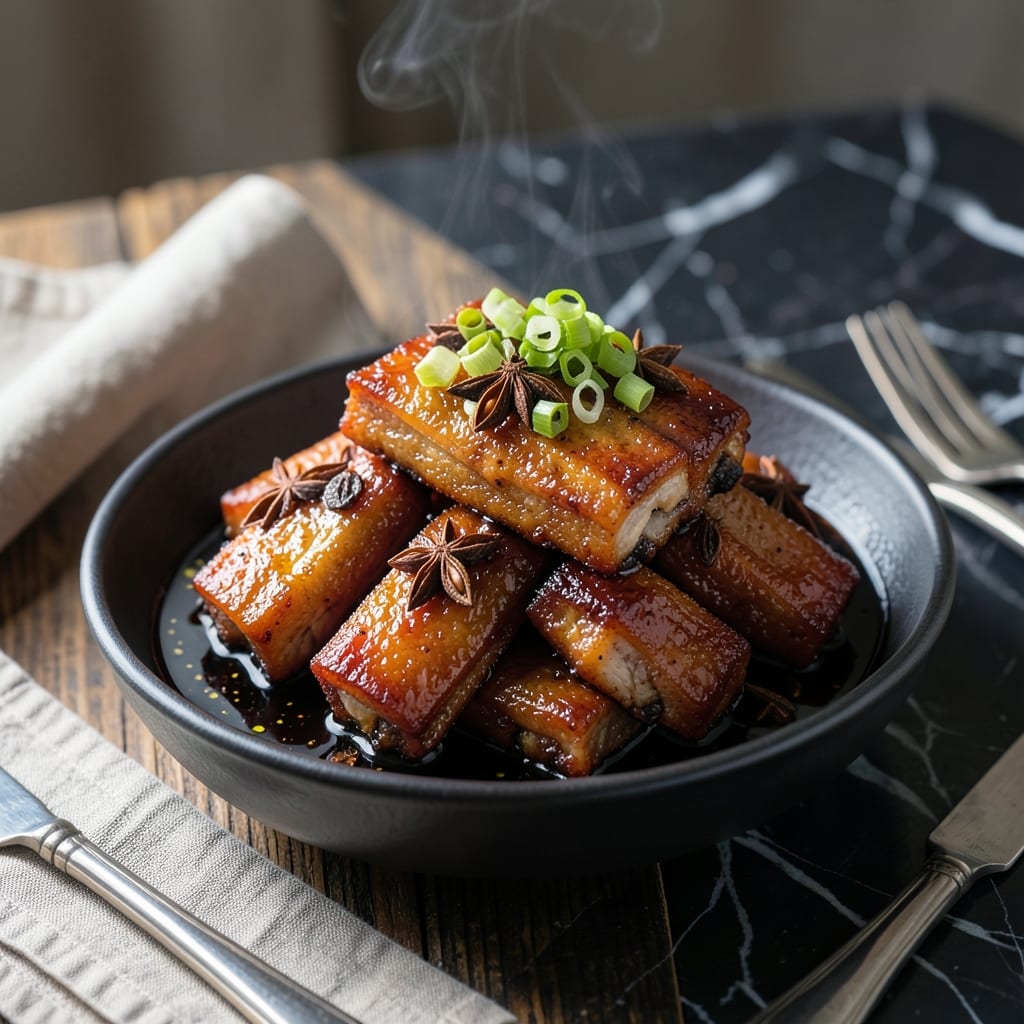
This Chinese braising technique transforms pork ribs into a sticky, aromatic masterpiece with deep caramelized flavors.
Slow-cooked in a blend of soy sauce, sugar, and spices, the ribs become fall-off-the-bone tender while developing a rich, glossy glaze.
Ingredients for Braised Pork Ribs Recipe Chinese
Rich, aromatic spices and tender pork ribs create a dish worth the slow cook.
| Ingredient | Amount | Notes |
|---|---|---|
| Pork Spareribs 🍖 | 2 lb | Cut into individual ribs |
| Light Soy Sauce 🫒 | ½ cup | Low-sodium preferred |
| Dark Soy Sauce 🫒 | 2 tbsp | For color and depth |
| Rock Sugar 🍚 | ¼ cup | Or substitute brown sugar |
| Shaoxing Wine 🍷 | ¼ cup | Chinese rice wine essential |
| Star Anise Pods ⭐ | 2 whole | Whole pods for aroma |
| Cinnamon Stick 🌿 | 1 whole | 2-inch piece preferred |
| Dried Shitake Mushrooms 🍄 | 4 whole | Rehydrated and sliced |
| Garlic Cloves 🧄 | 6 cloves | Smashed and peeled |
| Fresh Ginger 🌱 | 2 tbsp | Peeled and sliced |
| Green Onions 🧅 | 4 whole | Cut into 2-inch pieces |
| Water 💧 | 2 cups | To cover ribs |
| Vegetable Oil 🫒 | 2 tbsp | For searing ribs |
| Sesame Oil 🫒 | 1 tsp | For finishing aroma |
The pork ribs are the foundation—select meaty spareribs with good marbling. Asian markets often have pre-cut ribs perfect for braising. Look for rock sugar in the international aisle, though brown sugar works in a pinch. The Shaoxing wine is non-negotiable for authentic flavor; Koon Chun is a reliable brand available at most specialty stores.
No Shaoxing wine? Dry sherry at a 1:1 ratio gets you close. Missing dark soy sauce? Regular soy sauce plus molasses can substitute. The star anise and cinnamon are key for that signature aromatic depth—don’t skip them. For the mushrooms, fresh shiitake can replace dried, but reduce the water slightly.
This tastes even better the next day. Store in the fridge for up to 4 days, or freeze for 3 months. The sauce thickens as it cools, making it perfect for reheating. Always discard the star anise and cinnamon before serving.
Why You’ll Love This Recipe
- One Pot Wonder: I just toss the ribs with soy sauces, Shaoxing wine, and rock sugar, then let the pot do the work.
- Sticky Sweet Depth: The rock sugar caramelizes into this glossy, finger-licking glaze that coats every rib.
- Feeds a Crowd: Honestly, it’s my go-to for family gatherings—everyone always asks for the recipe.
- Tastes Better Tomorrow: Leftovers? Even more tender after sitting in that rich sauce overnight.
Step-by-Step Instructions for Braised Pork Ribs Chinese
Master this traditional technique for fall-off-the-bone ribs with rich, caramelized sauce.
Step 1: Blanch the Pork Spareribs
Bring a large pot of water to a rolling boil. Add the 2 lb pork spareribs and blanch for 3-4 minutes to remove impurities. You’ll see foam rising to the surface—this is the blood and bone fragments being drawn out.
Drain the ribs and rinse under cold water, then pat them completely dry with paper towels. This blanching step is crucial for achieving the clean, deep red color in your final dish and eliminates any gamy flavor from the meat.
Step 2: Sear and Build the Aroma Base
Heat 2 tbsp vegetable oil in a large, heavy pot over medium-high heat. Add the blanched ribs and sear for 3-4 minutes per side until golden brown. Remove the ribs and set aside.
In the same pot, add the 4 whole dried shitake mushrooms, 6 cloves garlic cloves, 2 tbsp fresh ginger, 4 whole green onions, 2 whole star anise pods, and 1 whole cinnamon stick. Stir-fry for 1-2 minutes until fragrant—the spices will begin to release their essential oils.
Step 3: Create the Braising Liquid
Return the seared ribs to the pot. Add the 0.5 cup light soy sauce, 2 tbsp dark soy sauce, 0.25 cup rock sugar, and 0.25 cup Shaoxing wine. The rock sugar will create a beautiful glaze as it caramelizes during cooking.
Pour in the 2 cups water—just enough to barely cover the ribs. Bring the mixture to a boil, then reduce the heat to low to maintain a gentle simmer. The liquid should just quiver at the surface, not roll aggressively.
Step 4: Braise to Perfection
Cover the pot and let the ribs braise for 1.5 to 2 hours, stirring occasionally to prevent sticking. The ribs are done when the meat easily pulls away from the bone with a fork and the sauce has thickened to a syrupy consistency.
During the last 30 minutes of cooking, remove the lid to allow the sauce to reduce and intensify in flavor. The sauce should coat the back of a spoon thickly and have a deep, glossy appearance.
Step 5: Finish and Serve
Once the ribs are tender and the sauce has reached your desired consistency, turn off the heat. Stir in the 1 tsp sesame oil—this adds a final layer of aroma that’s characteristic of authentic Chinese braised dishes.
Let the ribs sit for 10 minutes before serving to allow the flavors to meld completely. The sauce will continue to thicken slightly as it cools. Serve the ribs with steamed rice to soak up the rich, flavorful sauce.
Pro Tips For Making Braised Pork Ribs Recipe Chinese
- Blanch the Ribs: Parboil the spareribs for 3-5 minutes in boiling water to remove impurities and excess fat. I learned this the hard way—skipping this step leaves the sauce greasy and the flavor muddled.
- Balance the Sauces: Use a 2:1 ratio of light to dark soy sauce for depth without overpowering sweetness. My grandmother swore by this, and she was right: too much dark soy turns the dish bitter and one-dimensional.
- Simmer Low and Slow: After the initial sear, keep the heat at a gentle simmer for 1.5-2 hours. After burning three batches, I finally figured out that high heat toughens the meat and scorches the sugar.
- Add Sugar Last: Stir in the rock sugar only after the first 30 minutes of braising to prevent caramelization too early. Sounds weird, but it works: this keeps the sauce from turning thick and sticky before the ribs are tender.
Pro Cooking Tips for Perfect Results
Blanching First
Always blanch the 2 lb pork spareribs for 3-4 minutes in boiling water first. This removes impurities and ensures that clean, deep red color we all love. I learned this the hard way after skipping it once—never again. 💡
Sear for Depth
After blanching, pat the ribs completely dry before searing. Use 2 tbsp vegetable oil over medium-high heat for 3-4 minutes per side. This builds a flavor foundation that makes all the difference in the final dish.
Spice Bloom
When stir-frying the aromatics, give the star anise and cinnamon stick a full 1-2 minutes to release their oils. The fragrance should fill your kitchen—if it doesn’t, your heat might be too low.
Liquid Control
Add just enough 2 cups water to barely cover the ribs. Too much liquid means a watery sauce. I use a heavy Dutch oven for even heat distribution during the 1.5-2 hour braise.
Sauce Reduction
Uncover the pot during the last 30 minutes to let the sauce thicken. You want it to coat the back of a spoon. If it reduces too quickly, add a splash of water and lower the heat. 🔥
Rest Before Serving
Let the ribs rest for 10 minutes after cooking. This allows the flavors to meld and the sauce to thicken slightly. Finish with 1 tsp sesame oil for that authentic aromatic touch.
Nutrition Facts
Frequently Asked Questions
Can I substitute the rock sugar with regular sugar?
Yes, you can use brown sugar as a direct substitute. It provides a similar caramelized depth, though the flavor will be slightly different from traditional rock sugar.
How do I know when the ribs are done?
The meat should pull away from the bone easily with a fork. After 1.5-2 hours of braising, check for this tenderness. The sauce should also be thick and glossy.
Can I make this in a slow cooker?
After searing, transfer everything to a slow cooker and cook on low for 6-8 hours. Uncover and reduce the sauce on the stovetop afterward for best results.

- Cooking With Aisha Meatloaf Recipe: Glazed Crunch Meets Juicy Heart - October 7, 2026
- All Butter Pound Cake Recipe: Ultra-Moist Layers With Vanilla-Infused Depth - October 7, 2026
- Canned Beef BBQ Recipe: Smoky-Sweet Glaze That Caramelizes on the Grill - October 7, 2026