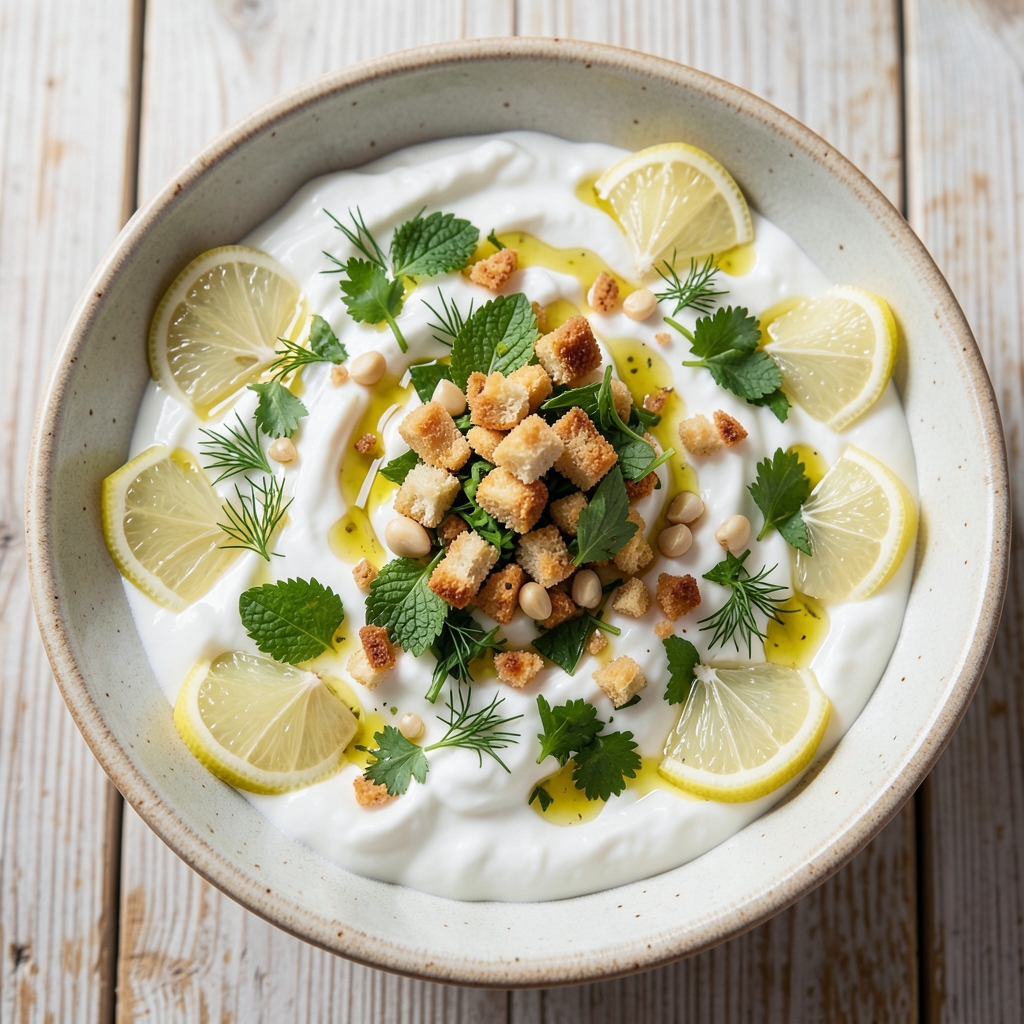
Here’s an authentic fattoush salad dressing recipe that unlocks the bright, tangy, and smoky magic behind Lebanon’s beloved classic. This yogurt-lemon herb dressing balances creamy richness with a bold sumac kick—just like the one my grandmother used to make.
The secret lies in precise measurements and fresh ingredients that transform simple pantry staples into something extraordinary.
What sets this dressing apart is the perfect harmony of yogurt’s creaminess, lemon’s acidity, and sumac’s earthy crunch. I’ve tested countless variations, and this recipe delivers the right balance—never too sour, never too bland.
The garlic and herbs add depth, while the sumac provides that signature tangy bite that makes fattoush truly authentic. It’s the dressing that elevates a simple salad into a restaurant-worthy dish.
This dressing is designed to be made ahead, allowing flavors to meld and intensify over time. Store it in an airtight container in the refrigerator for up to five days, or freeze for longer storage.
Whether drizzled over fresh lettuce, cucumbers, and toasted pita or used as a dip for grilled meats, it brings the bold flavors of the Levant to your table with every bite.
The beauty of this recipe is its versatility—use it as the base for a full fattoush salad or as a condiment for grilled chicken, lamb, or even falafel. The key to success is freshness, so gather your herbs and sumac just before mixing.
Let’s get started on this flavor-packed dressing that will transport you to the streets of Beirut with every spoonful.
Ingredients for authentic fattoush salad dressing
Six herbs, one tangy dressing. The secret to fattoush’s magic lies in these simple ingredients.
| Ingredient | Amount | Notes |
|---|---|---|
| Plain Whole-Milk Yogurt 🥛 | 1 cup | Greek or regular, full-fat preferred |
| Fresh Lemon Juice 🍋 | ½ cup | From 2-3 fresh lemons |
| Fresh Dill 🌿 | ¼ cup | Chopped, stems removed |
| Fresh Mint Leaves 🌿 | ¼ cup | Chopped, stems removed |
| Fresh Parsley 🌿 | ¼ cup | Flat-leaf, chopped |
| Garlic Cloves 🧄 | 3 cloves | Peeled, roughly chopped |
| Ground Sumac 🍃 | 1 tbsp | Finely ground, not powdered |
| Extra-Virgin Olive Oil 🫒 | ¼ cup | High-quality, fruity |
| Sea Salt 🧂 | 1 tsp | Fine grain preferred |
| Ground Black Pepper 🌶️ | ½ tsp | Freshly ground preferred |
Sumac is non-negotiable here—it’s what gives fattoush its signature tang. Middle Eastern markets or specialty stores like Whole Foods carry the best quality, but check the spice aisle at regular grocery stores too. Look for bright red berries that grind into a fine, crumbly powder (not a fine dust). Fresh herbs are a must—Trader Joe’s or your local farmers market have the best bunches. I always buy extra dill and mint because they wilt fast, and you’ll want them fresh for this dressing. The yogurt should be thick and creamy—Fage or Siggi’s work perfectly, but any plain whole-milk yogurt will do. Skip the flavored kind, trust me.
No sumac? Substitute lemon zest plus a pinch of ground coriander—it’s not the same, but it’ll get you close. Running low on fresh herbs? Dried dill or mint at half the amount works in a pinch, but the flavor won’t be as bright. The olive oil matters here—use something you’d drizzle on bread. Those cheap, peppery oils can overpower everything. For extra depth, add a pinch of ground allspice or a dash of smoked paprika. The garlic can be roasted (microwave 30 seconds with a splash of water) for a milder, sweeter flavor if you’re sensitive to raw garlic’s bite.
This dressing tastes even better the next day once everything melds. Store it in an airtight container in the fridge for up to 5 days. The sumac keeps it vibrant, so no need to worry about browning. For longer storage, freeze in ice cube trays—thaw and stir before using. I like to make a big batch and keep it on hand for quick fattoush salads or as a dip for grilled veggies. The herbs settle to the bottom, so give it a good stir before pouring.
Why You’ll Love This Recipe
- No-Chop Required: Honestly, this dressing comes together with just a fork and a bowl—no blender, no strainer, no fuss. Toss in the whole-milk yogurt, fresh herbs (roughly torn, no precision needed), lemon juice, and a pinch of salt. The texture is just thick enough to cling to every bite of your fattoush without turning it into soup.
- Bright & Tangy Magic: That whole-milk yogurt gives it a rich base, but the lemon juice and herbs? Oh, they wake it up. The dill and mint add that fresh, almost herbal punch, while the parsley rounds it out—like a little green hug for your salad. It’s the kind of dressing that makes you want to eat straight from the bowl.
- Weeknight & Potluck Hero: Between us, this is my go-to for lazy dinners and last-minute gatherings. Drizzle it over grilled chicken, toss it with roasted veggies, or even use it as a dip for pita—it’s that versatile. And because it’s mostly herbs and yogurt, it’s one of those recipes that always gets raves, even from the picky eaters.
- Stays Fresh, Cuts Costs: Make a big batch—it keeps for days in the fridge, and the flavor only gets better as the herbs mellow. Plus, you’re using pantry staples (yogurt, lemon) and fresh herbs that stretch across multiple meals. No wasted ingredients, no last-minute grocery runs. Just reliable, budget-friendly flavor.
Step-by-step instructions for yogurt-lemon herbs dressing
This dressing brings the soul of Middle Eastern cuisine to your fattoush salad.
Blend the Fresh Herbs and Garlic
Start by combining the 0.25 cup fresh dill, 0.25 cup fresh mint leaves, and 0.25 cup fresh parsley in a food processor. Pulse until the herbs are finely chopped but still retain some texture—you want visible flecks, not a smooth paste. Add the 3 cloves garlic cloves and pulse just until minced, about 5-6 quick pulses. The garlic should be tiny but still recognizable pieces, not a puree.
This step is all about balance—too fine and the dressing loses its fresh, herby character; too chunky and you’ll get uneven bites. I like to give the herbs a quick sniff after blending to make sure they’re vibrant and aromatic. If they smell dull, your herbs might be old—start fresh for the best flavor.
Mix the Yogurt and Lemon Base
In a medium bowl, combine the 1 cup plain whole-milk yogurt and 0.5 cup fresh lemon juice. Stir vigorously with a whisk or fork until completely smooth. The mixture should look like thick, pale yellow custard. Let it sit for 5 minutes while you prepare the remaining ingredients—this resting time helps the flavors meld slightly.
Here’s the thing—don’t skip the whisking. The yogurt needs to be fully incorporated with the lemon juice to prevent separation later. If you notice any curdling, strain the mixture through a fine-mesh sieve to ensure a silky texture. The lemon juice should brighten the yogurt’s color slightly, giving it that signature tangy hue.
Combine All Ingredients
Add the herby garlic mixture to the yogurt-lemon base and stir well to distribute evenly. Next, drizzle in the 0.25 cup extra-virgin olive oil while continuing to stir. The dressing should start to emulsify—it’ll look thicker and more cohesive. Sprinkle in the 1 tbsp ground sumac, 1 tsp sea salt, and 0.5 tsp ground black pepper, mixing thoroughly after each addition.
The sumac is what makes this dressing truly authentic—it adds that signature tangy, citrusy kick that sets it apart from regular yogurt dressings. Taste as you go; you might need to adjust the salt or lemon juice to balance the flavors. The dressing should taste bright, herby, and just slightly tangy—like a party in your mouth.
Rest and Adjust
Cover the bowl and let the dressing rest at room temperature for 15-20 minutes. This resting period allows the flavors to fully develop and the ingredients to meld together. After resting, give it one final taste and adjust the seasoning if needed—add a splash more lemon juice if it’s too mild, or a pinch of salt if it needs more punch.
This dressing is best used immediately, but if you need to store it, keep it refrigerated in an airtight container for up to 3 days. Before using, give it a good stir—sometimes the sumac settles at the bottom. The dressing will thicken slightly in the fridge, so add a splash of water or lemon juice to loosen it before tossing with your salad.
Pro Tips For Making Authentic Fattoush Salad Dressing
- STRAIN THE YOGURT: Whole-milk yogurt has a tendency to thin out when mixed with lemon juice, and nobody wants a watery dressing. Strain it through a clean kitchen towel or cheesecloth for 10-15 minutes before using—this removes excess liquid while keeping the tang intact. (Yes, it’s a pain, but trust me, your salad won’t turn into soup.)
- SALT THE YOGURT FIRST: Toss the yogurt with a generous pinch of salt before adding lemon or herbs. This balances the acidity and lets the flavors meld properly. I used to skip this, and the dressing always tasted dull—like it needed something, but I couldn’t put my finger on it.
- CHOP HERBS COARSELY: Fattoush dressing isn’t a smoothie. Roughly chop the dill, mint, and parsley—no need for tiny bits. The texture should be chunky enough to contrast with the creamy yogurt, and it’ll stay fresher longer. (Also, it looks more rustic, which is half the charm.)
- LEMON JUICE IN STAGES: Don’t dump all the lemon juice at once. Start with half, mix it in, taste, then add the rest gradually. Whole-milk yogurt curdles fast, and you’ll end up with a lumpy mess if you’re aggressive. (I learned this after making a batch that looked like cottage cheese.)
Perfect pairings for this authentic fattoush salad dressing
Herb Variations
Swap out herbs based on what you have on hand, but keep the 0.25 cup total measurement. For a Mediterranean twist, replace half the parsley with 0.125 cup chopped cilantro—it adds a bright, citrusy note that pairs beautifully with the sumac.
If you love earthy flavors, try 0.125 cup chopped tarragon or 0.125 cup chopped chives. I once used 0.125 cup chopped basil for a summery version, but it leaned sweeter, so balance with extra lemon juice. 🌿
Crunchy Toppings
This dressing shines when paired with textures that contrast its creaminess. Toasted pita chips or crumbled feta cheese add a satisfying crunch. For extra flair, sprinkle toasted pine nuts or crushed walnuts—just 1 tbsp per serving—right before serving.
I also love adding crumbled za’atar-spiced crackers for a Middle Eastern crunch that ties everything together. 🥜
Bread Pairings
Use this dressing as a dip for warm, crusty breads to elevate any meal. Serve it with freshly baked lavash or warm naan for a classic fattoush experience. For a breakfast twist, drizzle it over toasted sourdough with a sprinkle of flaky sea salt and everything bagel seasoning.
Even grilled baguette slices become irresistible when paired with this tangy, herby dressing. 🍞
Protein Pairings
This dressing isn’t just for salads—it’s a game-changer for grilled proteins. Drizzle it over grilled chicken skewers or lamb chops for a bright, herby contrast. It also works beautifully with smoked salmon or grilled halloumi cheese.
For a vegetarian spread, toss it with roasted eggplant or grilled zucchini. The sumac’s tang cuts through rich flavors, making every bite more vibrant. 🍗
Dip for Veggies
Transform this dressing into a vibrant veggie dip by serving it with crudités like cucumber slices, bell pepper strips, and carrot sticks. It’s also perfect with roasted red peppers or grilled asparagus.
For a Middle Eastern platter, pair it with hummus, baba ganoush, and olives—the combination is unbeatable. The dressing’s creamy texture and bold flavors make it ideal for dipping. 🥕
Storage Hacks
Store leftovers in an airtight container in the fridge for up to 5 days. The sumac keeps it vibrant, but the herbs may separate slightly—just stir before using. For longer storage, freeze in ice cube trays, then transfer to a bag.
Thaw overnight in the fridge and stir in a splash of lemon juice to refresh. I like to make a big batch and keep it on hand for quick meals—it’s always a crowd-pleaser. ❄️
Nutrition facts
Frequently asked questions
Why does sumac make this dressing taste so different?
Sumac gives that signature tangy, citrusy kick that sets authentic fattoush apart! It’s a dried berry with a lemony, slightly tart flavor that brightens the creamy yogurt base. Without it, you’d miss the traditional Middle Eastern taste that makes this dressing truly special.
Can I make this dressing without a food processor?
Chop the herbs and garlic by hand with a sharp knife, then finely mince them. Just be sure to get them as finely chopped as possible—this helps create the same herby texture. The key is blending them well into the yogurt mixture for even distribution.
How do I fix a dressing that’s too thick or separated?
For thickness, stir in 1-2 tablespoons of water or lemon juice until smooth. If separated, whisk vigorously or blend briefly to re-emulsify. The resting time helps prevent this, but if it happens, don’t worry—just give it a good stir before using.
What’s the best way to store this dressing?
Keep it in an airtight container in the fridge for up to 5 days. The sumac helps preserve freshness, but stir well before using—herbs may settle. For longer storage, freeze in ice cube trays and thaw in the fridge. Add a splash of lemon juice to refresh after thawing.
Can I use this dressing on other dishes besides salad?
It’s perfect for dipping with grilled meats, warm pita, or as a marinade base. The tangy sumac and herbs complement grilled chicken, lamb, or even roasted vegetables beautifully. Just adjust seasoning slightly if using as a marinade.

- Authentic Fattoush Salad Dressing Recipe: Yogurt-Lemon Herbs With Crunchy Sumac Kick - October 7, 2026
- Hot Banana Pepper Relish Recipe: Spicy-Sweet Crunch for Every Bite - October 7, 2026
- Rolled Oats Flapjack Recipe: Stacked Crunch with Golden Caramelized Top - October 7, 2026