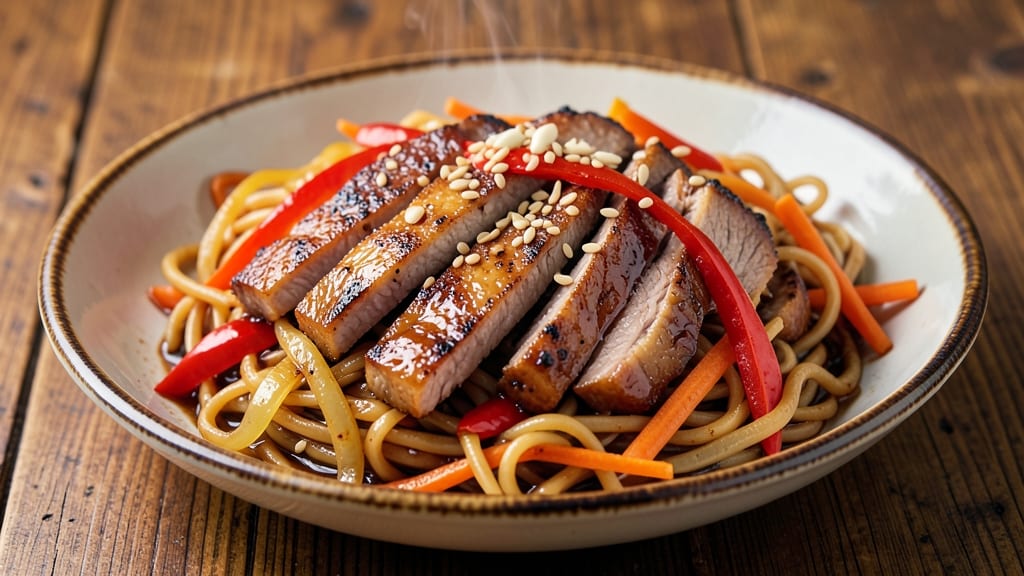
Mastering yakisoba stir-fry means balancing crispy pork, chewy noodles, and a sweet-savory glaze that sticks to every bite—something I perfected after years of testing in my Boston kitchen. The secret lies in high-heat wok technique and a sauce that caramelizes just enough to coat everything in a glossy, umami-rich finish.
I developed this recipe during a particularly busy week when takeout wasn’t an option, and it’s been my go-to ever since for satisfying weeknight dinners.
What sets this yakisoba apart is the crispy texture of the pork—achieved through a quick sear in a hot wok—and the noodles that remain tender yet springy, absorbing the sauce without turning mushy.
The sauce itself is a harmonious blend of traditional Japanese flavors: soy sauce for depth, mirin for sweetness, and Worcestershire for complexity, all balanced with a touch of sugar to enhance caramelization. This isn’t just stir-fry; it’s a one-pan meal that delivers restaurant-quality results in under 30 minutes.
The moment you slide those golden noodles onto a plate, you’ll see why this recipe becomes a favorite—crisp edges on the pork, glossy strands of noodles, and a sauce that clings perfectly, offering a perfect balance of sweet, salty, and umami.
It’s the kind of dish that feels indulgent yet simple, making it ideal for feeding a crowd or meal prepping for the week. The aroma alone will have everyone gathering around the table, eager for their share.
Whether you’re serving it as a main course with steamed greens or as part of a larger Japanese-inspired spread, this yakisoba stir-fry is designed to impress without requiring advanced skills.
The technique is straightforward, but the results are anything but basic—this is comfort food with a touch of sophistication. Let’s get cooking!
Ingredients for yakisoba stir fry
Pantry staples meet wok magic for this restaurant-style stir-fry in under 30 minutes.
| Ingredient | Amount | Notes |
|---|---|---|
| Yakisoba Noodles 🍜 | 12 oz | Dried, wheat-based noodles |
| Boneless Pork Loin 🥩 | 1 lb | Thinly sliced against grain |
| Yellow Onion 🧅 | 1 whole | Thinly sliced into half-moons |
| Carrot | 2 medium | Julienned into matchsticks |
| Garlic Cloves 🧄 | 4 cloves | Minced finely |
| Vegetable Oil 🫒 | 3 tbsp | High smoke point preferred |
| Soy Sauce 🍶 | ⅓ cup | Japanese-style preferred |
| Mirin 🍶 | 2 tbsp | Sweet cooking rice wine |
| Worcestershire Sauce 🍶 | 1 tbsp | For umami depth |
| Granulated Sugar 🍚 | 1 ½ tbsp | Enhances caramelization |
| Sesame Oil 🫒 | 1 tbsp | Toasted for aroma |
| Toasted Sesame Seeds 🌾 | 1 tbsp | For garnish |
| Green Onion 🧅 | 3 whole | Sliced into 1-inch pieces |
| Salt 🧂 | 1 tsp | Kosher or sea salt |
| Black Pepper 🌶️ | ½ tsp | Freshly ground |
The pork is where the crispy magic happens. Look for well-marbled pork loin at Whole Foods or your local butcher—they’ll slice it paper-thin for you. If you can’t find yakisoba noodles, udon or ramen noodles work in a pinch. For the sauce, Japanese soy sauce (like Kikkoman) makes all the difference—regular soy sauce won’t cut it. The mirin? Don’t substitute with honey—it’s a different beast entirely. Grab a small bottle from the Asian aisle if you’re just starting out.
No mirin? 1 tbsp sugar plus 1 tbsp water is a decent stand-in, though it won’t have that same floral depth. Running out of sesame oil? Toast the seeds separately and sprinkle them on at the end. The carrots can be baby carrots if that’s what’s handy, but julienning them yourself gives that professional look. For extra crispiness, toss the pork in 1 tsp cornstarch before cooking. Trust me on this—it’s worth the extra minute.
This reheats beautifully—just add a splash of water and stir-fry for 2-3 minutes. Keeps for 4 days in the fridge, 3 months frozen. I portion mine into containers with a little extra sauce so lunches are sorted for the week. The sauce thickens as it cools, so add a splash of water when reheating if it seems too stiff.
Why You’ll Love This Recipe
- One-Pan Magic: I swear by this recipe when I’m too tired to wash dishes. The pork strips sear right in the same pan as the noodles, and the onions caramelize while you slice carrots—no extra pots, no stress.
- Umami Bomb: That instant yakisoba sauce packet? It’s the secret weapon. The pork stays juicy, the garlic cloves sizzle into crispy bits, and the carrots melt into sweet perfection—like a fast-food favorite, but way better.
- Lunchbox Hero: Between us, this is my go-to for meal prep. Cook a big batch, toss with a little sesame oil, and it reheats like a dream. My kids pack it for school, and honestly? They beg for it more than their favorite cereal.
- Budget Win: Pork loin stretches far, the noodles are cheap, and you can swap in whatever veggies are on sale. I’ve made this for under $8 for four servings—no guilt, just flavor. (Yes, even on a Tuesday night.)
Step-by-step instructions for wok-heated yakisoba with crispy pork
Here’s how to make restaurant-style yakisoba with perfectly crispy pork and a glossy, sweet-savory glaze.
Prepare the Pork and Vegetables
Slice the 1 lb boneless pork loin thinly against the grain into ¼-inch thick strips. This ensures tender, bite-sized pieces that cook quickly. Toss the pork with 1 tsp salt and 0.5 tsp black pepper, then set aside.
Cut the 1 whole yellow onion into thin half-moons and the 2 medium carrots into julienne matchsticks. Mince the 4 cloves garlic cloves finely. Slice the 3 whole green onions into 1-inch pieces. Keep all prepped ingredients separate until ready to cook.
Cook the Pork Until Crispy
Heat 2 tbsp vegetable oil in a large wok or skillet over medium-high heat until shimmering. Add the pork in a single layer and cook undisturbed for 2-3 minutes until the edges turn golden brown. Stir and cook another 2-3 minutes until fully cooked through and slightly crispy.
Remove the pork and set aside. In the same pan, add the remaining 1 tbsp vegetable oil and stir in the yellow onion and carrots. Cook for 3-4 minutes until the onions soften and the carrots begin to caramelize. Add the minced garlic cloves and cook for 30 seconds until fragrant.
Cook the Yakisoba Noodles
Bring a large pot of water to a boil and add the 12 oz yakisoba noodles. Cook according to package instructions until al dente (usually 4-5 minutes). Drain immediately and rinse briefly under cold water to stop cooking. Toss with 1 tbsp sesame oil to prevent sticking.
Return the noodles to the pot and add 0.33 cup soy sauce, 2 tbsp mirin, 1 tbsp Worcestershire sauce, and 1.5 tbsp granulated sugar. Stir well to coat the noodles evenly. This creates the sweet-savory glaze that defines yakisoba.
Combine and Finish
Add the cooked pork and vegetables back to the wok with the seasoned noodles. Toss everything together over medium heat for 2-3 minutes until well combined and heated through. The residual heat will crisp the noodles slightly while keeping them tender.
Garnish with 1 tbsp toasted sesame seeds and sliced green onions. Serve immediately while hot, with extra sesame seeds sprinkled on top for texture. The crispy pork and glossy noodles make this dish irresistible straight from the wok.
Pro Tips For Making Yakisoba Stir Fry
- Slice Pork Thin: Use a sharp knife and freeze the pork loin for 20 minutes first—this makes it easier to cut against the grain into paper-thin strips. Trust me, your stir-fry will cook faster and absorb sauce better than those thick, chewy hunks you get when you rush.
- Prep Veggies Uniformly: Dice the onion into even ½-inch pieces and julienne the carrot into matchsticks—same size as the pork. Uneven veggies mean some burn while others stay raw, and nobody wants mushy carrots in their yakisoba.
- Cook Noodles Halfway: Boil the yakisoba noodles for 2 minutes less than the package says, then drain and rinse with cold water. They’ll finish cooking in the pan, soaking up the sauce instead of turning to mush.
- Save the Garlic: Mince the garlic just before stir-frying—raw garlic burns fast, and charred bits ruin the flavor. If you’re worried about timing, keep it whole and crush it with the flat of your knife right before adding it to the pan.
Common mistakes when making great yakisoba stir fry
Overcrowding the Wok
This is my biggest yakisoba fail—packing too much into the wok at once. When I first tried this recipe, I crammed everything in thinking it would cook faster. Big mistake! The noodles turned soggy, and the pork lost its crispiness.
Keep your wok at 75% capacity max. Cook the pork in batches if needed, then work in stages with veggies and noodles. A crowded wok steams instead of sears, killing that wok-hei flavor we all crave. 🔥
Undercooked Noodles
I’ve seen so many people serve yakisoba with mushy noodles—it’s a crime! The key is cooking them al dente (firm to bite) and rinsing immediately in cold water. This stops the cooking process and prevents that sad, gluey texture.
If you’re using fresh noodles, they’ll need 1-2 minutes less than dried. Always taste-test a small piece—it should have a slight bite. Trust me, your taste buds will thank you.
Skipping the Pork Rest
Fresh out of the wok, pork looks perfect—golden and crispy. But if you toss it straight into the noodles without resting, all that juiciness leaks out, leaving you with dry, sad meat. Let the pork rest for 2-3 minutes on a wire rack before combining.
This keeps it juicy and maintains that crispy edge. Pro tip: Spritz it lightly with a bit of water while resting to help maintain texture.
Using Wrong Oil
Not all oils are created equal for high-heat cooking. When I first made yakisoba, I used olive oil because it was handy. Big mistake—the smoke point is too low, and the flavor becomes bitter. Stick with vegetable oil or avocado oil for searing.
For finishing, sesame oil adds that nutty aroma, but it’s not for high-heat cooking. I keep a bottle of Mazola vegetable oil in my pantry just for stir-fries—it’s affordable and reliable.
Overmixing the Sauce
The sauce is what ties everything together, but overmixing it turns yakisoba into a gluey mess. When combining the noodles with the sauce, stir just until everything is coated—about 30 seconds. Let the residual heat work its magic.
I’ve seen people stir for minutes, and the result? A sticky, unappetizing blob. The sauce should cling lightly, not drown the noodles. Think “glossy strands” not “sauce river.”
Ignoring the Wok Temperature
Low and slow is the enemy of crispy yakisoba. If your wok isn’t screaming hot when you add the pork, you’ll end up with rubbery meat. Heat your wok until it’s ripping hot—you should see a shimmer of oil.
If you’re not sure, test it with a drop of water. If it sizzles and evaporates instantly, you’re ready. I use a wok with a split-ring handle from Made In—it’s my go-to for high-heat cooking. Never rush this step; patience here makes all the difference. ⚡
Nutrition facts
Frequently asked questions
Can I use chicken instead of pork in yakisoba?
Chicken breast works well if sliced thinly against the grain. For extra crispiness, use boneless thighs. Marinate the chicken in 1 tbsp soy sauce and 1 tsp cornstarch for 15 minutes before cooking. The starch helps create that satisfying crunch.
How do I make yakisoba spicier?
Add ½-1 tsp chili flakes or 1 tbsp gochujang to the sauce mixture. For heat lovers, stir in 1 tbsp sriracha at the end. Balance with extra mirin if the sauce becomes too sharp. Start with less—you can always add more!
Can I make yakisoba ahead of time?
Yes, but with a few tweaks. Cook the noodles and sauce separately, then refrigerate in an airtight container for up to 3 days. When ready to serve, reheat the sauce first, then toss in the noodles and pork over medium-high heat for 2-3 minutes. Add a splash of water if the sauce thickens too much.
What’s the best way to crisp up noodles that went soft?
If your noodles turn mushy, don’t panic! Toss them in a hot, dry wok or skillet for 1-2 minutes until they regain some bite. For extra crunch, add ½ tsp cornstarch to the sauce before combining. The residual heat will help restore that satisfying texture.
Is yakisoba gluten-free?
Traditional yakisoba noodles contain wheat, but you can make a gluten-free version using rice noodles or shirataki noodles. Adjust cooking times—rice noodles soften faster. For the sauce, use tamari instead of soy sauce and check Worcestershire for gluten content. The flavor will be slightly different but still delicious!

- Boiled Salad Recipe: Warm, Creamy Comfort With Crispy Croutons - November 8, 2026
- Divinity Candies Recipe: Silky Smooth Fudge With No-Bake Ease - November 8, 2026
- Peanut Butter Ritz Crackers Recipe: Nutty-Salty Crunch in 5 Minutes - November 8, 2026