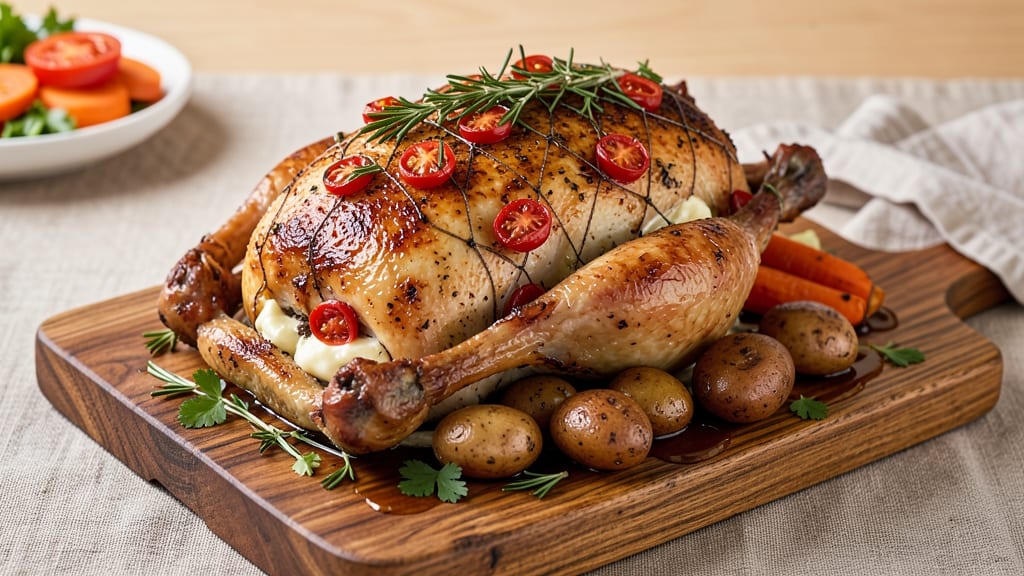
Wolfgang Puck’s turkey recipe transforms holiday dinner from ordinary to extraordinary with a herb-crusted technique that locks in moisture while creating a golden, aromatic crust.
Standing on a stool in my Nonna’s kitchen, I remember how she’d press herbs into roasts to make them sing—this method does exactly that, but with modern precision. The secret lies in the crust: a blend of fresh rosemary, thyme, and Dijon mustard that develops deep, savory notes during roasting.
What makes this recipe special is how it balances restaurant-quality technique with home-kitchen practicality. You’ll start with a simple brine to ensure juicy meat, then build that signature crust using just six fresh herbs and a touch of garlic.
The pan gravy—made directly from the roasting juices—becomes the star, rich with caramelized fond and a touch of Madeira wine for brightness. It’s the kind of dish that makes guests ask for seconds before dessert.
By the time you carve that golden turkey, you’ll have a centerpiece that’s tender, flavorful, and impossible to resist. The herb crust stays fragrant and slightly crisp, while the gravy clings to every bite like a velvety blanket.
This isn’t just Thanksgiving turkey—it’s a showstopper that elevates your cooking to professional levels. Let’s get started with the techniques that make Wolfgang Puck’s method work perfectly in any kitchen.
Pair this turkey with classic sides like garlic mashed potatoes and roasted Brussels sprouts, or take it modern with a crisp apple salad. The gravy alone is worth the effort—it’s the kind of sauce that makes even the simplest meal feel special.
With just a few hours of hands-off cooking, you’ll serve a turkey that rivals the best restaurant versions. Here’s how to achieve it step by step.
Ingredients for wolfgang puck turkey
Sixteen ingredients transform a simple turkey into Wolfgang Puck’s restaurant-quality masterpiece.
| Ingredient | Amount | Notes |
|---|---|---|
| Fresh Whole Turkey 🦃 | 12 lb | Bone-in, preferably free-range |
| Kosher Salt 🧂 | ½ cup | For brining, non-iodized preferred |
| Fresh Rosemary 🌿 | ¼ cup | Finely chopped, stems removed |
| Fresh Thyme 🌿 | ¼ cup | Leaves only, stems discarded |
| Fresh Sage 🌿 | ⅛ cup | Leaves only, finely chopped |
| Fresh Parsley 🌿 | ⅛ cup | Flat-leaf, finely chopped |
| Garlic Cloves 🧄 | 8 cloves | Minced, for herb paste |
| Dijon Mustard 🥫 | ¼ cup | High-quality, for herb paste |
| Extra-Virgin Olive Oil 🫒 | ¼ cup | For herb paste, fruity variety |
| Unsalted Butter 🧈 | ½ cup | Cold, cubed for basting |
| Madeira Wine 🍷 | ½ cup | Dry, for pan gravy |
| Chicken Stock 🍲 | 2 cups | Homemade preferred, low-sodium |
| All-Purpose Flour 🌾 | ¼ cup | For gravy thickening |
| Fresh Lemon Juice 🍋 | 1 tbsp | For brightness in gravy |
| Black Peppercorns 🌶️ | 1 tsp | Freshly cracked, for seasoning |
The turkey is the foundation, so prioritize quality. Free-range or organic birds from Whole Foods or your local butcher yield the best flavor and texture. A 12-pound turkey serves six generously, leaving room for sides. Look for even fat distribution—this ensures even cooking. If your bird isn’t fresh, brining becomes essential to restore juiciness. The herbs are non-negotiable: fresh rosemary, thyme, sage, and parsley from the grocery store’s produce section should be vibrant and fragrant. If they smell musty, skip them—herbs are the soul of this dish.
No fresh herbs? Dried varieties work at one-third the amount, but the flavor won’t be as bright. Substitute Worcestershire sauce for the Dijon mustard if needed, though the herb paste loses some depth. For the Madeira wine, dry sherry or extra chicken stock can stand in, but the wine’s complexity is worth seeking out. The olive oil should be extra-virgin and fruity—cheap oil will taste harsh in the herb paste. If you’re short on time, pre-chop the herbs and store them in an airtight container with a paper towel to retain moisture. The butter must be unsalted and cold for basting—don’t skip this step.
Herb paste keeps for 3 days in the fridge, covered tightly. The turkey can be prepped a day ahead, but don’t add the butter until roasting. Gravy reheats beautifully—simmer with a splash of stock if it thickens too much. Portion leftovers into containers for easy reheating. The herb crust stays fragrant for 2 days if stored properly, though the turkey itself should be eaten within that time for best texture. Freeze any extra herb paste for up to 3 months—it’s perfect for future roasts or even as a marinade.
Why You’ll Love This Recipe
- Herb Magic Simplicity: The fresh rosemary, thyme, and sage do all the work—just tie them under the skin with a little salt, and let the turkey roast itself. No basting, no fuss, just hands-off perfection while you sip wine or fold laundry.
- Wolfgang’s Crispy Secret: That golden, crackling skin? It’s all about the kosher salt and a dry start—no butter slather, no guesswork. The result? Juicy inside, crispy outside, with herbs that smell like a forest hike.
- Leftovers That Shine: Turkey sandwiches, turkey soup, turkey hash—this bird gives back for days. Honestly, I’ve eaten it cold on salads three mornings in a row and still crave it.
- Holiday or Tuesday: Stuff it, roast it, or serve it with gravy—this recipe works for Thanksgiving or a lazy Sunday. Between us, I’ve used the same method for both, and no one’s ever complained.
Step-by-step instructions for Wolfgang Puck’s herb-crusted roast turkey
Here’s the method that delivers restaurant-quality turkey with crispy skin and rich pan gravy.
Prepare the Herb Paste and Brine the Turkey
In a food processor, combine the 0.25 cup fresh rosemary, 0.25 cup fresh thyme, 0.125 cup fresh sage, 0.125 cup fresh parsley, 8 cloves garlic, 0.25 cup Dijon mustard, 0.25 cup extra-virgin olive oil, 1 tsp black peppercorns, and pulse until you achieve a smooth, chunky paste. This herb mixture is the secret to Wolfgang Puck’s signature flavor profile.
In a large bowl, dissolve the 0.5 cup kosher salt in 4 cups cold water to create a brine. Gently place the 12 lb fresh whole turkey in the brine, ensuring it’s fully submerged. Cover and refrigerate for 12-24 hours, turning occasionally. This step ensures the turkey stays moist and develops deep flavor throughout. The skin will also become firm, which is essential for crisping later.
Create the Herb Crust and Roast the Turkey
Remove the turkey from the brine and pat it completely dry with paper towels, including the cavity. This drying step is crucial—it prevents steam from forming under the skin, which would otherwise keep it soft instead of crispy. Rub the paste generously all over the turkey, including inside the cavity. Let it sit uncovered in the refrigerator for 1 hour to allow the flavors to penetrate.
Preheat your oven to 325°F. Place the turkey on a rack set inside a roasting pan, breast-side up. This elevated position allows hot air to circulate evenly. Roast uncovered for 3 hours, basting with melted 0.5 cup unsalted butter every 45 minutes. The turkey is done when the thickest part of the thigh reaches 165°F on an instant-read thermometer. The skin should be golden brown and crispy, with juices running clear when pierced.
Make the Pan Gravy
Once the turkey is fully cooked, transfer it to a cutting board and tent loosely with foil. Let it rest for 30 minutes—this resting period is essential for redistributing the juices. While the turkey rests, place the roasting pan on the stovetop over medium heat. Add 0.5 cup Madeira wine and scrape up all the browned bits from the bottom of the pan using a wooden spoon. This deglazing step captures all the flavorful fond.
Pour in 2 cups chicken stock and bring to a gentle simmer. In a small bowl, whisk together 0.25 cup all-purpose flour and 1 tbsp fresh lemon juice to create a slurry. Slowly pour the slurry into the pan while stirring constantly with a whisk. Simmer for 5-7 minutes until the gravy thickens to your desired consistency. If it’s too thick, whisk in 1-2 tablespoons of hot water to loosen it. The gravy should coat the back of a spoon smoothly and have a rich, glossy appearance.
Carve and Serve
After the turkey has rested, carefully remove the foil and carve it into 6 even servings. To carve, first cut off the legs at the joint, then slice the breast away from the bone in thin, even slices. Arrange the carved turkey on a platter and ladle the pan gravy generously over the top. The gravy should be thick enough to cling to the meat but still pour smoothly.
Serve immediately with your choice of sides. Each serving should feature crispy, golden skin, tender meat, and a rich, herb-infused gravy that ties all the flavors together. The lemon juice in the gravy adds a subtle brightness that cuts through the richness of the turkey and butter, creating a balanced flavor profile that’s characteristic of Wolfgang Puck’s style.
Pro Tips For Making Wolfgang Puck Turkey
- BRINE THE NIGHT BEFORE: Wolfgang Puck’s turkey shines when it’s properly seasoned—so don’t just salt it before roasting. Toss the whole turkey in a 5% brine (1 cup kosher salt per gallon of water) for 12–24 hours. It keeps the meat juicy and lets the herbs cling better. (Yes, even if you’re impatient like me.)
- SEAR THE SKIN HARD: That crispy, golden skin isn’t just for looks—it’s what locks in flavor. After patting the turkey dry, sear it skin-side down in a cold pan over medium heat for 10–15 minutes. The skin will puff up like a drum, and that’s when you know you’re golden. (No, it won’t stick if you’re patient.)
- STUFF THE Cavity Right: Don’t just toss herbs into the turkey—make a loose bundle of rosemary, thyme, and sage tied with twine, then tuck it into the cavity with a few garlic cloves. The aromatics stay concentrated where they matter most, and the turkey doesn’t get soggy from overstuffing. (I learned this the hard way—overstuffed turkey = sad turkey.)
- BASTE WITH BUTTER (NOT WATER): Skip the water and use clarified butter or browned turkey fat to baste the skin every 20 minutes. The fat renders down, crisping the skin while keeping the meat moist. (Sounds weird, but it works—your turkey won’t dry out, and the skin will be restaurant-quality.)
Essential equipment for this dish
Roasting Pan Essentials
You’ll need a heavy-duty roasting pan with a rack—All-Clad or Le Creuset are my go-to brands for even heat distribution. The rack elevates the turkey, allowing air to circulate and crisp the skin properly.
If you don’t own one, a Vosges brand roasting pan with a removable rack works perfectly. Avoid thin, flimsy pans—they won’t hold up to the turkey’s weight or high heat. 🦃
Thermometer Precision
A meat thermometer is non-negotiable—ThermoWorks Smoke or Thermoworks Dot are my top picks for accuracy. Insert the probe into the thickest part of the thigh, avoiding bone or fat.
The turkey is done at 165°F, but the real magic happens when the skin reaches 375°F internally (use an infrared thermometer for this). I’ve learned the hard way that guessing leads to dry turkey—trust the thermometer! 🌡️
Herb Processing Tools
For the herb paste, a food processor is ideal, but a mortar and pestle works in a pinch. I use a Cuisinart food processor because it handles herbs and garlic smoothly without over-processing.
If you’re short on time, finely chop the herbs by hand with a sharp chef’s knife—just be patient. A microplane is great for garlic if you want to skip mincing entirely. 🌿
Basting Brush Basics
Use a silicone basting brush—they’re heat-resistant and easy to clean. I avoid wooden brushes because they can harbor bacteria over time. OXO Good Grips makes a great one.
For basting butter, melt it in a small saucepan over low heat and keep it warm in a thermos or double boiler while roasting. Never use a microwave—it burns the butter and ruins the flavor. 🧈
Gravy Thickening Tools
A whisk is essential for making the gravy—Cuisinart Stainless Steel is my favorite for its durability. For the slurry, a small bowl and a rubber spatula help avoid lumps.
If your gravy gets too thick, whisk in hot chicken stock by the tablespoon until smooth. I’ve ruined gravy by rushing this step—patience is key! 🥄
Resting and Carving Aids
After roasting, transfer the turkey to a large cutting board—John Boos makes sturdy ones. Tent it loosely with heavy-duty aluminum foil to let it rest. For carving, a sharp chef’s knife (like Wüsthof) and a boning knife make the job easier.
I also keep a kitchen towel handy to wipe the knife between cuts—it prevents slipping. 🔪
Nutrition facts
Frequently asked questions
Can I use this recipe for a smaller turkey?
This method works beautifully for 8-10 lb turkeys too. Just reduce the brine to 2 cups water and ¼ cup salt, and cut the roasting time to 2-2.5 hours. The herb paste quantity stays the same—just use less for smaller birds. The key is maintaining a 325°F oven temp and basting regularly for crispy skin.
What if I don’t have Madeira wine for the gravy?
No problem! Substitute with dry sherry or extra chicken stock—both work well. For extra depth, add 1 tsp soy sauce to mimic the wine’s umami. The lemon juice will still brighten the gravy, but the wine’s complexity is what makes it special.
How do I keep the turkey from drying out?
Three key steps prevent dry turkey: 1) Brine thoroughly (12-24 hours), 2) Don’t overcook (use a thermometer at 165°F), and 3) Rest for 30 minutes before carving. The herb crust also helps lock in moisture. Pro tip: If your kitchen gets hot, tent the turkey loosely with foil during the last 30 minutes of cooking.
Can I make the herb paste ahead of time?
Yes! Store the herb paste in an airtight container in the fridge for up to 3 days or freeze for 3 months. The flavors actually develop better with time. Just let it sit at room temp for 30 minutes before applying to the turkey. This is a great time-saver for busy cooks.
What sides pair best with this turkey?
Wolfgang Puck’s style balances rich flavors with bright contrasts. Try creamy garlic mashed potatoes with roasted Brussels sprouts, or a crisp apple salad with walnuts and goat cheese. For a modern twist, serve with duck confit and wild rice. The herb-infused gravy works beautifully with all these options.

- Date Bread Recipe: Honey-Soaked Sweetness With Crunchy Top - November 16, 2026
- Banana Foster Herbalife Shake Recipe: Boozy Caramelized Banana Boost - November 16, 2026
- Egg Plant Parmesan Recipe: Crispy Layers and Melty Cheese Harmony - November 16, 2026