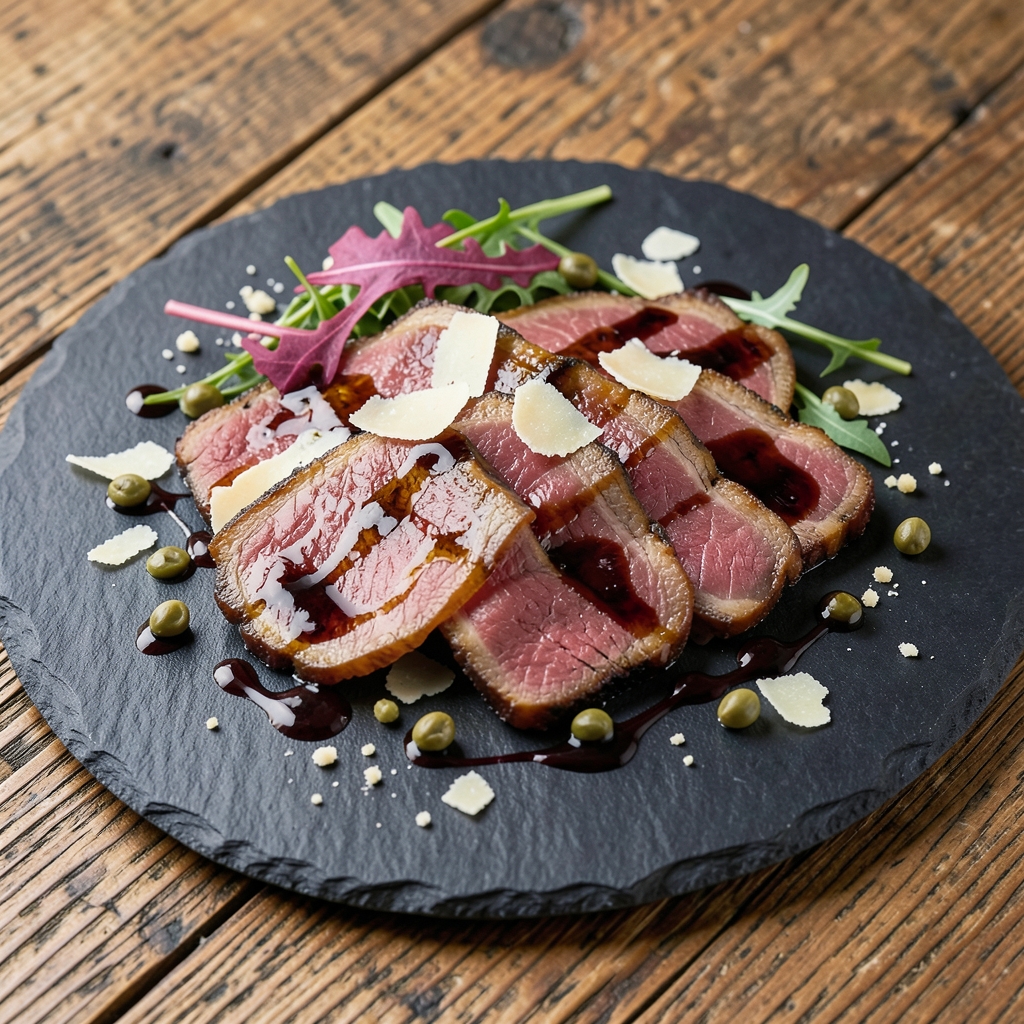
This wagyu beef carpaccio recipe transforms raw beef into a luxurious, restaurant-worthy dish that’s surprisingly simple to prepare at home. The secret lies in slicing the beef paper-thin for maximum tenderness, then balancing rich umami flavors with bright, fresh accompaniments.
I first discovered this technique while working with Italian butchers in Boston, where they taught me how to handle delicate cuts with precision.
What sets this recipe apart is the perfect marriage of textures—silky, melt-in-your-mouth beef slices paired with crisp arugula, salty capers, and a tangy balsamic drizzle. The dish requires only five key ingredients (plus optional garnishes), making it ideal for special occasions or impressing guests without hours in the kitchen.
Every slice delivers that signature marbled beef flavor without needing cooking.
By the time you plate this dish, you’ll have a visually stunning presentation that’s as elegant as it is delicious—golden beef slices fanned across a bed of greens, finished with shavings of Parmesan and a drizzle of reduction.
The beauty of carpaccio is that it highlights the beef’s natural richness while letting other ingredients shine. Let’s create this masterpiece together.
For best results, source the freshest wagyu you can find, handle it carefully (raw beef safety first!), and slice it against the grain for that signature melt-in-your-mouth texture. The presentation makes all the difference—think of it like a culinary canvas where every element has its place.
This is the kind of dish that turns a simple dinner into an unforgettable experience.
Ingredients for wagyu beef carpaccio
Five ingredients transform raw wagyu into a showstopping dish that feels luxurious yet simple.
| Ingredient | Amount | Notes |
|---|---|---|
| Wagyu Beef Top Sirloin 🥩 | 1 lb | Center-cut, marbled, frozen for slicing |
| Baby Arugula 🌿 | 4 cups | Organic preferred, crisp leaves |
| Parmesan Cheese 🧀 | ½ cup | Freshly shaved, aged 24+ months |
| Capers 🍅 | ¼ cup | Nonpareils, drained and rinsed |
| Extra-Virgin Olive Oil 🫒 | ¼ cup | Fruity, peppery variety |
| Balsamic Glaze 🍷 | ¼ cup | Reduced, aged 12+ months |
| Lemon Zest 🍋 | 1 tsp | Fresh, organic preferred |
| Flaky Sea Salt 🧂 | 1 tsp | Maldon or Jacobsen preferred |
| Freshly Ground Black Pepper 🌶️ | ½ tsp | Cracked, not powdered |
| Honey 🍯 | 1 tsp | Wildflower preferred |
| Toasted Pine Nuts 🥜 | ¼ cup | Lightly toasted, chopped |
The wagyu makes this dish—look for center-cut top sirloin with visible marbling. Costco or specialty butchers like D’Artagnan carry premium cuts, but even the frozen variety works if it’s properly marbled. The key is slicing it paper-thin against the grain—ask your butcher to freeze it first for easier slicing. If you can’t find wagyu, Kobe beef is the next best thing, but it’ll cost you. Freshness is everything here: that rich, buttery flavor comes from the marbling, so don’t skimp.
No capers? Drained sun-dried tomatoes add a similar salty crunch, though they’re fruitier. The balsamic glaze can be swapped for a reduced red wine reduction if you’re feeling fancy—just simmer 1 cup red wine with 1 tbsp brown sugar until syrupy. The arugula? Baby spinach works in a pinch, but it won’t have that peppery kick. Toast those pine nuts in a dry pan for 30 seconds—just until fragrant, or they’ll burn. And if you’re out of honey, a drizzle of aged balsamic gives that same sweet-tangy balance.
This dish is all about presentation, so prep everything ahead. The beef stays fresh for up to 2 days in the fridge if wrapped tightly in plastic and paper towels. Arugula wilts fast—store it in a damp paper towel-lined container for up to 3 days. The glaze and pine nuts keep for weeks in the pantry. For a restaurant-worthy touch, arrange the beef slices in a fan shape on a chilled plate, then drizzle the glaze in concentric circles. Serve immediately—this isn’t a dish that waits.
Why You’ll Love This Recipe
- No-Fuss Slicing: I swear by my trusty deli slicer—no butchering skills required. The wagyu’s marbled fat melts under the blade, so even if your cuts aren’t perfect, the flavor wins every time.
- Umami Bomb: That first bite? Buttery wagyu with peppery arugula, briny capers, and shaved parmesan—it’s like a flavor explosion in your mouth. Honestly, I’ve never met a salad that hits this hard.
- Date Night Ready: Dress it up with a drizzle of aged balsamic and a sprinkle of flaky salt, or keep it simple with just olive oil. Either way, it looks fancy enough for a restaurant but takes less time than ordering takeout.
- Leftovers? More Like Seconds: Slice the remaining wagyu thin for sandwiches or toss it into pasta. I’ll be real: I’ve eaten this cold the next day, and it’s still better than most takeout. Minimal waste, maximum satisfaction.
Step-by-step instructions for wagyu beef carpaccio with perfect umami crunch
Here’s how to create restaurant-quality wagyu carpaccio with ultra-tender slices and irresistible texture.
Freeze and Slice the Wagyu Beef Top Sirloin
Start by placing the 1 lb wagyu beef top sirloin on a cutting board and patting it completely dry with paper towels. Freezing the meat for 30-45 minutes before slicing is absolutely crucial—it firms up the fat marbling so you get those perfect, paper-thin slices that stay tender. I use a very sharp long knife (I prefer a 10-inch slicing knife) and angle it at about 45 degrees to cut against the grain.
Slice the beef into ⅛-inch thick slices, working quickly to maintain the cold temperature. You should end up with about 16-20 slices for 4 servings. Arrange them immediately on a serving platter or plate, leaving about ½ inch space between each slice. This prevents them from sticking together and allows the marinade to penetrate evenly. Keep them refrigerated until ready to assemble.
Prepare the Baby Arugula and Umami Marinade
In a large bowl, combine the 4 cups baby arugula with the 1 tsp lemon zest and 0.5 tsp freshly ground black pepper. Toss gently with your hands to distribute the flavors evenly. The arugula should look vibrant and fresh—this is your base that will carry all the rich flavors of the wagyu and toppings.
In a small bowl, whisk together the 0.25 cup extra-virgin olive oil, 0.25 cup balsamic glaze, and 1 tsp honey. The honey helps balance the acidity of the balsamic while adding subtle sweetness that complements the beef’s richness. Pour this marinade over the arugula and toss lightly again, just until everything is evenly coated. Let it sit for 5 minutes while you prepare the remaining toppings.
Assemble the Carpaccio with Perfect Umami Crunch
Working quickly, arrange the wagyu slices in an overlapping pattern on top of the arugula mixture. The overlapping creates visual interest and ensures each bite has that perfect combination of beef and greens. Sprinkle the 0.5 cup freshly shaved parmesan cheese evenly over the top—this adds a salty, nutty depth that cuts through the beef’s fat.
Next, distribute the 0.25 cup toasted pine nuts and 0.25 cup capers evenly over the entire platter. The pine nuts provide that essential crunch while the capers add a briny, tangy contrast that makes every bite exciting. Finish with the 1 tsp flaky sea salt, letting it cascade over the top for both visual appeal and maximum flavor impact.
Rest and Serve Immediately for Maximum Impact
Let the carpaccio rest for 10-15 minutes before serving. This brief resting period allows the flavors to meld together and the marinade to penetrate the beef slices slightly, creating that perfect harmony of textures and tastes. The beef should be perfectly tender with just a hint of pink in the center, while the arugula remains crisp and vibrant.
Serve immediately with additional balsamic glaze drizzled artistically over the top if desired. Each bite should deliver that incredible marbled texture of the wagyu, the peppery bite of the arugula, the crunch of pine nuts, and the complex umami from the parmesan and capers. This is the kind of dish that makes your guests say “wow” with their first bite!
Pro Tips For Making Wagyu Beef Carpaccio
- Freeze First: Pop your wagyu in the freezer for 20-30 minutes before slicing—it tightens the fibers so the slices stay flat and hold their shape. I used to skip this and ended up with wobbly, uneven strips that looked like they’d been cut by a drunk chef.
- Salt the Arugula: Toss the baby arugula with flaky salt and olive oil before assembling—it softens the leaves just enough to balance the beef’s richness without turning them limp. My first attempts had the greens fighting the beef for attention, and this fixes it.
- Skip the Overcrowding: Plate the carpaccio in a single layer, not a pile—it keeps the slices crisp and visible. I once stacked mine like lasagna, and by the time it hit the table, the bottom was soggy and the top was dry. One layer only.
- Use Capers Sparingly: A few capers (3-4 max) add brightness, but too many compete with the beef’s natural sweetness. I learned this after overdoing it and ending up with a dish that tasted like a briny salad. Less is more—trust the wagyu’s flavor.
Storing and reheating this dish
Refrigerator Storage
Store your sliced wagyu carpaccio in an airtight container lined with plastic wrap directly against the beef slices. The fat content makes it prone to oxidation, so I recommend using glass containers with tight-sealing lids.
Keep it refrigerated at 40°F or below for up to 2 days—the beef stays freshest when tightly packed and chilled. The arugula should be stored separately in a damp paper towel-lined container to maintain crispness for the same duration. 🥩
Freezing Limitations
Unfortunately, wagyu carpaccio doesn’t freeze well due to its delicate texture. The fat marbling can turn grainy when thawed, and the beef loses its signature melt-in-your-mouth tenderness.
If you must prep ahead, freeze only the raw beef slices (unassembled) on a tray, then transfer to a freezer bag with all air removed. Thaw overnight in the fridge—never at room temperature—and use within 24 hours of thawing. The assembled dish should never be frozen. ❄️
Reheating (Not Recommended)
This dish is meant to be served fresh, but if you must reheat, focus only on the arugula base. Warm the greens gently in a dry skillet over low heat for 1-2 minutes to revive crispness. The beef should never be reheated—its beauty lies in its raw, tender state.
If you’re making extra, I suggest assembling only what you’ll serve immediately and keeping the remaining ingredients separate in the fridge for quick reassembly. 🔥
Make-Ahead Components
Prep the balsamic reduction and toast the pine nuts up to 1 week ahead—store them in airtight containers in a cool, dark place. The capers and Parmesan shavings keep for months in the pantry.
The only components that need last-minute attention are the beef slices and fresh arugula. This way, you can assemble the dish in 10 minutes when guests arrive, ensuring maximum freshness. ✨
Serving Temperature
Serve carpaccio chilled to maintain the beef’s tenderness and prevent the fat from melting too quickly. Remove the dish from the fridge 10 minutes before serving to let it come to room temperature slightly—this enhances the flavors without compromising texture.
The contrast between the cold beef and warm pine nuts creates an unforgettable dining experience. 💡
Leftovers Strategy
If you have leftovers (unlikely with this showstopper!), consume them within 24 hours. Reuse the beef slices in a quick pan-seared dish with garlic butter or transform the arugula into a light pasta salad.
The key is to repurpose components creatively rather than trying to salvage the carpaccio itself. This dish is truly best enjoyed fresh. 💫
Nutrition facts
Frequently asked questions
Can I use any cut of wagyu beef for carpaccio?
For the best results, choose top sirloin or tenderloin with excellent marbling. These cuts stay tender when sliced thin and have that signature buttery texture. Avoid leaner cuts like flank steak—they’ll be tougher and less flavorful. If you can only find wagyu chuck, ask your butcher to trim excess fat first.
How do I know when my wagyu slices are thin enough?
Aim for slices that are ⅛-inch thick or thinner—they should be nearly translucent when held up to light. Use a sharp slicing knife and angle it at 45 degrees to cut against the grain. If you’re unsure, practice on a small piece first. The thinner the slice, the more luxurious the texture!
What if I don’t have capers or pine nuts?
No problem! Swap capers for drained sun-dried tomatoes or pickled onions for tangy crunch. Replace pine nuts with toasted walnuts or almonds—just toast them lightly until fragrant. The key is maintaining that textural contrast between soft beef and something crisp.
Is it safe to eat raw wagyu if I’m pregnant?
While wagyu is exceptionally safe due to its high-quality marbling, pregnant women should avoid raw beef to prevent foodborne illnesses. Opt for lightly seared wagyu slices (just until pink) or choose a cooked alternative like wagyu tartare with extra precautions. Always source beef from reputable suppliers.
Can I make this vegetarian?
Replace the beef with thinly sliced portobello mushrooms marinated in balsamic and olive oil, or use seitan carpaccio for a meaty texture. Keep the same toppings—arugula, Parmesan, and pine nuts—to maintain that elegant presentation.

- Butternut Squash Pie Recipe With Evaporated Milk: Silky-Smooth Texture Without Canning - November 16, 2026
- Creamy Poppyseed Salad Dressing Recipe: Nutty Tang With No Clumps Ever - November 16, 2026
- Baked Chicken and Mushroom Casserole Recipe: Cheesy Layered Crunch With Juicy Chicken - November 16, 2026