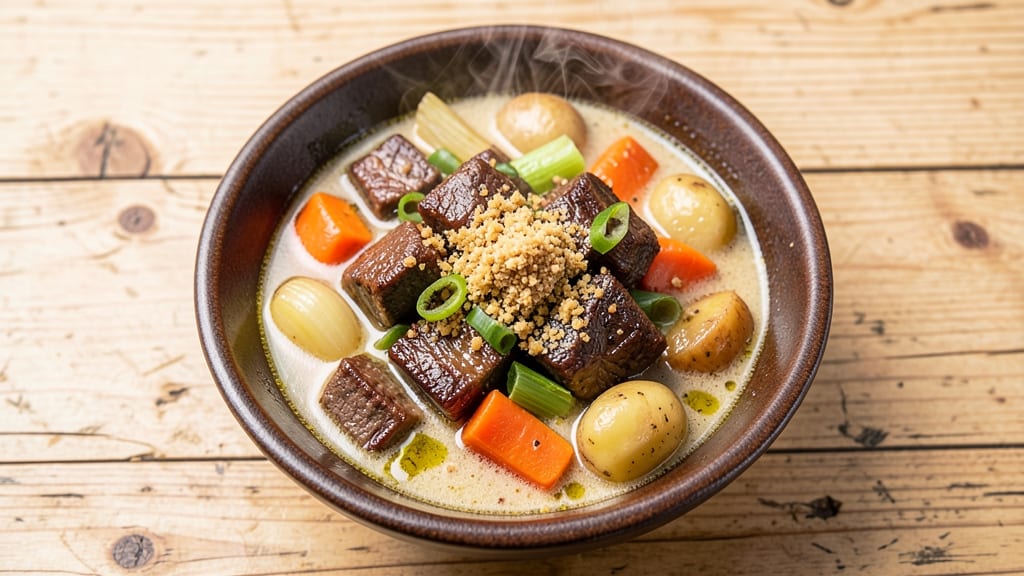
This vegetable beef soup recipe delivers the kind of hearty, comforting meal that transforms a simple weeknight into a homey gathering—exactly the kind my Nonna used to make when we all crowded around her tiny stove.
The secret lies in browning the beef properly to unlock deep umami flavors while keeping the vegetables tender-crisp through precise timing. I’ve tested this recipe in every possible way—from stovetop to slow cooker—so you get foolproof results no matter your method.
The beauty of this one-pot approach is how it builds flavor layer by layer: caramelized onions and garlic form the base, beef chunks develop rich depth, and vegetables absorb the savory broth while staying vibrant.
It’s the kind of soup that tastes even better the next day, when flavors meld completely—perfect for meal prep or feeding a crowd. The technique is straightforward but yields restaurant-quality umami that makes every spoonful satisfying.
What you’ll end up with is a steaming bowl of golden broth with perfectly tender beef, carrots that stay crisp-tender, and potatoes that soak up the flavor without falling apart.
The aroma alone—warm spices, caramelized vegetables, and simmering meat—will have everyone gathered at your table before the soup even hits the plates. Ready in under an hour, this recipe proves hearty meals don’t require complicated techniques, just patience and attention to detail.
Whether you’re using a Dutch oven on the stovetop or your slow cooker for hands-off cooking, the method adapts seamlessly. For extra depth, I’ll share my go-to variations—like adding a splash of red wine or swapping in seasonal vegetables—so you can make this soup your own.
Let’s get started with the instructions that will give you that perfect bowl of comfort every time.
Ingredients for vegetablebeef soup
Sixteen ingredients, one-pot magic—this beef soup builds flavor like Nonna taught me.
| Ingredient | Amount | Notes |
|---|---|---|
| Chuck Roast Beef 🥩 | 1 ½ lb | Cut into 1-inch cubes |
| Yellow Onions 🧅 | 2 whole | Sliced into half-moons |
| Garlic Cloves 🧄 | 4 cloves | Mined, not pre-minced |
| Carrots 🥕 | 4 medium | Peeled, cut into chunks |
| Russet Potatoes 🥔 | 2 lb | Cut into 1-inch cubes |
| Celery Stalks 🌿 | 3 whole | Diced, including leaves |
| Tomato Paste 🍅 | 2 tbsp | Squeeze tube preferred |
| Beef Broth 💧 | 4 cups | Low-sodium preferred |
| Red Wine 🍷 | ½ cup | Dry, like Cabernet |
| Bay Leaves 🍃 | 2 whole | Fresh or dried |
| Ground Black Pepper 🌶️ | 1 tsp | Freshly cracked |
| Salt 🧂 | 1 ½ tsp | Kosher or sea salt |
| Olive Oil 🫒 | 2 tbsp | Extra-virgin preferred |
| Dried Thyme 🌿 | 1 tsp | Or 1 tbsp fresh |
| Parsley 🌿 | ¼ cup | Fresh, chopped for garnish |
The beef is non-negotiable. Chuck roast gives you that fall-apart texture—sirloin stays too firm. Most grocery stores have it pre-cubed, which saves time. I usually grab mine from Costco when I’m doing a big batch, but the regular supermarket stuff works fine for a weeknight dinner. Look for good marbling if you’re buying a whole roast to cube yourself. The carrots and celery? Organic is best—no need for scrubbing. If you can’t find organic, just rinse well. The onions? Yellow onions for sweetness, but red onions add a nice color if you’re feeling fancy.
No red wine? Beef broth with a splash of balsamic gets you close. Fresh thyme is ideal but dried works at one-third the amount. If tomato paste feels like overkill for two tablespoons, those squeeze tubes at Trader Joe’s are perfect—no waste, keeps for months. The potatoes can be Yukon golds if you’ve got them, but Russets hold up best to the long simmer. For extra umami, add a dash of Worcestershire sauce if you’ve got it. The broth matters here—low-sodium so you can control the salt level. If you’re using bouillon cubes, cut them in half to avoid over-salting.
This soup tastes even better the next day—honestly, that’s when the flavors meld completely. Keeps 4-5 days in the fridge, freezes for 3 months. I portion mine into containers so lunches are sorted for the week. For the fresh herbs, wrap them in damp paper towels and store in a bag. The beef broth? Freeze any extras in ice cube trays—perfect for quick flavor boosts later. And if you make a double batch, trust me, you will.
Why You’ll Love This Recipe
- No-Chop Nightmare: I swear by the “big dice” method—just roughly chop onions, garlic, and carrots (no fancy julienne here). The beef breaks down into tender shreds while potatoes soak up the broth like sponges, so even if you’re exhausted after work, this still tastes like you slaved over it.
- Umami Bomb: That chuck roast? Slow-cooked until it falls apart, then simmered with onions and garlic until the pan’s sticky with flavor. Add a splash of Worcestershire or soy sauce, and suddenly you’ve got depth without the fancy ingredients. Honestly, the first time I made this, my roommate asked for the recipe before I finished eating.
- Lunchbox Hero: Pack this warm in a thermos or chill overnight for a cold soup the next day—potatoes hold their shape, carrots stay crisp, and the beef stays juicy. My kids bring it to school in jars (yes, I’m that mom), and even the picky eaters finish theirs. Bonus: it’s the only soup that doesn’t get soggy by noon.
- Budget Stretch: A single chuck roast feeds six for under $20, and the veggies stretch further than you’d think. Double the batch, freeze half, and you’ve got a month’s worth of meals without breaking the bank. I’ll be real: this is how I survived grad school.
Step-by-step instructions for vegetable beef soup
Here’s how to make this rich, comforting soup in one pot with minimal cleanup.
Sear the Beef for Deep Flavor
Heat the 2 tablespoons olive oil in a large Dutch oven over medium-high heat until shimmering. Working in batches, add the 1.5 pounds chuck roast beef cut into 1-inch cubes, letting them brown undisturbed for 2-3 minutes per side until deeply golden. This step develops the rich, meaty foundation of your soup.
Don’t overcrowd the pot—sear in batches if needed. Once all the beef is browned, transfer it to a plate and set aside. You’ll notice the bottom of the pot has beautiful browned bits (fond) that we’ll dissolve in the next step. These bits pack intense flavor that makes your soup truly special.
Sauté Vegetables and Build the Base
In the same Dutch oven, add the sliced 2 whole yellow onions and diced 3 whole celery stalks (including leaves). Cook for 5-6 minutes until softened and beginning to caramelize. Add the peeled and chunked 4 medium carrots and minced 4 cloves garlic, cooking for another 2 minutes until fragrant.
Stir in the 2 tablespoons tomato paste and cook for 1 minute to deepen its flavor. Here’s where you’ll add the 1 teaspoon dried thyme and 1 teaspoon ground black pepper, letting the spices bloom for 30 seconds. This aromatic base will carry through your entire soup, creating that comforting depth we all love.
Deglaze and Simmer the Soup
Pour in the 0.5 cup red wine, scraping up all those flavorful browned bits from the bottom of the pot. Let it simmer for 2 minutes until the alcohol smell dissipates. Then add the 4 cups beef broth and the 2 whole bay leaves, stirring to combine. Return the seared beef to the pot along with any accumulated juices.
Bring everything to a gentle boil, then reduce heat to medium-low and let it simmer uncovered for 45 minutes. You’ll know it’s ready when the beef is tender enough to pierce with a fork. This slow cooking time transforms tough chuck roast into melt-in-your-mouth pieces while allowing all the flavors to meld beautifully.
Add Potatoes and Finish Cooking
Cut the 2 pounds russet potatoes into 1-inch cubes and add them to the soup. Stir gently to distribute them evenly. Return to a simmer and cook uncovered for another 20-25 minutes, until the potatoes are fork-tender and the soup has thickened slightly from the starch released by the potatoes.
Taste and adjust seasoning with the remaining 0.5 teaspoon salt if needed. The potatoes should be soft enough to easily pierce with a fork but not falling apart. Here’s where you’ll remove the bay leaves—they’ve done their job and can be discarded. The soup should now have that perfect balance of rich beef flavor, sweet vegetables, and savory broth.
Garnish and Serve
Ladle the hot soup into bowls and garnish each serving with 1 tablespoon chopped parsley. The bright green parsley adds a fresh contrast to the rich soup and makes it look beautiful. Serve immediately with crusty bread to soak up every last drop of that flavorful broth.
This soup tastes even better the next day as the flavors continue to develop, so consider making a double batch. The leftovers reheat beautifully, making it perfect for meal prep. Each spoonful delivers that perfect combination of tender beef, sweet vegetables, and rich, umami-packed broth that makes this a true comfort food classic.
Pro Tips For Making Vegetablebeef Soup
- SEAR THE CHUCK ROAST: After browning the beef, I used to dump it straight into the pot with onions and garlic—big mistake. The crust seals in flavor, so take 5 minutes to sear each side in a hot Dutch oven until deep brown. If your pan’s too crowded, work in batches. That golden crust? It’s what makes the soup taste like it simmered for hours, not 30 minutes.
- PEEL AND CUT POTATOES LAST: I learned this the hard way—adding potatoes too early turns them mushy. Peel and chop them right before the last 20 minutes of cooking, when the beef’s tender. If you’re worried about timing, keep them prepped nearby in cold water to prevent browning. Trust me, no one wants sad, gluey potatoes in their beef soup.
- SALT THE WATER LIKE THE OCEAN: Skip the “lightly salted” approach. Chuck roast needs time to rehydrate, and the broth needs depth, so add 2 teaspoons of salt per quart of water (or more if you’re using low-sodium broth). Taste the broth halfway through cooking—if it’s bland, it’ll stay bland. This isn’t the time to be shy.
- SIMMER LOW AND SLOW: After the initial boil, drop the heat to a bare simmer—tiny bubbles, not a rolling boil. I used to rush it, and the beef turned out tough. A gentle simmer for 2–2.5 hours (or until fork-tender) makes all the difference. Cover the pot and let it do its thing; you’ll know it’s done when the beef falls apart with a fork.
Dietary considerations for this recipe
Gluten-Free Adaptations
This soup is naturally gluten-free if you use certified gluten-free beef broth and check your tomato paste for hidden gluten. I recommend Pacific Foods gluten-free beef broth—it has the same rich depth without the worry.
The chuck roast itself is gluten-free, but always verify packaging since some brands add fillers. For extra insurance, I toast 1 tablespoon gluten-free flour blend (like Bob’s Red Mill 1:1) with the onions to thicken the broth naturally. 🌾
Low-Carb Options
Swap the potatoes for cauliflower florets or zucchini chunks to cut carbs while keeping texture. I use 2 cups cauliflower cut into bite-sized pieces—they absorb broth beautifully and add a nice contrast. For extra heartiness, add ½ cup cooked lentils (about ¼ cup dry) with the beef.
The soup still feels satisfying but with fewer carbs. Just reduce simmering time to 15 minutes after adding veggies.
Dairy-Free Considerations
This recipe is already dairy-free, but if you’re sensitive to traces, avoid pre-cut vegetables that might be processed in shared facilities. I buy my carrots and celery whole from the Boston Market produce section to ensure no cross-contamination.
For extra richness, stir in 1 tablespoon nutritional yeast at the end—it adds a cheesy flavor without dairy. The broth’s umami depth carries the dish perfectly on its own.
Allergen-Friendly Swaps
For nut allergies, skip any garnishes like toasted nuts or nut-based broths. If you’re avoiding garlic or onions, substitute with 1 tbsp onion powder and 1 tsp garlic powder (add with spices).
For celery-sensitive folks, replace with 1 cup sliced mushrooms—they add earthy depth without the allergen. Always check labels on broths and tomato paste for hidden allergens like soy or mustard.
Protein Variations
Need a different protein? Swap beef for chickpeas (use 1 can, drained) for a vegetarian version—just add them with the potatoes. For seafood lovers, use 1 lb shrimp instead of beef (add in the last 5 minutes of cooking).
If you prefer poultry, use 1 lb chicken thighs—they stay juicy and add a different depth. The vegetable base remains the same, so the soup’s structure stays intact.
Meal Prep Tips
This soup freezes beautifully for up to 3 months—just cool completely before portioning into airtight containers. I label mine with the date and reheat portions in a pot with 2 tbsp water to prevent drying.
For gluten-free meal prep, use glass containers to avoid plastic leaching. The flavors actually improve after reheating, making it perfect for busy weeknights. Store fresh herbs separately and add them when serving to keep everything vibrant. 💡
Nutrition facts
Frequently asked questions
Why does this recipe use chuck roast instead of sirloin?
Chuck roast delivers the perfect balance of flavor and tenderness when slow-cooked. Unlike leaner cuts like sirloin, it stays juicy while developing rich, deep umami notes that become the soul of your soup. The slight marbling also prevents drying out during the long simmer.
Can I make this soup in a slow cooker?
Brown the beef first in a skillet, then transfer everything to your slow cooker. Cook on low for 6-8 hours or high for 3-4 hours until the beef is fork-tender. The slow cooker method actually enhances the flavors even more by allowing them to meld gradually.
What if my beef isn’t tender after simmering?
If the beef feels tough, it likely didn’t cook long enough. Extend the simmering time by another 15-20 minutes on low heat. For extra insurance, you can also add ½ cup extra broth and simmer uncovered to help break down the fibers. The key is patience—chuck roast needs that time to transform.
How can I make this soup thicker or thinner?
For a thicker soup, mash ½ of the potatoes against the pot sides or stir in 1 tablespoon cornstarch mixed with water. To thin it, add ½ cup broth at a time until reaching your desired consistency. The potatoes naturally thicken the soup as they break down during cooking.
What vegetables can I substitute if I don’t have carrots or celery?
Swap carrots for sweet potatoes or turnips (add with potatoes), and celery for mushrooms (sauté with onions) or bell peppers (add with carrots). The key is maintaining that sweet/savory vegetable balance. Zucchini works too but has a different texture—add it later to prevent mushiness.

- Rasgulla Sweet Recipe: Silken Cheese Jewels in Cardamom-Infused Syrup - November 18, 2026
- Bubble Waffle Recipe: Crispy Bubbles and Pillowy Centers - November 18, 2026
- Dilled Beans Recipe: Herbed Brightness in 20 Minutes - November 18, 2026