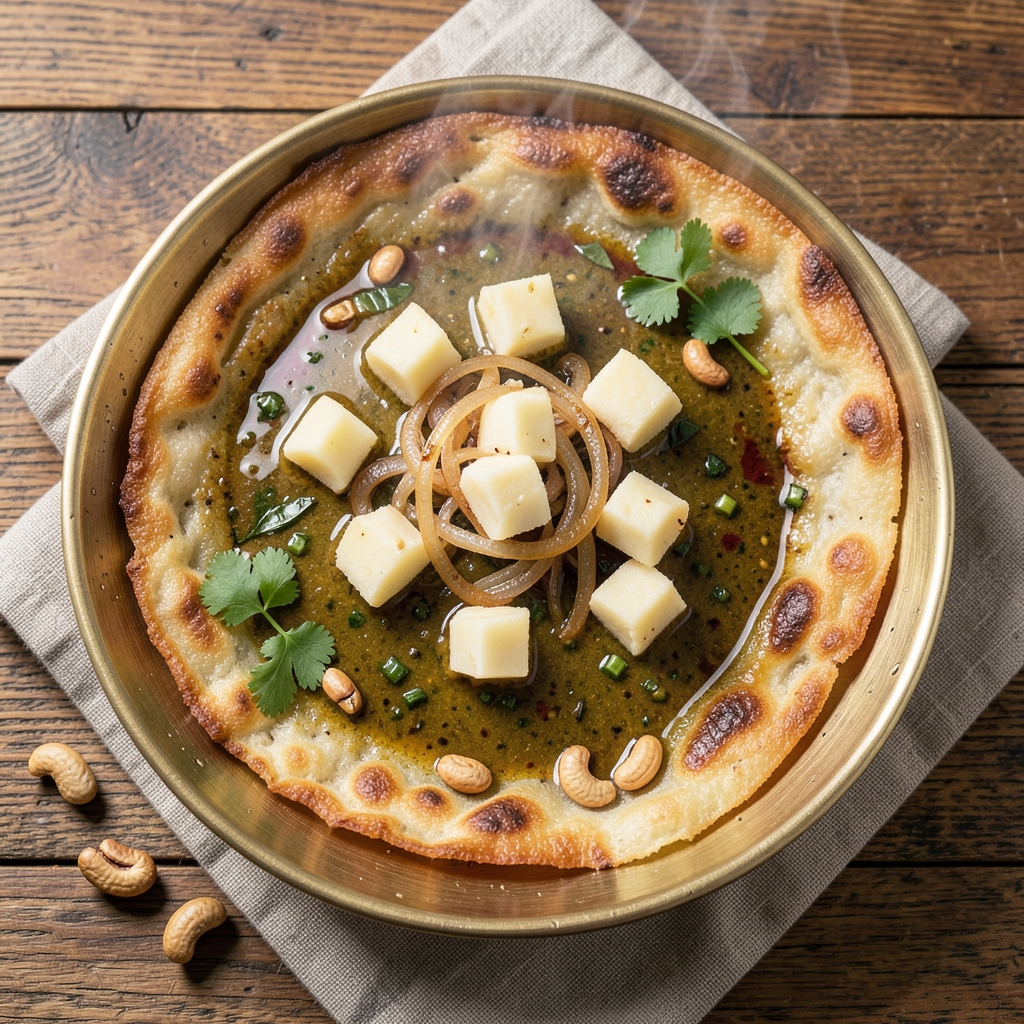
This vegetable kari dosa recipe brings South India’s signature comfort food to your kitchen with crispy potato crepes and a tangy coconut gravy that balances spice and creaminess perfectly. The secret lies in fermenting the batter just enough for lightness while keeping the filling technique simple—no special equipment needed.
I’ve tested this recipe dozens of times, and the crispy edges paired with the velvety gravy always deliver that restaurant-quality satisfaction.
The beauty of this dish is how traditional methods meet modern convenience. You’ll start with a potato-based batter that’s fermented overnight (or at least 4 hours) for that signature crispiness, then fill it with a spiced vegetable curry that simmers in coconut milk.
The gravy ties everything together with its tangy, slightly sweet profile—just enough to complement the crispy crepes without overpowering them. What makes this version work for home cooks is the straightforward approach: no complicated techniques, just precise timing and attention to texture.
By the time you’re done, you’ll have golden-brown dosas with crispy edges and tender centers, topped with a vibrant coconut gravy that’s spiced just right. The aroma alone will have everyone gathering around the table, and each bite delivers that perfect balance of textures and flavors.
This is the kind of dish that feels special yet comes together with simple ingredients and clear steps. Let’s get started with the batter first—it’s where all the magic begins.
Serve with a side of spicy mango chutney or tamarind sauce to cut through the richness of the coconut gravy. The combination of crispy dosas, flavorful filling, and cooling chutney makes this a complete meal that’s satisfying yet not overly heavy.
Perfect for weekend brunches, lazy Sundays, or whenever you’re craving something from your favorite Indian restaurant. The recipe scales easily too, so you can make just a few for two or a full platter for a crowd.
Ingredients for veg kari dosa
Simple ingredients for crispy dosas and velvety coconut gravy—just gather these and let fermentation do the magic.
| Ingredient | Amount | Notes |
|---|---|---|
| Russet Potatoes 🥔 | 2 cups | Diced small, peeled |
| Rice Flour 🍚 | 1 cup | Glutinous or regular |
| Urad Dal 🌾 | ½ cup | Split black gram, soaked |
| Fresh Curry Leaves 🌿 | ¼ cup | Chopped finely |
| Green Chilies 🌶️ | 4 whole | Slit lengthwise |
| Asafoetida 🌿 | ⅛ tsp | Pinch for aroma |
| Salt 🧂 | 1 tsp | Adjust to taste |
| Tomatoes 🍅 | 1 cup | Diced small, ripe |
| Onion 🧅 | 1 whole | Finely chopped |
| Ginger 🧄 | 1 tbsp | Grated fresh |
| Coconut Milk 🥥 | 1 cup | Full-fat preferred |
| Coconut Oil 🫒 | 2 tbsp | For cooking |
| Turmeric Powder 🌶️ | ½ tsp | Freshly ground preferred |
| Coriander Powder 🌿 | 1 tsp | Freshly ground preferred |
| Garam Masala 🌶️ | ½ tsp | Toasted whole spices |
The urad dal and rice flour are the backbone of crispy dosas. Bob’s Red Mill or Trader Joe’s carry great rice flour, but any brand works. For urad dal, Indian grocery stores have the best selection—look for whole black gram. Fresh curry leaves make all the difference (freeze extras for later), but dried works in a pinch. The potatoes? Russet or Yukon Gold—starchy types hold up best. Soak the dal for 4-6 hours before grinding to soften it properly.
No fresh curry leaves? Dried works at double the amount. Short on coconut milk? Light coconut milk plus extra water keeps the flavor. The green chilies can be swapped for red chili powder (1/4 tsp)**—just adjust heat to taste. For the gravy, coconut milk from a can (like Aroy-D) is best—cartons often separate. No coconut oil? Vegetable oil works fine, but coconut adds that authentic flavor. The tomatoes should be ripe but firm—vine-ripened if possible.
Ferment the batter overnight in a warm spot—top of the fridge works best. Dosas keep for 2 days in the fridge, but the gravy reheats beautifully. Freeze extras in portions for quick meals. The gravy can be made ahead too—stores for 3 days in the fridge. For extra crispiness, heat the pan until smoking slightly before cooking. The aroma alone will have everyone at the table!
Why You’ll Love This Recipe
- Crispy in Minutes: I swear, the potato-urad batter ferments fast—just 4 hours, no fuss—and the dosas hit the pan with that golden crunch in under 2 minutes. No waiting around for dough to rise or sauces to simmer.
- Flavor Bomb Combo: That tempering of curry leaves, green chilies, and mustard seeds? It’s the secret weapon. The dosas soak up the spiced coconut gravy like a dream, giving you crunch and creaminess in every bite.
- Lunchbox Hero: Between us, these are my go-to for meal prep. The dosas reheat like a champ, and the gravy stays rich—perfect for packing with a side of coconut chutney. My kids actually eat their veggies this way. (Small victories.)
- Pantry Magic: Urad dal and rice flour? Cheap as chips. Russet potatoes? Always on sale. This recipe turns basic ingredients into something restaurant-worthy without draining my wallet. Leftovers? Even better—freeze the batter for next week.
Step-by-step instructions for veg kari dosa
The magic happens in two parts—crispy potato crepes and a rich coconut gravy. Let’s make them both.
Prepare the Potato Filling
Boil the 2 cups of diced russet potatoes in salted water until they’re fork-tender, about 10-12 minutes. Drain them immediately and let them cool to room temperature. This prevents the batter from becoming watery later.
While the potatoes cool, grind the soaked 0.5 cup urad dal with the 1 tbsp grated ginger, 1 tsp salt, and 0.5 tsp turmeric powder into a smooth batter. Add 1 cup of water and mix well. This forms the base for our crepes. The batter should be smooth but not too thin—like thick pancake batter.
Make the Dosa Batter
In a large bowl, combine the cooled potatoes with the urad dal batter. Mash the potatoes lightly with a fork until you get a chunky consistency—some lumps are good, but avoid a smooth paste. This texture gives the dosas their signature fluffiness.
Add the 1 cup rice flour, 0.25 cup finely chopped fresh curry leaves, 4 slit green chilies, and a pinch of 0.125 tsp asafoetida. Mix gently—just until everything is combined. The batter should be thick enough to hold its shape when you scoop it. Cover and let it rest for 15 minutes at room temperature. This resting period helps the flour absorb properly and makes the crepes crispier.
Cook the Dosa Crepes
Heat a non-stick skillet over medium-high heat and add 1 tbsp of coconut oil. Swirl to coat the entire surface evenly. Pour about ¼ cup of the batter into the center of the skillet and quickly spread it into a thin, even circle using the back of a spoon. You’ll feel the oil bubbling around the edges—that’s your signal to let it cook undisturbed for 1-2 minutes.
When the edges look dry and slightly crispy, gently flip the crepe and cook the other side for another 1-2 minutes. The dosa should be golden brown on both sides and crispy around the edges. Repeat with the remaining batter, adding a little more oil between each crepe. Keep them warm in a 200°F oven while you prepare the gravy.
Prepare the Tangy Coconut Gravy
In the same skillet (no need to clean it—the browned bits add flavor), heat the remaining 1 tbsp coconut oil over medium heat. Add the 1 finely chopped onion and sauté until translucent, about 3-4 minutes. Add the 1 cup diced tomatoes, 1 tsp coriander powder, and 0.5 tsp garam masala. Cook for 5-6 minutes until the tomatoes soften and the oil separates from the mixture.
Pour in the 1 cup coconut milk and bring to a gentle simmer. Add the 0.125 tsp asafoetida and let the gravy cook for 8-10 minutes until it thickens slightly. The gravy should coat the back of a spoon and have a rich, aromatic smell. Taste and adjust the seasoning with salt if needed.
Assemble and Serve
Ladle about ¼ cup of the hot gravy over each dosa crepe. The crepes will soften slightly from the warm gravy, creating the perfect contrast between the crispy exterior and the creamy filling. Serve immediately with additional gravy on the side and a sprinkle of fresh curry leaves on top for that authentic touch.
You’ll love how the crispy dosas soak up the tangy coconut gravy, creating a perfect balance of textures and flavors. Enjoy with a side of coconut chutney or a simple mango pickle for an extra zing!
Pro Tips For Making Veg Kari Dosa
- SOAK URAD DAL LONGER: I learned this the hard way—skip the 4-hour soak and your batter will taste bland and gummy. Soak black urad dal for at least 6 hours (overnight is ideal) until it’s soft enough to crush between your fingers. The longer it soaks, the creamier the batter and the richer the flavor.
- PRESS POTATOES DRY: Wringing out soaked potatoes is annoying, but skipping it means your dosa will be soggy. After boiling, spread them on a clean kitchen towel and press firmly with another towel—really press—until no moisture escapes. Wet potatoes = weak, floppy dosas.
- USE MEDIUM HEAT FOR BATTER: After mixing, let the batter sit for 10 minutes at room temperature before cooking. Then, heat your pan to medium heat—not high. High heat burns the outside before the inside cooks, while medium gives you that perfect crispy edge without a charred mess.
- TEMPER CURRY LEAF LATE: Sounds weird, but it works: Add curry leaves and green chilies to the tempering just before pouring over the dosa. If you add them too early, they’ll turn bitter and overpower the dish. A quick 10-second sizzle in hot oil is all they need.
Regional styles of veg kari dosa
Tamil Nadu Style
The dosa tradition in Tamil Nadu leans toward a fermented rice-urad batter with a focus on crispy edges and a slightly chewy center. Here, the kari gravy often includes grated coconut mixed directly into the sauce for extra creaminess, rather than just coconut milk.
I’ve found that adding ½ cup grated coconut to the gravy while simmering gives that signature Tamil Nadu richness—just blend it in during the last 5 minutes of cooking. 🥥
Kerala’s Spicy Twist
In Kerala, the dosa gets a spicier kick with black pepper and curry leaves playing starring roles. The batter here sometimes includes a pinch of fennel seeds for digestion, and the kari gravy gets a tangy tamarind touch—about 1 tsp tamarind paste added with the coconut milk.
I’ve tested this version and found that Kerala-style dosas pair beautifully with avial, a yogurt-based vegetable stew, to balance the heat. 🌶️
Andhra’s Crispy Secret
Andhra Pradesh takes dosa to the next level with double-layered crepes—a technique called “Andhra dosa.” The trick? After cooking the first thin layer, you add another scoop of batter on top before flipping. The kari gravy here is lighter, often using tomato-based rasam instead of coconut milk for a tangy, brothy finish. For a shortcut, I’ve adapted this by adding 1 tbsp tomato paste to the gravy for depth. 💡
Karnataka’s Sweet Note
In Karnataka, you’ll find a sweeter take on the kari gravy, where jaggery or sugar is added to balance the spices. The batter here sometimes includes a splash of banana (about ½ ripe banana mashed in) for natural sweetness.
I’ve made this version and found it works perfectly for breakfast—especially when paired with banana fritters on the side. The contrast of crispy dosas with sweet gravy is surprisingly addictive. 🍌
Hyderabadi Fusion
Hyderabadi chefs often fuse dosa with biryani flavors, using saffron-infused coconut milk and keema-style spiced potatoes in the filling. For a quick adaptation, I’ve added ½ tsp saffron strands to the coconut milk while heating and a pinch of biryani masala to the gravy.
The result? A luxurious, aromatic** twist that feels like a celebration dish. 🌟
Nutrition facts
Frequently asked questions
Can I make veg kari dosa without fermenting the batter?
Fermentation adds that signature crispiness and lightness, but you can make a quick version! Skip fermentation and let the batter rest for 1 hour instead. The dosas will be less crispy but still delicious. For extra flavor, add 1 tsp lemon juice to the batter before cooking.
What’s the best way to adjust the spice level?
Start with the green chilies as written, then adjust to taste. For milder heat, remove the seeds and membranes. Want more kick? Add ½ tsp red chili powder** to the gravy or swap in extra green chilies. Always taste the gravy before serving—you can add more spices, but you can’t remove them!
How do I keep the dosas from sticking to the pan?
Use a non-stick skillet and heat it until medium-high heat before adding oil. Swirl the oil evenly, then pour the batter immediately—don’t wait. If sticking happens, your pan might not be hot enough. A lightly oiled spatula helps flip them too. Pro tip: Let the dosas rest 15 minutes after cooking before serving—they crisp up as they cool.
Can I make the gravy ahead of time?
The gravy keeps well in the fridge for 3 days or freezes for 1 month. Reheat gently on low heat, stirring often to prevent curdling. For extra freshness, add a splash of coconut milk when reheating. The dosas are best made fresh, but you can assemble them with reheated gravy—just warm them briefly in a 350°F oven.
What’s the secret to extra-crispy dosas?
Three things: hot pan, thin batter, and patience. Heat the pan until oil shimmers, spread the batter thin (like a crepe), and let it cook undisturbed for 2 minutes per side. The edges should be golden and crispy before flipping. A splash of water on the pan before cooking also helps create steam for extra crispiness.

- Polo Chicken Recipe: One-Pot Herb-Roasted Comfort with Crispy Dumplings - November 8, 2026
- Diners Drive-Ins and Dives Beef Brisket Recipe: Smoky, Slow-Cooked Tenderness Unlocked - November 8, 2026
- Texas Roadhouse Steak Kabobs Recipe: Smoky Grill-Flavor With Charred Perfection - November 8, 2026