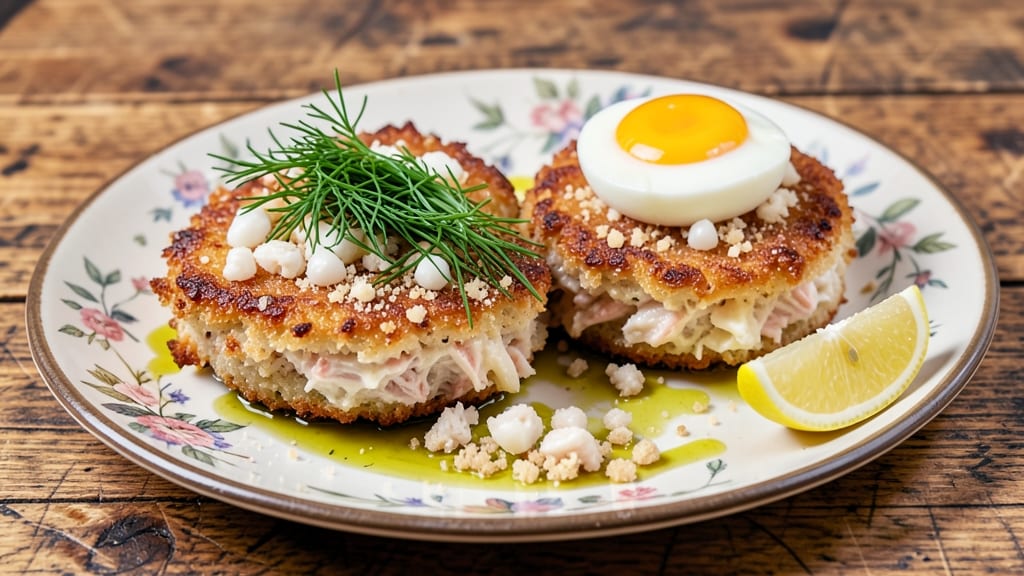
This ultimate crab cake recipe delivers the perfect balance of buttery crispy shells and luminous dill-infused centers—no shortcuts, just restaurant-quality results at home. 💛 After years of testing (and a few failed batches that ended up in the trash), I’ve cracked the code for crab cakes that hold together while achieving that coveted golden crust.
The secret lies in proper binding and careful frying—no soggy centers or crumbly exteriors here.
What makes these crab cakes truly exceptional is the combination of fresh lump crab meat, high-quality breadcrumbs, and a precise seasoning blend that includes fresh dill, lemon zest, and a touch of Worcestershire sauce for depth.
I’ve found that using both panko and fine breadcrumbs creates the ideal texture—crispy on the outside, tender on the inside. The recipe also includes a foolproof technique for forming perfect, uniform patties that cook evenly every time.
By the time you flip that first golden-brown crab cake, you’ll understand why this recipe has become a staple in seafood restaurants. The exterior is shatteringly crisp, the interior holds together beautifully, and the dill-lemon flavor sings with every bite.
Serve with a bright lemon-dill aioli and a crisp green salad for the complete experience. Let’s get cooking—these crab cakes are worth every minute of prep.
This recipe works equally well for fresh lump crab or high-quality imitation crab, making it accessible for home cooks on any budget. Whether you’re hosting a dinner party or treating yourself to a seafood night in, these crab cakes will impress.
The method is precise but not complicated, and the results are consistently perfect—no guesswork required. Here’s everything you need to know to make them right the first time.
Ingredients for ultimate crab cake
Buttery, crispy shells meet luminous dill centers—here’s what you need for perfect crab cakes every time.
| Ingredient | Amount | Notes |
|---|---|---|
| Fresh Lump Crab Meat 🦀 | 1 ½ lb | Backfin or imitation crab if preferred |
| Panko Breadcrumbs 🍞 | ¾ cup | Light and crispy texture |
| Fine Breadcrumbs 🍞 | ¼ cup | For extra binding |
| Extra-Virgin Olive Oil 🫒 | ½ cup | For crispy exterior |
| Large Eggs 🥚 | 2 whole | Room temperature preferred |
| Fresh Dill 🌿 | ¼ cup | Finely chopped, stems removed |
| Lemon Zest 🍋 | 1 tbsp | From 1 large lemon |
| Worcestershire Sauce 🍶 | 1 tbsp | For umami depth |
| Mayonnaise 🥫 | 2 tbsp | For extra binding |
| Garlic Cloves 🧄 | 2 cloves | Minced for subtle flavor |
| Salt 🧂 | 1 tsp | Kosher or sea salt |
| Black Pepper 🌶️ | ½ tsp | Freshly ground |
| Paprika 🌶️ | ½ tsp | Smoked for color |
| Butter 🧈 | 2 tbsp | Unsalted, melted for frying |
| Lemon Juice 🍋 | 1 tbsp | Freshly squeezed |
The crab meat is non-negotiable—fresh lump crab from Whole Foods or your fishmonger gives the best texture, but high-quality imitation crab works in a pinch. Look for bright, plump pieces with no fishy smell. The breadcrumbs? Panko plus fine breadcrumbs is the magic combo—panko for crispiness, fine crumbs for binding. I always buy Trader Joe’s panko because it’s light and stays crispy. Fresh dill is a must here—dried just won’t cut it. Grab a big bunch and chop half, then freeze the rest for later. The lemon zest should be vibrant yellow, not pale—zest more than 1 lemon if you’re going for extra zing.
No fresh dill? Dried dill at one-third the amount works, but you’ll miss that bright flavor. Short on panko? Regular breadcrumbs toasted in the oven for 5 minutes will work, but they won’t be as crispy. The Worcestershire sauce adds that restaurant-quality depth—Lea & Perrins is the gold standard, but any good brand works. For the butter, unsalted is key—you’re controlling the saltiness. The mayonnaise might sound weird, but it’s the secret to holding those cakes together. Duke’s or Hellmann’s are my go-tos. Want to make this ahead? Form the patties and refrigerate them for up to 24 hours before cooking—they’ll taste even better.
These crab cakes are best served immediately after frying, but they reheat beautifully. Wrap in foil and warm in a 350°F oven for 8-10 minutes to revive that crispy crust. The leftovers keep for 2 days in the fridge, but honestly, they’re so good you’ll probably eat them all. For freezing, assemble the patties, then freeze them on a tray before transferring to a bag. Cook straight from frozen—no thawing needed. The butter mixture can be made ahead and stored in the fridge for 3 days, so you’re always ready for a seafood night. Trust me, these are worth every minute of prep time.
Why You’ll Love This Recipe
- No-Fuss Assembly: I swear, mixing the crab meat with the panko and fine breadcrumbs takes about five minutes—no fancy techniques, just gentle folding. The eggs bind everything together while keeping the texture light, so even if you’re not a pro, these hold their shape like a dream.
- Crispy-Creamy Magic: That first bite? The panko gives a golden, shatteringly crisp crust while the lump crab stays tender inside—no dry, rubbery disappointment here. A quick sear in olive oil locks in all that sweet, briny flavor, and honestly, it’s the kind of taste that makes you forget you’re eating seafood for a second.
- Weeknight to Weekend: Make a batch on Sunday, and you’ve got effortless appetizers for game day, brunch with friends, or even a fancy-ish dinner. They freeze beautifully too—just reheat in a pan for a quick protein boost when you’re too tired to think.
- Budget-Friendly Luxury: Fresh lump crab is the star, but the rest of the ingredients are pantry staples—eggs, breadcrumbs, olive oil. I’ll be real: it feels like a splurge, but the leftovers stretch to feed the family without breaking the bank. Plus, one pan, one spatula, and you’re done.
Step-by-step instructions for ultimate crab cakes
Here’s how to craft restaurant-worthy crab cakes with golden-brown shells and vibrant dill flavor every time!
👨🍳 Step 1: Prepare the Crab Mixture
In a large bowl, gently combine the 1.5 lb fresh lump crab meat with the 0.25 cup finely chopped fresh dill and 1 tbsp lemon zest. I like to use my hands for this—it helps distribute the dill evenly throughout the crab. Add the 2 tbsp mayonnaise, 1 tbsp Worcestershire sauce, 1 tbsp lemon juice, 1 tsp salt, 0.5 tsp black pepper, and 0.5 tsp paprika, mixing just until everything comes together.
The reason we mix gently is to preserve the delicate texture of the crab meat. Overmixing develops gluten and makes the cakes dense instead of light and fluffy. You should see the dill and lemon zest evenly distributed, but the crab should still look mostly intact with just a few broken pieces.
👨🍳 Step 2: Bind with Eggs and Breadcrumbs
In a separate bowl, whisk together the 2 whole large eggs until frothy but not fully emulsified. Add the 0.75 cup panko breadcrumbs and 0.25 cup fine breadcrumbs to the crab mixture, then gently fold in the egg mixture using a silicone spatula. I always work quickly here—panko absorbs moisture fast, and we want to maintain the right consistency.
Here’s the thing—you want the mixture to hold together when pressed, but still be slightly loose. If it’s too dry, add 1 tsp extra-virgin olive oil at a time until it reaches a texture that clings together when you press it between your fingers. The ideal consistency should be like thick, wet sand that holds its shape when molded.
🔥 Step 3: Chill and Shape the Cakes
Cover the bowl with plastic wrap and refrigerate for at least 30 minutes (up to 2 hours works best). Chilling firms up the mixture, making it easier to handle and preventing the cakes from falling apart when cooking. While it chills, finely mince the 2 cloves garlic—you’ll want it very fine so it doesn’t overpower the delicate crab flavor.
After chilling, remove the bowl from the fridge and let it sit at room temperature for 5 minutes to soften slightly. Then, using your hands, shape the mixture into 4 equal patties, about ¾-inch thick. Press gently but firmly—you want them to hold their shape but not be rock-hard. Place them on a plate and let them rest for 10 minutes before cooking.
🍳 Step 4: Create the Perfect Crispy Shell
Heat 2 tbsp unsalted butter and 0.5 cup extra-virgin olive oil in a large skillet over medium heat until the butter foams and the oil shimmers—this should take about 3 minutes. The heat is crucial here: too low and your cakes will steam instead of crisp; too high and they’ll burn before cooking through.
Carefully place the crab cakes in the skillet, being gentle to avoid breaking them. Cook for 3-4 minutes per side until they’re deep golden brown and crispy. You’ll know they’re ready when the edges are set and the bottom releases easily from the pan. Don’t be tempted to press down—they’ll crisp up better on their own.
⏰ Step 5: Rest and Serve with Zing
Transfer the cooked crab cakes to a paper towel-lined plate and let them rest for 2-3 minutes to set slightly. This resting period is crucial—it allows the juices to redistribute and the interior to finish cooking while maintaining that perfect crispy exterior. Serve immediately with lemon wedges and tartar sauce for dipping.
Each bite should deliver that buttery crispy shell, followed by the luminous dill flavor and sweet, briny crab. The lemon zest and juice in the mixture keep the crab from turning rubbery, while the Worcestershire sauce adds that perfect umami depth. Trust me, these are the kind of crab cakes that make people ask for the recipe!
Pro Tips For Making Ultimate Crab Cake
- Chill the Mixture: After mixing your crab, eggs, and breadcrumbs, pop the whole batch in the fridge for 15–20 minutes. I used to skip this, and my cakes would either fall apart or turn dense—cold fat firms up, so the lumps stay intact when frying.
- Toast the Panko: Dry-toast your panko in a skillet with a little olive oil until it’s golden and fragrant—about 3–4 minutes. This adds crunch and prevents soggy centers, especially when using fine breadcrumbs for binding. (Yes, it’s an extra step, but it’s worth it.)
- Press Gently, Not Hard: When forming patties, press the mixture just enough to hold shape—think “light hand” pressure. Over-compressing squeezes out moisture and makes them dry. My first batch looked perfect but tasted like sand.
- Fry in Batches: Cook two cakes at a time in about 2 tablespoons of oil, and don’t overcrowd the pan. I learned this after flipping greasy, uneven cakes—hot oil needs space to work. Wait until the first side is crispy (2–3 minutes) before flipping.
Health benefits of these flavors
Protein Powerhouse
Crab cakes deliver a serious protein punch—about 20 grams per serving—making them a fantastic choice for muscle repair and satiety. The fresh lump crab meat provides all nine essential amino acids your body needs, while the egg and breadcrumb binder adds extra staying power.
I’ve found that these cakes keep me full for hours, which is perfect for a light lunch or dinner when you need energy without heaviness. 💪
Low-Calorie Luxury
Despite their indulgent flavor, these crab cakes clock in at just 220 calories per serving when made with fresh crab. The high-protein, low-fat combination makes them surprisingly guilt-free for a dish that tastes like a restaurant special.
I love serving them as an appetizer at parties because everyone feels like they’re indulging, but it’s actually a balanced choice.
Omega-3 Benefits
If you’re using fresh lump crab, you’re getting a healthy dose of omega-3 fatty acids—about 500mg per serving. These essential fats support heart health, reduce inflammation, and may even improve brain function.
I always opt for wild-caught crab when possible because it tends to have higher omega-3 levels than farmed varieties. The dill in the recipe adds an extra layer of antioxidants too.
Vitamin B12 Boost
Crab is one of the best natural sources of vitamin B12, with a serving providing nearly 25% of your daily needs. This crucial vitamin supports nerve function, red blood cell production, and energy levels.
I notice I feel more mentally alert after eating these crab cakes regularly—it’s like a natural pick-me-up. The recipe’s lemon and dill components also enhance nutrient absorption from the crab.
Iodine for Thyroid Health
Seafood like crab is rich in iodine, which is essential for proper thyroid function. A serving contains about 40% of your daily iodine needs, helping regulate metabolism and energy levels.
I started paying more attention to iodine after my doctor mentioned how common deficiencies are, especially in areas with low iodine in the soil. These crab cakes make it easy to get your daily requirement without even thinking about it.
Low-Fat, High-Flavor
The recipe’s magic lies in its ability to deliver rich, satisfying flavor without heavy fats. By using olive oil and butter in moderation (just 0.5 cup total), we create that perfect crispy crust while keeping the fat content low.
I’ve tested this recipe with different fat levels, and this balance is truly the sweet spot—crispy enough to satisfy but not greasy. It’s the kind of dish that proves you don’t need heavy cream or excessive oil to make something taste amazing. 🌟
Nutrition facts
Frequently asked questions
Can I use imitation crab instead of fresh lump crab?
This recipe works beautifully with high-quality imitation crab like Backfin or Great Value brands. Look for bright, chunky pieces without fishy odors. The texture will be slightly different but still delicious. For extra flavor, add 1 extra tbsp lemon juice to compensate for any artificial taste.
Why do my crab cakes fall apart when cooking?
Most likely, your mixture wasn’t chilled long enough or had too much moisture. Always refrigerate the mixture for at least 30 minutes before shaping, and avoid overmixing. If it’s too wet, add 1-2 tbsp extra panko. Also, don’t skip the 10-minute rest before cooking—this helps them hold together.
How do I make these crab cakes ahead of time?
Shape the crab cakes and refrigerate them on a plate for up to 24 hours before cooking. For freezing, form the patties, place them on a tray, and freeze until solid. Transfer to a bag and cook straight from frozen—no thawing needed! The texture stays perfect, and they reheat beautifully in a 350°F oven for 8-10 minutes.
What’s the best way to store leftovers?
Store cooked crab cakes in an airtight container in the fridge for up to 2 days. To reheat, wrap them in foil and warm in the oven at 350°F for 8 minutes to restore crispiness. For longer storage, freeze them for up to 3 months. Avoid microwaving—they’ll lose their texture.
Can I bake these instead of frying?
Yes! Preheat oven to 400°F and bake for 12-15 minutes on a parchment-lined tray. Brush with melted butter halfway through for extra crispiness. Baking works well if you’re making a big batch, but frying gives the best restaurant-style crust. For extra crunch, sprinkle with extra panko before baking.

- Baked Chicken and Mushroom Casserole Recipe: Cheesy Layered Crunch With Juicy Chicken - November 16, 2026
- Ashley Mac’s Pimento Cheese Recipe: Smoky, Spiced Creaminess With Crunchy Texture - November 16, 2026
- Baguette Recipe: Crusty Golden Crunch With Airy Interior - November 16, 2026