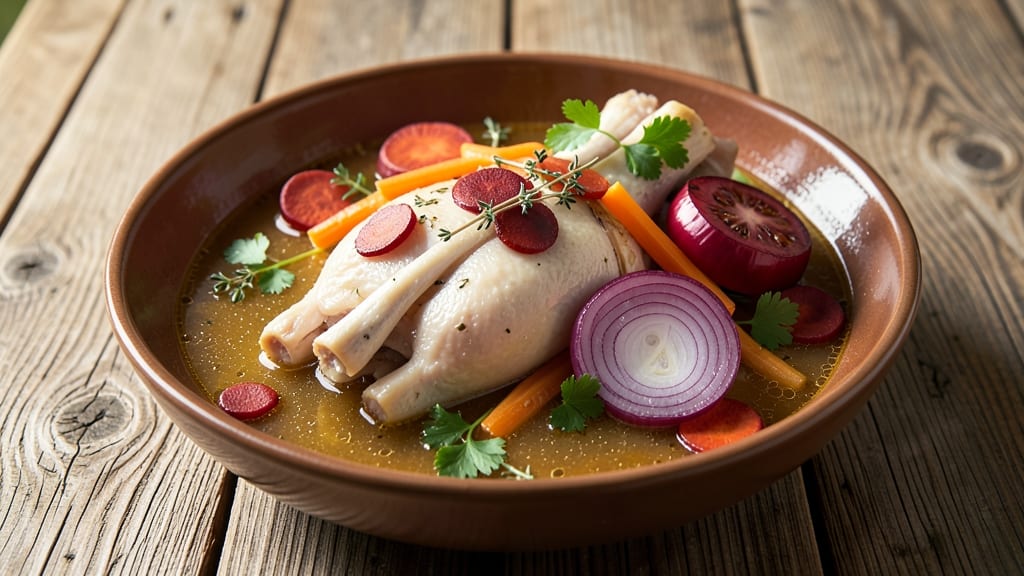
Transforming a turkey carcass into a rich, golden broth is the ultimate act of kitchen resourcefulness—turning what many see as waste into a flavor-packed centerpiece. 💛 I learned this trick from my Nonna, who’d always say, “Every bite deserves a second life,” and she wasn’t wrong.
The secret lies in roasting the bones first to deepen the flavor, then simmering them for hours until the broth is so velvety it’ll make you forget it started as leftovers.
This isn’t just about stock—it’s about sustainable cooking that respects both your wallet and the ingredients. With just a few pantry staples (vinegar, herbs, onion scraps), you’ll create a broth so aromatic it’ll have your whole house asking what’s for dinner.
The best part? You can use it for soups, gravies, or even crispy fried turkey skin—proof that good food doesn’t have to go to waste.
By the time you’re done, you’ll have a golden, deeply flavorful broth that’s richer than anything store-bought. The roasted bones infuse the liquid with a smoky, savory depth, while the herbs add bright, herbal notes that balance everything perfectly.
It’s the kind of dish that turns a simple carcass into a centerpiece—no fancy ingredients required.
Pair it with mashed potatoes, crusty bread, or a hearty green salad for a meal that feels like a hug on a plate. Let’s turn that turkey carcass into something extraordinary—here’s how.
Ingredients for turkey carcass
A few simple ingredients transform turkey leftovers into liquid gold—rich, aromatic, and full of flavor.
| Ingredient | Amount | Notes |
|---|---|---|
| Turkey Carcass 🦃 | 1 whole | Freshly roasted, meat removed |
| Yellow Onion 🧅 | 1 whole | Quartered, skin on for color |
| Carrots 🥕 | 3 whole | Cut into large chunks |
| Celery Stalks 🥬 | 3 whole | Cut into 2-inch pieces |
| Fresh Parsley Stems 🌿 | 1 cup | Tough stems only, chopped |
| Fresh Thyme Sprigs 🌿 | 4 whole | Stems intact for simmering |
| Fresh Rosemary Sprigs 🌿 | 2 whole | Woody stems preferred |
| Garlic Cloves 🧄 | 6 cloves | Smash lightly, skin on |
| White Wine Vinegar 🍷 | ¼ cup | Brightens the broth |
| Water 💧 | 8 cups | Filtered preferred |
| Salt 🧂 | 1 tsp | Kosher or sea salt |
| Black Peppercorns 🌶️ | ½ tsp | Crushed for depth |
| Bay Leaves 🍃 | 2 whole | Dried, standard size |
| Extra-Virgin Olive Oil 🫒 | 1 tbsp | For roasting bones |
The turkey carcass is your flavor foundation—roast it first (450°F for 20 minutes) to deepen the color and flavor. Costco or grocery store carcasses work, but avoid ones with plastic packaging. The onion, carrots, and celery form the aromatic trio—don’t peel the onion (skin adds color). For herbs, I grab fresh thyme and rosemary from the grocery store’s produce section—they’re cheaper than dried and pack more punch. The parsley stems? Most people toss them, but they’re packed with flavor. Trader Joe’s has great organic bundles for this.
No white wine vinegar? Apple cider vinegar or lemon juice works in a pinch, but the brightness is key. Short on herbs? Dried thyme at one-third the amount gets you close, but fresh is always better. The garlic cloves can be peeled or left whole—they’ll soften during simmering. For extra depth, add a 1-inch piece of ginger if you’ve got it. The water should be cold to start—hot water can cook the vegetables too quickly. And don’t skip the salt and pepper—this isn’t just stock, it’s a flavor bomb.
This broth keeps for 5-7 days in the fridge, but it gets better with time. Freeze in ice cube trays for easy portions—perfect for future soups or gravies. I usually make a double batch and freeze half. The roasted bones? Save them—they make the best crispy fried turkey skin for sandwiches. And if you’re feeling fancy, reduce the broth by half for a rich gravy. Every drop is worth it.
Why You’ll Love This Recipe
- Zero-Waste Magic: I swear by this trick—turning leftover turkey bones into something delicious instead of tossing them. The bones themselves are the star, simmering down into rich, gelatinous goodness that turns tough veggies into melt-in-your-mouth perfection.
- Savory Depth Bomb: That first sip of broth? Chef’s kiss. The onion, carrots, and celery create a classic trio that builds layers of flavor—sweet from the carrots, sharp from the onion, and a fresh herbal finish from the parsley. It’s the kind of taste that makes you slow down and savor every spoonful.
- Weeknight Workhorse: Between us, this is my go-to when I need something hearty but hands-off. Toss everything in a pot, cover it with water, and let it simmer while I handle dinner chaos. By the time the kids are in bed, I’ve got a pot of gold (or broth) waiting for me.
- Budget-Friendly Luxury: Honestly, it’s one of the cheapest ways to stretch a holiday turkey into a full week of meals. The bones are free, the veggies are cheap, and the result? A broth so rich it feels like a restaurant-quality secret. My wallet and my taste buds thank me every time.
Step-by-step instructions for turkey carcass broth
Turn your leftover turkey bones into liquid gold with this simple, flavor-packed method.
🔥 Step 1: Roast the Carcass for Deep Flavor
Preheat your oven to 450°F. Place the turkey carcass on a rimmed baking sheet and drizzle with the 1 tablespoon extra-virgin olive oil. Rub it all over the bones and any remaining meat bits to help extract maximum flavor.
Roast the carcass for 20-25 minutes, turning occasionally, until the bones are deep golden brown and any remaining meat is crispy. This step develops a rich, nutty base that infuses into your broth. Don’t rush this—you’re building flavor foundation here.
👨🍳 Step 2: Sauté the Aromatics
While the carcass roasts, prepare your vegetables. In a large stockpot, heat the oven over medium heat. Add the quartered yellow onion, 3 whole carrots cut into chunks, and 3 whole celery stalks cut into 2-inch pieces. Sauté for 5-7 minutes until they begin to soften and release their fragrance.
Add the 6 lightly smashed garlic cloves (skin on), 4 whole fresh thyme sprigs, 2 whole fresh rosemary sprigs, and 2 whole bay leaves. Stir for 1 minute until the garlic becomes fragrant. This layering of aromatics creates complex flavor that will develop during simmering.
🥘 Step 3: Build the Broth Base
Transfer the roasted turkey carcass to your stockpot with the sautéed vegetables. Add the 8 cups water and 0.25 cup white wine vinegar. The vinegar brightens the broth and helps extract collagen from the bones. Bring everything to a rolling boil over high heat.
Once boiling, reduce heat to low and skim off any foam or impurities that rise to the surface with a ladle. This ensures a clear, clean broth. The liquid should gently bubble—if it’s too vigorous, reduce heat slightly. This simmering process is where all the magic happens.
⏰ Step 4: Simmer for Maximum Richness
Cover the pot and let it simmer gently for 3-4 hours, maintaining a low bubble. Check occasionally and add water if the liquid level gets too low. You’ll know it’s ready when the bones can be easily separated from the meat with your fingers and the broth has reduced slightly.
Here’s the thing—patience pays off. The longer it simmers, the more gelatin releases from the bones, creating that velvety texture. The broth should smell incredible—like a symphony of roasted turkey, herbs, and vegetables. This is your reward for waiting.
🔪 Step 5: Strain and Finish
After simmering, remove the pot from heat and let it sit for 10 minutes to allow any settled particles to sink. Strain the broth through a fine-mesh sieve into a clean pot or bowl, pressing gently on the solids to extract every last bit of flavor.
Discard the solids (or compost them—they’re flavorful!). Return the broth to the pot and stir in the 1 teaspoon salt and 0.5 teaspoon crushed black peppercorns. Taste and adjust seasoning—you might need a bit more salt depending on your water quality. Let it cool slightly before storing or using.
Pro Tips For Making Turkey Carcass
- Roast Until Blackened: Don’t stop when the carcass is bone-brown—keep it in until the meat pulls cleanly off the bones and the bones themselves turn dark gray or black. I used to pull it out too soon, and the broth ended up weak. A 350°F oven for 2–3 hours, uncovered, does the trick. (Yes, even if it looks sad.)
- Chop Veggies Uniformly: Cut onions, carrots, and celery into ½-inch chunks—no smaller, no larger. Big pieces take forever to soften, while tiny ones burn before they flavor. I learned this the hard way after burning a batch of mirepoix. A sharp knife and a steady hand make this step worth the effort.
- Skip the Parsley Stems: Parsley stems are tough and bitter—save them for garnish or compost. Use only the leaves for the broth; they release flavor without turning the stock grassy. I was skeptical until I tried it, and now I swear by it.
- Strain Twice for Clarity: After simmering, strain the broth through a fine-mesh sieve first, then a cheesecloth-lined colander. This catches all the grit and sediment that ruin an otherwise perfect stock. It’s extra work, but the result is smooth, golden perfection. (Your future self will notice the difference.)
Wine and beer pairings for this dish
Red Wine Pairings
A bold Pinot Noir from Oregon or Burgundy is my go-to choice for this rich turkey broth—its earthy notes and subtle fruitiness complement the deep umami flavors without overpowering them. I love a 2019 Domaine Drouhin or La Crema Pinot Noir for their balance of acidity and smooth tannins.
The wine’s bright acidity cuts through the broth’s richness, making each sip feel refreshing. 🍷
Crisp White Options
For a lighter touch, try a Chardonnay with minimal oak—something like a California Sonoma Coast Chardonnay from Flowers Vineyard. The citrus and green apple notes in the wine mirror the herbal brightness of thyme and rosemary in the broth, creating a harmonious balance.
If you prefer something even crisper, a Sauvignon Blanc from New Zealand adds a zesty contrast that pairs beautifully with the broth’s savory depth.
Beer Pairings
A German-style Helles Lager like Weihenstephaner Original is a fantastic match—its malty sweetness and clean finish complement the broth’s herbal and roasted notes without competing.
For a local option, I reach for a crisp Boston Beer Company Samuel Adams Noble Pilsner, which offers a refreshing hoppy bite that cleanses the palate after each sip. 🍺
Seasonal Cider
Don’t overlook dry hard cider as a pairing—especially in fall. A New England-style cider from Angry Orchard or Woodchuck Hard Cider brings a subtle tartness that enhances the broth’s savory flavors.
The slight effervescence also makes it feel lighter, perfect for sipping alongside a warm bowl of soup. It’s a pairing that feels as cozy as the dish itself.
After-Dinner Digestif
If you’re serving this broth with a hearty meal, finish with a small glass of Port wine—specifically a Ruby Port like Graham’s Six Grapes. The wine’s sweetness and depth mirror the richness of the broth, making it a satisfying closer.
The port’s caramel notes also echo the caramelized flavors from the roasted turkey bones, tying the whole experience together beautifully. ✨
Nutrition facts
Frequently asked questions
How long can I store turkey carcass broth?
This rich broth stays fresh in the refrigerator for 5-7 days in an airtight container. For longer storage, freeze it in ice cube trays or 1-cup portions for up to 6 months. The flavor actually improves over time as the gelatin develops! Thaw overnight in the fridge before using.
Can I use a frozen turkey carcass?
Thaw the carcass completely in the refrigerator (24 hours for a whole carcass) before roasting. The flavor won’t suffer—frozen carcasses work just as well as fresh ones. Just pat it dry before roasting to get maximum crispiness on the bones.
What can I do with leftover turkey meat from the carcass?
Pick all the meat off the bones during roasting—it crisps up beautifully! Use it for fried turkey skin sandwiches, turkey pot pie, or turkey tacos. The crispy bits add amazing texture to soups or salads too. Don’t waste a single bite—it’s pure flavor gold!
Can I make this broth in a slow cooker?
Yes! Roast the carcass first as directed, then transfer everything to your slow cooker with 10 cups water (extra for evaporation). Cook on low for 8-10 hours or high for 5-6 hours. The slow cooker method is perfect for hands-off flavor development. Just skim foam occasionally.
What if my broth tastes bland?
Don’t panic! Add a splash of soy sauce (1 tsp), a pinch of MSG, or a few drops of fish sauce to deepen umami. A squeeze of lemon juice can brighten it too. The broth should taste rich and savory—if it’s flat, it likely needs more seasoning or longer simmering next time.

- Baguette Recipe: Crusty Golden Crunch With Airy Interior - November 16, 2026
- Texas Roadhouse Bread Recipe: Buttery, Pull-Apart Softness With Every Tear - November 16, 2026
- Pork Tenderloin With Cranberry Sauce Recipe: Sweet-Tart Glaze That Elevates Every Bite - November 16, 2026