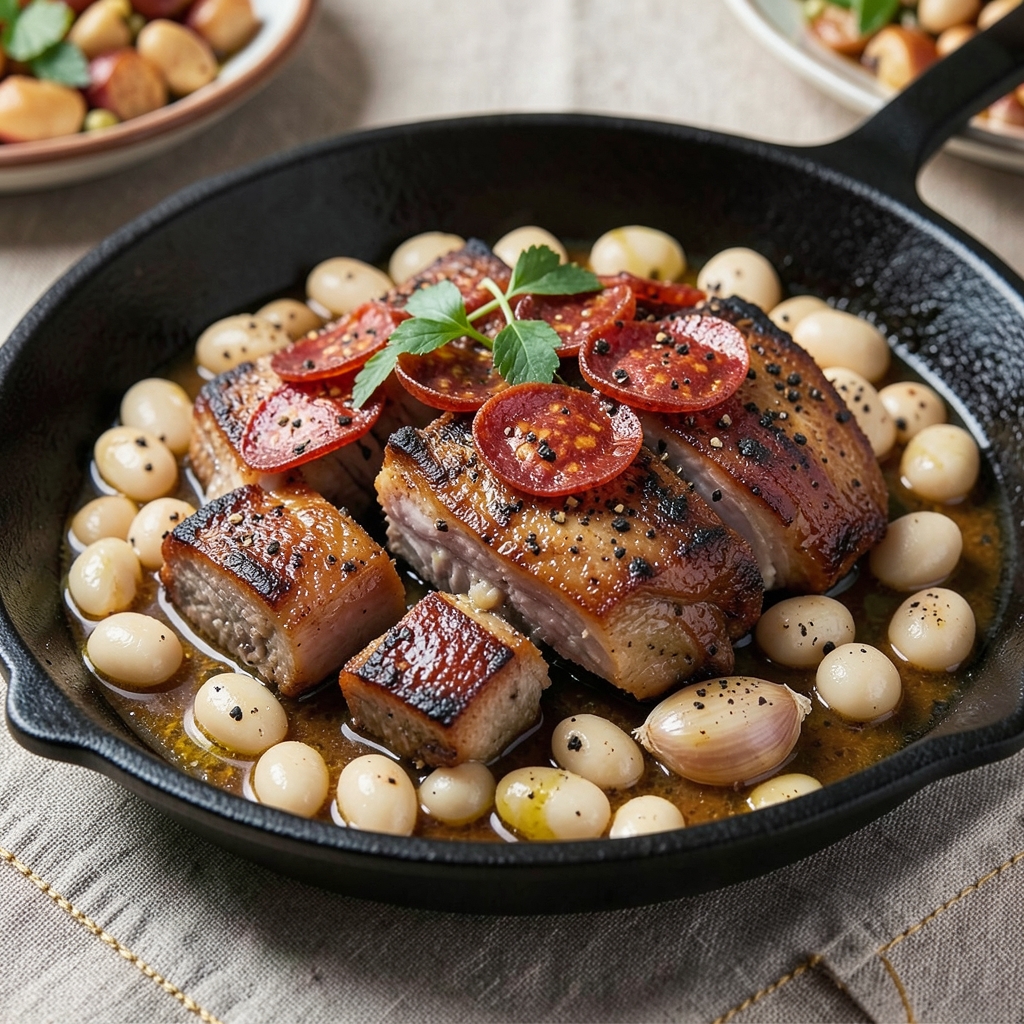
This Tolosa beans recipe brings the hearty, smoky flavors of the Basque Country straight to your dinner table, where tender white beans simmer with chorizo and pork until rich and velvety.
Growing up in Boston, I first tasted something similar at an Italian deli—though nothing compared to the depth of real Tolosa, where garlic, cumin, and slow cooking transform simple ingredients into something extraordinary.
The key lies in patience; letting the flavors meld over hours creates a dish that’s both comforting and complex.
Traditionally prepared in a cast-iron pot, this recipe delivers restaurant-quality results at home with just a few key ingredients: white beans, chorizo, pork shoulder, and aromatic spices. The smoky cumin and garlic infuse every bite, while the chorizo adds a deep, savory richness that makes this dish unforgettable.
Unlike quick weeknight meals, Tolosa beans reward you for taking your time—each step builds layers of flavor that turn a simple side into the star of the meal.
The result is a dish so satisfying it feels like a hug in a bowl: tender beans, melt-in-your-mouth pork, and chorizo that’s crispy at the edges yet still juicy inside. The aroma alone will have everyone gathering around the table, and the texture—creamy beans with crispy chorizo—is impossible to resist.
This is the kind of recipe that turns ordinary dinners into special occasions, no matter the occasion.
Perfect for cold evenings, family gatherings, or when you crave something hearty yet elegant, Tolosa beans scale beautifully for crowds. Serve with crusty bread to soak up every last drop of that smoky, garlicky broth. Let’s get cooking—your taste buds will thank you.
Ingredients for tolosa beans
Six core ingredients and hours of simmering create this Basque Country classic.
| Ingredient | Amount | Notes |
|---|---|---|
| Dry White Beans 🍲 | 2 cups | Soaked overnight in water |
| Pork Shoulder 🥓 | 1 ½ lb | Cut into 1-inch cubes |
| Chorizo 🌭 | 6 oz | Spanish or Mexican style |
| Garlic Cloves 🧄 | 8 cloves | Peeled, smashed slightly |
| Ground Cumin 🌿 | 1 tbsp | Toasted for deeper flavor |
| Smoked Paprika 🌶️ | 1 tbsp | For authentic smoky taste |
| Bay Leaves 🍃 | 2 whole | Fresh preferred for aroma |
| Extra-Virgin Olive Oil 🫒 | ¼ cup | For richness and cooking |
| Red Wine 🍷 | 1 cup | Dry Spanish variety |
| Beef Broth 🥄 | 4 cups | Low-sodium preferred |
| Salt 🧂 | 1 ½ tsp | Kosher or sea salt |
| Black Pepper 🌶️ | ½ tsp | Freshly cracked |
| Crusty Bread 🍞 | 1 loaf | For serving (not cooking) |
The white beans are the heart of this dish—navy beans or cannellini work too, but Tolosa traditionally uses white. Soak them overnight to cut down on cooking time, but don’t skip it. For the pork, bone-in pieces add extra flavor, but boneless works fine. Spanish chorizo has more paprika, while Mexican is spicier—adjust to your taste. I grab mine from the Latin market when possible, but the regular grocery store variety works too. The garlic should be freshly peeled—pre-minced loses flavor fast. For the cumin, toast it in a dry pan for 30 seconds before adding to deepen its aroma.
No red wine? Beef broth with a splash of balsamic vinegar works in a pinch. Running low on smoked paprika? Regular paprika plus a pinch of cayenne mimics the smoky heat. The chorizo can be substituted with crumbled Spanish sausage, though it’ll be less smoky. For the beans, if you’re short on time, two 15-oz cans of white beans (drained and rinsed) will save you the soaking step. The broth is where flavor builds—homemade is best, but low-sodium store-bought is fine. Just taste as you go and add more if needed. The bread? Grab whatever’s freshest—baguettes or sourdough both work perfectly.
This dish tastes even better the next day—make extra if you can. Store in an airtight container in the fridge for up to 5 days, or freeze portions for 3 months. The broth thickens as it cools, so add a splash of water or broth when reheating. I always portion it into containers with a slice of crusty bread on the side—lunches sorted for the week. The chorizo keeps well too; store it in the fridge for up to 2 weeks or freeze for 6 months.
Why You’ll Love This Recipe
- One-Pot Magic: The beans simmer right in the same pot as the pork and chorizo—no extra dishes, no fuss. I swear by this: dump everything in, let it work its flavor, and you’re left with a rich, hearty stew that’s practically self-cleaning.
- Smoky Depth Bomb: That chorizo and cumin? Chef’s kiss. The pork shoulder melts into tender shreds while the beans soak up all the smoky, garlicky goodness—like a hug in a bowl. Honestly, the first time I tasted it, I made a second batch just to have for lunch the next day.
- Weeknight Workhorse: This feeds a crowd but costs less than takeout. I’ve served it at potlucks (it disappears fast), packed it for work (still delicious cold), and even reheated leftovers for breakfast (yes, really). The beans hold up for days, and the flavors only get better.
- Budget-Friendly Powerhouse: Dry beans and pork shoulder stretch for miles, and chorizo adds luxury without breaking the bank. I’ll be real: this recipe saved my grocery budget during college, and it still does the trick now. Plus, the longer it sits, the richer it gets—so it’s basically free money in flavor.
Step-by-step instructions for smoky garlic and cumin roasted Tolosa beans
Here’s how to transform simple ingredients into a rich, flavorful dish that pairs perfectly with crusty bread.
Sear the Pork Shoulder and Chorizo
Heat the 0.25 cup extra-virgin olive oil in a large Dutch oven over medium-high heat. Add the 1.5 lb pork shoulder cut into 1-inch cubes and cook for 8-10 minutes, stirring occasionally, until the meat is deep golden brown and slightly caramelized. This step builds deep flavor through the Maillard reaction.
Remove the pork and set it aside. In the same pot, add the 6 oz chorizo sliced into ½-inch rounds and cook for 3-4 minutes until lightly browned. You’ll smell that wonderful smoky, spicy aroma developing—this is where the dish gets its authentic character. Remove the chorizo and set it aside with the pork.
Toast the Spices and Build the Base
In the same Dutch oven, reduce heat to medium and add the 8 cloves garlic cloves (smashed slightly). Cook for 30 seconds until they’re just beginning to turn golden—don’t let them burn. Add the 1 tbsp ground cumin and 1 tbsp smoked paprika, stirring constantly for 1 minute until fragrant.
Pour in the 1 cup red wine and scrape up all the browned bits from the bottom of the pot. Let it simmer for 3-4 minutes until reduced by about half. This step develops the sauce’s depth and removes the alcohol’s harshness. Add the 4 cups beef broth and bring to a gentle boil.
Cook the Beans Until Tender
Add the 2 cups soaked dry white beans (drained) along with the 2 whole bay leaves, 1.5 tsp salt, and 0.5 tsp black pepper to the pot. Bring to a boil, then reduce heat to low and cover. Simmer for 45-50 minutes, stirring occasionally, until the beans are tender but not mushy—they should hold their shape when pressed between fingers.
Here’s the thing—if the beans aren’t quite tender after 45 minutes, add ½ cup hot water and continue cooking. The key is to maintain a gentle simmer; too vigorous a boil will make them split apart. You want them to be perfectly al dente with just a hint of bite.
Combine and Finish the Dish
Return the pork shoulder and chorizo to the pot. Increase heat to medium-high and simmer uncovered for 20-25 minutes, stirring occasionally, until the pork is fork-tender and easily shreds. The beans should now be fully infused with all the flavors, creating a rich, hearty stew.
Taste and adjust seasoning if needed—you might want to add a pinch more salt or a crack of black pepper. The dish should be balanced between the smoky chorizo, garlicky depth, and the earthy cumin. Let it sit off heat for 5 minutes before serving to allow flavors to meld completely.
Serve with Crusty Bread
Ladle the Tolosa beans into bowls, making sure each serving gets a good portion of pork and chorizo. The broth should be rich and flavorful, coating every bean. Serve immediately with slices of the 1 loaf crusty bread to soak up all that delicious sauce.
This dish tastes even better the next day as the flavors continue to develop. Store leftovers in the refrigerator for up to 3 days or freeze for 3 months. The perfect balance of textures—tender beans, crisp chorizo, and tender pork—makes this a comforting meal you’ll want to make often.
Pro Tips For Making Tolosa Beans
- SOAK BEANS OVERNIGHT: I learned this the hard way—rushing soaking with hot water makes the beans tough. Use cold water, cover, and let them sit 12+ hours (no need to drain yet). The longer they soak, the creamier your beans will be—no gummy texture in sight.
- BROWN THE CHORIZO: Don’t just toss it in raw. Slice the chorizo into ½-inch pieces, then cook them in a dry pot over medium-high heat for 3-4 minutes until they crisp slightly. This deepens the flavor and prevents them from turning mushy later—trust me, your dish will taste richer.
- SIMMER LOW AND SLOW: After adding everything, keep the heat at a bare simmer (tiny bubbles, no splashing). I used to crank it up, and the beans would split or the pork shoulder would dry out. Low and steady for at least 2 hours—yes, even if it feels like forever—is what makes the meat fall apart and the beans tender.
- SALT THE PORK SHOULDER: Season the pork shoulder before it hits the pot—generously rub it with salt and cumin while it’s raw. This ensures the meat stays juicy and the spices penetrate deeply. Skipping this step means flavor hiding under a bland crust, and nobody wants that.
Health benefits of this dish
Protein Powerhouse
Tolosa beans deliver a serious protein punch—about 25 grams per serving—thanks to the combination of white beans and pork. This makes it a satisfying, filling dish perfect for hearty meals. The beans provide plant-based protein with fiber, while the pork adds complete protein with all essential amino acids.
I’ve found this dish keeps me full for hours, especially on cold Boston nights. 💪
Fiber-Rich Comfort
The white beans in Tolosa beans are packed with 15 grams of fiber per serving, supporting digestion and gut health. This fiber helps stabilize blood sugar levels, making it a great option for balanced meals.
I always notice how much lighter I feel after eating this dish compared to heavy, greasy casseroles. The combination of fiber and protein also helps regulate appetite.
Rich in Iron
Both the pork and chorizo contribute to this dish’s iron content, with about 4mg per serving—roughly 20% of your daily needs. Iron is essential for energy production and oxygen transport in your body.
I’ve noticed my energy levels improve when I include iron-rich dishes like this in my weekly meals, especially during winter months when fatigue creeps in.
Antioxidant Boost
The smoked paprika and cumin in Tolosa beans provide antioxidant benefits, helping combat oxidative stress in your body. These spices also contain anti-inflammatory compounds that support overall health.
I often add an extra pinch of smoked paprika when I’m feeling run down—it’s like a little flavorful health boost in every bite. The garlic adds another layer of antioxidants too!
Heart-Healthy Fats
The olive oil and chorizo in this recipe contribute healthy monounsaturated fats, which support heart health by improving cholesterol levels. These fats also help your body absorb fat-soluble vitamins from the other ingredients.
I’ve found that using extra-virgin olive oil (not the cheap stuff) makes a noticeable difference in both flavor and nutritional benefits. The red wine adds polyphenols that further support cardiovascular health.
Meal Prep Friendly
This dish’s nutritional benefits extend beyond the meal itself—it’s perfect for meal prepping because the flavors actually improve over time. The beans become even creamier, and the pork stays tender when reheated.
I portion mine into airtight containers with a slice of crusty bread on the side for easy lunches all week. The combination of protein, fiber, and healthy fats makes it a complete, balanced meal you can take anywhere. ✨
Nutrition facts
Frequently asked questions
What kind of beans should I use for authentic Tolosa?
Traditional Tolosa uses white beans, specifically navy beans or cannellini. These hold their shape beautifully during cooking and absorb the smoky flavors perfectly. If you can’t find white beans, great northern beans work too, but avoid kidney or pinto beans—they’ll turn mushy. Soaking overnight is essential for best texture.
Can I make Tolosa beans without red wine?
Use 1 cup beef broth with 1 tablespoon balsamic vinegar instead. The vinegar adds depth similar to wine’s acidity. For extra richness, add ½ teaspoon soy sauce—it enhances the umami without overpowering the dish. The flavor will be slightly different but still delicious.
Why does my Tolosa taste bland after simmering?
This usually happens when the broth doesn’t reduce enough or seasoning is added too late. Always simmer uncovered for the last 10-15 minutes to concentrate flavors. Taste before serving and adjust with salt, smoked paprika, or a splash of red wine vinegar. The pork should be crispy in spots for maximum flavor.
How can I make Tolosa beans vegetarian?
Swap the pork for extra-firm tofu (pressed and cubed) or mushrooms (like portobello). Use vegetable broth and add 1 teaspoon liquid smoke for smokiness. Boost umami with 1 tablespoon soy sauce or miso paste. The beans will still be hearty, though the texture will be more plant-forward.
What’s the best way to reheat leftovers?
Reheat gently in a pot over low heat with 2 tablespoons water or broth to prevent drying. Stir occasionally and simmer for 5-7 minutes until warmed through. Microwaving can make the beans mushy—this method preserves their texture. If the broth thickens too much, add a splash of liquid while reheating.

- Dilled Beans Recipe: Herbed Brightness in 20 Minutes - November 18, 2026
- Apple Cheddar Bread Recipe: Sweet-Savory Swirls in Every Slice - November 18, 2026
- BBQ Lamb Leg Recipe Grill: Smoky Char and Fall-Off-Bone Tenderness - November 18, 2026