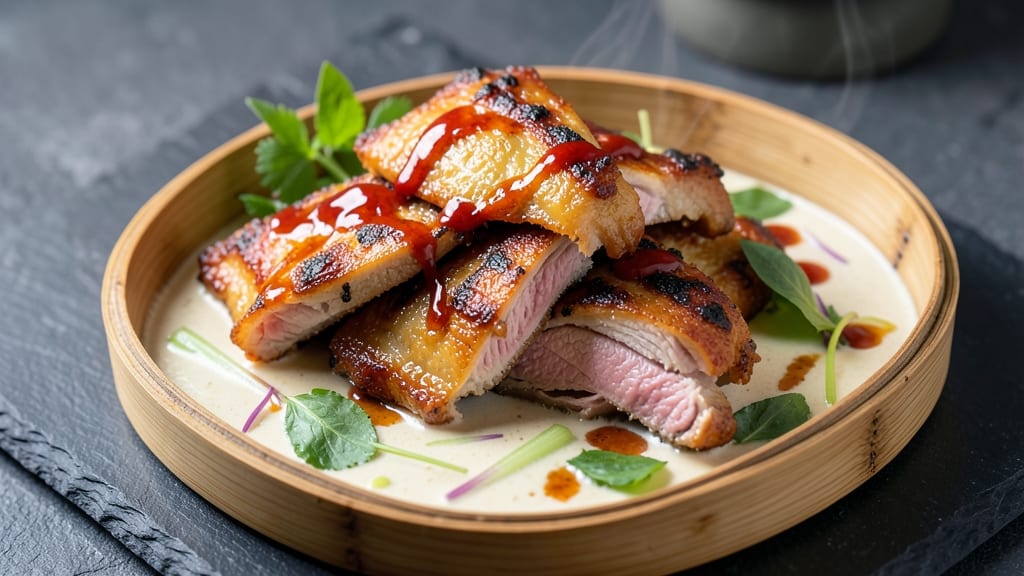
This Thailand pork belly recipe delivers the perfect balance of sticky coconut caramel and crispy edges in just 45 minutes—transforming a simple cut into a restaurant-worthy centerpiece.
Growing up in small-town Georgia, I never imagined pork could taste this complex, but Thai flavors changed everything with their aromatic depth and perfect sweet-spicy contrast. The secret lies in marinating overnight with lemongrass and galangal, then braising until the meat practically melts while creating that coveted caramelized crust.
The beauty of this method is its precision: tender pork belly infused with coconut milk’s richness, balanced by a touch of fish sauce and chili for that signature Thai tang.
What makes it special is how the flavors develop—starting with fragrant marinade, then deepening as the coconut reduces into a glossy glaze that clings to every bite. You won’t find this level of authenticity in most home recipes, but the technique is surprisingly straightforward for professional results.
By the time you serve it, you’ll have perfectly tender pork belly with crispy edges and that irresistible sticky caramel glaze—served traditionally with jasmine rice and quick-pickled vegetables for balance.
The aroma alone will have everyone gathering around the table, and each bite delivers layers of flavor that transport you straight to Bangkok. Let’s bring this Thai masterpiece to your kitchen.
This recipe works equally well for weeknight dinners or special occasions, scaling beautifully for crowds while maintaining its restaurant-quality depth. The same marinade technique works for chicken or shrimp too, proving its versatility. Trust me—once you taste this version, store-bought pork belly will never compare again.
Ingredients for thailand pork belly
Fourteen ingredients that transform simple pork belly into restaurant-quality Thai perfection.
| Ingredient | Amount | Notes |
|---|---|---|
| Pork Belly 🥓 | 1 ½ lb | Skin-on, cut into 1-inch pieces |
| Coconut Milk 🥥 | 1 can (13.5 oz) | Full-fat, unsweetened |
| Lemongrass 🌿 | 1 whole stalk | Bruised, bottom 3 inches only |
| Galangal 🌿 | 3 inches | Fresh, peeled, sliced thin |
| Fish Sauce 🍶 | 2 tbsp | Red Boat preferred |
| Thai Chili Paste 🌶️ | 1 tbsp | Adjust for heat preference |
| Brown Sugar 🍯 | ¼ cup | Packed, light brown preferred |
| Garlic Cloves 🧄 | 6 cloves | Minced, fresh preferred |
| Shallots 🧅 | 2 whole | Minced, or sub with onions |
| Extra-Virgin Olive Oil 🫒 | 1 tbsp | For crisping pork belly |
| Kosher Salt 🧂 | 1 ½ tsp | Diamond Crystal preferred |
| Black Pepper 🌶️ | ½ tsp | Freshly ground |
| Lime Juice 🍋 | 1 tbsp | Freshly squeezed |
| Fresh Cilantro 🌿 | ¼ cup | Chopped, for garnish |
The galangal and lemongrass are the soul of this dish—Asian markets have the freshest, but if you can’t find them, substitute ginger and cardamom (though it won’t be authentic). Look for galangal with tight, pale yellow skin—it should smell citrusy and sharp. The Red Boat fish sauce is non-negotiable here; its balance of umami and salt is what elevates this from good to extraordinary. Pork belly? Costco or Whole Foods have the best cuts with good marbling—ask for it to be cut into 1-inch pieces if they’ll do it for you. Fresh lemongrass is essential—dried just won’t cut it for this recipe.
No galangal? Double the ginger and add a pinch of star anise for depth. Running low on coconut milk? Swap for light coconut milk plus 2 tbsp cream—it’ll still be rich, just slightly less velvety. Thai chili paste varies wildly in heat—Maesri is my go-to, but any brand will work if you adjust the amount. The shallots can be swapped for regular onions, but they add a delicate sweetness that’s worth hunting down. Brown sugar is better than white here—it caramelizes more beautifully and adds depth. Fresh lime juice is a must at the end—bottled just won’t have the same bright punch.
This marinade keeps for 3 days in the fridge, but the pork belly itself? Use within 2 days for best texture. The cooked pork belly reheats beautifully—400°F for 10 minutes in the oven restores that crispy edge. Store leftovers in an airtight container with the caramel sauce spooned on top to keep everything moist. Freezes for 3 months, though I’ve never had it last that long—it disappears too fast!
Why You’ll Love This Recipe
- One-Pot Magic: I swear by this recipe because it’s actually one-pan—no chopping boards, no extra bowls. Just sear the pork belly, toss in the lemongrass and galangal (minimal prep, I promise), then let the coconut milk and fish sauce work their magic while you sip tea.
- Craving-Worthy Balance: That crispy, caramelized pork belly with the creamy coconut milk? It’s like a hug in your mouth. The galangal adds a peppery kick that cuts through the richness, and the fish sauce ties everything together—salty, sweet, umami perfection.
- Leftover Goldmine: Between us, this dish begs to be made in bulk. The flavors deepen overnight, and reheated, it’s even better—crispy edges, tender meat, and that coconut aroma wafting through the house. I’ve fed a crowd with leftovers, and no one complained.
- Budget-Friendly Luxury: Pork belly might sound fancy, but it’s cheaper than you think, especially when you stretch it with coconut milk and herbs. Plus, the galangal and lemongrass (often sold as bundles) last for multiple recipes. Frugal? Yes. Delicious? Absolutely.
Step-by-step instructions for Thailand pork belly recipe
This method delivers perfectly caramelized pork belly with a sticky coconut glaze and crispy edges—just like your favorite Thai street food.
Prep and Sear the Pork Belly
Pat the 1.5 lb pork belly dry with paper towels, then cut it into 1-inch pieces. In a large skillet, heat 1 tablespoon extra-virgin olive oil over medium-high heat until shimmering. Add the pork belly in a single layer and let it sear undisturbed for 4-5 minutes until the skin crisps and turns golden brown. Flip once and sear the other side for another 3-4 minutes. You want deep caramelization on both sides—this builds the foundation for that addictive crunch.
Remove the pork belly and set it aside on a plate. If the oil isn’t golden by now, let it heat up a bit longer—cold oil will steam the pork instead of searing it. This step is crucial for developing the rich, savory depth that carries through the entire dish.
Build the Aromatic Coconut Base
In the same skillet (no need to clean it—the browned bits add flavor), add 2 whole minced shallots and 6 minced garlic cloves. Sauté for 1-2 minutes until fragrant and just beginning to turn golden. Add 3 inches sliced galangal and 1 whole stalk bruised lemongrass (bottom 3 inches only), cooking for another 30 seconds until the galangal softens slightly and releases its citrusy aroma.
Pour in 1 can (13.5 oz) coconut milk and bring to a gentle simmer. Stir in 2 tablespoons fish sauce, 1 tablespoon Thai chili paste, and 0.25 cup packed brown sugar. The mixture should bubble gently—if it’s too vigorous, reduce the heat slightly. This balance of sweet, salty, and spicy flavors is what makes this dish sing.
Simmer the Pork Belly in Coconut Sauce
Return the seared pork belly to the skillet, spooning the coconut mixture over it. Partially cover the skillet and simmer on medium-low heat for 20-25 minutes, stirring occasionally. The pork belly should be tender enough to pierce with a fork but still hold its shape. If the sauce reduces too quickly, add 2-3 tablespoons water to maintain a glossy consistency.
Here’s the thing—don’t rush this step. The pork belly needs time to absorb the coconut milk’s richness while the sugar caramelizes into a sticky glaze. You’ll know it’s ready when the pork is fork-tender and the sauce has thickened into a glossy, syrupy consistency that clings beautifully.
Finish with Lime and Garnish
Once the pork belly is tender, remove it from the skillet and transfer to a serving platter. Strain the coconut sauce through a fine-mesh sieve into a small saucepan, pressing on the solids to extract maximum flavor. Return the sauce to medium heat and simmer for 3-4 minutes until slightly thickened. Stir in 1 tablespoon lime juice and 1.5 teaspoons kosher salt, then adjust the seasoning with 0.5 teaspoon black pepper if needed.
Pour the finished sauce over the pork belly and garnish with 0.25 cup chopped fresh cilantro. The bright acidity of the lime cuts through the richness, while the cilantro adds a fresh herbal note. Serve immediately with steamed jasmine rice to soak up every last drop of that sticky, caramelized goodness.
Pro Tips For Making Thailand Pork Belly
- Blister First, Braise Slow: Get that pork belly screaming hot in a dry pan for 8-10 minutes until the fat renders and the surface turns deep golden—almost black in spots. I learned this the hard way: skipping this step means your meat stays greasy instead of caramelized. Then drop the heat to medium-low for the coconut milk stage, or you’ll curdle it faster than you can say “fish sauce burn.”
- Bruise the Galangal: Don’t slice it thin—give that galangal a good whack with the flat side of your knife first. You want it releasing its oils and aroma into the pot, not just sitting there looking pretty. (Yes, even if you’re impatient like me.) This is the thing that matters most for that authentic Thai heat without overpowering the dish.
- Simmer, Don’t Boil: Once the coconut milk hits the pot, keep the temperature at a bare simmer—tiny bubbles, maybe 160°F (70°C) if you’re checking. After burning three batches, I finally figured out that boiling turns the milk grainy and dulls the lemongrass flavor. Sounds weird, but it works: patience here makes all the difference.
- Salt the Pork Twice: Generously salt the belly before searing, then add another pinch of fish sauce to the braising liquid. The first layer seasons the meat, the second boosts the sauce. I skip this when I’m lazy, but the dish is noticeably better when I don’t—especially if you’re using leaner cuts that need extra help absorbing flavor.
Perfect pairings for this recipe
Rice Pairings
Jasmine rice is the classic choice—its delicate floral aroma and tender grains soak up the coconut sauce beautifully. For extra authenticity, use Thai jasmine rice from Asian markets like H Mart or 99 Ranch Market.
Cook it with a 1:1.25 rice-to-water ratio and steam for 15 minutes after the initial boil. The rice should be fluffy but slightly sticky, perfect for capturing every drop of that caramelized pork belly sauce. 💛
Quick-Pickled Veggies
Bright, tangy pickled vegetables cut through the richness of the pork belly and add a refreshing crunch. Thinly slice 1 carrot, 1 cucumber, and 1 red onion, then toss with 2 tbsp rice vinegar, 1 tbsp sugar, and ½ tsp salt.
Let sit for 30 minutes before serving. The acidity balances the sweet-spicy glaze, and the texture contrast makes every bite more dynamic.
Thai-Inspired Sides
Add stir-fried Thai basil with garlic and chili flakes for a quick side that enhances the dish’s aromatic profile. Sauté 2 cups Thai basil leaves with 2 minced garlic cloves and ½ tsp chili flakes in 1 tbsp oil for 1-2 minutes until just wilted.
Alternatively, serve with papaya salad—a mix of shredded green papaya, cherry tomatoes, green beans, and a dressing of lime juice, fish sauce, and palm sugar.
Beverage Pairings
A crisp Thai iced tea from Chaokoh complements the dish perfectly with its sweet, creamy, and slightly spiced profile. For a local twist, try a coconut water infused with muddled lemongrass and lime—the natural sweetness mirrors the flavors in the pork belly.
If you prefer alcohol, a light lager like Singha or a Thai white wine like Oryza keeps the palate clean and highlights the dish’s complexity.
Garnish Upgrades
Elevate your plating with crispy shallots and lime zest. Fry 4 thinly sliced shallots in 2 tbsp oil until golden and crisp, then sprinkle over the pork belly. Add 1 tsp lime zest for a bright, citrusy finish that ties all the flavors together.
A few Thai chili slices on the side let guests control their spice level—because not everyone wants to brave the full heat of the glaze. ✨
Nutrition facts
Frequently asked questions
Can I substitute regular ginger for galangal in this Thai pork belly recipe?
Yes, but expect a slightly different flavor profile. Use double the amount of ginger (about 6 inches) and add a pinch of star anise or cardamom to mimic galangal’s citrusy depth. Galangal has a more complex, peppery aroma that’s harder to replicate—it’s worth tracking down at Asian markets for authentic results.
How do I prevent the pork belly from becoming too greasy?
Start by patting the pork belly completely dry before searing—this creates a better crust. After simmering, skim excess fat from the coconut sauce using a spoon or fat separator. For extra crispiness, broil the pork belly for 2-3 minutes at the end (watch closely to avoid burning). The sauce should remain glossy, not oily.
What’s the best way to reheat leftovers without losing the crispy texture?
Reheat in a 400°F oven for 10-12 minutes on a wire rack over a baking sheet. The dry heat restores the crispy edges while keeping the inside tender. For microwave reheating, cover with a damp paper towel and heat in 30-second bursts—just know the texture won’t be as crisp. Always reheat the sauce separately and combine at the last minute.
Can I make this recipe in a slow cooker for hands-off cooking?
Sear the pork belly first, then transfer everything (including marinade) to a slow cooker. Cook on LOW for 6-7 hours or HIGH for 3-4 hours. The sauce will thicken more, so add 2-3 tablespoons water if needed. Finish with lime juice and fresh cilantro before serving. The slow cooker method works especially well for large gatherings.
Why does my coconut sauce turn out too thin?
This usually happens from overcooking or insufficient reduction. Simmer uncovered on medium-low heat until the sauce thickens naturally—it should coat the back of a spoon. If it’s still too thin, remove the pork belly and reduce the sauce alone for 5-7 minutes. For extra thickness, mix 1 teaspoon cornstarch with 1 tablespoon water and stir it in at the end.

- Lamb Sauce Recipe: Red Wine and Rosemary Reduction for Rich Depth - November 11, 2026
- Petite Sirloin Roast Recipe: Herb-Crusted, Juicy Center Every Time - November 11, 2026
- Basic Vanilla Cookies Recipe: Soft-Centered Chew With Vanilla Bean Depth - November 11, 2026