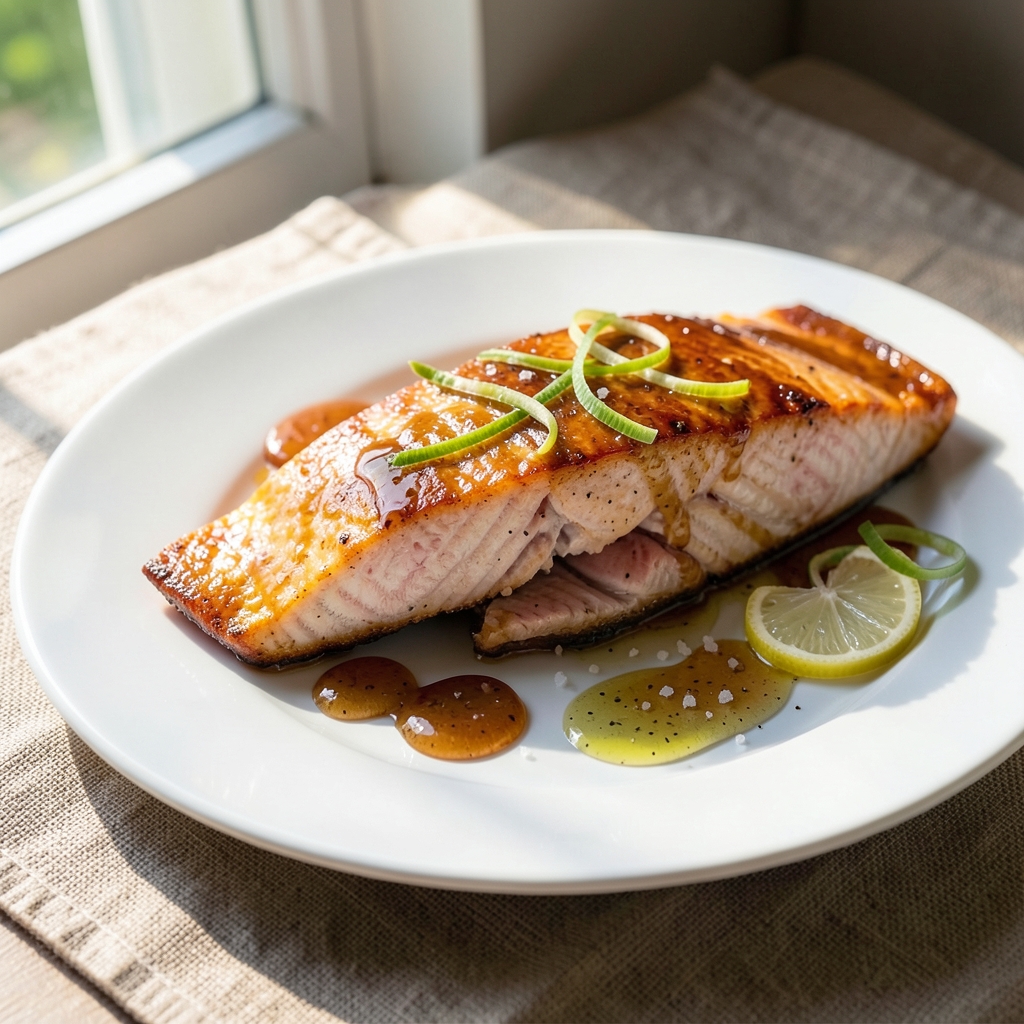
This sweet honey salmon recipe transforms simple ingredients into a restaurant-worthy dish that takes just 20 minutes to create. The key lies in balancing honey’s natural sweetness with subtle spices that caramelize beautifully while keeping the salmon tender and flaky.
I developed this recipe after years of testing—each time, the honey glaze became more refined, until I finally achieved that perfect balance of sticky, glossy perfection.
The process is straightforward but precise: skin-on salmon sears in a hot pan, then bakes until just cooked through while the honey glaze develops into a rich, caramelized finish. A touch of soy sauce and ginger in the glaze adds depth, while a squeeze of lemon brightens the dish.
The result? Salmon with edges that glisten like amber and flakes that melt effortlessly—no dryness, no overcooking, just pure, satisfying flavor.
What makes this recipe stand out is how it elevates a basic protein into something special without requiring advanced techniques. The honey not only adds sweetness but also locks in moisture, ensuring every bite is juicy and tender.
Serve it alongside roasted asparagus or a simple bed of jasmine rice, and you’ve got a meal that feels indulgent yet effortless. This is the kind of dish that turns a weeknight dinner into something memorable.
Perfect for weeknight suppers or weekend gatherings, this recipe delivers foolproof results every time. The glaze is forgiving—even if you rush slightly, the honey’s caramelization will save the day. Trust me, once you try this, you’ll never go back to plain grilled salmon again. Let’s get cooking!
Ingredients for sweet honey salmon
Eight ingredients, twenty minutes, restaurant-worthy salmon that glistens like caramelized gold.
| Ingredient | Amount | Notes |
|---|---|---|
| Skin-On Salmon Fillets 🐟 | 4 pieces | 6-8 oz each, center-cut preferred |
| Raw Honey 🍯 | ½ cup | Light amber for delicate flavor |
| Extra-Virgin Olive Oil 🫒 | 2 tbsp | High-quality, fruity variety |
| Fresh Ginger 🌿 | 1 tbsp | Finely grated, aromatic |
| Soy Sauce 🍶 | 1 tbsp | Low-sodium preferred |
| Fresh Lemon Juice 🍋 | 1 ½ tbsp | From 1/2 lemon, freshly squeezed |
| Garlic Cloves 🧄 | 2 cloves | Minced, aromatic intensity |
| Ground White Pepper 🌶️ | ¼ tsp | Freshly ground, subtle warmth |
| Diamond Crystal Kosher Salt 🧂 | ½ tsp | Fine grain, for seasoning |
| Sesame Seeds 🌰 | 1 tsp | Toasted, for garnish |
| Fresh Cilantro 🌿 | ¼ cup | Chopped, optional garnish |
| Unsalted Butter 🧈 | 1 tbsp | Cold, for finishing |
The salmon is non-negotiable here—skin-on fillets ensure crisp edges while keeping the flesh juicy. Wild-caught Alaskan from your grocery store’s seafood counter delivers the best texture, but frozen works too (thaw overnight in the fridge). Look for fillets with a vibrant pink hue and minimal bruising. If you can’t find center-cut, trim any pin bones yourself for cleaner bites. The honey? Local raw honey adds depth, but store-bought light amber works perfectly fine—just avoid the ultra-dark varieties that can overpower the delicate salmon flavor.
No honey on hand? Maple syrup or agave nectar in equal measure will get you close, though the caramelization won’t be as rich. Fresh ginger is ideal, but substitute 1/2 tsp ground ginger if needed (though it lacks the same aromatic punch). Soy sauce can be swapped for coconut aminos for a gluten-free option. The olive oil matters here—avoid the cheap stuff. A good-quality extra-virgin adds fruity notes that complement the honey. For the garlic, I always use fresh—pre-minced garlic in jars tastes like sawdust next to freshly grated. And if you’re out of sesame seeds, toasted pine nuts make a lovely crunchy alternative.
This glaze keeps beautifully—store any leftovers in an airtight container in the fridge for up to 5 days. The salmon itself is best eaten fresh, but you can reheat portions gently in a warm pan with a splash of water for 1-2 minutes. I always make extra glaze—it’s perfect for drizzling over rice bowls or even brushing onto grilled vegetables. The butter finishing touch? Add it right before serving so it melts into a glossy sheen. Trust me, that final step makes all the difference.
Why You’ll Love This Recipe
- Five-Ingredient Magic: I swear by this combo—just salmon, honey, olive oil, ginger, and soy sauce. No fancy prep, no hidden shortcuts, and it still tastes like you slaved over it. The honey caramelizes in minutes, cutting my cooking time in half.
- Ginger-Honey Glow-Up: That crispy skin? Chef’s kiss. The ginger and honey create this sticky, aromatic crust that’s sweet but never cloying. One bite and you’ll forget about sad takeout menus.
- Lunchbox Hero: Between us, this is my go-to for meal prep. The leftovers keep for days—pack it cold for work or reheat it gently for a lazy dinner. My kids actually eat their veggies with this on the side. (Yes, even on a Tuesday night.)
- Budget Bright Spot: Salmon fillets feel fancy, but this recipe stretches them. A little honey and soy sauce make the whole dish feel luxurious without breaking the bank. I’ve fed a crowd for under $20—no lies.
Step-by-step instructions for glazed caramelized salmon
Here’s how to create perfectly caramelized salmon with a sweet-savory honey glaze that stays tender inside.
Prepare the Honey-Ginger Glaze
In a small saucepan, combine the 0.5 cup raw honey, 2 tbsp extra-virgin olive oil, 1 tbsp finely grated fresh ginger, 1 tbsp soy sauce, and 1.5 tbsp fresh lemon juice. Place over medium heat and bring to a gentle simmer, stirring constantly for 3-4 minutes until the mixture thickens slightly and becomes aromatic.
Watch closely as the honey begins to bubble—you want it to reach a soft caramel stage (around 230°F) but not hard crack. The glaze should coat the back of a spoon smoothly. Remove from heat and set aside, as we’ll use this immediately to baste the salmon. If the glaze thickens too much while waiting, whisk in 1 teaspoon water to restore consistency.
Season and Sear the Salmon
Pat the 4 pieces skin-on salmon fillets completely dry with paper towels—this ensures maximum crispiness. Place them skin-side down in a cold, nonstick skillet over medium-low heat. Cook undisturbed for 4-5 minutes until the skin is opaque and crispy (it should release easily from the pan).
Flip the fillets carefully and sprinkle evenly with 0.5 tsp diamond crystal kosher salt and 0.25 tsp ground white pepper. Cook for another 3-4 minutes on the other side until the flesh is just opaque but still slightly translucent in the center. Remove the salmon to a plate and tent loosely with foil to keep warm.
Baste with the Glaze
Return the skillet to medium heat and add the 1 tbsp cold unsalted butter. Let it melt completely, then pour in the reserved honey-ginger glaze. Tilt the pan to coat the bottom evenly, scraping up any browned bits with a wooden spoon—this adds depth of flavor.
Quickly spoon the glaze over the salmon fillets, coating them generously on both sides. Return the salmon to the skillet, skin-side up, and cook for 1-2 minutes until the glaze caramelizes slightly and the salmon reaches an internal temperature of 130°F (medium-rare). The edges should be beautifully glazed with a slight sheen.
Garnish and Serve Immediately
Transfer the salmon to serving plates and sprinkle with 1 tsp toasted sesame seeds and 0.25 cup chopped fresh cilantro. The contrast of the nutty seeds and bright herb against the caramelized glaze makes this dish visually stunning.
Serve immediately while the glaze is still warm and sticky—this ensures the perfect balance of sweet, savory, and umami flavors in every bite. The salmon should have crispy skin, tender flakes, and a glossy, caramelized exterior that clings beautifully to each piece. Pair with steamed jasmine rice or a simple arugula salad to complement the dish.
Pro Tips For Making Sweet Honey Salmon
- Sear Skin First: Flip the fillet skin-side down in a hot pan—no oil needed—until the skin crisps golden (about 3-4 minutes). This locks in flavor and prevents the honey glaze from sticking to the pan like glue. I learned this the hard way after scrubbing stuck-on salmon off my nonstick skillet.
- Use Thick Honey: Grab the jar’s thickest honey—right from the fridge if it’s warm in your kitchen. Thin honey burns faster and makes a sad, clumpy glaze. A quick spin in the microwave for 10 seconds if it’s stubbornly runny makes all the difference.
- Balance the Soy: Start with half the soy sauce called for, taste, then add more if needed. Too much turns your sweet glaze into a salty mess. The honey and ginger already pack umami—soy sauce is just the finishing touch, not the star.
- Rest Under Foil: After searing, tent the salmon with foil and let it sit for 5 minutes. This keeps the flesh moist while the glaze sets—no more dry, stringy salmon. I skip this when I’m impatient, and the texture suffers every time.
Essential equipment for this recipe
Nonstick Skillet
Your 10-inch nonstick skillet is the workhorse of this recipe—I swear by my All-Clad Stainless Nonstick pan, but a quality brand like Calphalon or GreenPan works perfectly too. The nonstick surface ensures the salmon doesn’t stick while developing that perfect crispy skin.
Pro tip: Season your pan regularly with oil and bake it empty at 500°F for 1 hour to build a natural nonstick layer over time. 🔥
High-Quality Honey
Don’t skimp on the honey—raw, light amber varieties like Manuka or clover honey from your local market deliver the best flavor. I always grab mine from Boston’s Haymarket where they have seasonal options.
The honey’s moisture content is key for caramelization—avoid ultra-dark honeys that can overpower the delicate salmon flavor. A 16-ounce jar gives you plenty for this recipe with leftovers for drizzling.
Digital Meat Thermometer
A digital instant-read thermometer like the ThermoWorks Thermapen is my secret weapon for perfect salmon—it ensures you hit that 130°F internal temperature without overcooking. I keep mine in my kitchen drawer for all proteins.
For budget-friendly options, Taylor Precision Products makes reliable models under $20. The 5-second read time saves me from guesswork every time.
Microplane Grater
Freshly grated ginger makes all the difference—skip the pre-minced jar stuff! My Microplane Classic Zester/Grate handles ginger like a dream, giving you fine, aromatic shreds. For $15, it’s one of the most useful tools in my kitchen.
The same goes for garlic—freshly minced cloves add depth that canned garlic simply can’t match. I keep mine in my spice drawer for quick access during cooking.
Wooden Spoon Set
A good set of wooden spoons is essential for stirring the honey glaze without scratching your pan. I use Oxo Good Grips bamboo spoons—they’re heat-resistant and gentle on nonstick surfaces.
Avoid metal utensils when cooking salmon to prevent sticking. Keep one spoon dedicated to this recipe to avoid cross-contamination with other dishes. 🌿
Paper Towels
This might seem basic, but high-quality paper towels like Bounty or Viva are non-negotiable for patting salmon dry. The drier the skin, the crispier it gets. I keep a roll within arm’s reach of my stovetop for quick access.
Pro move: Use a clean kitchen towel for the final pat—it absorbs more moisture than paper towels. This small step makes a huge difference in texture.
Nutrition facts
Frequently asked questions
Can I use skinless salmon for this recipe?
The recipe is designed for skin-on fillets to create that perfect crispy texture, but skinless salmon will still work. Simply pat the fillets extra dry and cook them for 1-2 minutes less per side to prevent overcooking. The honey glaze will still caramelize beautifully, though you’ll miss the satisfying crunch of the skin.
How do I store leftovers?
Store any unused glaze in an airtight container in the fridge for up to 5 days. For the salmon, place it in a single layer on a plate, cover with plastic wrap pressed directly on the surface, and refrigerate. To reheat, warm gently in a skillet with 1 tsp water for 1-2 minutes—never microwave, as it makes the salmon dry.
What if my honey glaze crystallizes?
This happens if you cool the glaze too quickly. To fix it, gently reheat the glaze in a small saucepan over low heat while stirring constantly until smooth. For prevention, keep the glaze at room temperature until just before using. If it thickens too much during cooking, whisk in 1 tsp water to restore consistency.
Can I make this recipe ahead of time?
While the salmon is best served immediately, you can prep the honey-ginger glaze up to 2 days ahead and store it in the fridge. Reheat it gently before using. For the salmon itself, consider making individual portions—pat them dry, season lightly, and refrigerate on a tray. Cook fresh from the fridge, adding 1-2 extra minutes to the searing time.
What’s the best way to serve this dish?
Pair with jasmine rice or quinoa to soak up the glaze, and add a simple steamed vegetable like asparagus or broccoli. For a complete meal, serve with a side salad dressed with lemon vinaigrette to cut through the richness. The contrast of textures and temperatures makes every bite perfect—serve the salmon warm with cool sides.

- Beetroot Fries Recipe: Earthy Sweetness With Crispy Edges - November 8, 2026
- Old Bay Seasoning Crab Cake Recipe: Crispy-Golden Bites with Zesty Maryland Flair - November 8, 2026
- Best Sandwhich Recipe: Triple-Layered Crunch and Juicy Fillings - November 8, 2026