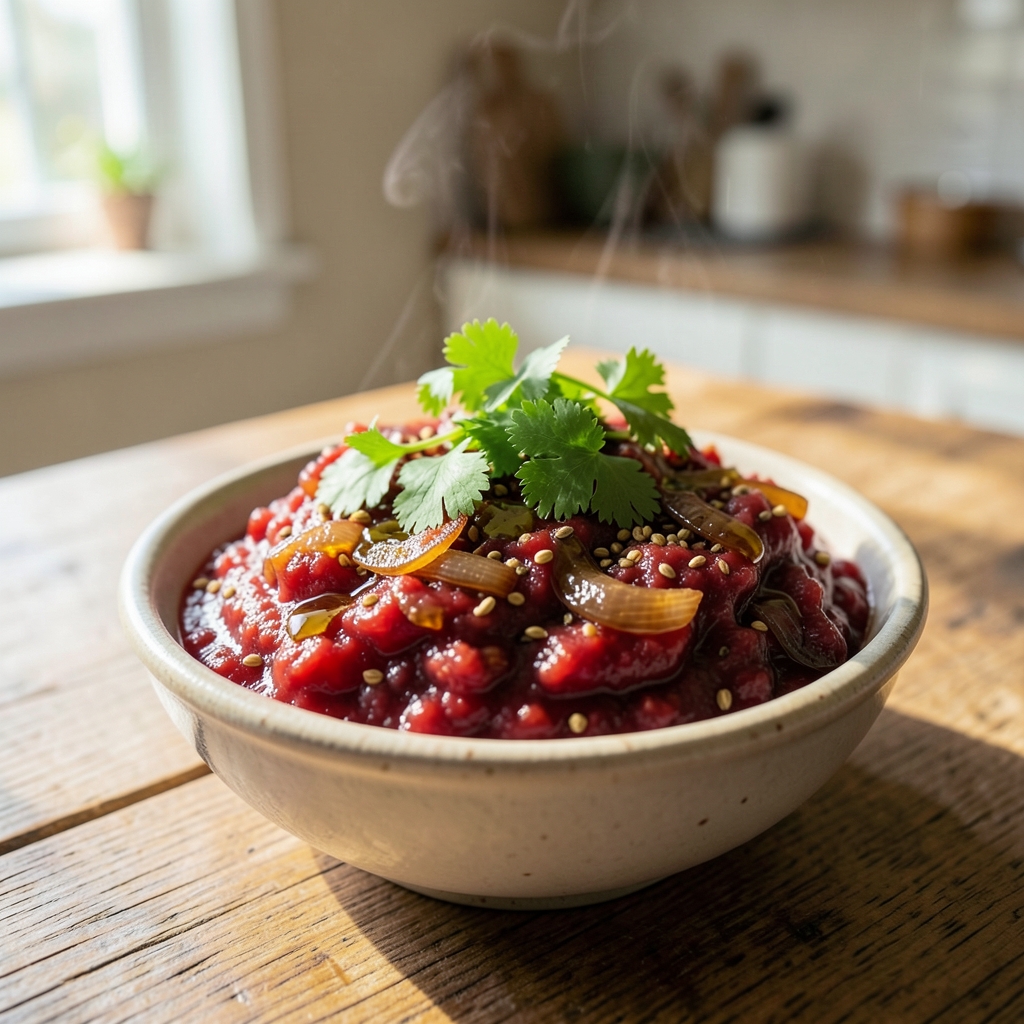
Creating a sugar-free tomato chutney that still delivers bold, tangy flavor without sacrificing sweetness was my biggest challenge—until I discovered the perfect balance of vinegar, spices, and natural sweeteners.
This recipe transforms simple ingredients into a versatile condiment that works with everything from grilled meats to vegan flatbreads, all while keeping it completely plant-based.
The secret lies in controlling acidity and letting the flavors develop over time, which makes this chutney taste even better after a few days in the fridge.
What sets this chutney apart is its preservation-friendly nature—you can sterilize jars and store it for months, making it ideal for meal prep or gifting.
The process involves simmering tomatoes, onions, and spices until they break down into a thick, vibrant paste, then balancing that intensity with just the right amount of vinegar and a touch of natural sweetener like stevia or monk fruit.
I’ve tested this recipe multiple times to ensure the texture stays perfect—neither too thin nor too thick—so it spreads beautifully on sandwiches or enhances curries with every spoonful.
The result is a tangy, spiced tomato chutney with layers of flavor that build with each bite—bright from the vinegar, warm from the spices, and just slightly sweet from the natural alternatives.
It’s the kind of condiment that elevates simple meals into something special, whether you’re pairing it with roasted vegetables, drizzling it over hummus, or using it as a marinade. The best part? It’s completely sugar-free, vegan, and packed with the bold flavors you’d expect from a traditional chutney.
Once you make this, you’ll never go back to store-bought versions. Let’s get started—your pantry (and taste buds) will thank you.
Ingredients for sugar free tomato chutney
Nine vibrant ingredients transform into a tangy, spiced chutney with no sugar needed.
| Ingredient | Amount | Notes |
|---|---|---|
| Roma Tomatoes 🍅 | 2 lbs | Fresh, vine-ripened preferred |
| Yellow Onions 🧅 | 1 whole | Medium size, finely chopped |
| Apple Cider Vinegar 💧 | ½ cup | Raw, unfiltered preferred |
| Stevia Powder 🍃 | 1 tsp | Pure extract, no fillers |
| Ground Cumin 🌿 | 1 ½ tsp | Freshly toasted for depth |
| Ground Coriander 🌶️ | 1 tsp | Freshly ground preferred |
| Mustard Seeds 🌾 | 1 tsp | Yellow or brown preferred |
| Fresh Garlic Cloves 🧄 | 4 cloves | Peeled, roughly chopped |
| Fresh Ginger Root 🌿 | 2 tbsp | Finely grated, fresh preferred |
| Extra-Virgin Olive Oil 🫒 | 2 tbsp | High-quality, fruity |
| Diamond Crystal Kosher Salt 🧂 | ½ tsp | Fine grain preferred |
| Red Chili Flakes 🌶️ | ½ tsp | Adjust for heat preference |
The tomatoes are the heart of this chutney—Roma tomatoes have fewer seeds and more flesh, which means less water and more concentrated flavor. Local farmers markets often have the freshest, ripest ones, but if you’re shopping at Whole Foods or Trader Joe’s, grab the vine-ripened variety. The onions? Yellow onions add sweetness as they cook, but red onions give a brighter acidity if you prefer that. For the vinegar, raw, unfiltered apple cider vinegar has more flavor complexity than white vinegar—Bragg is my go-to, but any raw vinegar works. The stevia is crucial—pure powdered stevia (no fillers) dissolves completely and won’t leave a bitter aftertaste like liquid extracts can.
No stevia? Monk fruit sweetener at half the amount works beautifully, though it has a slightly different profile. Running out of mustard seeds? Ground mustard at one-third the amount is a decent swap, but you’ll lose some texture. The ginger and garlic can be swapped for powdered versions at one-fourth the amount, though fresh is always better. If you’re sensitive to heat, reduce the chili flakes to one-quarter teaspoon or swap for smoked paprika for warmth without the burn. The olive oil matters here—high-quality extra-virgin (like California Olive Ranch) adds fruity notes that cut through the acidity.
This chutney tastes even better after 3-5 days in the fridge as the flavors meld. For long-term storage, sterilize jars and process in a water bath for 15 minutes—keeps for 6-12 months on the shelf. I always double the batch because it disappears fast—perfect for gifting or meal prep. The texture should be thick but spreadable; if it’s too thin, simmer uncovered for 10-15 minutes to reduce. Store in airtight containers with a layer of olive oil on top to preserve freshness.
Why You’ll Love This Recipe
- No-Fuss Pantry Staples: I swear by this one because it uses things I already have—no fancy shopping trips. Roma tomatoes, onions, and vinegar? That’s it for the heavy hitters, plus a pinch of cumin and stevia. Honestly, the stevia’s subtle sweetness is the real MVP here—no aftertaste, just bright, balanced flavor.
- Tangy Cumin Kick: Between us, the cumin and vinegar combo is ridiculously good—earthy, warm, and just a little sharp. I love how the stevia rounds it out without overpowering, so you get that classic chutney tang without the cloying sweetness. It’s the kind of flavor that makes you reach for seconds without thinking.
- Double-Duty Condiment: This chutney is my go-to for quick meals: dolloped on scrambled eggs, stirred into yogurt bowls, or slathered on grilled chicken. I’ll be real, it’s also my secret weapon for turning plain rice into something special. And yes, even on a Tuesday night when I’m too tired to think.
- Lasts All Week: Here’s what sold me—this stuff doesn’t spoil. Store it in the fridge for days, and it only gets better as the flavors meld. Plus, it’s budget-friendly: a few tomatoes and onions stretch into enough for snacks, sandwiches, or even a quick soup base. No waste, all win.
Step-by-step instructions for sugar free tomato chutney
This vibrant, naturally sweetened chutney delivers bold flavor without a single gram of sugar—just pure, spiced tomato goodness.
Toast the Spices for Maximum Depth
Heat the 2 tablespoons extra-virgin olive oil in a heavy-bottomed saucepan over medium heat. Add the 1 teaspoon mustard seeds and let them sizzle for 30 seconds until they begin to pop—this releases their nutty aroma. Immediately add the 4 cloves fresh garlic cloves and 2 tablespoons fresh ginger root, stirring constantly for 1 minute until fragrant but not browned.
Here’s where the magic happens: sprinkle in the 1.5 teaspoons ground cumin and 1 teaspoon ground coriander, stirring vigorously for 20 seconds until the spices bloom with their earthy, citrusy notes. The heat activates their essential oils, creating a fragrant base that will carry through your chutney. Remove from heat immediately—over-toasting will turn these spices bitter.
Build the Flavor Foundation with Onions and Vinegar
Return the pan to medium-low heat and add the 1 whole yellow onions, finely chopped. Cook for 5-6 minutes, stirring occasionally, until the onions soften and develop a golden hue. This step is crucial—it prevents the raw onion flavor from dominating your finished chutney.
Pour in the 0.5 cup apple cider vinegar and let it simmer for 2 minutes until the liquid reduces slightly and the onions are completely tender. The vinegar will mellow out the sharpness of the raw onions while adding that signature tangy brightness. Here’s a pro tip: if you notice any browning at the bottom of the pan, scrape it up—those caramelized bits pack serious flavor.
Incorporate Tomatoes and Simmer to Perfection
Add the 2 lbs roma tomatoes, chopped into ½-inch pieces (no need for precision here—just rough chunks). Stir to combine with the onion mixture, then sprinkle in the 0.5 teaspoon diamond crystal kosher salt and 0.5 teaspoon red chili flakes. Bring everything to a gentle boil, then reduce heat to low and let it simmer uncovered for 25-30 minutes, stirring occasionally.
As it simmers, the tomatoes will break down into a thick, jammy consistency. You’re looking for a sauce that coats the back of a spoon but still has some body. If it reduces too quickly, add 1-2 tablespoons water to maintain the perfect texture. The longer it simmers, the more concentrated the flavors become—this is where patience pays off.
Finish with Stevia and Adjust the Balance
Once the tomatoes have broken down and the mixture has thickened, remove the pan from heat. Stir in the 1 teaspoon stevia powder and let it dissolve completely. Taste immediately—this is your quality control moment. The stevia should enhance the natural sweetness of the tomatoes without overpowering the spice profile.
At this stage, you might find the chutney needs a final adjustment. If it’s too tangy, add a pinch more stevia. If the heat level feels uneven, add another ¼ teaspoon red chili flakes. For extra depth, you could even stir in 1 tablespoon tomato paste (though this isn’t in our original ingredients, it’s a common variation). The goal is a harmonious balance where every element—tangy, spicy, sweet—works together in perfect equilibrium.
Rest and Refine for Ultimate Texture
Transfer the chutney to a clean jar and let it cool to room temperature. This resting period, about 1 hour, allows all the flavors to meld completely. You’ll notice the texture becomes even more velvety as it cools, and any remaining sharpness mellows out.
Before serving, give it one final taste and adjust seasoning if needed. The chutney will keep in the refrigerator for up to 2 weeks, though I guarantee it won’t last that long with how versatile it is. Use it as a condiment for grilled meats, a marinade base, or a flavorful dip—its possibilities are endless. The best part? You’ve created a sugar-free masterpiece that’s every bit as rich and satisfying as traditional versions.
Pro Tips For Making Sugar Free Tomato Chutney
- Blister Onions First: I learned this the hard way—sautéing chopped onions in oil until they’re deep golden brown (not just soft) adds a caramelized depth that plain cooking misses. Skip this, and your chutney tastes flat; do it right, and the vinegar’s acidity balances perfectly with that sweet, toasty onion flavor.
- Core the Tomatoes: Roma tomatoes are stubborn—leave the cores in, and you’ll spend forever straining out seeds later. Slice them in half, scoop out the jelly-like center with a spoon, then chop. Less mess, smoother texture, and no surprise pulp clumps.
- Simmer, Don’t Boil: A rolling boil turns your chutney into mush. Keep the heat at a gentle simmer—tiny bubbles at the edges, not a full-on storm—so the tomatoes break down evenly without losing structure. Stevia burns easily, so low and slow is your friend here.
- Toast the Cumin Dry: Blooming ground cumin in oil for 30 seconds until it smells warm and earthy (not burnt) makes a real difference. If you add it raw, it’ll just sit there like a dull afterthought. The toasted version? That’s when the chutney gets its cozy, spiced soul.
Regional styles of this sugar free tomato chutney
Indian Tangy Twist
In India, chutneys are a staple with regional variations. For a spicier take, add 1 tbsp amchur (dry mango powder) and ½ tsp garam masala during the final simmer. The amchur adds a fruity tang that balances the heat, while garam masala brings warmth.
I tested this version with Trader Joe’s amchur and it worked perfectly—just reduce the vinegar to ¼ cup since amchur is acidic. Serve with naan or dosa for that authentic Indian street food vibe. 🌶️
Middle Eastern Za’atar
Transform this chutney into a Middle Eastern-inspired spread by swapping the coriander for 1 tbsp za’atar seasoning and adding 1 tbsp sesame seeds toasted in the olive oil. The za’atar brings earthy, herby notes that pair beautifully with the tomatoes.
For extra depth, stir in 1 tbsp tahini at the end to create a creamy, nutty finish. This version shines on pita bread or grilled halloumi—I love it as a dip with veggie sticks. 🥙
British-Style Piccalilli
For a British-inspired twist, reduce the vinegar to ¼ cup and add ½ cup grated carrots and ½ cup chopped cauliflower with the tomatoes. The vegetables add sweetness and texture, making it more like a traditional piccalilli.
I found Whole Foods‘ organic grated carrots work best for even distribution. This version keeps well for 3 months when canned, and pairs perfectly with sandwich meats or cheese boards. 🇬🇧
Italian Sun-Dried
Give it an Italian flair by adding ¼ cup chopped sun-dried tomatoes (oil-packed) and 1 tsp dried oregano during the final simmer. The sun-dried tomatoes intensify the umami, while oregano adds a Mediterranean touch.
For extra richness, finish with 1 tbsp balsamic glaze (reduced from 2 tbsp balsamic vinegar simmered for 5 minutes). This version is perfect with grilled chicken or caprese salads—I love it drizzled over mozzarella and basil. 🍅
Mexican Salsa Roja
For a bold Mexican-inspired salsa roja, increase the chili flakes to 1 tsp and add 1 roasted poblano pepper (charred and peeled) with the onions. The smoky poblano transforms the chutney into a vibrant salsa.
I like using frozen poblano peppers from Trader Joe’s for convenience. Serve with tortilla chips or tacos—this version has a chunkier texture that works beautifully as a topping. 🌶️🔥
Nutrition facts
Frequently asked questions
Can I substitute stevia with another natural sweetener?
Monk fruit sweetener works beautifully at half the amount (½ tsp instead of 1 tsp). For a more traditional touch, try date syrup (1 tbsp) or mashed banana (2 tbsp), though these will slightly alter the texture. The key is balancing sweetness with the chutney’s natural acidity—taste as you go!
How do I adjust the heat level if I’m sensitive to spice?
Start by reducing the red chili flakes to just ¼ teaspoon or swap them for smoked paprika (½ tsp) for warmth without the burn. For extra depth, add ½ teaspoon ground cumin—it enhances flavor without heat. Always taste as you simmer to fine-tune the balance.
Can I make this chutney without vinegar?
Yes, but the flavor will be less tangy. Replace the ½ cup apple cider vinegar with ½ cup lemon juice (brightens the tomatoes) or ¼ cup tamarind paste (adds depth). The chutney will taste more fruity but still delicious—just expect a slightly different profile.
How long does homemade sugar-free chutney last?
Unopened, sterilized jars last 6-12 months on the shelf. Once opened, refrigerate for up to 2 weeks. For longer storage, freeze in ice cube trays (thaw in the fridge). The flavors actually improve over time—this chutney tastes richer after 3-5 days!
What’s the best way to use up extra chutney?
Spread it on toasted bread with avocado, drizzle over grilled meats, or mix into hummus for extra flavor. It also makes an amazing marinade for chicken or tofu—just thin with a splash of olive oil. Don’t forget to gift it! Small jars make perfect homemade presents.

- Homemade Kombucha Recipe: Fermented Tangy Elixir With Probiotic Power - November 17, 2026
- Banana Pudding Recipe: Preppy Kitchen’s Vanilla Bean Cream Magic - November 17, 2026
- Brio Steak Salad Recipe: Crispy-Crusted Beef Over Peppery Arugula - November 17, 2026