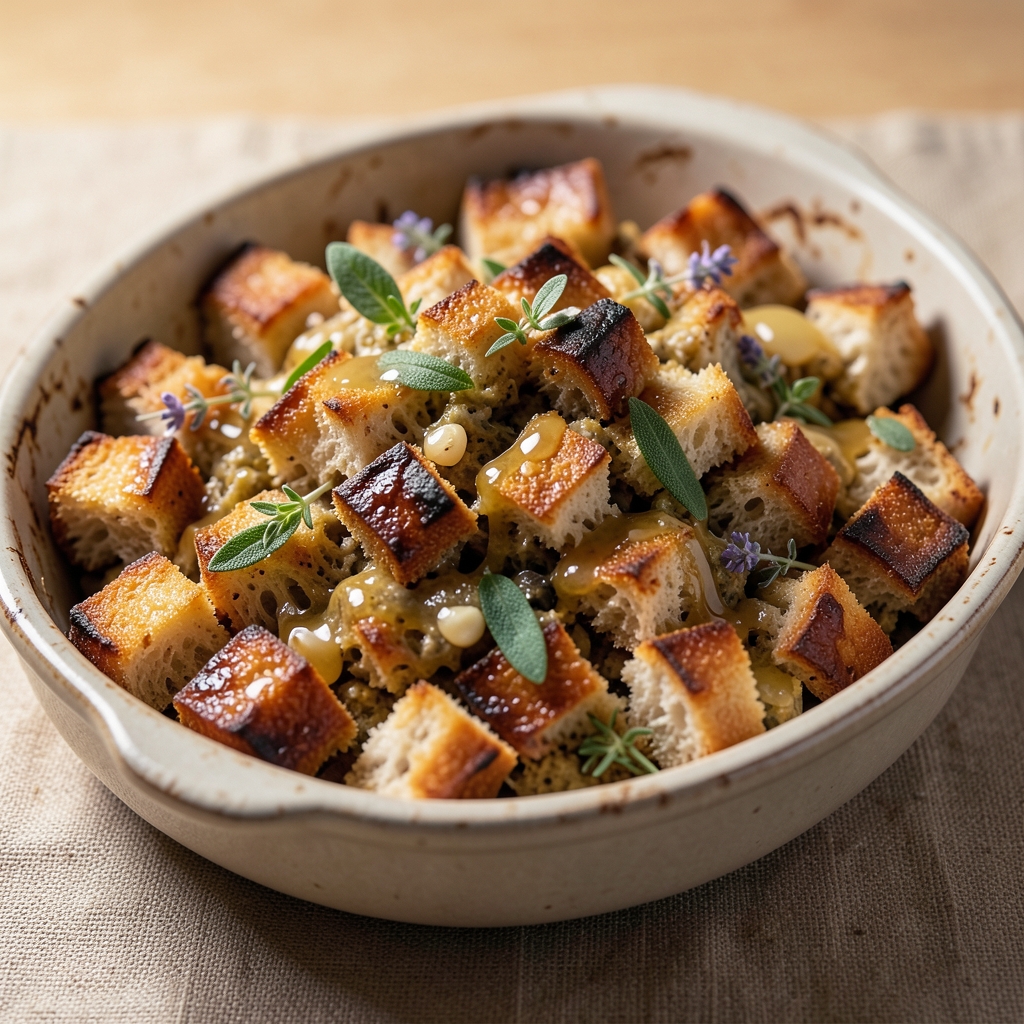
This stuffing recipe with bread cubes delivers the perfect balance of crispy edges and soft centers—exactly what transforms a holiday table from good to unforgettable.
Standing on a step stool in my grandmother’s kitchen in Sicily, I learned how to toast bread just enough to hold its shape while staying tender inside, a technique that’s become my holiday secret.
The key lies in the right bread selection, proper seasoning, and a baking method that ensures every bite is golden and flavorful.
What makes this recipe truly special is its versatility—whether you’re preparing for Thanksgiving, Christmas, or a cozy Sunday dinner, the same principles apply.
Using a mix of stale bread (or intentionally dried-out bread from the freezer) ensures the perfect texture, while herbs like sage and thyme, combined with rich chicken or vegetable broth, infuse every cube with deep, aromatic flavor. The result?
A stuffing so delicious it disappears faster than the last slice of pie.
By the time it emerges from the oven, your stuffing will be crispy at the edges with a tender, moist center, and an aroma that fills your home with warmth.
The secret to achieving this lies in the baking process—using a high enough temperature to crisp the edges while keeping the interior soft.
This recipe isn’t just about following steps; it’s about mastering the art of balancing textures and flavors for a dish that feels like a hug in every bite.
For those looking to elevate their stuffing further, consider adding cooked sausage for a meatier version or swapping in gluten-free bread for a dietary-friendly twist. The beauty of this recipe is its adaptability—it’s as much about tradition as it is about making it your own.
Let’s get started on a stuffing that will have everyone asking for seconds.
Ingredients for stuffing recipe with bread cubes
Eight cups of bread cubes, rich herbs, and a touch of golden butter—this stuffing nails crispy edges and tender centers every time.
| Ingredient | Amount | Notes |
|---|---|---|
| Day-Old Bread Cubes 🍞 | 8 cups | Stale or intentionally dried |
| Unsalted Butter 🧈 | ½ cup | Cold, cubed for even toasting |
| Chicken Broth 💧 | 2 cups | Low-sodium preferred |
| Fresh Sage Leaves 🌿 | ½ cup | Chopped, stems removed |
| Fresh Thyme Leaves 🌿 | ¼ cup | Or 1 tbsp dried thyme |
| Garlic Cloves 🧄 | 3 cloves | Minced or finely chopped |
| Yellow Onion 🧅 | 1 medium | Finely diced (about 1 cup) |
| Celery Stalks 🥬 | 3 stalks | Diced, about 1 cup |
| Salt 🧂 | 1 ½ tsp | Adjust to taste |
| Black Pepper 🌶️ | 1 tsp | Freshly ground |
| Eggs 🥚 | 1 whole | Lightly beaten |
| Parmesan Cheese 🧀 | ½ cup | Freshly grated |
| Chicken Sausage 🍖 | ½ lb | Cooked and crumbled |
The bread is everything. Day-old bread works best—French bread, sourdough, or even brioche if you’re treating yourself. Costco or Trader Joe’s have great bulk options, but honestly, whatever’s getting stale in your pantry is perfect. For the herbs, fresh sage and thyme from the grocery store’s produce section (not the sad dried bundles) make all the difference. The Parmesan? Grate it fresh from a wedge—pre-grated tastes like sawdust. And that sausage? Cook it first so it doesn’t make your stuffing soggy.
No chicken broth? Vegetable broth works too—just add a splash of chicken bouillon powder. Short on celery? Swap for mushrooms or bell peppers. The eggs are optional but help bind everything—skip if you prefer extra-crispy. For a meatier version, add diced ham or cooked bacon. And if you’re gluten-free, use gluten-free bread cubes—just don’t forget to add an extra egg to help with binding. The garlic and onion can be prepped ahead and stored in the fridge for 3 days if you’re planning early.
Toast the bread cubes low and slow—350°F for 15-20 minutes—so they crisp up without burning. Store leftovers in an airtight container for 4 days or freeze for 3 months. I always make extra because it reheats beautifully—just add a splash of broth and warm through. The best part? It tastes even better the next day once all the flavors meld together.
Why You’ll Love This Recipe
- No-Waste Magic: I swear by day-old bread—this recipe turns stale loaves into something golden and crispy. No sad sandwich scraps here; just cubes tossed in butter and herbs that soak up broth like a dream.
- Herb-Packed Punch: That combo of sage and thyme? It’s like a warm hug in every bite. The butter melts into the bread while the broth infuses just enough savory depth—simple, but ridiculously satisfying.
- Budget Booster: Butter and herbs cost pennies compared to pre-packaged stuffing mixes. Plus, using up random bread? That’s money in my pocket. (Yes, even on a Tuesday night.)
Step-by-step instructions for holiday stuffing with crispy edges
Here’s how to make stuffing that’s golden on the outside and perfectly moist inside—every time.
Toast the Bread Cubes for Maximum Crispiness
Preheat your oven to 350°F and spread the 8 cups day-old bread cubes evenly on two baking sheets. Toast for 10-12 minutes, stirring halfway, until the edges are light golden brown and the cubes feel dry to the touch. This step is non-negotiable—it prevents a soggy center later.
I like to use a mix of bread types (like sourdough and brioche) for texture, but any stale bread works. If your cubes aren’t perfectly dry, spread them on a tray and bake for another 5 minutes until completely crisp. The goal is to mimic the texture of fresh bread but with that toasted crunch that makes holiday stuffing special.
Cook and Crumble the Chicken Sausage
While the bread toasts, heat 2 tablespoons of the 0.5 cup unsalted butter in a large skillet over medium heat. Add the 0.5 lb chicken sausage and cook for 8-10 minutes, breaking it apart with a wooden spoon until fully browned and cooked through.
Transfer the cooked sausage to a large mixing bowl and set aside. This step gives the stuffing its savory depth—don’t skip browning the sausage, as that’s where most of the flavor develops. If the sausage releases too much grease, pour off all but 1 tablespoon to keep the stuffing from getting greasy.
Sauté the Aromatics for Maximum Flavor
In the same skillet, melt the remaining 0.3 cup unsalted butter over medium heat. Add the 1 medium yellow onion and 3 stalks celery stalks, both finely diced, and cook for 5-6 minutes until softened and just starting to brown. Stir in the 3 cloves garlic cloves and cook for 30 seconds until fragrant.
Add the 0.5 cup fresh sage leaves and 0.25 cup fresh thyme leaves, stirring for 1 minute until the herbs release their aroma. This aromatic trio is the soul of the stuffing—don’t rush this step. The deeper the color of the vegetables, the more flavor you’ll get. Transfer everything to the mixing bowl with the sausage.
Combine Everything for Perfect Texture
In the mixing bowl, combine the toasted bread cubes, sausage mixture, and sautéed vegetables. Add the 2 cups chicken broth, 1.5 tsp salt, and 1 tsp black pepper. Mix gently with a wooden spoon—just until everything is evenly distributed. The stuffing should look moist but not wet.
In a separate bowl, lightly beat the 1 whole egg and stir in the 0.5 cup freshly grated parmesan cheese. Pour this mixture over the stuffing and fold in just until combined. The egg acts as a binder, while the parmesan adds a rich, umami depth. Don’t overmix or you’ll end up with dense stuffing.
Bake Until Golden and Tender
Transfer the stuffing to a greased 9×13-inch baking dish and spread it evenly. Bake at 375°F for 30-35 minutes until the top is deep golden brown and the center reaches 165°F when tested with a meat thermometer. If the top browns too quickly, tent it loosely with foil.
For extra crispy edges, broil for 2-3 minutes at the end, watching closely to avoid burning. Let the stuffing rest for 10 minutes before serving—this lets the juices redistribute, ensuring every bite is moist and flavorful. Serve warm with gravy for the ultimate holiday experience.
Pro Tips For Making Stuffing Recipe With Bread Cubes
- Dry the Cubes First: Toss those bread cubes in a single layer on a baking sheet and let them air-dry for 30 minutes before toasting. I learned this the hard way—wet cubes turn to mush, no matter how much broth you add. Trust me, the extra 10 minutes saves your stuffing from turning into a sad, soggy brick.
- Toast Until Golden: Cook the bread cubes in butter over medium-high heat until they’re deep golden, not just pale brown. I used to rush this, and the stuffing always tasted underwhelming. Let them crisp for 5-7 minutes, stirring often—this builds flavor and texture that broth alone can’t fix.
- Broth in Stages: Don’t dump all the broth at once. Start with half, stir it in, then let the mixture sit for 2 minutes before adding the rest. This lets the bread soak up moisture evenly instead of turning into a watery mess. (Yes, even if you’re impatient like me.)
- Herb, Don’t Drown: Tear sage and thyme leaves by hand—no need to chop finely—and sprinkle them after the broth goes in. Whole leaves infuse better, and you avoid that bitter, overpowering herb taste that comes from over-chopping. A few rough tears go a long way.
Dietary considerations for this dish
Gluten-Free Adaptations
For a gluten-free version, swap traditional bread cubes for a mix of gluten-free bread (like Canyon Bakehouse or Schär) and cornbread or polenta cubes for texture. Toast them at 375°F for 15 minutes until crisp, then proceed with the recipe.
Add 1 extra egg to help bind the mixture—gluten-free bread lacks the natural elasticity of wheat-based bread. 🌱
Vegetarian Options
Skip the chicken sausage and boost flavor with 1 cup cooked mushrooms (cremini or shiitake) or ½ cup walnuts for a meaty texture. Use vegetable broth instead of chicken broth, and add 1 tbsp soy sauce or 1 tsp smoked paprika for depth.
The mushrooms soak up the broth beautifully, keeping the stuffing moist.
Low-Carb Swaps
Replace bread cubes with cauliflower rice (pulse fresh cauliflower in a food processor) and toast in the oven at 400°F for 10 minutes until slightly crisp. Use 2 tbsp olive oil instead of butter, and add 1 tbsp nutritional yeast for a cheesy flavor.
This version cuts carbs but keeps the hearty, savory profile. 🥬
Dairy-Free Adjustments
For a dairy-free twist, omit the butter and use olive oil or vegan butter (like Miyoko’s) for toasting and sautéing. Replace the parmesan with nutritional yeast or dairy-free cheese shreds (like Violife). The egg can stay in—it’s dairy-free! Just ensure your broth is also dairy-free to keep the stuffing cohesive.
Allergen-Friendly Tips
If nut allergies are a concern, avoid walnuts and check labels on gluten-free bread for cross-contamination warnings. For egg-free binding, mix 1 tbsp cornstarch with 2 tbsp cold water and stir it into the stuffing before baking.
This creates a light, airy texture without eggs. Always double-check your ingredients—sausage and broth can sometimes contain hidden allergens. 💡
Nutrition facts
Frequently asked questions
Why does my bread cube stuffing turn out soggy?
The most common culprit is under-toasting the bread cubes. They need to be completely dry before mixing with broth—otherwise, the moisture creates a mushy texture. Toast at 350°F for 15-20 minutes, stirring halfway, until golden and crisp. Also, avoid overmixing after adding liquid ingredients, which can compress the bread and trap moisture.
Can I make this stuffing ahead of time?
Assemble the stuffing up to 24 hours ahead and refrigerate uncovered to let it dry out slightly. Bake straight from the fridge, adding 5-10 extra minutes to the baking time. For make-ahead convenience, you can also toast the bread cubes and store them in an airtight container for 3 days before assembling.
What’s the best bread for bread cube stuffing?
Day-old bread works best—French bread, sourdough, or even brioche add wonderful texture. Avoid soft breads like white sandwich bread, as they’ll turn gummy. For extra flavor, try Italian bread or a mix of crusty and soft varieties. If you’re short on time, intentionally dry out fresh bread by slicing it and baking at 200°F for 1-2 hours until completely dry.
How do I get extra crispy edges without burning the top?
Bake at 375°F until the center reaches 165°F, then broil for just 2-3 minutes—watch closely! For even crispier edges, spread the stuffing in a thin layer in a baking dish. Another trick: Sprinkle 1 tablespoon of breadcrumbs on top before the final broil. This creates a crispy crust while protecting the interior from drying out.
Can I use this recipe for Thanksgiving turkey stuffing?
Yes, but with one key adjustment: Add 1 extra cup of broth when baking inside the turkey to prevent drying out. For extra flavor, stuff the turkey cavity with half the mixture and bake the rest separately. The stuffing baked in the turkey will absorb juices, while the separate portion can be broiled for extra crispiness. Remove the stuffing from the turkey 15 minutes before it’s fully cooked to avoid overcooking.

- Chocolate Gnache Recipe: Silky Smooth Pour With Perfect Snap - November 18, 2026
- Rasgulla Sweet Recipe: Silken Cheese Jewels in Cardamom-Infused Syrup - November 18, 2026
- Bubble Waffle Recipe: Crispy Bubbles and Pillowy Centers - November 18, 2026