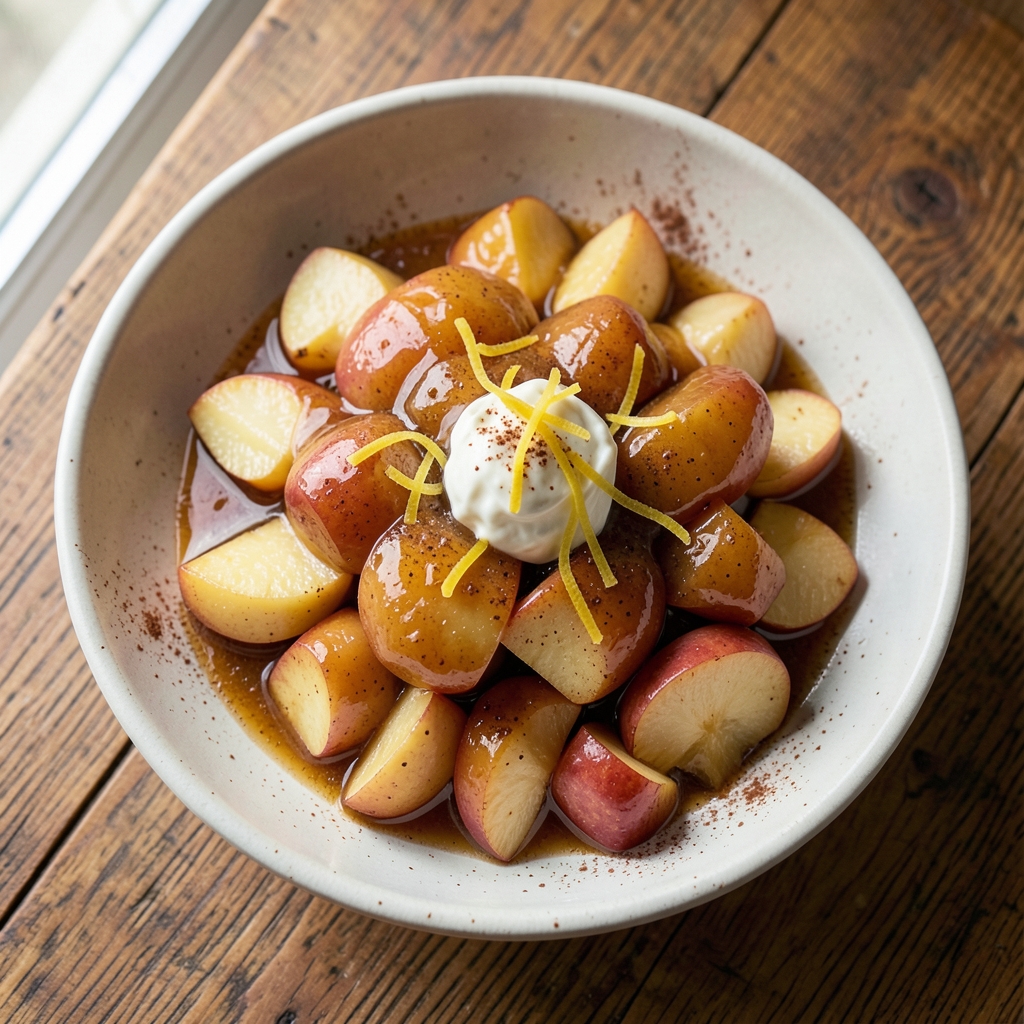
This stewed apples recipe transforms simple fruit into a spiced, velvety simmer that works as both dessert and breakfast—proof that comfort food doesn’t require flour or fuss.
The secret lies in slow cooking apples with cinnamon and just enough liquid to create a thick, aromatic sauce that clings to each bite. I first made this version after burning through three batches of apple crisp (don’t ask), and this method actually rewards mistakes—overripe apples just get sweeter.
The beauty of stewed apples is their versatility: serve them warm over yogurt for breakfast, spoon them into pancakes for a boozy twist, or pair with crispy pork chops for a savory-sweet dinner.
The recipe uses just five core ingredients—apples, cinnamon, a touch of sugar, and a splash of liquid—and delivers restaurant-quality results in under an hour. No fancy equipment needed, just a pot and patience (the kind that rewards you with a kitchen smelling like autumn).
What you’ll end up with is tender, caramelized apple pieces swimming in a fragrant sauce that’s thick enough to coat a spoon but light enough to let the fruit’s natural sweetness shine. The cinnamon infuses the liquid with warmth, while a pinch of salt keeps the flavors balanced.
This isn’t just dessert—it’s the kind of dish that turns ordinary weeknights into cozy moments, whether you’re feeding a crowd or treating yourself to a quiet meal.
For extra depth, I often add a splash of apple cider or a strip of orange peel during simmering, but the basic version stands strong on its own. Let’s get to the recipe—where the magic happens in the slow, steady simmer.
Ingredients for stew apples
Five simple ingredients create this velvety spiced apple simmer that works breakfast or dessert.
| Ingredient | Amount | Notes |
|---|---|---|
| Apples (Honeycrisp or Granny Smith) 🍎 | 2 lb | Peeled, cored, cut into chunks |
| Granulated Sugar 🍚 | ½ cup | Adjust to taste for tart apples |
| Ground Cinnamon 🌶️ | 2 tsp | Ceylon preferred for delicate flavor |
| Apple Cider 🍏 | 1 cup | Or substitute apple juice |
| Unsalted Butter 🧈 | 2 tbsp | Full-fat for best texture |
| Lemon Juice 🍋 | 1 tbsp | Freshly squeezed |
| Sea Salt 🧂 | ¼ tsp | Fine grain preferred |
| Orange Peel (optional) 🍊 | 1 strip | Thinly sliced for aroma |
| Vanilla Extract (optional) 🌸 | ½ tsp | Pure vanilla for depth |
The apples are the foundation—Honeycrisp for sweetness or Granny Smith for tartness. Costco or local orchards often have pre-washed, pre-cut apples that save time, but whole fruit holds up better during storage. Look for firm apples with no bruising; overripe ones actually work best here since they soften faster. The cinnamon should be freshly ground if possible—Penzeys or Spicewalla carry high-quality varieties that make a noticeable difference. For the apple cider, Mott’s or local farm brands add subtle flavor notes that store-bought juices can’t match.
No apple cider? Apple juice or even white wine works in a pinch, though the flavor profile shifts slightly. Short on cinnamon? Nutmeg or cardamom add warmth, but stick to half the amount. The butter is key for richness—Plugrá or Land O’Lakes are reliable choices, but full-fat is non-negotiable here. For the optional orange peel, navel oranges work best; their thick peel stays aromatic during simmering. If you’re making this ahead, the vanilla extract can be omitted until serving—it’s more about aroma than structure in this dish.
Store the cooked apples in an airtight container for up to 5 days in the fridge, though they taste best within 2 days. The sauce thickens as it cools, so add a splash of water or cider when reheating if needed. Freezes beautifully for 3 months—portion into ice cube trays for perfect single servings. For extra coziness, serve with vanilla ice cream or whipped cream. The cinnamon flavor actually intensifies overnight, making leftovers even more comforting.
Why You’ll Love This Recipe
- Five-Ingredient Magic: I swear by this—just apples, sugar, cinnamon, cider, and butter. That’s it. No fancy techniques, no hidden pantry raids. Honestly, if you can peel an apple, you can do this.
- Caramelized Crunch: The Granny Smiths stay crisp while the Honeycrisp ones melt into that perfect jammy bite. Toss in a splash of cider while simmering? Instant depth—like dessert sneaking into your day.
- Pot Luck Star: Between us, this is my go-to for game nights, potlucks, or even a lazy Sunday brunch. Serve it warm over pancakes or straight from the pot—no judgment. (Yes, even on a Tuesday night.)
- Leftovers? More Like Leftovers: Make a double batch and refrigerate. Cold, they’re a snack. Reheated, they’re better—the flavors meld into something richer. And since it’s just fruit and spices, it’s the kind of cheap that feels indulgent.
Instructions for stewed apples recipe: spiced cinnamon simmer
Here’s a straightforward method that delivers tender, aromatic stewed apples in under 30 minutes.
Prepare the Apples for Cooking
Peel, core, and cut the 2 lb of apples into even 1-inch chunks. I prefer Honeycrisp for natural sweetness or Granny Smith for tartness that balances well with the sugar. Place the apple chunks in a large, heavy-bottomed pot—this helps distribute heat evenly and prevents scorching.
Add the 1 cup of apple cider and the 1 strip of orange peel if using. The cider adds depth while preventing the apples from drying out. If your apples are particularly tart, you might reduce the 0.5 cup of granulated sugar slightly later, but start with the full amount for balanced flavor. Bring everything to a gentle boil over medium-high heat.
Simmer Until Apples Are Tender
Once boiling, reduce heat to medium-low and let the apples simmer uncovered for 10-12 minutes. You’ll know they’re ready when a knife slides in easily—this ensures they’ll break down further during the final reduction but won’t turn mushy. Stir occasionally to prevent sticking, especially if your pot isn’t nonstick.
Here’s where the cinnamon comes in: sprinkle in the 2 tsp of ground cinnamon and the 0.25 tsp of sea salt. Stir well to distribute evenly. The salt enhances the apple flavor while balancing the sweetness, and the cinnamon infuses throughout. If you’re using vanilla extract, add it now—it blends better when the apples are warm.
Finish with Butter and Lemon for Richness
Add the 2 tbsp of unsalted butter and 1 tbsp of lemon juice to the pot. The butter creates a velvety texture, while the lemon brightens the dish and prevents the apples from tasting flat. Let the mixture simmer for another 3-4 minutes until the butter melts completely and the sauce thickens slightly. You’re aiming for a consistency that coats the back of a spoon.
Taste and adjust seasoning if needed—add a pinch more sugar if the apples taste tart, or a splash of apple cider if the sauce is too thick. The stewed apples should be tender but still hold their shape slightly, with a glossy sheen from the butter and a fragrant aroma from the spices.
Serve Warm or Store for Later
Transfer the stewed apples to a serving bowl or individual ramekins. They’re perfect served warm over vanilla ice cream, with a dollop of whipped cream, or alongside buttery toast for breakfast. If storing, let them cool to room temperature first, then refrigerate for up to 5 days or freeze for up to 3 months—the flavors actually deepen over time.
For a cozy touch, garnish with an extra sprinkle of cinnamon or a few thin orange peel strips. The warm spices and citrus notes make this a versatile dish that works as dessert, breakfast, or even a side for pork dishes. The key is keeping the texture tender but not mushy—this method guarantees that every bite is perfectly balanced.
Pro Tips For Making Stew Apples
- Peel Before Slicing: DESCRIPTION: I learned this the hard way—peeling apples first saves you from chasing skins that curl up while cooking. Granny Smiths hold their shape better peeled, but Honeycrisp’s thicker skin still benefits from a quick peel to avoid gummy texture. Use a paring knife or vegetable peeler, and work over a bowl to catch the peels (they’re great for compost or even apple cider vinegar).
- Start Medium-High Heat: DESCRIPTION: Crank the stove to medium-high when adding butter and apples—this gets them caramelizing fast before the cider dilutes the heat. After 3 minutes of sizzling, drop to medium-low to simmer. I used to simmer immediately, and the apples turned mushy instead of tender with bite. Let that butter brown first, or you’ll regret it.
- Use Cold Cider: DESCRIPTION: Reach for the cold apple cider straight from the fridge—it prevents a sudden temperature drop that can make the butter seize up. Pour it slowly against the side of the pan, and stir gently to incorporate. Warm cider loses its brightness, and the stewed apples end up tasting flat. Trust me, your future self will notice the difference.
- Skip the Over-Stirring: DESCRIPTION: This isn’t the prettiest method, but it’s the tastiest: let the apples caramelize in patches instead of stirring constantly. After the first 5 minutes, give them a quick stir, then walk away. The uneven browning deepens the flavor—like a natural caramelization. Over-stirring just turns everything into a uniform mush, and nobody wants that.
Regional styles of these flavors
English Country Style
In the UK, stewed apples often take on a more robust, spiced character—think black pepper and nutmeg alongside cinnamon. I’ve made this version with Bramley apples (the British classic) and a splash of port wine instead of cider, which adds depth without overpowering.
Serve with scones or clotted cream for a proper afternoon tea experience. The British love their puddings, and this is a lighter, fruit-focused alternative to heavier desserts. 🍏
German Apfelmus Twist
German Apfelmus (applesauce) often includes stewed apples, but with a ginger and clove twist. Replace the cinnamon with 1 tsp ground ginger and add 2 whole cloves while simmering. The Germans use Boskop apples for their firm texture, and I’ve seen versions with a touch of rum for warmth.
This version works beautifully as a topping for pork schnitzel or sausages, bridging the gap between dessert and savory sides. 🌶️
French Tarte aux Pommes
While not a standalone stew, French tarte aux pommes often uses stewed apples as a filling. The French prefer Golden Delicious or Pink Lady apples, stewed with vanilla bean and a splash of calvados (apple brandy).
The sauce is thicker, almost like a jam, and used to fill a buttery puff pastry crust. For a quick version, use this recipe as a filling—just reduce the liquid slightly and thicken with a cornstarch slurry. The result is a restaurant-worthy dessert that feels effortless. 🍰
American Southern Comfort
In the American South, stewed apples often get a bourbon or apple brandy infusion, especially in regions like Virginia or the Carolinas. I’ve made this version with 1 tbsp bourbon simmered in at the end, along with a pinch of allspice for warmth.
It’s a classic side for smoked ham or pork ribs, where the sweet-tangy apples cut through the richness. The Southern touch? Serving it warm with vanilla ice cream for a dessert that feels like a hug. 🥃
Scandinavian Simplicity
Nordic countries keep stewed apples minimalist but flavorful, often using cloudberries or lingonberries alongside apples for a tart-sweet balance. Swap the cinnamon for cardamom pods (lightly crushed) and simmer with a splash of lingonberry jam instead of sugar.
The Scandinavians serve this as a breakfast side with lingonberry yogurt or as a topping for cardamom buns. The result is bright, tangy, and perfect for cold mornings. ❄️
Nutrition facts
Frequently asked questions
Can I use any apples for stewing?
Not all apples work equally well! Honeycrisp or Granny Smith are ideal—Honeycrisp stays sweet while Granny Smith adds tartness that balances perfectly. Avoid mealy varieties like Gala or Fuji, which turn mushy. Overripe apples actually work best since they soften faster and develop deeper flavor during simmering.
How do I fix stewed apples that turned out too thick?
Don’t worry—just add a splash of apple cider or water (start with 1-2 tablespoons) and simmer for 2-3 minutes until the consistency improves. For extra richness, stir in a pat of butter afterward. If the sauce is still too thick, thin it gradually while tasting.
Can I make this ahead for a party?
The flavors actually improve overnight. Store in an airtight container in the fridge for up to 5 days or freeze for 3 months. Reheat gently on the stove with a splash of liquid—it’s perfect for make-ahead desserts or breakfast toppings. The texture stays tender when reheated properly.
What’s the best way to serve stewed apples?
This versatile dish shines in 3 ways: spooned over vanilla ice cream for dessert, stirred into oatmeal or yogurt for breakfast, or paired with pork chops or sausages for a sweet-savory dinner. For extra flair, garnish with whipped cream, toasted nuts, or a sprinkle of cinnamon.
Can I substitute the apple cider?
Yes! Use apple juice (same amount) or even white wine (reduce to ½ cup for stronger flavor). For a boozy twist, try apple brandy or bourbon**—simmer in at the end with the butter. Just avoid acidic juices like orange juice, which can make the apples turn mushy faster.

- Lemon Pound Cake Recipe: Bright Citrus Layers With Buttery Crumb - November 18, 2026
- Spumoni Cake Recipe: Layers of Fruit, Cream, and Chocolate Magic - November 18, 2026
- Chocolate Gnache Recipe: Silky Smooth Pour With Perfect Snap - November 18, 2026