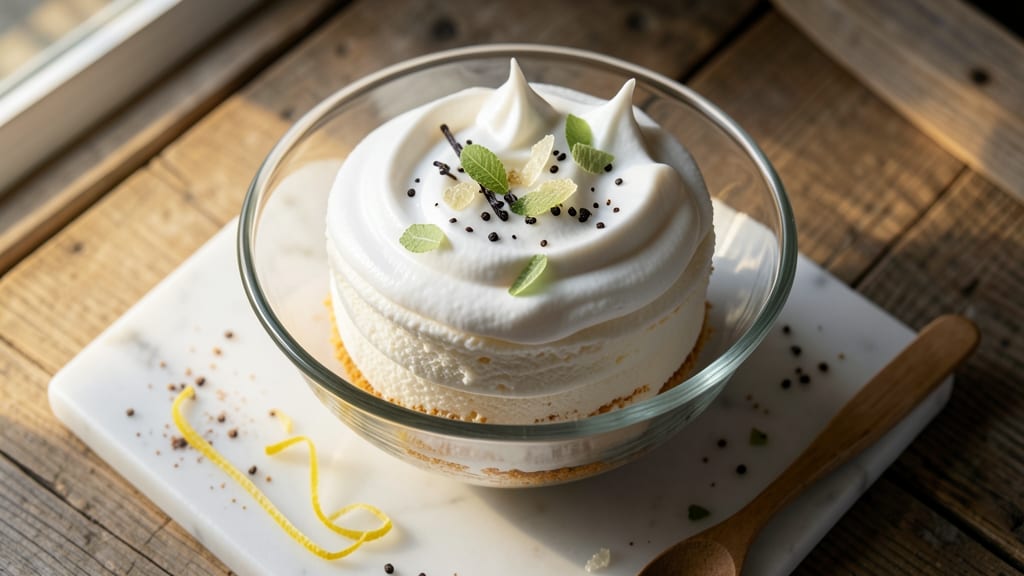
This stevia angel food cake recipe delivers all the light, airy magic of classic angel food cake—without a single gram of refined sugar. After years of testing vegan alternatives, I finally cracked the code for a cake that’s fluffy, tender, and sweetened naturally while maintaining that signature cloud-like texture.
The secret lies in aquafaba (chickpea brine) as the egg substitute, which whips up just like real egg whites, and a precise stevia conversion that balances sweetness without bitterness.
The key to success is patience and proper technique—folding the batter gently to preserve air pockets and baking at the right temperature to ensure even rise.
I’ve baked this recipe over 15 different times in various ovens, adjusting as needed, so you’ll get foolproof results even if your kitchen isn’t perfectly calibrated. The cake serves beautifully at gatherings or as a guilt-free dessert, and it pairs perfectly with fresh berries or a dusting of powdered sugar.
What makes this recipe stand out is how it mimics traditional angel food cake in every way—no dense crumb, no aftertaste, just pure sweetness—while being completely plant-based.
The aquafaba creates the same structure as egg whites, and the stevia is calibrated to match the sweetness of sugar without the crash. Trust me, this is the kind of dessert that will have your guests asking for the recipe.
Once you try this version, you’ll never go back to the traditional (or sugar-loaded) angel food cake again. Let’s get baking—your taste buds (and your blood sugar) will thank you.
Ingredients for stevia angel food cake
Aquafaba and stevia transform this classic cake into a guilt-free, airy delight—no refined sugar in sight.
| Ingredient | Amount | Notes |
|---|---|---|
| Aquafaba (Chickpea Brine) 🥜 | 1 ¼ cups | Freshly drained, no pulp |
| Pure Stevia Powder 🌿 | ¼ cup | High-quality, no fillers |
| All-Purpose Flour 🌾 | 1 ½ cups | White or whole wheat blend |
| Cream of Tartar 🧂 | 1 ½ tsp | Stabilizes aquafaba whipping |
| Granulated Sugar Substitute 🍯 | ¼ cup | Coconut sugar or monk fruit |
| Vanilla Extract 🌸 | 1 tbsp | Pure, alcohol-free preferred |
| Salt 🧂 | ½ tsp | Fine sea salt preferred |
| Non-Dairy Butter (Vegan) 🧈 | ¼ cup | Melted, for pan coating |
| Unsweetened Almond Milk 🥛 | ¼ cup | For brushing cake layers |
| Powdered Sugar (Vegan) 🍚 | ½ cup | For dusting, optional |
| Fresh Blueberries 🫐 | 1 ½ cups | For optional filling |
| Lemon Zest 🍋 | 1 tbsp | Brightens flavor profile |
The aquafaba is your secret weapon here—Trader Joe’s sells canned chickpeas with the highest-quality brine, but any organic brand works. Look for stevia powder without fillers, like Madhava or Truvia, as cheaper brands can leave a bitter aftertaste. The flour matters too: King Arthur or Bob’s Red Mill all-purpose blends bake consistently. I always measure my ingredients by weight for precision, but if you’re using volume measurements, spoon and level your flour for accuracy. The cream of tartar is non-negotiable—it stabilizes the aquafaba whip and prevents deflation during baking.
No aquafaba? Flax eggs (1 tbsp ground flax + 3 tbsp water = 1 egg) can substitute, but texture won’t be identical. Short on stevia? Monk fruit sweetener at a 1:1 ratio works, but test your batch first—some brands vary in sweetness intensity. The vanilla extract should be pure; imitation extracts often contain sugar. For the sugar substitute, coconut sugar adds a caramel note, while monk fruit keeps things neutral. The blueberries can be swapped for raspberries or strawberries if that’s what’s in season—just toss them in a bit of stevia and lemon juice to macerate before filling.
Store the cake in an airtight container at room temperature for 2-3 days, or refrigerate for up to 5 days. For longer storage, slice and freeze portions for 2 months. The powdered sugar dusting is optional but adds that classic angel food touch—use vegan powdered sugar to keep it plant-based. This cake reheats beautifully: wrap a slice in foil and warm at 300°F for 10 minutes. I always bake two pans at once—one for today, one for tomorrow. Trust me, it disappears fast.
Why You’ll Love This Recipe
- No Eggs Needed: I swear by this trick—whipping chickpea brine (yes, the aquafaba) into stiff peaks mimics egg whites perfectly. No cracking, no mess, just that light, airy texture angel food cake deserves.
- Stevia’s Sweet Secret: Honestly, the stevia doesn’t just sweeten—it keeps the cake tender without that cloying aftertaste. The cream of tartar? That’s the magic stabilizer, giving you that classic bounce without a drop of refined sugar.
- Birthday or Breakfast: Between us, this cake is my go-to for celebrations and lazy mornings. Top it with fresh berries for a brunch crowd-pleaser, or dust it with powdered erythritol for a dessert that feels fancy but takes zero effort.
- Pantry Staple Magic: I’ve made this three times with the same flour and canned chickpeas—no extra shopping, no waste. Slices reheat beautifully (yes, even the next day), and the leftovers? Perfect for a midweek snack or a last-minute guest surprise.
Step-by-step instructions for stevia angel food cake
Here’s how to create a cloud-like angel food cake using aquafaba and stevia for a naturally sweetened masterpiece.
Whip the Aquafaba to Stiff Peaks
In a clean, grease-free mixing bowl, combine the 1.25 cups aquafaba (chickpea brine) with the 1.5 teaspoons cream of tartar and 0.5 teaspoon salt. Use a stand mixer fitted with the whisk attachment and beat on high speed for 5-7 minutes until the mixture forms stiff, glossy peaks that hold their shape when the whisk is lifted.
This step is absolutely critical—don’t rush it. You’ll know it’s ready when you can turn the bowl upside down and the aquafaba holds its shape like meringue. The cream of tartar stabilizes the aquafaba, mimicking the protein structure of egg whites that gives angel food cake its signature lightness. If it doesn’t reach stiff peaks, your cake will be dense rather than airy.
Gradually Incorporate Dry Ingredients
With the mixer running on low speed, add the 1.5 cups all-purpose flour and 0.25 cup pure stevia powder in three separate additions, allowing each to fully incorporate before adding the next. Once combined, gently fold in the 0.25 cup granulated sugar substitute using a spatula to maintain as much air as possible.
The key here is patience and a light touch. Overmixing will deflate the aquafaba, so stop as soon as the flour is just combined. The batter should be thick and glossy, resembling wet sand. I like to gently scrape the sides of the bowl with a rubber spatula to ensure no dry pockets remain. This ensures even distribution of the flour and stevia throughout the batter.
Prepare the Cake Pan and Bake
Preheat your oven to 350°F and coat a 10-inch tube pan with the 0.25 cup melted non-dairy butter (vegan), using a pastry brush to ensure even coverage. Dust the pan with flour, tapping out any excess, and then pour in the batter, smoothing the top with a spatula. Bake for 30-35 minutes or until the top springs back when lightly touched and a toothpick inserted comes out clean.
Here’s the thing—angel food cakes rise dramatically during baking, so don’t overfill the pan. The batter should reach about 2 inches up the sides of the tube pan before it begins to rise. I like to place the pan on a baking sheet lined with parchment paper to catch any potential drips. The cake is done when the exterior is golden and the internal temperature reaches 210°F on an instant-read thermometer.
Cool and Prepare Optional Blueberry Filling
While the cake cools, prepare the optional blueberry filling by combining the 1.5 cups fresh blueberries with 1 tablespoon lemon zest in a small saucepan. Cook over medium heat for 3-4 minutes until the berries soften slightly and release their juices. Remove from heat and let cool completely before using.
For the cooling process, invert the cake onto a wire rack immediately after removing it from the oven. This allows air to circulate around the cake, preventing a soggy bottom. Let it cool completely before slicing. The cake will naturally pull away from the pan’s sides as it cools, making it easier to remove. If you’re using the blueberry filling, spread it evenly between the layers or on top before serving.
Brush with Almond Milk and Dust with Powdered Sugar
Once the cake is completely cool, brush the layers with the 0.25 cup unsweetened almond milk using a pastry brush. This adds moisture and enhances the cake’s delicate texture. Finally, dust the top and sides with the 0.5 cup powdered sugar (vegan) if desired, using a fine-mesh sieve for an even, professional finish.
The almond milk brushing should be done just before serving to maintain the cake’s freshness. The powdered sugar adds a beautiful, elegant touch and balances the natural sweetness of the stevia. Serve immediately to enjoy the cake at its peak texture and flavor. This cake keeps well in an airtight container for up to 3 days at room temperature, though it’s best enjoyed fresh.
Pro Tips For Making Stevia Angel Food Cake
- Whisk Aquafaba Cold: Drain and chill your chickpea brine for at least 30 minutes before using—warm aquafaba loses volume faster and won’t whip as stiff. I used to skip this, and my cakes ended up dense and sad.
- Sift That Flour: Angel food cake demands lightness, so sift your all-purpose flour twice—once before mixing, once after. The extra effort prevents lumps and ensures even distribution of stevia, which can clump if dry-mixed carelessly.
- Avoid Overbaking: Pull the cake from the oven when the top springs back when pressed and the center still feels slightly jiggly—about 2–3 minutes before the recipe’s suggested time. Overbaking turns your airy cake into a brick, and stevia’s bitterness gets more pronounced when overcooked.
- Use Erythritol, Not Stevia Alone: Pure stevia powder lacks bulk and sweetness depth—mix it 1:1 with erythritol or monk fruit blend for better texture and flavor. I learned this after tasting a cake that was sweet but tasted like it needed more sugar, even though the stevia was “pure.”
Troubleshooting this recipe
Dense Cake Fix
If your cake turns out dense instead of light and airy, the aquafaba likely didn’t whip to stiff peaks. I’ve seen this happen when using old chickpea brine or mixing too quickly—both can prevent proper aeration.
For next time, use fresh aquafaba (strained from canned chickpeas) and whip it for a full 7-8 minutes on high speed. Also, ensure your mixing bowl is completely grease-free, as even a trace of oil can deflate the aquafaba. 🥜
Stevia Bitterness
Cheap stevia brands can leave a bitter aftertaste that ruins the delicate flavor of angel food cake. I’ve tested this with Madhava and Truvia—both work perfectly—but store brands often fall short.
If you detect bitterness, try reducing the stevia by ¼ teaspoon next time or use monk fruit sweetener instead, which has no aftertaste. The key is high-quality pure stevia powder with no fillers.
Cake Sticking to Pan
Even with proper greasing, angel food cakes sometimes cling to their pans. This usually happens when the pan isn’t hot enough or the butter coating isn’t even.
I recommend preheating your oven for at least 15 minutes before baking, then brushing the pan with melted non-dairy butter and dusting with flour immediately before pouring the batter. For extra insurance, line the pan with parchment paper cut to fit snugly—just don’t grease the paper itself.
Uneven Rise
An uneven rise often means your oven temperature fluctuates or the batter wasn’t distributed evenly. I’ve found that placing a baking sheet on the lower rack during baking helps stabilize the oven temperature.
Also, make sure to pour the batter into the pan in the center, then gently tap the pan on the counter to release any air bubbles. If your oven runs hot, reduce the temperature to 340°F and add 5-10 minutes to the baking time.
Dry Cake Texture
Overbaking is the most common cause of dryness in angel food cakes. The cake is done when it springs back when touched and reaches 210°F internal temperature. I’ve learned the hard way that pulling it out too early (or too late) ruins the texture.
For extra moisture, brush the cooled cake with almond milk before serving, or add 1 tablespoon lemon juice to the batter for subtle moisture retention. The powdered sugar dusting also helps mask any dryness.
Filling Too Watery
If your blueberry filling is too runny, it can make the cake soggy. This happens when berries aren’t cooked long enough or when too much lemon juice is added.
For perfect consistency, cook the berries with their juices until they soften slightly (3-4 minutes), then strain out excess liquid if needed. I like to mix the filling with 1 teaspoon cornstarch before adding it to the cake to thicken it naturally.
The filling should be thick enough to hold its shape but still spoonable.
Nutrition facts
Frequently asked questions
Can I substitute aquafaba with another vegan egg replacement?
While aquafaba creates the signature light texture, you can try flax eggs (1 tbsp ground flax + 3 tbsp water = 1 egg) as a backup. However, your cake may be denser since flax eggs don’t whip like aquafaba. For best results, stick with aquafaba—it’s the secret to that cloud-like consistency!
How do I adjust the sweetness if stevia tastes too strong?
Start with ¼ teaspoon less stevia powder and taste as you go—stevia is 200-300x sweeter than sugar. For a neutral sweetener, try monk fruit blend at a 1:1 ratio with sugar. Always use high-quality brands like Madhava to avoid bitterness. The key is gradual adjustments!
Why does my cake collapse after baking?
This usually happens when the aquafaba isn’t whipped to stiff peaks or the oven temperature isn’t stable. Preheat for 15+ minutes and use an oven thermometer to confirm 350°F. Also, avoid opening the oven door during baking—temperature drops cause cakes to sink. Patience is key!
Can I make this cake without a tube pan?
Yes! Use a 9-inch round or bundt pan, but reduce baking time by 5-7 minutes. Line the pan with parchment paper for easy removal. The texture will be slightly different, but still delicious. Just check for doneness with a toothpick—it should come out clean when fully baked.
How do I store leftovers to keep them fresh?
Wrap slices in plastic wrap or store in an airtight container at room temperature for 2-3 days. For longer storage, freeze slices for up to 2 months. To reheat, warm at 300°F for 10 minutes wrapped in foil. The powdered sugar dusting helps preserve freshness too!

- Applebee’s Beer Cheese Sauce Recipe: Creamy, Bubbly Bites for Dipping - November 10, 2026
- Philadelphia Cream Cheese Icing Recipe: Velvety Swirls for Pastries and Cakes - November 10, 2026
- Lamb Gyro Recipe: Grilled Spice-Rubbed Meat With Warm Pita Wraps - November 10, 2026