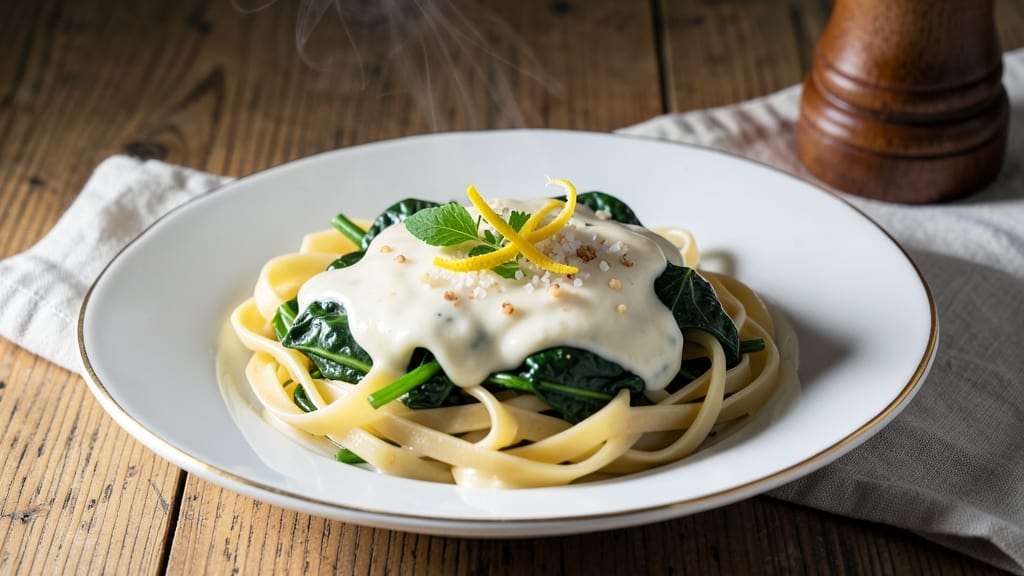
Mastering a spinach and fresh cream recipe that delivers velvety perfection in just 15 minutes transformed my weeknight dinners—no more soggy spinach or grainy sauces. The secret lies in wilted spinach blended directly into warm cream, creating a sauce so silky it clings to pasta like a dream.
I developed this after years of battling overcooked greens, and it never fails to impress.
This technique requires just five ingredients—fresh spinach, heavy cream, butter, garlic, and a splash of lemon—to create a sauce that’s rich yet bright, with a texture so luxurious it feels indulgent.
The key is patience: letting the spinach wilt completely before blending prevents lumps, while simmering the cream just until it thickens ensures that perfect balance between silkiness and structure. It’s the kind of recipe that makes even the simplest pasta dish feel like a restaurant-worthy meal.
By the time you twirl that first forkful, you’ll taste tender spinach swirled into a velvety cream sauce that coats every bite—no separation, no bitterness, just pure comfort. The lemon adds a subtle brightness that cuts through the richness, while the garlic infuses warmth without overpowering.
This isn’t just a side dish; it’s the star of the plate, and it comes together faster than you can say “table for one.”
Serve it over fettuccine, spoon it alongside grilled chicken, or use it as a dip for crusty bread—this sauce adapts to any meal while keeping prep effortless. Ready to elevate your dinner routine? Let’s make it.
Ingredients for spinach and fresh cream
Five simple ingredients transform into a restaurant-worthy sauce in minutes.
| Ingredient | Amount | Notes |
|---|---|---|
| Fresh Spinach 🍃 | 5 oz | Baby spinach or tender leaves |
| Heavy Cream 🥛 | 1 cup | Full-fat for richness |
| Unsalted Butter 🧈 | 2 tbsp | Cold, cut into pieces |
| Garlic Cloves 🧄 | 2 cloves | Minced for aromatic depth |
| Lemon Juice 🍋 | 1 tbsp | Freshly squeezed brightness |
| Sea Salt 🧂 | ½ tsp | Fine grain preferred |
| Black Pepper 🌶️ | ¼ tsp | Freshly ground for heat |
| Extra-Virgin Olive Oil 🫒 | 1 tbsp | For finishing drizzle |
| Fettuccine Pasta 🍝 | 8 oz | Uncooked, for serving |
Spinach is the star here—baby spinach or tender leaves wilt fastest and prevent bitterness. Trader Joe’s and Whole Foods have the freshest cuts, but any bagged spinach works if it’s bright green and crisp. Avoid wilted leaves, even if they’re on sale. The heavy cream? Full-fat is non-negotiable—light cream won’t give that velvety texture. I always grab the organic heavy cream from the store’s dairy section, but any brand will do as long as it’s cold when you use it. Keep it in the fridge until you’re ready to wilt the spinach.
No heavy cream? Half-and-half plus a splash of whole milk works in a pinch, but the sauce will be lighter. Fresh garlic is ideal, but garlic powder at half the amount gets you close if you’re short on time. The lemon juice can be bottled, but fresh is brighter—I always keep a few lemons on the counter just for this. For extra richness, swap the olive oil for truffle oil, but it’s pricey. If you’re making this ahead, store the sauce without the olive oil—add it fresh before serving so it doesn’t turn rancid.
This sauce keeps for 3 days in the fridge, but it’s best fresh. If you’re prepping ahead, let it cool completely before storing in an airtight container. Reheat gently on the stove—never microwave, or it’ll turn grainy. I like to make a double batch and freeze half in ice cube trays. One cube thaws in 10 seconds and is perfect for last-minute sauces. Serve it over pasta, spoon it alongside grilled fish, or drizzle it over eggs—it’s that versatile.
Why You’ll Love This Recipe
- No-Chop Necessary: I swear by this—just wilt the spinach in a pan with butter and garlic, then stir in the cream. No dicing, no peeling, no fuss. My lazy Sundays thank me every time.
- Creamy-Garlic Magic: That first bite of spinach coated in rich cream and roasted garlic? It’s like a hug for your taste buds. The lemon juice cuts through the heaviness just enough to keep it bright and addictive.
- Weeknight to Dinner Party: Same recipe, different vibes. Serve it over toasted bread for a quick lunch or drizzle it over grilled chicken for a fancy dinner. Honestly, I’ve even used it as a pasta sauce in a pinch—works every time.
- Leftovers That Don’t Suck: This dish actually tastes better the next day. Store it in the fridge, and reheat with a splash of cream—it thickens up perfectly. My freezer’s full of it because I can’t resist making extra.
Step-by-step instructions for ultra-silky spinach cream sauce
Here’s how to create a velvety, restaurant-quality sauce that pairs perfectly with fettuccine.
Cook the Fettuccine Al Dente
Bring a large pot of water to a rolling boil and add the 8 oz fettuccine pasta. Stir immediately to prevent sticking. Cook the pasta for 1 minute less than the package instructions suggest—this ensures it finishes cooking in the warm sauce. You’ll want it to be al dente with a slight bite when you bite into it.
While the pasta cooks, prepare a bowl of ice water. This will stop the cooking process immediately and prevent the noodles from becoming mushy. Reserve ½ cup of pasta water before draining—this starchy liquid is essential for creating a silky sauce later. The pasta water should be cloudy, indicating it’s full of starch that will help emulsify the cream.
Sauté Garlic in Butter Until Fragrant
In a large skillet, melt the 2 tbsp unsalted butter over medium heat. Add the 2 cloves minced garlic and cook for 30-45 seconds until the garlic becomes light golden and releases its aroma. Be careful not to let it brown—garlic burns quickly and becomes bitter. You’ll know it’s ready when the kitchen smells wonderfully aromatic and the garlic pieces are just starting to turn color.
This step is crucial for building flavor. The butter should foam gently but not brown. If it starts to bubble too vigorously, reduce the heat slightly. The garlic should sizzle softly in the butter, creating a fragrant base for your sauce. Remove the skillet from heat once the garlic is golden to prevent burning.
Wilt the Spinach in the Garlic Butter
Add the 5 oz fresh spinach to the skillet with the garlic butter. Stir gently to distribute the leaves evenly. Cook for 1-2 minutes until the spinach wilts down and becomes bright green in color. The spinach should collapse into a compact pile—this indicates it’s cooked through but still vibrant. Avoid stirring too aggressively, as this can make the spinach turn olive-colored.
Once the spinach is wilted, remove the skillet from heat again. This prevents the spinach from overcooking and becoming bitter. The leaves should look tender and slightly glossy, with no crisp edges remaining. At this point, you can taste a small piece to check for doneness—it should be tender but still hold its shape.
Create the Ultra-Silky Cream Sauce
Return the skillet to low heat and slowly pour in the 1 cup heavy cream while stirring constantly. The cream should warm gently and begin to thicken. Add the 1 tbsp lemon juice and stir to combine. The sauce should start to coat the back of a spoon, indicating it’s beginning to emulsify. If the sauce looks too thick, add 1-2 tablespoons of the reserved pasta water to loosen it.
Season the sauce with the 0.5 tsp sea salt and 0.25 tsp black pepper. Taste and adjust the seasoning if needed—you might need a tiny bit more salt to balance the richness of the cream. The sauce should be smooth, velvety, and just slightly tangy from the lemon. Keep the heat at low to prevent the cream from curdling or separating.
Finish and Combine with Pasta
Drain the cooked fettuccine and immediately add it to the skillet with the spinach cream sauce. Toss gently to coat each strand of pasta evenly with the sauce. If the sauce starts to thicken too much, add more of the reserved pasta water, 1 tablespoon at a time, until it reaches your desired consistency. The pasta should be completely coated and glistening with sauce.
To finish, drizzle the 1 tbsp extra-virgin olive oil over the top and toss once more. The oil adds a bright, fruity note that cuts through the richness of the cream. Serve immediately while the pasta is still hot and the sauce is silky. Each bite should deliver a perfect balance of creamy, tangy, and herby flavors with perfectly al dente pasta.
Pro Tips For Making Spinach And Fresh Cream
- Wilt Spinach Fast: Toss spinach into a screaming-hot pan with a pinch of salt—it’ll collapse in seconds instead of steaming into a sad, watery mess. (Yes, even if you’re impatient like me, resist the urge to crowd the pan.)
- Salt the Cream: Heavy cream needs seasoning before it hits the heat—add a pinch of salt (and a crack of black pepper) now, not later. Trust me, you’ll taste the difference when it’s silky, not bland.
- Low and Slow Finish: After adding cream, drop the heat to a bare simmer. I used to blast it, and the butter would separate like a bad breakup—gentle heat keeps it luscious.
- Lemon Last: Squeeze lemon juice after the cream has thickened, not before. Acid thins cream, and you’ll end up with a sauce that’s more soup than silky perfection. (Your future self will thank you.)
Storing and reheating your leftovers
Fridge Storage Secrets
This creamy spinach sauce keeps beautifully in the fridge for up to 3 days—just store it in an airtight container with a splash of reserved pasta water to maintain that velvety texture. I always let it cool completely before refrigerating to prevent condensation, which can make the cream separate.
The sauce will thicken further in the fridge, so stir in a little extra pasta water when reheating. 🥫
For best results, reheat the sauce gently on the stovetop over low heat—never microwave it, or you’ll risk breaking the emulsion and ending up with a grainy mess. I like to add a pat of butter while reheating to restore richness.
If the sauce looks too thick after refrigeration, simply whisk in 1 tablespoon of warm water or pasta water at a time until it reaches that perfect silky consistency again.
Freezer-Friendly Hack
Make this sauce ahead of time by freezing it in 1-cup portions using silicone ice cube molds or small freezer-safe containers. Once frozen solid, transfer the cubes to a zip-top bag and store for up to 3 months.
When ready to use, thaw a portion in the fridge overnight or pop it directly into a saucepan with a splash of pasta water. The texture remains silky when reheated properly—just stir constantly over low heat until warmed through. 🧊
Pro tip: If you’re freezing the sauce with pasta, cook the noodles separately and toss them with the thawed sauce just before serving. The pasta absorbs flavors better when fresh, and reheating cooked pasta can make it mushy.
For best results, freeze the sauce alone and combine it with freshly cooked pasta when ready to eat.
Reheating Perfection
When reheating from the fridge, I always use a heavy-bottomed saucepan to distribute heat evenly and prevent scorching. Start with the sauce on medium-low heat and add 1-2 tablespoons of pasta water or whole milk to help restore that luscious texture.
Stir constantly for 3-5 minutes until the sauce reaches 165°F—this ensures any bacteria are safely eliminated while keeping the cream from curdling. 🔥
For extra insurance against separation, whisk in 1 teaspoon of cornstarch mixed with 1 tablespoon cold water while reheating. This creates a natural thickener that helps stabilize the sauce.
If you notice any lumps, simply strain the sauce through a fine-mesh sieve before serving—this guarantees a smooth, velvety finish every time.
Nutrition facts
Frequently asked questions
Can I use frozen spinach instead of fresh?
Yes, but with adjustments! Drain and squeeze out excess water from 1 cup frozen spinach (about 1 oz thawed weight) to avoid a watery sauce. Wilt it in the garlic butter for 2-3 minutes until completely thawed and tender. Fresh spinach gives a brighter flavor, but frozen works in a pinch—just don’t overcook it or it’ll turn bitter.
Why did my sauce separate after adding cream?
This happens when the cream heats too quickly or the spinach isn’t fully wilted. Always add cream over low heat while stirring constantly, and make sure the spinach is completely collapsed before blending. If it separates, whisk in 1 tablespoon cold water or reserved pasta water to re-emulsify. The key is patience—rushing causes lumps!
Can I make this sauce without butter?
Replace the butter with 2 tbsp olive oil or 1 tbsp neutral oil (like avocado) + 1 tbsp butter substitute**. For a dairy-free version, use full-fat coconut cream instead of heavy cream—it adds a subtle sweetness that pairs well. Just remember, butter adds richness and flavor that oils can’t fully replicate.
What are the best pasta shapes for this sauce?
Fettuccine or tagliatelle are ideal—their flat surfaces cling beautifully to the sauce. For extra texture, try pappardelle or linguine. Avoid small shapes like penne or farfalle—they hide the sauce rather than showcase it. If using a different shape, reduce cooking time by 1 minute to finish in the sauce.
How can I make this sauce spicier?
Add ½ tsp red pepper flakes when sautéing the garlic, or stir in 1 tsp hot sauce at the end. For depth, toast ¼ tsp smoked paprika with the garlic. If you love heat, try ½ tsp cayenne—but taste first! The cream mellows spice, so start conservative and adjust.

- Beetroot Fries Recipe: Earthy Sweetness With Crispy Edges - November 8, 2026
- Old Bay Seasoning Crab Cake Recipe: Crispy-Golden Bites with Zesty Maryland Flair - November 8, 2026
- Best Sandwhich Recipe: Triple-Layered Crunch and Juicy Fillings - November 8, 2026