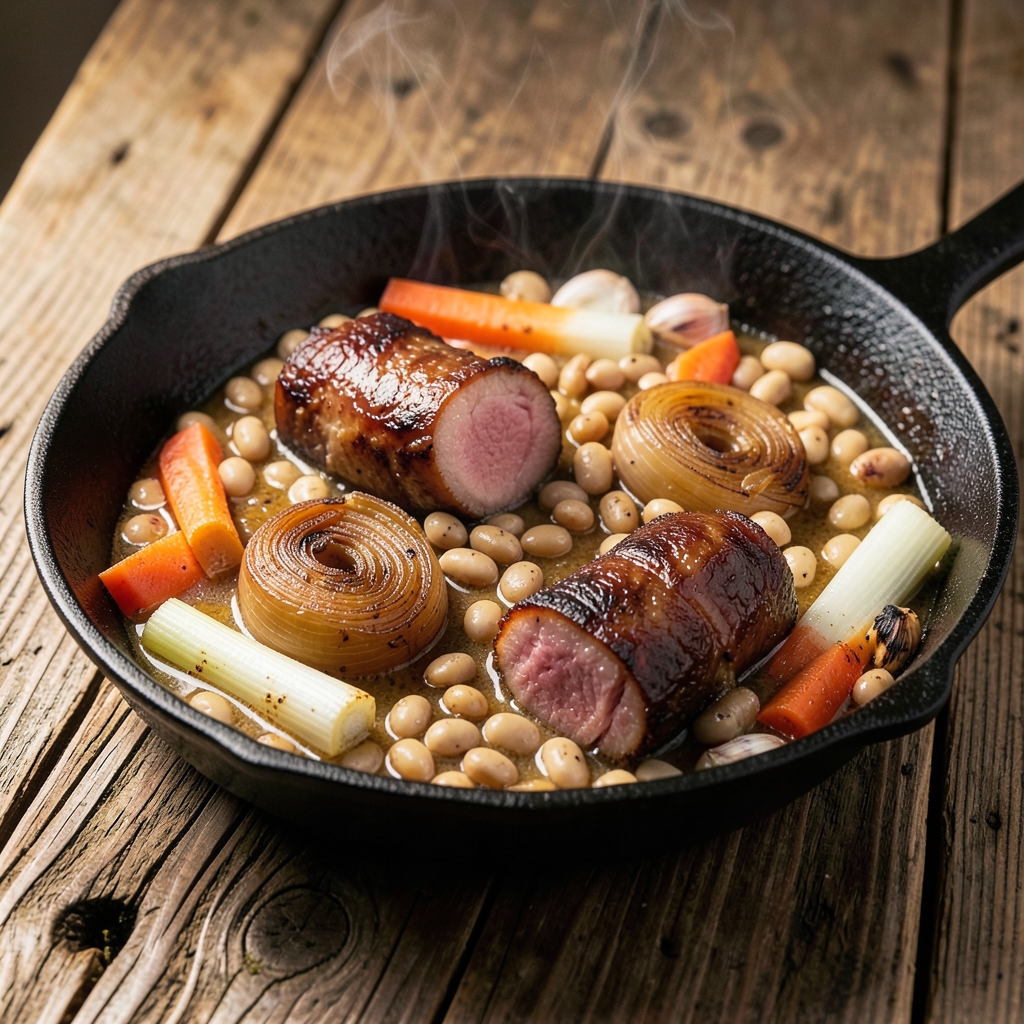
This Southern beans recipe transforms humble ingredients into a dish that carries the weight of tradition and comfort in every bite. The secret lies in the ham hock infusion, which imparts a deep, smoky richness that elevates simple navy beans to something extraordinary.
Growing up in a Boston triple-decker, I learned that good cooking often starts with patience—and this recipe demands it, with hours of slow simmering to develop those complex flavors.
The beauty of this method is its versatility—whether you’re making classic baked beans or a hearty black-eyed pea stew, the same principles apply. A proper ham hock provides the backbone of flavor, while a blend of spices and a touch of molasses rounds out the taste.
The result is a dish that’s both humble and impressive, perfect for family gatherings or quiet weeknight dinners when you crave something substantial.
By the time you’re done, you’ll have a pot of beans that’s tender yet substantial, with a broth so flavorful it deserves a spoon. The ham hock melts into the beans, leaving behind layers of savory depth, while the spices create a harmonious balance.
This isn’t just a side dish—it’s a centerpiece that brings people together, just like the meals my Nonna used to make in our tiny kitchen.
The best part? Leftovers only get better with time, as the flavors continue to meld. Serve it alongside cornbread, grilled meats, or even as a standalone dish when you’re craving that Southern comfort. Here’s how to make it—step by step, with all the care and tradition it deserves.
Ingredients for southern beans
Six core ingredients transform into a smoky, soulful Southern beans dish that tastes like home.
| Ingredient | Amount | Notes |
|---|---|---|
| Navy Beans 🌾 | 2 cups | Dried, soaked overnight |
| Ham Hock 🥓 | 2 whole | Smoked, for deep flavor |
| Onion 🧅 | 1 whole | Yellow, diced medium |
| Carrots 🥕 | 3 medium | Peeled, chopped into chunks |
| Celery Stalks 🥬 | 3 whole | Diced, for classic mirepoix |
| Garlic Cloves 🧄 | 4 cloves | Minced, for aromatic base |
| Molasses 🍯 | ¼ cup | Unsulphured, for sweetness |
| Tomato Paste 🍅 | ¼ cup | Smooth, for depth |
| Apple Cider Vinegar 🍏 | 2 tbsp | For tangy balance |
| Dried Thyme 🌿 | 1 tbsp | Or 1 tbsp fresh thyme |
| Bay Leaves 🍃 | 2 whole | For herbal complexity |
| Black Peppercorns 🌶️ | 1 tsp | Freshly cracked |
| Salt 🧂 | 1 ½ tsp | Kosher or sea salt |
| Water 💧 | 8 cups | For soaking and cooking |
The ham hock is non-negotiable here—look for smoked ones at the butcher counter or meat department. Costco and Whole Foods often carry them, but call ahead if you’re unsure. If you can’t find smoked, unsmoked will work, but you’ll need to add a 1/4 tsp smoked paprika to mimic that depth. The beans? Navy beans are traditional, but pinto or black-eyed peas work beautifully too. Just make sure they’re dried—not canned. Soaking overnight cuts cooking time by hours and makes them tender.
No molasses? Maple syrup or brown sugar will do in a pinch, but molasses gives that authentic Southern touch. Running short on tomato paste? Crushed tomatoes at half the amount works, though the texture won’t be as rich. Fresh thyme is ideal, but dried works at one-third the amount. The vinegar keeps the beans from getting too sweet—apple cider vinegar is best, but white vinegar in a bind. For the mirepoix (onion, celery, carrot), pre-chopped veggie mixes from the store save time, but fresh tastes better. If you’re prepping ahead, chop everything and store in a sealed container for up to 3 days.
This dish tastes even better the next day as flavors meld. Store leftovers in the fridge for up to 5 days—the broth gets richer over time. Freeze portions for up to 3 months by transferring to airtight containers. I always make a double batch because it disappears fast. The ham hock can be saved and reused once—simmer it again in water to extract more flavor for soups or stews. And trust me, the first bite after reheating is worth the wait.
Why You’ll Love This Recipe
- One-Pot Magic: I swear by this recipe because it’s literally one pot—no fussing with multiple dishes. Toss everything in, let it simmer, and walk away. The ham hock melts into the beans, and those onions caramelize right in the pot. Cleanup? One spoon.
- Smoky, Savory Soul: That ham hock? It’s the secret weapon—deep, smoky flavor that seeps into every bean. The celery and carrots add just enough sweetness to balance the richness, while the navy beans soak it all up like a sponge. Honestly, the first bite makes me close my eyes.
- Weeknight to Potluck: Make a big batch on Sunday and eat it all week—sandwiches, sides, or straight from the pot. It’s my go-to for family dinners, church potlucks, or even a last-minute guest meal. The flavors only get better after a day or two, so it’s basically freezer-friendly too.
- Budget-Friendly Powerhouse: Navy beans and ham hocks stretch a dollar without sacrificing taste. I’ve fed a crowd of six for under $15, and everyone leaves happy. Between us, this is the kind of dish that makes grocery shopping feel like a win.
Step-by-step instructions for smoky ham hock infusion
Here’s how to transform simple navy beans into rich, smoky Southern beans bursting with ham hock flavor.
Prepare the Ham Hock and Vegetables
First, rinse the 2 whole ham hock under cold water to remove any surface impurities. Place them in a large Dutch oven and cover with the 8 cups water. Bring to a boil over high heat, then reduce to a simmer for 30 minutes. This step extracts all that deep, smoky flavor into the cooking liquid.
While the ham hock simmers, peel and chop the 3 medium carrots into ½-inch chunks. Dice the 3 whole celery stalks into small pieces—about ¼-inch cubes. Finely mince the 4 cloves garlic cloves. You’ll want these vegetables cut uniformly so they cook evenly alongside the beans. Set them aside for now.
Build the Flavor Base
After the ham hock has simmered for 30 minutes, remove it from the pot using tongs and set it aside. Strain the cooking liquid through a fine-mesh sieve into a clean bowl, discarding any solids. This clear, flavorful broth is the foundation of your beans.
Return the strained broth to the Dutch oven and bring it back to a simmer. Add the chopped carrots, celery, and minced garlic. Stir in the 0.25 cup tomato paste and cook for 5 minutes until the vegetables soften slightly and the tomato paste loses its raw taste. This creates your aromatic base.
Combine All Ingredients for Cooking
Add the 2 cups soaked navy beans to the pot along with the 1.5 tsp salt, 1 tsp freshly cracked black peppercorns, 1 tbsp dried thyme, and 2 whole bay leaves. Pour in the 0.25 cup molasses and 2 tbsp apple cider vinegar. Stir everything together gently to combine.
Return the ham hock to the pot, positioning it on top of the beans. This ensures the meat continues to render flavor as it cooks. Bring the mixture to a boil, then immediately reduce the heat to low. Cover the pot and let it simmer gently for 1 hour, stirring occasionally to prevent sticking.
Simmer to Perfect Tender Texture
After the initial hour, check the beans for doneness. They should be tender but still have a slight bite. If they’re not quite soft enough, continue simmering uncovered for another 30-45 minutes, adding a splash of water if needed to maintain the liquid level.
When the beans are fork-tender with a creamy texture, remove the ham hock and let it cool slightly before shredding the meat with two forks. Discard the bay leaves and adjust the seasoning if needed. The beans should have a rich, smoky depth with just the right balance of sweetness from the molasses and tang from the vinegar.
Rest and Serve with Confidence
Let the completed beans rest for 10 minutes before serving. This allows the flavors to meld together and the beans to absorb any remaining cooking liquid. The final texture should be creamy yet still hold its shape when spooned.
Serve the beans warm with cornbread or over buttered egg noodles. The smoky ham hock flavor will shine through every bite, making this a hearty dish perfect for family gatherings or cozy weeknight meals. Store any leftovers in the refrigerator for up to 5 days—they only get better with time!
Pro Tips For Making Southern Beans
- BLANCH BEANS FIRST: Dump those dry navy beans straight in? Bad move. Soak them overnight or boil them for 2 minutes, drain, and return to the pot before adding ham hock. I learned this the hard way—skipping it leads to beans that stay stubbornly tough, no matter how long you simmer. (Yes, even with that ham hock flavor bomb.)
- CRUSH HAM HOCK BONES: That ham hock’s got flavor locked in the marrow, but if you leave the bones intact, you’ll end up with a broth that’s more suggestive of depth than actually rich. Grab a rolling pin or heavy pan and crack the bones—just a few good whacks. The marrow will melt into the pot, turning your beans from “meh” to “holy smokes.”
- SAUTÉ THE SOUP BASE: Dump chopped onions, carrots, and celery straight into the pot with beans and ham? You’re missing out. Sweat them in oil or ham fat over medium heat for 8-10 minutes until they’re soft and just starting to brown. This step builds flavor faster than simmering ever could—like laying a foundation before you stack the bricks.
- SKIP THE BOIL-OVER: Southern beans need time, but if you walk away and let the pot rage like a pressure cooker, you’ll end up with a foamy, sad mess. Keep the heat at a gentle simmer—low enough that bubbles break cleanly, not explode. A wooden spoon across the pot helps too; it’s not fancy, but it works. (And yes, even if you’re impatient like me.)
Wine and beer pairings for this southern beans
Red Wine Classics
Southern beans pair beautifully with robust red wines that stand up to the smoky ham hock and molasses sweetness. I always reach for a bold Zinfandel from California—its jammy berry notes and peppery finish cut through the richness.
A Southern Italian Primitivo offers similar depth with a touch of earthiness that complements the beans’ savory-sweet profile. 🍷
For a lighter option, try a Chianti Classico—its bright acidity and cherry undertones balance the molasses without overpowering. Avoid heavy Cabernet Sauvignons; they can clash with the dish’s complexity.
If you’re new to wine, look for Apothic Red or Bogle Vineyards Old Vine Zinfandel—both are crowd-pleasers at reasonable prices.
Crisp White Wines
Don’t overlook whites if you prefer them! A dry Riesling from Germany or Alsace provides crisp acidity that refreshes your palate between bites. The slight mineral notes in these wines enhance the beans’ earthy depth. I love Dr. Loosen Blue Slate Riesling—it’s affordable and consistently excellent. 🍷
For a Southern twist, try a Muscadine wine from North Carolina or Georgia. These native grapes create wines with a unique honeyed sweetness and spicy finish that pairs surprisingly well with the smoky beans. Look for Chateau Chantal or Burch Estate—both are local favorites.
Beer Pairings
For beer lovers, a smoked porter like Goose Island Bourbon County Stout is a perfect match—its caramel and coffee notes echo the molasses and ham hock. A dark ale with chocolate undertones, such as Samuel Smith’s Nut Brown Ale, also works beautifully. 🍺
If you prefer lighter beers, a honey wheat ale (like Allagash White) balances the dish’s richness with its floral and citrus notes. For a Southern classic, try a local craft lager—many regional breweries in the South make excellent, crisp options that won’t overpower the beans.
Non-Alcoholic Options
Don’t drink alcohol? No problem! A sparkling apple cider like Martinelli’s adds a festive touch and complements the vinegar in the beans. For something more substantial, try a ginger beer—its spicy kick enhances the dish’s smoky depth. 🥤
Herbal teas like hibiscus iced tea (with a splash of lemon) or chamomile tea with honey provide a soothing contrast to the hearty beans. Brew a strong cup and serve it chilled—it’s a refreshing way to cleanse your palate between bites.
Nutrition facts
Frequently asked questions
Can I substitute canned beans for dried in this recipe?
While you can use canned beans in a pinch, dried beans create a much richer, creamier texture perfect for Southern-style dishes. If you must use canned, drain and rinse them well, then simmer for 20-30 minutes with the other ingredients to let flavors meld. For best results, stick with dried beans soaked overnight—they develop that signature tender yet hearty consistency.
What’s the best way to store leftovers?
Transfer leftovers to an airtight container and refrigerate for up to 5 days. The flavors actually improve as they sit! For longer storage, freeze portions in sealed containers for up to 3 months. Reheat gently on the stove with a splash of water or broth to restore moisture. The ham hock’s flavor intensifies over time, making reheated beans even more delicious.
Why does my ham hock smell so strong when cooking?
The rich, smoky aroma comes from the collagen breaking down during the 30-minute simmer—it’s completely normal and essential for flavor! If the smell seems overpowering, crack a window or use the range hood. The final dish will have a balanced, savory depth rather than the raw intensity of the ham hock. Think of it like making stock—what starts strong becomes delicious.
Can I make this recipe without ham hock?
Yes, but the flavor will be less complex. Replace the ham hock with 4 oz smoked bacon or 2 oz smoked sausage, simmering them first to extract flavor. For a vegetarian version, use 1 cup vegetable broth> plus 1 tsp liquid smoke and ½ tsp smoked paprika. The dish will still be tasty, but the ham hock’s deep umami is hard to replicate.
How do I know when the beans are perfectly tender?
Test for doneness by mashing one bean between your fingers—it should be soft but still hold its shape, like a ripe avocado. If it’s mushy, you’ve overcooked it; if it’s still firm, simmer 15-20 minutes longer. The beans should have a creamy texture with a slight bite, not a pudding-like consistency. A quick taste test is your best guide!

- Guy’s Potato Chip Tuna Casserole Recipe: Crunchy Topping, Creamy Cheese Magic - November 8, 2026
- McCormick Apple Crisp Recipe: Spiced Topping Crunch Over Warm Cinnamon Apples - November 8, 2026
- Old Fashioned Royal Icing Recipe: Stiff-Pipe Consistency for Decorating Dreams - November 8, 2026