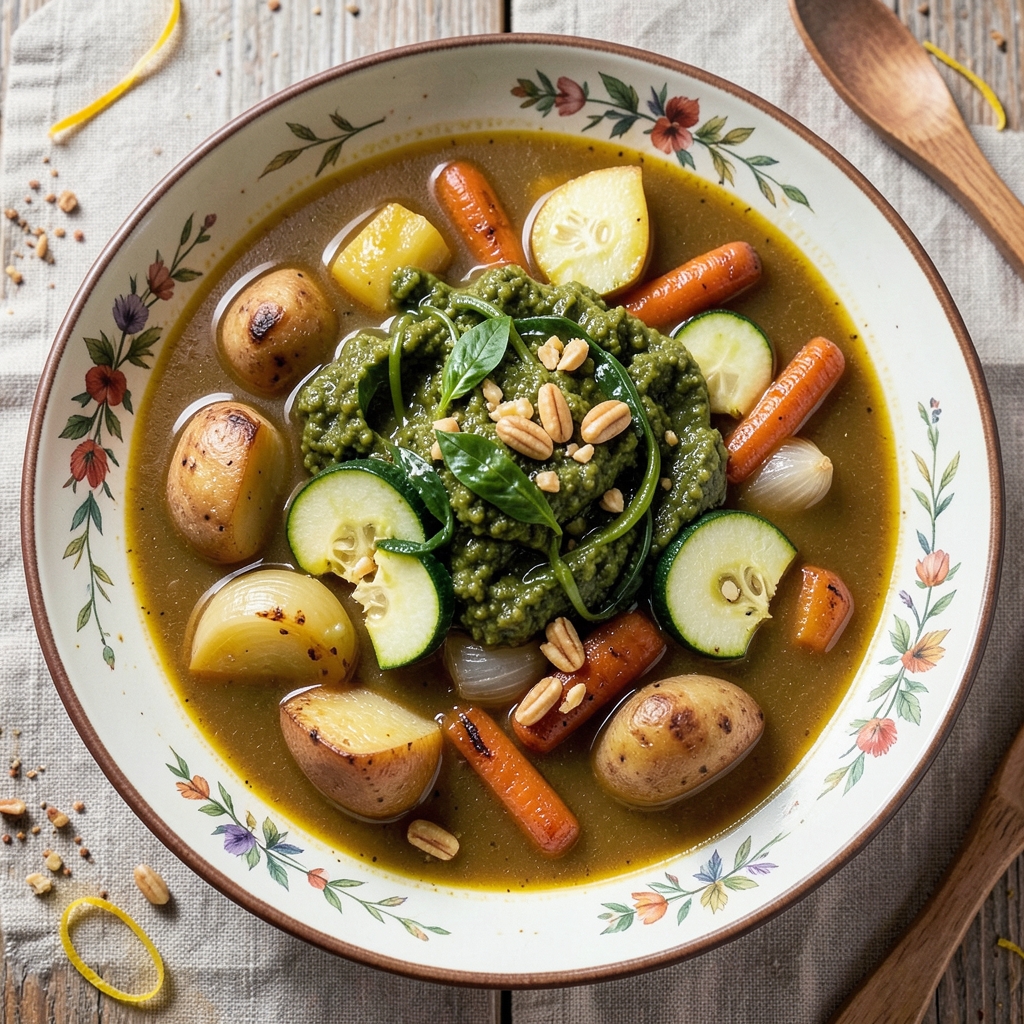
This Soupe au Pistou recipe brings Provençal sunshine to your kitchen with its vibrant tomato broth and herby basil pistou swirled in at the end.
I first tasted it in a tiny bistro in Nice, where the aroma alone made me close my eyes—this is comfort food at its most elegant. The secret lies in the pistou, which must be made fresh and blended by hand for that authentic texture and flavor.
The soup itself is a celebration of simple vegetables—carrots, zucchini, and potatoes—simmered until tender in a rich tomato broth. White beans add heartiness, while the pistou, made with fresh basil, garlic, olive oil, and Parmesan, transforms the dish into something truly special.
It’s vegetarian-friendly, packed with flavor, and ready in just one hour—perfect for a cozy weeknight dinner.
What makes this recipe stand out is the moment you swirl in the pistou just before serving. The bright green sauce melts into the warm broth, creating a marriage of flavors that’s both rustic and refined.
Each spoonful delivers tender vegetables, creamy beans, and that fresh basil aroma that instantly transports you to Provence. Serve with crusty bread to soak up every last drop.
This is the kind of soup that feels like a hug in a bowl—warm, comforting, and full of sunshine. Whether you’re feeding a family or treating yourself to a quiet meal, Soupe au Pistou delivers restaurant-quality results with minimal effort. Let’s get cooking!
Ingredients for soupe au pistou
Fresh basil, creamy beans, and rustic vegetables—this Provençal soup needs just 14 ingredients.
| Ingredient | Amount | Notes |
|---|---|---|
| Extra-Virgin Olive Oil 🫒 | 2 tbsp | For sautéing vegetables |
| Yellow Onion 🧅 | 1 whole | Diced, medium size |
| Garlic Cloves 🧄 | 4 cloves | Peeled, for pistou |
| Carrots 🥕 | 2 medium | Peeled, chopped into chunks |
| Zucchini 🥒 | 2 medium | Sliced into half-moons |
| Russet Potatoes 🥔 | 2 medium | Peeled, cubed into 1-inch pieces |
| Canned White Beans 🌾 | 1 ½ cups | Drained, cannellini or great northern |
| Canned Crushed Tomatoes 🍅 | 1 can (14.5 oz) | San Marzano preferred |
| Vegetable Broth 💧 | 4 cups | Low-sodium preferred |
| Fresh Basil Leaves 🌿 | 1 ½ cups | Packed, stems removed |
| Parmesan Cheese 🧀 | ½ cup | Freshly grated, block preferred |
| Salt 🧂 | 1 ½ tsp | Kosher or sea salt |
| Black Pepper 🌶️ | ½ tsp | Freshly ground preferred |
| Fresh Lemon Juice 🍋 | 1 tbsp | From 1 small lemon |
The basil is non-negotiable—farmers market basil has the most vibrant flavor, but use what you can get as long as the leaves are bright green. For the Parmesan, skip the pre-grated stuff—it gets clumpy and lacks flavor. I grab mine from the deli counter, wrapped in parchment paper. The tomatoes? San Marzano cans are worth the splurge—they’re sweeter and less acidic, which keeps the soup from tasting canned. If you can’t find them, any high-quality crushed tomatoes will do, but avoid the watery kinds.
No fresh basil? Dried basil at half the amount works in a pinch, but trust me, it’s not the same. Short on Parmesan? Pecorino Romano is a great swap—it’s sharper and pairs beautifully with the basil. For the broth, low-sodium is key—you’ll be adding plenty of salt later. The potatoes can be Yukon Gold if you prefer a creamier texture, but Russets hold up just fine. If you’re using canned beans, rinse them well to remove any starchy residue that can make the soup gummy.
This soup tastes even better the next day—reheats beautifully in the microwave or on the stove. Store leftovers in the fridge for up to 5 days, covered tightly. The pistou can be made ahead and kept in the fridge for 3 days, but blend it fresh before swirling into the soup for the best texture. For a crowd, double the recipe—it freezes well for up to 3 months. Just thaw overnight in the fridge before reheating.
Why You’ll Love This Recipe
- No Chopping Chaos: I swear by this—just dice the veggies roughly, no need for perfect matchsticks. The carrots and zucchini melt into the broth anyway, so even if your knife skills are rusty, the soup still wins.
- Herb Bomb Simplicity: That pistou—crushed basil, garlic, olive oil—transforms the soup into something restaurant-worthy with zero effort. Just toss it in at the end, and suddenly you’ve got bright, herby magic without a single fancy technique.
- Lunchbox Hero: Between us, this soup reheats like a dream and tastes just as good cold. Pack it in jars for work lunches or picnic meals—no sad, soggy sandwiches here. The olive oil keeps it rich, even hours later.
- Budget-Friendly Feast: Onions, carrots, zucchini—these are the kind of ingredients that don’t break the bank. A single batch feeds four, and leftovers? They’re even better the next day, especially with a sprinkle of fresh herbs. My wallet and my freezer both thank me.
Step-by-step instructions for Soupe au pistou
Here’s how to make this vibrant, herby tomato soup with a swirl of fresh pistou.
Sauté the Vegetables Until Tender
Heat the 2 tablespoons extra-virgin olive oil in a large pot over medium heat. Add the 1 whole yellow onion, 2 medium carrots (chopped into chunks), and 2 medium zucchini (sliced into half-moons). Cook for 5-6 minutes, stirring occasionally, until the vegetables begin to soften and the onion turns translucent.
Add the 2 medium russet potatoes (cubed into 1-inch pieces) and continue cooking for another 5 minutes, stirring gently. You want the vegetables to soften slightly but not brown—they’ll finish cooking in the broth. This step builds the flavor base for your soup, so don’t rush it.
Build the Tomato-Broth Base
Pour in the 1 can (14.5 oz) canned crushed tomatoes and 4 cups vegetable broth, stirring to combine. Add the 1.5 cups canned white beans (drained) and bring the mixture to a gentle boil. Once boiling, reduce the heat to low-medium and let it simmer uncovered for 15 minutes. This allows the vegetables to fully cook and the flavors to meld together.
After 15 minutes, taste the broth and adjust seasoning with the 1.5 teaspoons salt and 0.5 teaspoon black pepper. The soup should be flavorful but not overly salty. If it’s too thin, let it simmer uncovered for another 5 minutes to reduce slightly. This step ensures your soup has a rich, balanced tomato base.
Make the Pistou and Finish the Soup
While the soup simmers, pulse the 4 cloves peeled garlic cloves, 1.5 cups fresh basil leaves, and 0.5 cup freshly grated Parmesan cheese in a food processor until smooth. With the processor running, slowly drizzle in 1 tablespoon fresh lemon juice to create a bright, herby pistou. Set aside.
Once the soup is fully cooked and seasoned, stir in the pistou in a slow, swirling motion. This creates beautiful marbled strands of green throughout the soup. Let it simmer for another 2-3 minutes to blend the flavors together. The pistou should brighten the soup with its fresh, herby notes and add a creamy richness.
Serve Warm with Crusty Bread
Ladle the soup into bowls and serve immediately. The pistou will settle slightly, but the vibrant green swirls throughout the tomato broth make this soup visually stunning. Pair it with warm, crusty bread to soak up every last drop of that herby, tomato-infused goodness.
This soup tastes even better the next day as the flavors continue to meld, but the pistou stays brightest when served fresh. Enjoy this comforting, flavorful dish that’s perfect for any season!
Pro Tips For Making Soupe Au Pistou
- Sweat, Don’t Burn Onions: I learned this the hard way—low and slow is the only way with onions in pistou soup. If they darken, you’ve lost that sweet, mellow base the pistou needs to shine. Keep heat at a gentle simmer, stir often, and resist the urge to rush. A well-sweated onion makes the whole dish sing.
- Slice Zucchini Thinly: Thin, even slices (about ¼-inch) cook faster and stay tender without turning to mush. Thick slices? They’ll turn to rubber. Use a mandoline if you’re impatient—it’s worth it for that perfect al dente texture in every bite.
- Blanch Carrots First: Skip the long simmer and blanch carrots in boiling water for 3 minutes before adding them to the pot. This jumpstarts their softness while keeping their shape intact. Less time stirring, more time enjoying the soup.
- Save Pistou Greens: Don’t toss those wilted basil stems—they’re packed with flavor. After blending the pistou, strain it through a fine-mesh sieve to remove seeds and stems, but save the greens. Fold them back into the soup at the end for a fresher finish. (Yes, even if you’re skeptical.)
Essential equipment for soupe au pistou
Pot Essentials
You’ll need a large, heavy-bottomed pot—I swear by my Le Creuset Dutch oven—to handle the soup’s simmering without scorching. A 6-quart pot is ideal for this recipe, giving you enough room for the vegetables to soften without overcrowding.
If you’re using a smaller pot, cook the vegetables in batches to avoid steaming instead of sautéing. 🫒
Pistou Blender
The pistou is where the magic happens, so don’t skimp on your blending tool. A mini food processor or high-powered blender (like a Ninja BN601) works best—it chops the basil finely enough to create that signature swirled texture.
If you’re blending by hand with a mortar and pestle, use freshly grated Parmesan and extra olive oil to help emulsify the sauce. Trust me, the hand-blended version tastes like you’ve been in Provence all day.
Measuring Tools
Precision matters here, especially for the pistou. A small kitchen scale ensures you get the right amount of fresh basil and Parmesan cheese—I weigh my basil at 50 grams for that perfect 1.5 cups packed.
For liquids, a medicine dropper helps measure the lemon juice accurately, which brightens the pistou without overpowering it. A microplane for garlic is a game-changer too—it minces the cloves finely so they blend seamlessly into the sauce.
Storage Containers
If you’re making this ahead, glass airtight containers are your best friend. I use Pyrex 4-cup bowls for the soup and a small mason jar for the pistou. The glass keeps the flavors fresh longer, and the jars let you see those vibrant green swirls when you reheat.
Label everything with the date—this soup stays good for 5 days in the fridge, and the pistou holds up for 3 days if stored separately. For freezing, use quart-sized freezer bags with 1-inch headspace to prevent ice crystals from dulling the flavors.
Serving Essentials
No Soupe au Pistou is complete without crusty bread to soak up every last drop. I grab a baguette from my local Italian deli—it’s got that perfect chewy crust that turns the soup into a full meal.
For serving, a wooden spoon adds rustic charm, and a small bowl of extra pistou on the table lets everyone customize their soup. Don’t forget a lemon wedge on the side—it’s the finishing touch that keeps the flavors bright and fresh. 🍞
Nutrition facts
Frequently asked questions
What makes pistou different from pesto?
Pistou is the Provençal cousin of pesto—it skips the nuts and cheese (or uses less) and relies on fresh basil, garlic, olive oil, and just a touch of Parmesan. The key difference is the lemon juice, which brightens the sauce and keeps it light. Pistou is also traditionally blended by hand for that rustic texture, while pesto often uses more processed ingredients.
Can I make Soupe au Pistou without fresh basil?
Fresh basil is non-negotiable for authentic flavor, but if you’re in a pinch, use dried basil at half the amount (¼ cup instead of 1.5 cups). For a better substitute, try blending spinach or parsley with a bit of basil—it won’t taste exactly the same, but it’ll add herby brightness. The pistou won’t have the same vibrant green color, though.
How do I prevent the pistou from separating in the soup?
Emulsify the pistou properly by blending it with a bit of the soup’s broth or adding 1 extra tablespoon olive oil while processing. Stir the pistou into the soup gently in a swirling motion, then let it sit for 2-3 minutes before serving. For extra insurance, add a splash of lemon juice or a pinch of salt to help bind the sauce. The key is patience—don’t rush the blending!
Can I make this soup ahead of time?
Prepare the soup base (without pistou) up to 2 days ahead and store it in the fridge. Reheat gently on the stove, then swirl in fresh pistou just before serving. The pistou itself can be made 1 day ahead and stored in the fridge, but blend it again before adding to the soup for the best texture. For freezing, store the soup base (without pistou) for up to 3 months.
What’s the best bread to serve with this soup?
A crusty baguette or rustic sourdough is perfect for soaking up the broth. For extra authenticity, toast the bread lightly and rub it with a garlic clove before serving. Avoid soft breads—they’ll turn mushy. Pro tip: Serve with a small bowl of extra pistou on the side so everyone can customize their soup!

- Spanish Coffee Recipe: Rich, Spiced Brew With Cinnamon Kick - November 8, 2026
- Costco Tri-Tip Steak Recipe: Smoky Grill Marks and Buttery Crust - November 8, 2026
- Maine Style Lobster Roll Recipe: Buttery Toasted Buns With Sweet Maine Lobster - November 8, 2026