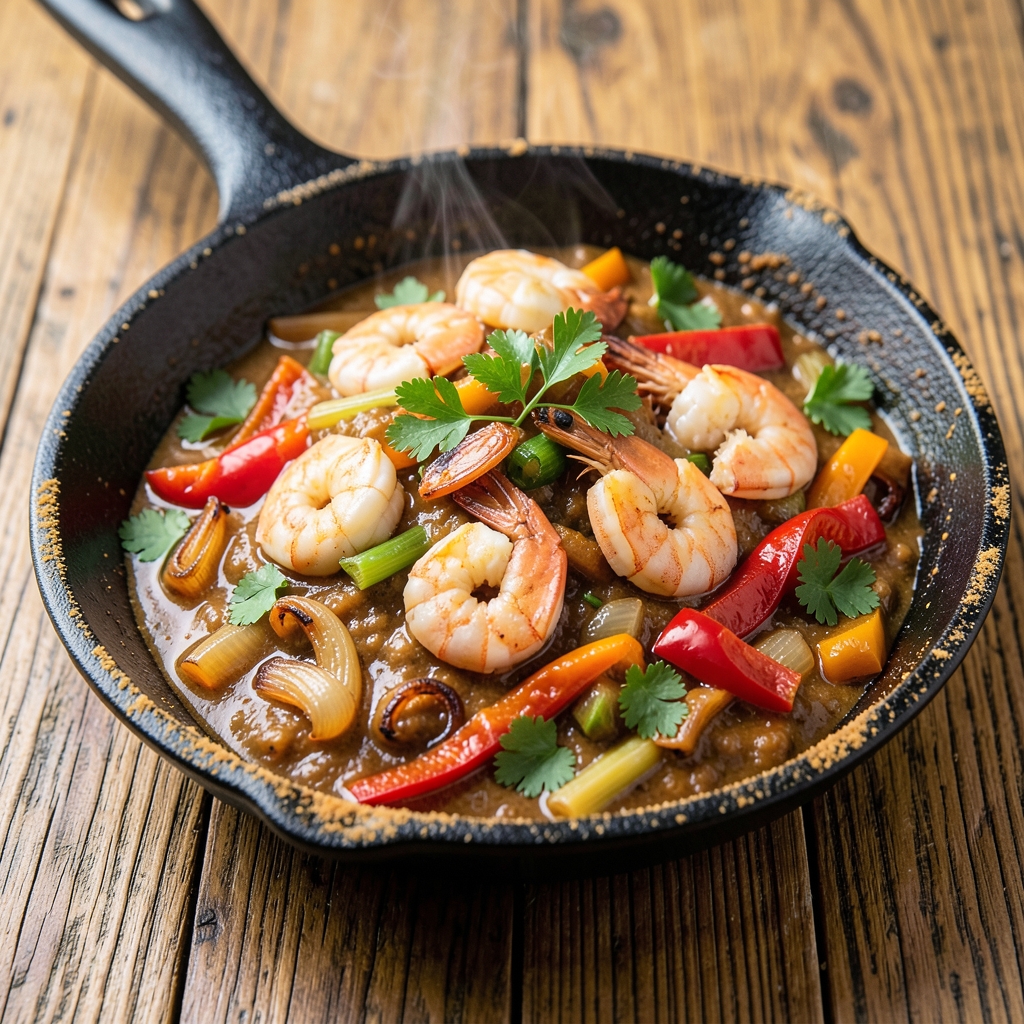
Mastering shrimp and crawfish étouffée means building a rich, dark roux that forms the soul of this Louisiana classic. The slow simmer transforms simple ingredients into a velvety, smoky sauce that clings to every bite of tender seafood.
I’ve perfected this technique after years of testing—no burnt roux in sight, just deep, caramelized flavor that defines Creole cooking.
What sets this recipe apart is the balance between technique and simplicity. You’ll start with a classic roux, then layer in onions, celery, and bell peppers before adding the seafood. The key is patience—letting the sauce develop its signature depth while keeping the shrimp and crawfish perfectly tender.
This isn’t just a dish; it’s a flavor experience that transports you to New Orleans with every spoonful.
The result is a one-pot wonder with a sauce so rich it coats every ingredient, creating a dish that’s both hearty and elegant. Serve it over buttery rice or with crusty bread to soak up every last drop of that smoky, seafood-infused goodness.
Whether you’re cooking for a crowd or treating yourself to a taste of Louisiana, this recipe delivers restaurant-quality results at home.
Ready to elevate your seafood game? Here’s everything you need to bring this iconic dish to life—step by step, with tips to ensure success every time.
Ingredients for shrimp crawfish etouffee
The soul of this dish starts with a dark roux and fresh seafood—simple ingredients that transform into Creole magic.
| Ingredient | Amount | Notes |
|---|---|---|
| Large Shrimp 🦐 | 1 ½ lb | Peeled, deveined, tail-on |
| Crawfish Tails 🦞 | 1 lb | Fresh or frozen, thawed |
| All-Purpose Flour 🌾 | ½ cup | White, for roux foundation |
| Unsalted Butter 🧈 | ½ cup | Cold, cut into pieces |
| Yellow Onion 🧅 | 1 whole | Medium, diced small |
| Green Bell Pepper 🍅 | 1 whole | Medium, diced small |
| Celery Stalks 🥬 | 3 whole | Medium, diced small |
| Garlic Cloves 🧄 | 4 cloves | Fresh, minced finely |
| Cayenne Pepper 🌶️ | 1 tsp | Adjust for heat preference |
| Smoked Paprika 🌶️ | 1 tsp | For authentic smoky depth |
| Dried Thyme 🌿 | 1 tsp | Or 0.25 cup fresh |
| Dried Parsley 🌿 | 1 tbsp | For finishing garnish |
| Seafood Stock 💧 | 2 cups | Homemade preferred |
| Lemon Juice 🍋 | 1 tbsp | Freshly squeezed |
| Salt 🧂 | 1 ½ tsp | Adjust to taste |
| Black Pepper 🌶️ | ½ tsp | Freshly cracked |
| Green Onions 🌱 | 3 whole | Sliced thin, for garnish |
The roux is where this dish shines. Use all-purpose flour and unsalted butter—nothing else works. Butter must be cold to prevent burning, and you’ll need patience to reach that deep brown stage. I recommend Land O’Lakes unsalted butter for consistency, or Organic Valley if you prefer organic. For the seafood, fresh Gulf shrimp and crawfish deliver the best flavor, but frozen works in a pinch. Look for wild-caught shrimp at Wegmans or Whole Foods—they carry high-quality options. The holy trinity of onions, bell peppers, and celery should be finely diced, almost paste-like, to blend seamlessly into the sauce. Trader Joe’s pre-diced mix is a time-saver if you’re short on prep time.
No cayenne on hand? Red pepper flakes at half the amount work in a bind. Fresh thyme is ideal but dried at one-third the quantity suffices. For seafood stock, Knorr or Pacific Foods make reliable options, though homemade elevates the dish. The lemon juice should be freshly squeezed—bottled won’t cut it here. If you can’t find crawfish tails, substitute extra shrimp or even crabmeat, though texture will differ slightly. The smoked paprika is non-negotiable for that authentic Louisiana flavor—Penzeys or Goya brands deliver the best quality. For the green onions, frozen chopped works if you’re in a rush, but fresh tastes infinitely better.
This dish tastes even better the next day as flavors meld. Store leftovers in an airtight container in the fridge for up to 3 days. For longer storage, freeze portions in single-serving containers for up to 3 months. The roux can be made ahead and refrigerated for 1 week, though it’s best used fresh. When reheating, add a splash of seafood stock to maintain sauce consistency. Garnish with extra parsley and green onions right before serving—fresh herbs brighten the dish and make it look restaurant-worthy.
Why You’ll Love This Recipe
- One-Pot Magic: I swear by this recipe because it lives entirely in one pot—no extra pans, no messy cleanup. The roux builds itself while you dice onions, and by the time you’re stirring in those plump shrimp and crawfish, your kitchen’s almost spotless.
- Roux Revelation: That golden butter-and-flour roux is the star—it’s rich, nutty, and clings to every bite like a hug. The onions caramelize right into it, so you’re not just eating flavor, you’re eating depth.
- Weeknight Wonder: Between us, this is my go-to when I’m feeding the family after a long day. It reheats beautifully for lunches, and the leftovers? Even better the next day—if there are any.
- Budget-Friendly Luxury: You’re getting two types of seafood for the price of one, and the butter and flour stretch far. Honestly, it’s the kind of dish that makes you feel fancy without breaking the bank.
Step-by-step instructions for shrimp and crawfish Étouffée
Master this classic Cajun dish with a rich roux foundation and tender seafood.
Prepare the Holy Trinity and Roux Foundation
In a large, heavy-bottomed pot, melt the 0.5 cup unsalted butter over medium heat. Add the diced 1 whole yellow onion, 1 whole green bell pepper, and 3 whole celery stalks, stirring frequently for 8-10 minutes until softened and translucent. This is the “holy trinity” of Cajun cooking, forming the flavor base.
Reduce heat to medium-low and gradually whisk in the 0.5 cup all-purpose flour, creating a smooth paste. Cook for 10-12 minutes, stirring constantly, until the roux turns a deep chocolate brown color. This takes patience—don’t rush it or the flavor will be bitter. The roux should coat the back of a spoon and smell nutty and rich.
Build the Flavor Base with Aromatics
Add the 4 cloves minced garlic cloves, 1 tsp smoked paprika, 1 tsp dried thyme, 1 tsp cayenne pepper, 1.5 tsp salt, and 0.5 tsp black pepper to the roux. Stir for 1-2 minutes until fragrant, being careful not to burn the garlic. The spices should meld with the roux, creating a complex flavor foundation.
Slowly pour in the 2 cups seafood stock, whisking continuously to prevent lumps. Bring to a gentle simmer and let cook uncovered for 10 minutes to develop the flavors. The sauce should thicken slightly but remain pourable. Taste and adjust seasoning if needed—this is your flavor baseline before adding the seafood.
Cook the Seafood to Perfect Tenderness
Add the 1 lb crawfish tails and 1.5 lb large shrimp to the pot. Stir gently to coat with the sauce, then reduce heat to low. Cover and simmer for 5-7 minutes until the crawfish turn pink and the shrimp curl slightly. The seafood should be just cooked through—overcooking will make it rubbery.
Stir in the 1 tbsp lemon juice and 1 tbsp dried parsley, then taste. The acidity brightens the dish, cutting through the richness of the roux. If the sauce is too thick, add 1-2 tablespoons of water to reach your desired consistency. The étouffée should be thick enough to coat the back of a spoon but still spoonable.
Finish and Serve with Fresh Garnish
Remove from heat and let sit for 2-3 minutes to thicken slightly. Garnish with 3 whole green onions, sliced thin, just before serving. The green onions add a fresh contrast to the deep, smoky flavors of the dish.
Serve immediately over steamed white rice or crusty bread to soak up every bit of that rich, roux-kissed seafood. The étouffée should have a velvety texture with tender seafood pieces suspended in a flavorful sauce. Each bite should deliver a perfect balance of spicy, smoky, and briny flavors.
Pro Tips For Making Shrimp Crawfish Etouffee
- Deglaze Like a Pro: After browning your onions, don’t just splash in liquid—scrape the fond (those sticky brown bits) with a wooden spoon first. That’s where the flavor lives, and skipping it means missing half the depth of your roux. Even if it looks messy, take the extra 20 seconds—your etouffee will taste richer.
- Pat Dry, Don’t Rush: Crawfish tails and shrimp are sneaky little water-holders. After peeling, blot them thoroughly with paper towels—especially the tails—before cooking. I learned this the hard way when my etouffee turned into a sad, watery stew instead of a thick, velvety sauce. Trust me, it’s worth the extra minute.
- Low and Slow for Roux: Your roux is the backbone of this dish, so don’t rush it. Cook the flour and butter over medium-low heat, stirring constantly, until it’s a deep peanut butter color—not golden, not brown, but that rich, nutty shade. After burning three batches, I finally figured out: patience here means no bitter aftertaste later.
- Add Shellfish Last: Tossing in shrimp and crawfish tails too early will turn them rubbery. Wait until the roux is thickened and the onions are soft before adding them—just a minute or two before serving. This keeps them tender and ensures they soak up all that glorious sauce instead of getting overcooked. Your future self will thank you.
Regional styles of these flavors
Classic New Orleans Style
This is the dish you’d find at Commander’s Palace or Galatoire’s—where the roux is dark enough to “brown your shoe,” as locals say.
The secret lies in the slow simmer: after building your roux, you let the seafood cook gently in the sauce until it’s tender but not falling apart. I’ve perfected this version by using wild-caught Gulf shrimp and crawfish, which add a natural sweetness that balances the smoky heat.
Serve it over steamed long-grain white rice for that authentic New Orleans experience. 🦞
Bayou-Inspired Rustic Version
For a heartier take, swap the white rice for dirty rice—a Cajun staple made with ground pork, onions, and herbs. The extra texture from the rice makes this dish even more satisfying, especially when paired with crusty French bread for dipping.
I like to add ½ cup chopped andouille sausage to the roux before the seafood for deeper flavor. This version feels more like a bayou feast than a restaurant dish. 🌶️
Spicy Crawfish Étouffée
If you love heat, crank up the cayenne to 1.5 tsp and add ½ tsp ground allspice to the roux for a deeper, spicier kick. For extra fire, stir in 1 tbsp hot sauce (like Crystal or Tabasco) at the end.
This version is a crowd-pleaser at Cajun cook-offs—just be sure to have cool drinks on hand. The crawfish tails absorb the heat beautifully, making every bite a flavor explosion. 🔥
Low-Country Coastal Adaptation
In South Carolina’s Lowcountry, étouffée often includes sheephead fish or blackened redfish alongside the shrimp and crawfish. For this version, add 1 lb redfish fillets to the pot with the seafood and cook for just 3-4 minutes to avoid overcooking.
The fish adds a delicate sweetness that pairs perfectly with the smoky roux. Serve with cornbread for a true Lowcountry twist. 🌊
Vegetarian-Friendly Étouffée
For a plant-based version, replace the seafood with 1 lb king oyster mushrooms (sliced to mimic shrimp texture) and ½ lb firm tofu (pressed and cubed). Boost the umami with 1 tbsp soy sauce** added to the roux.
While it won’t taste identical, the mushrooms soak up the sauce beautifully, and the tofu adds a satisfying bite. Garnish with extra parsley to brighten the dish. This version proves étouffée can be just as rich without seafood. 🌱
Nutrition facts
Frequently asked questions
Can I substitute crawfish with another seafood?
If crawfish tails are unavailable, try 1 lb crabmeat or extra shrimp (up to 2 lbs total) for similar texture. For a Lowcountry twist, add 1 lb redfish fillets and cook just 3-4 minutes to avoid overcooking.
Why did my roux burn before reaching dark brown?
Roux burns when heat is too high or stirring isn’t constant. Always use medium-low heat after adding flour, and whisk vigorously every 30 seconds. Cold butter helps too—never use melted butter. Patience is key: a proper roux takes 10-15 minutes to darken.
How do I adjust the spice level for kids?
Reduce cayenne to ½ tsp and omit smoked paprika initially. For extra mildness, stir in 1 tbsp honey at the end to balance heat. Serve with plain rice and offer hot sauce on the side for adults. The natural sweetness of shrimp still shines through!
Can I make this dish ahead of time?
Yes! Étouffée tastes even better the next day. Store in an airtight container in the fridge for up to 3 days. Reheat gently with 1-2 tbsp seafood stock to restore sauce consistency. For longer storage, freeze portions for 3 months—just thaw overnight in the fridge.
What’s the best way to serve this dish?
Traditionally over steamed white rice, but crusty bread or cornbread work too. For a complete meal, add a simple green salad with lemon vinaigrette. The sauce should be thick enough to coat the back of a spoon but still spoonable. Serve with cool drinks—this dish packs serious flavor!

- Coconut Macaroons Recipe: Chewy Centers and Toasted Coconut Crunch - November 9, 2026
- Classic Shortbread Recipe: Buttery Layers That Melt in Your Mouth - November 9, 2026
- Zucchini Cottage Cheese Recipe: Herb-Infused Creamy Bites in 20 Minutes - November 9, 2026