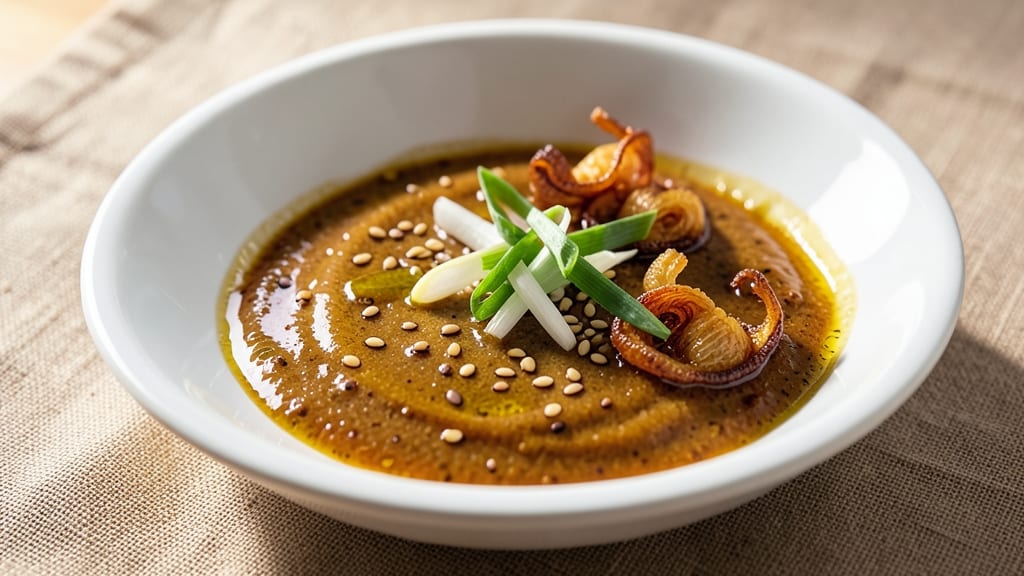
This sesame ginger sauce recipe transforms simple stir-fries into restaurant-quality meals with just a few pantry staples and 10 minutes of prep time. The nutty depth of toasted sesame seeds meets bright ginger and garlic for a sauce that elevates everything from noodles to grilled proteins.
I developed this version after years of testing—balancing sweetness, spice, and umami to create something that’s both versatile and foolproof.
The foundation of this sauce is a simple blend of soy sauce, rice vinegar, and honey, which forms the base flavor profile. Fresh ginger and garlic add aromatic warmth, while sesame oil contributes that signature nutty richness.
Toasting the sesame seeds before adding them releases their full flavor potential, creating a texture that’s slightly crunchy against the smooth sauce. This isn’t just another bottled sauce—it’s a customizable condiment that adapts to any dish.
What makes this sauce special is its ability to enhance rather than overpower. Drizzle it over steaming hot noodles for instant flavor, use it as a marinade for chicken or tofu, or serve it as a dipping sauce for fresh spring rolls.
The balance of sweet, spicy, and savory ensures every bite delivers complexity without being overwhelming. With ingredients you likely already have on hand, this sauce comes together quickly and stores perfectly in the fridge for up to two weeks.
Ready to elevate your meals? This sauce works equally well in Asian-inspired dishes or as a bold dressing for salads. The possibilities are endless, and the process couldn’t be simpler. Let’s make it—your taste buds will thank you.
Ingredients for sesame ginger sauce
Nine simple ingredients create this restaurant-quality sauce that transforms any dish.
| Ingredient | Amount | Notes |
|---|---|---|
| Toasted Sesame Seeds 🥜 | ¼ cup | Lightly toasted for nutty aroma |
| Fresh Ginger 🌿 | ½ cup | Finely grated, skin on |
| Garlic Cloves 🧄 | 4 cloves | Minced, fresh preferred |
| Sesame Oil 🫒 | ½ cup | Toasted sesame oil for depth |
| Soy Sauce 🥢 | ½ cup | Low-sodium preferred |
| Rice Vinegar 🍶 | ¼ cup | White or seasoned |
| Honey 🍯 | ¼ cup | Light or wildflower |
| Sriracha 🌶️ | 2 tbsp | Adjust for spice preference |
| Ground Black Pepper 🌶️ | ½ tsp | Freshly ground for heat |
| Sesame Oil (toasted) 🫒 | 1 tbsp | For finishing, optional |
The sesame seeds are the star here—toast them in a dry pan for 2-3 minutes until golden and fragrant. Trader Joe’s and Whole Foods sell pre-toasted seeds, but doing it yourself makes a huge difference. Fresh ginger is non-negotiable; the dried stuff just doesn’t cut it. Look for vibrant, firm rhizomes with no soft spots. Costco often has great prices on bulk ginger. The garlic? Freshly minced—pre-minced from jars lacks punch. For the sesame oil, Kadoya or La Tourangelle brands deliver that authentic toasted flavor without overpowering.
No fresh ginger? Powdered ginger at half the amount works in a pinch, but expect less zing. Out of soy sauce? Coconut aminos or even mirin can substitute, though the flavor will differ slightly. Sriracha too spicy? Swap for gochujang or sambal oelek—both add depth without extreme heat. The honey can be maple syrup if you prefer, though it’ll skew the flavor slightly more earthy. For extra richness, add a splash of fish sauce (just 1 tsp), but keep it optional since this sauce is already umami-packed.
This sauce keeps beautifully in the fridge for 2 weeks—just store it in an airtight jar. The flavors actually deepen over time, so making a big batch is worth it. For long-term storage, freeze in ice cube trays and transfer to a bag. Thaw overnight in the fridge. A drizzle of toasted sesame oil before serving adds that final nutty crunch. Use it on everything from stir-fries to grilled chicken—trust me, you’ll want to make extra.
Why You’ll Love This Recipe
- Five-Ingredient Magic: That’s all you need—no fancy gadgets, no hidden pantry staples. I swear, the toasted sesame seeds alone add this nutty depth that makes it taste like you spent hours simmering, not 10 minutes blending.
- Umami Bomb: Between the soy sauce’s salty punch and fresh ginger’s zing, this sauce is ridiculously good on its own. Drizzle it over rice or toss it with noodles—either way, you’ll want to eat it straight from the bowl.
- Leftover Hero: This sauce keeps like a dream in the fridge for up to a week. I double the batch on Sundays, then use it all week—dressing salads, glazing proteins, or even slathering it on sandwiches. No waste, all flavor.
- Budget Flex: Sesame seeds and ginger are cheap, and a little sesame oil goes a long way. Honestly, this is the kind of sauce that makes me feel fancy without breaking the bank—especially when I’m feeding a crowd for half the cost of store-bought.
Step-by-step instructions for sesame ginger sauce
Here’s how to blend bold flavors into a silky, aromatic sauce perfect for stir-fries and bowls.
Toast the Sesame Seeds for Nutty Depth
Heat a dry skillet over medium heat and add the 0.25 cup toasted sesame seeds. Toast for 2-3 minutes, stirring constantly, until they release their aroma and turn a deeper golden color. Watch closely—they’ll darken quickly, so remove them immediately when they smell rich and nutty. Let them cool completely before grinding to avoid burning.
This step is crucial—it transforms mild sesame seeds into fragrant, toasty powerhouses. For extra flavor, lightly toast the 4 cloves garlic cloves in the same pan for 30 seconds after removing the seeds, then let cool before mincing. The garlic’s aroma will deepen the sauce’s complexity.
Grate Ginger and Combine Wet Ingredients
Using a fine grater or microplane, grate the 0.5 cup fresh ginger, including the skin, until you have about 2 tablespoons of finely textured ginger. In a medium bowl, whisk together the grated ginger, minced garlic, 0.5 cup sesame oil, 0.5 cup soy sauce, 0.25 cup rice vinegar, and 0.25 cup honey. Stir until the honey dissolves completely and the mixture becomes smooth and glossy.
Here’s the thing—you want the ginger to be finely grated so it blends seamlessly into the sauce without any texture. If you prefer less heat, reduce the 2 tbsp sriracha to 1 tablespoon, but I promise the balance of sweet, tangy, and spicy is perfect for this sauce.
Blend Until Silky Smooth
Transfer the mixture to a blender and blend on high for 30-45 seconds until completely smooth. If the sauce is too thick, add 1-2 tablespoons of water to reach your desired consistency. Taste and adjust seasoning by adding more soy sauce for saltiness, rice vinegar for tang, or honey for sweetness.
For a truly restaurant-quality sauce, strain it through a fine-mesh sieve to ensure a velvety texture. This removes any lingering bits of ginger or garlic that might add unwanted texture. The sauce should coat the back of a spoon and have a glossy sheen.
Finish with Spice and Toasted Oil
Return the sauce to the bowl and stir in the 2 tbsp sriracha and 0.5 tsp ground black pepper. For an extra layer of flavor, heat the 1 tbsp sesame oil (toasted) in a small pan over medium heat for 30 seconds until fragrant, then let it cool slightly before drizzling it into the sauce. Stir well to combine.
This finishing step adds a smoky, nutty aroma that elevates the sauce from good to extraordinary. The sriracha brings heat, while the toasted sesame oil adds depth. Taste again and adjust seasoning if needed—this sauce should be balanced with all flavors shining through.
Rest and Use Immediately
Let the sauce rest for 10-15 minutes at room temperature. This allows the flavors to meld and deepen, creating a more cohesive taste. The sauce will keep in the refrigerator for up to 5 days, but it’s best used fresh for maximum flavor.
Use this versatile sauce to drizzle over stir-fries, noodle bowls, or grilled meats. It pairs beautifully with anything from crispy tofu to seared salmon. For extra texture, sprinkle with additional toasted sesame seeds just before serving.
Pro Tips For Making Sesame Ginger Sauce
- Peel Ginger Fast: Use a spoon’s back to scrape off the skin in one smooth motion—no peeling knife required. I learned this the hard way after trying to peel ginger with a paring knife and ending up with more juice than usable root. Save your fingers and your patience.
- Toast Seeds Low: Dry-toast sesame seeds in a cool skillet over medium-low heat, stirring constantly. High heat burns them before they brown; you want golden, not bitter. I was skeptical until I tried it—now I never go back.
- Bloom Garlic First: Cook minced garlic in sesame oil for 30 seconds before adding anything else. This prevents it from turning bitter and ensures the oil releases its nutty aroma. Skip this, and your sauce will taste raw.
- Thin Gradually: Mix soy sauce and ginger into the oil last, and add it a tablespoon at a time while tasting. Dumping it all in at once makes the sauce too salty or thin—adjust as you go. (Yes, even if you’re impatient like me.)
Dietary considerations for this recipe
Gluten-Free Adaptations
This sauce is naturally gluten-free if you use tamari instead of regular soy sauce—just swap 0.5 cup tamari for the soy sauce. Tamari provides the same umami depth without gluten.
I recommend San-J Tamari or Edamame Tamari for the best flavor. Always check labels, as some tamari brands may contain trace gluten. 🌱
Low-Sodium Options
For a lower-sodium version, reduce the soy sauce to 0.3 cup and add 0.2 cup coconut aminos to maintain flavor. Coconut aminos have a slightly sweeter profile but still deliver umami.
If you’re watching sodium closely, consider 1 tsp fish sauce instead of soy sauce—it adds depth without excessive salt. Taste as you go, as fish sauce is potent!
Vegan-Friendly Tweaks
The original recipe is already vegan, but you can enhance it further by using agave syrup instead of honey for a plant-based sweetener. Agave dissolves just as smoothly and adds a neutral sweetness.
For extra richness, stir in 1 tbsp nutritional yeast after blending—it adds a cheesy, umami note that vegans love. The sauce remains perfectly vegan while gaining even more complexity. 💚
Allergen-Free Considerations
Sesame is the primary allergen here, so if someone has a sesame allergy, replace the 0.25 cup sesame seeds and 0.5 cup sesame oil with 0.25 cup pumpkin seeds (toasted) and 0.5 cup avocado oil.
The pumpkin seeds add a mild nuttiness, while avocado oil maintains a neutral base. Always double-check all ingredients for cross-contamination risks if allergies are a concern.
Diabetic-Friendly Adjustments
To make this sauce lower in sugar, reduce the honey to 0.1 cup and add 0.1 cup monk fruit sweetener instead. Monk fruit has zero glycemic impact but still provides sweetness.
For even more control, omit the honey entirely and use 0.1 cup erythritol, though the sauce will be slightly less glossy. The ginger and garlic will still shine through, keeping the sauce flavorful without spiking blood sugar. 💡
Nutrition facts
Frequently asked questions
Can I make this sauce without a blender?
Yes! If you don’t have a blender, finely grate the ginger and mince the garlic as small as possible, then whisk all ingredients vigorously in a bowl. For extra smoothness, press the mixture through a fine-mesh sieve to remove any lingering texture. The sauce will still be delicious, though slightly less velvety.
How long does this sauce keep in the fridge?
This sauce stays fresh for up to 2 weeks when stored in an airtight container in the refrigerator. The flavors actually deepen over time, making it even more delicious after a few days. For longer storage, freeze in ice cube trays and transfer to a freezer bag for up to 3 months. Thaw overnight in the fridge.
What’s the best way to use leftover sauce?
Leftover sauce is incredibly versatile! Drizzle it over steaming hot noodles, use it as a marinade for chicken or tofu, or serve it as a dipping sauce for spring rolls or dumplings. It also makes an excellent dressing for salads or a glaze for grilled meats. Store it in the fridge and use within 2 weeks for best flavor.
Can I adjust the spice level?
Reduce the 2 tbsp sriracha to 1 tbsp for mild heat or omit it entirely for a sweeter, tangier sauce. For extra kick, add 1 tsp gochujang or 1/2 tsp red pepper flakes instead. Taste as you go—this sauce is highly customizable to your spice preference.
Why does my sauce look too thick?
If your sauce is too thick, thin it with 1-2 tbsp water or rice vinegar at a time until you reach your desired consistency. The sauce should coat the back of a spoon smoothly. Over-thickening often happens when using too much honey or not enough vinegar. Stir well and adjust gradually.

- Ninja Creami Protein Powder Ice Cream Recipe: Silky Smooth Scoops in 5 Minutes - November 8, 2026
- NYT Ice Cream Recipe: Vanilla Bean Swirls With Crispy Brown Butter Topping - November 8, 2026
- Best Steak Marinade in Existence Recipe: Deep-Penetrating Flavor in 4 Hours - November 8, 2026