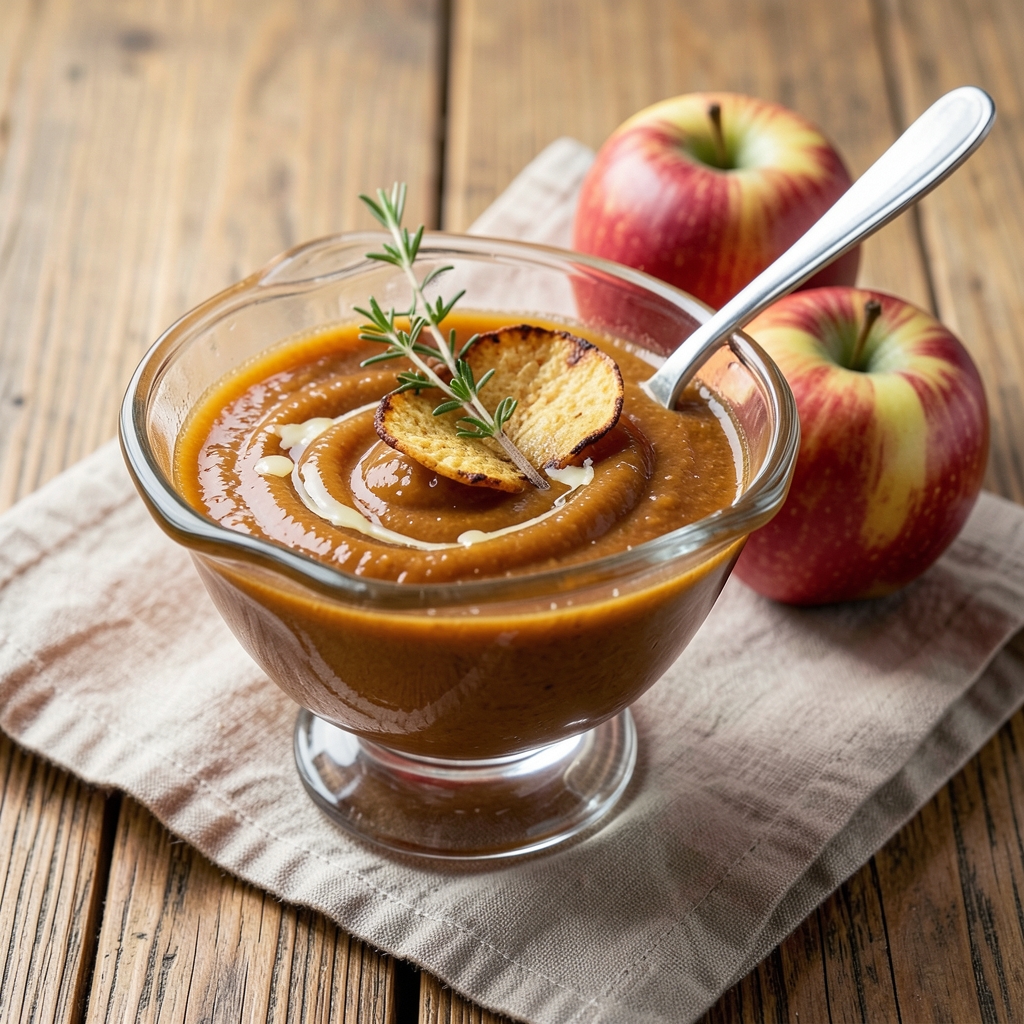
This sauce Normande recipe transforms simple ingredients into a velvety, herb-infused masterpiece that elevates any dish from ordinary to exceptional. The secret lies in balancing creamy richness with the bright acidity of apple cider and Dijon mustard—a perfect marriage that French chefs have perfected for generations.
I developed this version after years of experimenting with traditional techniques, ensuring every step delivers restaurant-quality results without unnecessary complexity.
The foundation of sauce Normande is a classic roux, where butter and flour create the perfect base for emulsification. Simmering in apple cider reduces the sauce to a luxurious consistency, while brandy (or Calvados) adds depth and warmth.
Fresh herbs like thyme and tarragon infuse subtle earthy notes that bridge the creamy texture and tangy flavors. What makes this sauce truly special is its versatility—it pairs beautifully with roasted poultry, delicate fish, or even grilled vegetables.
By the time you finish making this sauce, you’ll have a silky, golden sauce that coats every bite with a harmonious blend of sweet, tangy, and herby flavors. The texture is velvety yet light, never cloying, and the aroma alone will transform your kitchen into a French bistro.
This is the kind of sauce that turns simple weeknight meals into memorable dining experiences. Let’s create it step by step.
The beauty of sauce Normande lies in its adaptability—you can enhance it with extra cheese for richness, a splash of white wine for brightness, or even a touch of honey for subtle sweetness.
Whether you’re serving it with roasted chicken or creamy mashed potatoes, this sauce will become a staple in your culinary repertoire. Ready to master it?
Ingredients for sauce normande
Eight simple ingredients. One luxurious sauce that turns ordinary meals into French bistro magic.
| Ingredient | Amount | Notes |
|---|---|---|
| Unsalted Butter 🧈 | ¾ cup | Cold, cubed for roux |
| All-Purpose Flour 🌾 | ¾ cup | White or whole wheat |
| Apple Cider 🍎 | 2 cups | Unfiltered, unsweetened |
| Dijon Mustard 🌶️ | 1 tbsp | High-quality, smooth |
| Dry Brandy 🍷 | ½ cup | Or Calvados for authenticity |
| Fresh Thyme 🌿 | 1 tbsp | Leaves only, chopped |
| Fresh Tarragon 🌿 | 1 tbsp | Leaves only, chopped |
| Heavy Cream 🥛 | 1 cup | Full-fat for best texture |
| Salt 🧂 | ½ tsp | Kosher or sea salt |
| Black Pepper 🌶️ | ¼ tsp | Freshly ground preferred |
The butter and flour are your foundation—don’t skimp. European-style butter like Plugrá or President melts beautifully, but any good unsalted butter works. The flour should be sifted first for a smoother roux. Apple cider is non-negotiable here—Mott’s or Woodchuck are reliable brands, but any unsweetened, unfiltered variety will do. For the herbs, fresh tarragon is key (dried won’t cut it), and I always grab mine from Whole Foods or a local farmers market. The Dijon mustard should be smooth, not whole-grain—Grey Poupon is my go-to, but any quality brand works.
No brandy? Apple brandy or even a good bourbon works in a pinch, but Calvados is ideal if you can find it. Short on tarragon? Fresh basil at half the amount adds brightness, though it won’t be identical. The heavy cream is where texture happens—full-fat only, and cold before adding. For extra richness, stir in 1 oz grated Gruyère at the end. The sauce thickens as it cools, so if it’s too thin, simmer uncovered for 2-3 minutes. Too thick? Thin with a splash of warm apple cider.
This sauce keeps beautifully—3-4 days in the fridge sealed tightly, or 3 months frozen in ice cube trays for perfect portions. Reheat gently on low heat, stirring constantly. I always make double batches—one for dinner, one for leftovers. The flavor actually improves overnight as the herbs infuse deeper. For serving, drizzle over roasted chicken, mashed potatoes, or even grilled fish—it’s that versatile.
Why You’ll Love This Recipe
- Here’s what sold me: that little hit of brandy at the end. It’s not just alcohol—it’s the secret that turns a simple roux into something rich and complex. Honestly, the first time I skipped it, I regretted it immediately.
- Pantry Magic: I swear by this sauce because it uses stuff I already have—no fancy shopping required. Butter, flour, apple cider, and a splash of brandy? That’s it. Even my lazy Sundays feel productive when I pull this together in 15 minutes.
- Brandy Boost: Here’s what sold me: that little hit of brandy at the end. It’s not just alcohol—it’s the secret that turns a simple roux into something rich and complex. Honestly, the first time I skipped it, I regretted it immediately.
- Double Duty Sauce: This isn’t just for chicken or pork—it’s my go-to for roasted veggies, mashed potatoes, or even drizzled over toast. (Yes, even on a Tuesday night.) The mustard adds a tang that pairs with everything, and the apple cider keeps it bright.
Step-by-step instructions for apple-cider creamed sauce with herbs
This rich, velvety sauce brings Normandy’s rustic charm to your table with just 10 simple ingredients.
Create a Golden Roux with Butter and Flour
In a medium saucepan, melt the 0.75 cup unsalted butter over medium heat until it foams. Immediately whisk in the 0.75 cup all-purpose flour all at once to form a smooth paste. This is your roux foundation – cook it for 2-3 minutes, stirring constantly, until it turns a pale golden color.
Here’s the thing – don’t walk away. The moment it turns golden, it’s ready. If it browns too much, you’ll get a nutty flavor instead of the clean base we want. Keep that whisk moving to prevent any hot spots from forming. You’ll know it’s perfect when it smells nutty but doesn’t look toasted.
Deglaze with Apple Cider and Brandy
Pour in the 2 cups apple cider and 0.5 cup dry brandy all at once, whisking vigorously to break up any flour lumps. The mixture will bubble vigorously as it comes to a simmer. Let it cook for 5-6 minutes, stirring occasionally, until it thickens noticeably and the raw flour taste disappears.
This is where the magic happens. The alcohol will cook off completely, leaving just the rich brandy flavor. You’ll see the sauce reduce slightly and become glossy. If it starts to stick, add a splash of water to loosen it. The sauce should coat the back of a spoon smoothly by this point.
Build Depth with Herbs and Mustard
Reduce heat to medium-low and stir in the 1 tbsp fresh thyme, 1 tbsp fresh tarragon, 1 tbsp Dijon mustard, 0.5 tsp salt, and 0.25 tsp black pepper. Let the sauce simmer gently for 4-5 minutes, stirring occasionally, until the herbs release their aromatic oils and the flavors meld together.
The herbs should be fragrant but not overpowering. You’ll notice the sauce becoming even more velvety as the mustard emulsifies with the fat. This is the moment that matters – if you taste it now, you should detect all the individual components working together. The thyme adds earthiness, tarragon brings an anise note, and the mustard adds subtle tang.
Finish with Cream for Luxurious Texture
Pour in the 1 cup heavy cream and stir gently to combine. Increase heat to medium and let the sauce simmer for 3-4 minutes until it thickens to your desired consistency. For a glossy finish, I like to simmer it until it coats a spoon completely but still moves slightly when you tilt the pan.
Here’s where it gets fun – if the sauce is too thick, whisk in a tablespoon of water or apple cider to reach that perfect coating consistency. The cream should make the sauce luxuriously smooth while balancing the acidity from the cider. Taste and adjust seasoning if needed – sometimes you need a little more salt to bring out all the flavors.
Strain and Serve Warm
Remove from heat and strain the sauce through a fine-mesh sieve into a clean saucepan to remove any herb stems. For an ultra-smooth texture, I press a spoon against the sieve to extract every last bit of flavor. The strained sauce should be completely smooth with no visible herb particles.
This sauce is best served immediately over roasted chicken, pork, or even mashed potatoes. If you need to reheat it later, warm it gently over low heat, stirring constantly to prevent scorching. The sauce will thicken slightly as it cools, so don’t worry if it looks perfect when you first make it – it’ll still be luscious when served.
Pro Tips For Making Sauce Normande
- Whisk Like You Mean It: The roux is your foundation—don’t treat it like a half-hearted afterthought. Melt the butter first, then whisk in the flour constantly over medium heat until it’s a deep golden brown, not just pale. I learned this the hard way after a sauce that tasted like flour had just met butter and called it quits.
- Reduce the Cider Right: Skip the slow simmer and crank the heat to medium-high to reduce the apple cider down fast—it concentrates the flavor without letting it turn into syrup. Just watch it like a hawk; you want it thick enough to coat the back of a spoon, not glue it there.
- Mustard First, Regret Later: Whisk in the Dijon mustard before the brandy. That way, it emulsifies properly and doesn’t separate into little mustard landmines when you add the alcohol. Trust me, you’ll taste the difference—and avoid the weird texture.
- Deglaze with a Splash: After cooking the roux, immediately pour in just ¼ cup of the apple cider to deglaze the pan. This lifts all the browned bits (flavor gold) before you add the rest. Lazy deglazing means flavor left behind—don’t let that happen.
Perfect pairings for this dish
Poultry Pairings
Sauce Normande shines when drizzled over roasted chicken or duck breast—the creamy texture contrasts beautifully with crispy skin. For chicken, I roast a 3-4 lb bird at 375°F for 1 hour 15 minutes, then baste with the sauce during the last 10 minutes for a glossy finish.
With duck, serve it alongside seared duck confit or crispy duck legs for an elegant French bistro experience. 🍗
Fish and Seafood
Delicate fish like halibut or salmon absorb the sauce’s richness without overpowering their natural flavors. I pan-sear a 6-8 oz fillet in butter until golden (3-4 minutes per side), then spoon the warm sauce over the top.
For seafood lovers, try it with shrimp scampi—the sauce’s tangy notes complement the briny shrimp perfectly.
Comforting Sides
This sauce elevates simple sides like creamy mashed potatoes or buttery egg noodles. I fold 1 cup sauce into 2 cups mashed potatoes for a decadent twist, or drizzle it over roasted Brussels sprouts for a sweet-savory balance.
The apple cider notes pair especially well with caramelized onions or roasted root vegetables.
Vegetable Applications
Don’t limit this sauce to proteins—it’s fantastic with grilled asparagus or roasted mushrooms. Toss 1 lb asparagus with olive oil, salt, and pepper, then grill for 8-10 minutes before spooning sauce over the top.
For mushrooms, roast 8 oz cremini mushrooms at 400°F for 15 minutes before adding the sauce.
Cheese Board Twist
For an unexpected appetizer, warm the sauce gently and drizzle it over a charcuterie board alongside brie, Gruyère, and sharp cheddar. The creamy sauce melts beautifully with the cheese, creating a luxurious dip. I also add apple slices and walnuts to echo the sauce’s Normandy-inspired flavors. 🧀
Beverage Pairings
Complement the sauce’s apple and brandy notes with a dry white wine like Chardonnay or Sauvignon Blanc. For beer lovers, a Belgian witbier or crisp lager cuts through the richness. I also enjoy a sparkling cider—its bubbles cleanse the palate between bites of sauced dishes. 🍷
Nutrition facts
Frequently asked questions
What makes this sauce different from other creamy sauces?
This sauce Normande stands out because of its unique blend of apple cider and brandy, which creates a bright yet rich flavor profile. The combination of fresh tarragon and thyme adds aromatic depth that most creamy sauces lack. Unlike béchamel or hollandaise, it balances sweetness from the cider with tangy mustard and herbal notes for a truly distinctive taste.
Can I substitute brandy with something else?
Yes! If you don’t have brandy, use apple brandy or bourbon in equal amounts. For a non-alcoholic version, substitute with extra apple cider (add 2 tbsp apple cider vinegar for acidity). The key is maintaining the sauce’s balance of sweetness and depth. Just remember, alcohol cooks off completely during simmering.
How do I fix a sauce that’s too thick or too thin?
For a thick sauce, whisk in 1 tbsp warm apple cider or water at a time until smooth. If it’s too thin, simmer uncovered for 2-3 minutes to reduce. The sauce should coat the back of a spoon but still move slightly when you tilt the pan. For extra richness, stir in 1 tsp cold butter at the end.
What’s the best way to store leftover sauce?
Store in an airtight container in the fridge for 3-4 days or freeze for 3 months. Reheat gently over low heat, stirring constantly to prevent separation. For best results, freeze in ice cube trays and transfer to a bag—this makes reheating portions effortless. The flavor actually improves overnight as the herbs infuse deeper!
Can I make this sauce without fresh herbs?
You can use dried herbs, but reduce to 1 tsp dried thyme and 1 tsp dried tarragon (half the fresh amount). For a different flavor profile, add 1 tsp dried marjoram or ½ tsp dried basil. Fresh herbs are ideal, but dried works in a pinch—just steep them in the warm sauce for 5 minutes before straining.

- Eggs Supreme Recipe: Fluffy Custard With Crispy Herb-Topped Magic - November 11, 2026
- All Bran Banana Nut Bread Recipe: Moist Grain-Packed Loaf With Warm Spice Harmony - November 11, 2026
- Freezer-Burned Shrimp Recipe: Buttery Garlic Revival in 15 Minutes - November 11, 2026