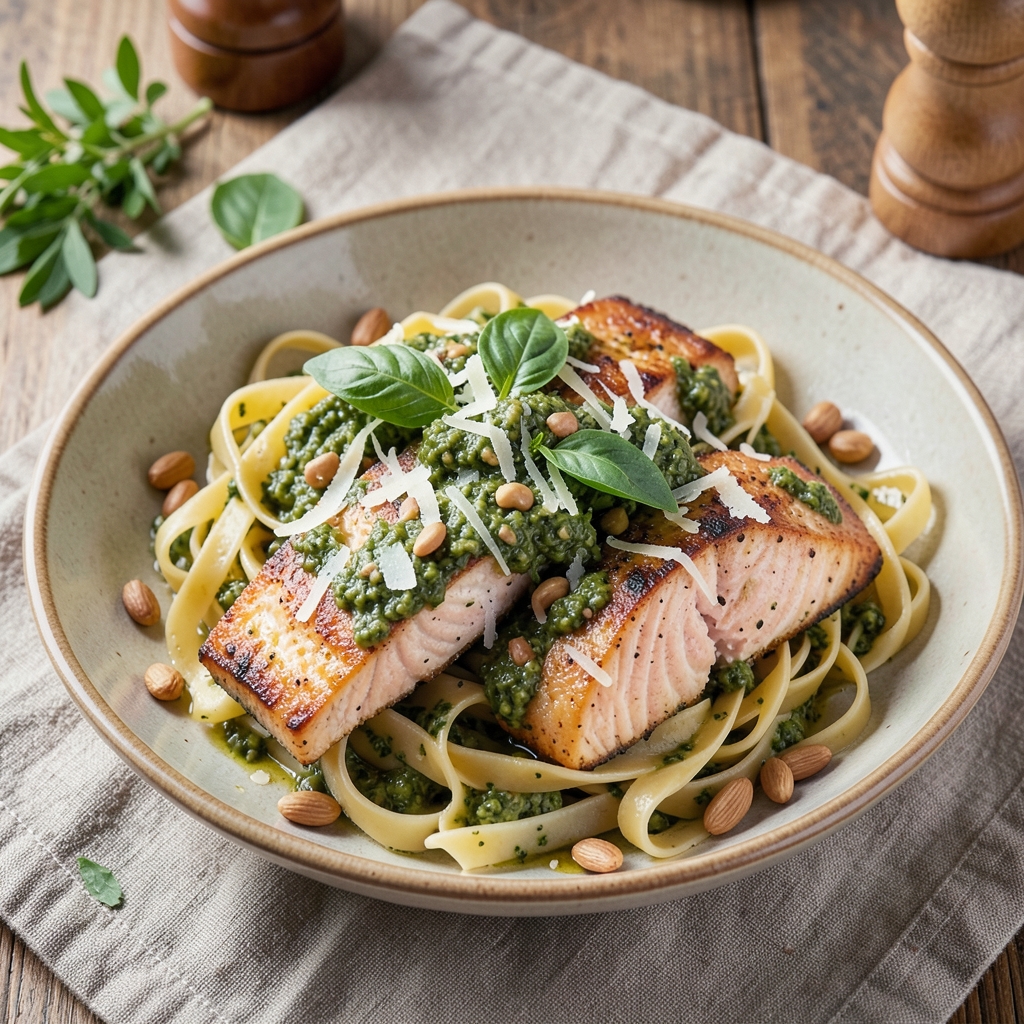
This salmon pesto pasta recipe delivers restaurant-quality flakiness in just 25 minutes, combining tender salmon with bright herb sauce and perfectly al dente pasta.
The secret lies in searing the salmon skin-side down for crisp edges while keeping the center delicate—a technique I perfected after years of overcooked fish disasters. My Italian roots taught me how to balance bold flavors without overpowering the natural taste of the fish.
The recipe starts with fresh basil pesto (homemade or store-bought) that gets elevated with a touch of lemon zest and roasted garlic for depth.
While the salmon cooks, the pasta boils in salted water until just tender, then tosses with the pesto and a splash of pasta water to create a silky, clinging sauce. The result? A dish that feels luxurious but comes together faster than takeout.
What makes this recipe stand out is how the salmon’s richness pairs perfectly with the herbaceous pesto—no heavy cream needed. The lemon zest brightens the dish, while optional microgreens add a modern touch.
It’s a complete meal with protein, carbs, and fresh herbs, all ready in under half an hour. Here’s how to make it foolproof.
This dish works as a weeknight dinner or an impressive guest meal, and the leftovers reheat beautifully. The salmon stays flaky, the pasta maintains its bite, and the sauce clings to every strand.
Trust me—once you try this combination, you’ll never go back to basic pesto pasta again. Let’s get cooking.
Ingredients for salmon pesto pasta
Fresh herbs and flaky salmon make this dish shine—no heavy cream needed.
| Ingredient | Amount | Notes |
|---|---|---|
| Salmon Fillets 🐟 | 2 whole | Skin-on, 6 oz each, center-cut |
| Fettuccine Pasta 🍝 | 12 oz | Al dente preferred, fresh or dried |
| Fresh Basil Leaves 🌿 | 1 ½ cups | Packed, stems removed, vibrant green |
| Pine Nuts 🥜 | ½ cup | Toasted, or sub walnuts for budget |
| Garlic Cloves 🧄 | 4 cloves | Roasted for depth, peeled |
| Parmesan Cheese 🧀 | ¾ cup | Freshly grated, aged 24+ months |
| Extra-Virgin Olive Oil 🫒 | ½ cup | Fruity, peppery variety |
| Lemon Zest 🍋 | 1 tbsp | Bright yellow, freshly grated |
| Lemon Juice 🍋 | 1 tbsp | Freshly squeezed, no seeds |
| Salt 🧂 | 1 ½ tsp | Kosher or sea salt |
| Black Pepper 🌶️ | ½ tsp | Freshly cracked |
| Microgreens 🌱 | ¼ cup | Optional, for garnish |
| Butter 🧈 | 2 tbsp | Unsalted, for salmon searing |
The salmon fillets are the star, so center-cut, skin-on pieces make all the difference—they stay together better. I grab mine from Whole Foods or my local fishmonger, but the grocery store frozen section works too if you thaw them properly. Look for vibrant pink flesh and no fishy smell. For the pesto, fresh basil from the market has way more flavor than the plastic containers—if you can’t find fresh, dried basil at half the amount works in a pinch. The pine nuts? Trader Joe’s has the best price, but walnuts or cashews save money without sacrificing too much texture.
No pine nuts? Walnuts or pecans work perfectly—they just add a different nutty depth. The pesto can be store-bought (I won’t judge), but homemade tastes worlds better. Roasting the garlic (400°F for 10 minutes) adds sweetness that raw garlic can’t match. For the Parmesan, grate it yourself—pre-grated tastes like sawdust and won’t melt as nicely. Short on lemon zest? Substitute 1 tbsp lemon juice, but the zest gives that bright pop that’s crucial here. The microgreens are optional but add that restaurant-quality touch—skip them if you’re in a hurry.
This dish reheats beautifully—just toss with a splash of water to loosen the sauce. Keeps for 3 days in the fridge, though I always make extra because it disappears fast. The pesto sauce can be made ahead (up to 5 days) and stored separately. For a quick weeknight, prep everything except the salmon in the morning—then cook it all in 20 minutes when you get home. The salmon stays flaky if you don’t overcook it, and the pasta keeps its bite when tossed with cold water after draining.
Why You’ll Love This Recipe
- No-Fuss Weeknight Win: I toss in the salmon and pasta at the same time—no waiting, no fuss. The garlic and basil blitz in the food processor while I boil water, and suddenly, dinner’s almost ready before the kids even notice.
- Umami Bomb Combo: That crispy salmon skin meets the nutty pine nuts and bright basil—it’s like a flavor explosion. Honestly, the first bite makes me wonder why I don’t make this more often.
- Lunches for Days: Make a big batch and store the leftovers in airtight containers. Cold or reheated, it’s still packed with protein and flavor—my go-to for busy mornings or office lunches.
- Budget-Friendly Luxury: Fresh salmon feels fancy, but using fillets (not steaks) keeps costs down. The pesto’s simple too—just basil, garlic, and a handful of pine nuts. Feels indulgent without breaking the bank.
Step-by-step instructions for salmon pesto pasta
Here’s how to deliver perfectly flaky salmon and vibrant pesto in just 25 minutes.
Cook the Fettuccine Al Dente
Bring a large pot of water to a rolling boil and add the 12 oz fettuccine pasta. Season the water generously with 1 teaspoon of the 1.5 teaspoons salt (save the rest for later). Cook the pasta until it’s al dente—about 1 minute less than the package instructions recommend. You’ll know it’s ready when you taste a piece and feel a slight resistance in the center.
While the pasta cooks, prepare an ice bath in a large bowl. Reserve 1 cup of pasta water before draining—this starchy water is essential for creating a silky pesto sauce. Once the pasta reaches al dente doneness, drain it and immediately transfer it to the ice bath to stop the cooking process. This keeps the pasta firm and prevents it from becoming mushy when mixed with the pesto later.
Prepare the Fresh Pesto Sauce
In a food processor, combine the 1.5 cups fresh basil leaves, 0.5 cup toasted pine nuts, 4 cloves roasted garlic, and 0.75 cup freshly grated parmesan cheese. Pulse the mixture until it’s finely chopped but not completely pureed—you want to retain some texture. With the processor running, slowly drizzle in the 0.5 cup extra-virgin olive oil until the mixture forms a thick, vibrant green paste.
Transfer the pesto to a medium bowl and stir in the 1 tablespoon lemon zest, 1 tablespoon lemon juice, remaining 0.5 teaspoon black pepper, and the remaining 0.5 teaspoon salt. Taste and adjust the seasoning if needed—you might want to add a pinch more salt or lemon juice to balance the flavors. This fresh pesto should be bright, herby, and slightly tangy with a nutty depth from the pine nuts.
Sear the Salmon to Flaky Perfection
While the pesto rests, heat a large skillet over medium heat. Add the 2 tablespoons butter and let it melt completely, then increase the heat to medium-high. Place the 2 whole salmon fillets, skin-side down, in the skillet. Press down gently on the fillets during the first minute to prevent them from curling and ensure even contact with the pan.
Cook the salmon for 3 to 4 minutes on each side, or until the skin is crispy and golden brown and the internal temperature reaches 145°F. You’ll know it’s done when the flesh flakes easily with a fork and pulls away cleanly from the skin. Remove the salmon from the skillet and let it rest on a plate for 2 to 3 minutes—this resting period is crucial for keeping the fish moist and flaky.
Combine Pasta, Pesto, and Salmon
Drain the fettuccine from the ice bath and transfer it to a large serving bowl. Add the prepared pesto sauce and toss gently to coat the pasta evenly. If the sauce seems too thick, add a splash of the reserved pasta water, 1 tablespoon at a time, until it reaches a smooth, creamy consistency that clings to the pasta strands.
Slice the rested salmon into bite-sized pieces and arrange them on top of the pesto pasta. The salmon should be flaky and tender, with crispy skin that adds texture to each bite. Garnish the dish with the 0.25 cup microgreens for a pop of color and freshness, and serve immediately while everything is still warm.
Pro Tips For Making Salmon Pesto Pasta
- Cook salmon skin-side down: Use a nonstick pan and press the fillets flat with a spatula—this guarantees even cooking and crispy skin without flipping constantly. I learned this the hard way after flipping salmon too soon and ending up with dry edges.
- Toast pine nuts in batches: Pine nuts burn faster than you’d think. Spread them on a dry pan over medium-low heat and stir every 10 seconds until golden—just enough to smell their nuttiness. Overcrowding the pan is how I’ve ruined three batches in a row.
- Salt the pasta water aggressively: No, you’re not overdoing it—use about 2 tablespoons of salt for 4 quarts of water. The pasta should taste like the sea when you bite into it, and the pesto will cling better to properly seasoned strands.
- Finish with lemon juice last: Add a squeeze of fresh lemon right after tossing everything together—this brightens the pesto and keeps the salmon from overcooking while the dish sits. I used to add it earlier, and the flavor would fade under the heat.
Wine and beer pairings for this salmon pesto pasta
Crisp White Wine
For this dish, I always reach for a dry Vermentino from Sardinia or a Pinot Grigio from Alto Adige—both have enough acidity to cut through the richness of the salmon while complementing the bright basil pesto.
The crisp, citrus notes in these wines mirror the lemon zest in the recipe, creating a perfect harmony. I keep a bottle of Santa Margherita Pinot Grigio in my fridge because it’s reliable and affordable. 🍷
Light Red Option
If you prefer red, a Chianti Classico with its tart cherry notes works surprisingly well. The acidity balances the creamy pesto, while the earthy undertones pair beautifully with the salmon’s natural flavor.
Look for a Sangiovese-based wine from Tuscany—avoid heavy, oaked reds that would overpower the dish. My go-to is Ruffino Chianti, which has just the right balance.
Craft Beer Pairing
A Belgian witbier like Hoegaarden or Stella Artois adds a refreshing contrast with its coriander and citrus flavors. The effervescence cleanses your palate between bites of rich pesto and flaky salmon. For a local option, I love Sam Adams Seasonal—their summer wheat beers have that perfect crispness. 🍺
Sparkling Alternative
For a celebratory touch, Prosecco or Cava brings a festive sparkle that elevates the dish. The bubbles and slight sweetness enhance the lemon notes in the pesto while keeping the salmon’s delicate flavor front and center.
I keep a bottle of La Marca Prosecco chilling for special occasions—it’s affordable and always impresses guests.
Non-Alcoholic Options
Don’t overlook sparkling water with a splash of lemon juice and a pinch of salt for a refreshing mocktail. For something more substantial, try ginger beer—its zesty kick complements the pesto’s herbal notes.
I also love San Pellegrino Aranciata, a blood orange soda that adds a sweet-tart contrast to the dish. ✨
Nutrition facts
Frequently asked questions
Can I use store-bought pesto instead of homemade?
Store-bought pesto works perfectly fine if you’re short on time. Just add an extra 1 tablespoon of lemon juice and 1 teaspoon of lemon zest to brighten it up. Look for pesto with minimal additives—no preservatives or thickeners. For extra flavor, stir in 1 clove of roasted garlic and a pinch of salt.
How do I keep the salmon from sticking to the pan?
First, make sure your salmon fillets are completely dry before searing. Pat them with paper towels to remove any moisture. Use medium-high heat and a well-seasoned skillet—if your pan isn’t properly seasoned, add 1 tablespoon of olive oil along with the butter. Press down gently on the fillets during the first minute to ensure they make full contact with the pan.
What type of pasta works best with salmon pesto?
Fettuccine is ideal because its flat surface holds the pesto sauce beautifully. For a heartier dish, try pappardelle or tagliatelle. If you prefer something lighter, linguine or spaghetti work well too. Avoid small shapes like penne—they don’t cling to the sauce as effectively. Fresh pasta adds a luxurious touch, but dried pasta works perfectly fine.
Can I make this dish ahead of time?
Yes! Prepare the pesto sauce up to 5 days in advance and store it in an airtight container in the fridge. Cook the pasta just before serving—it reheats beautifully when tossed with a splash of water or pasta water. For the salmon, cook it fresh and store it separately. When ready to serve, simply reheat the salmon gently (under 300°F for 3-4 minutes) and toss it with the pre-cooked pasta and pesto.
What if my salmon comes out dry?
Overcooking is the most common cause of dry salmon. Use a meat thermometer to check the internal temperature—it should reach 145°F max. If you don’t have one, look for opaque flesh that flakes easily. To fix dry salmon, slice it thinly and serve immediately with extra lemon juice and pesto. For future attempts, reduce cooking time by 30 seconds per side and let it rest for 5 minutes before serving.

- Costco Tri-Tip Steak Recipe: Smoky Grill Marks and Buttery Crust - November 8, 2026
- Maine Style Lobster Roll Recipe: Buttery Toasted Buns With Sweet Maine Lobster - November 8, 2026
- Philadelphia Cooking Cream Recipe: Thick, Velvety Base for Casseroles - November 8, 2026