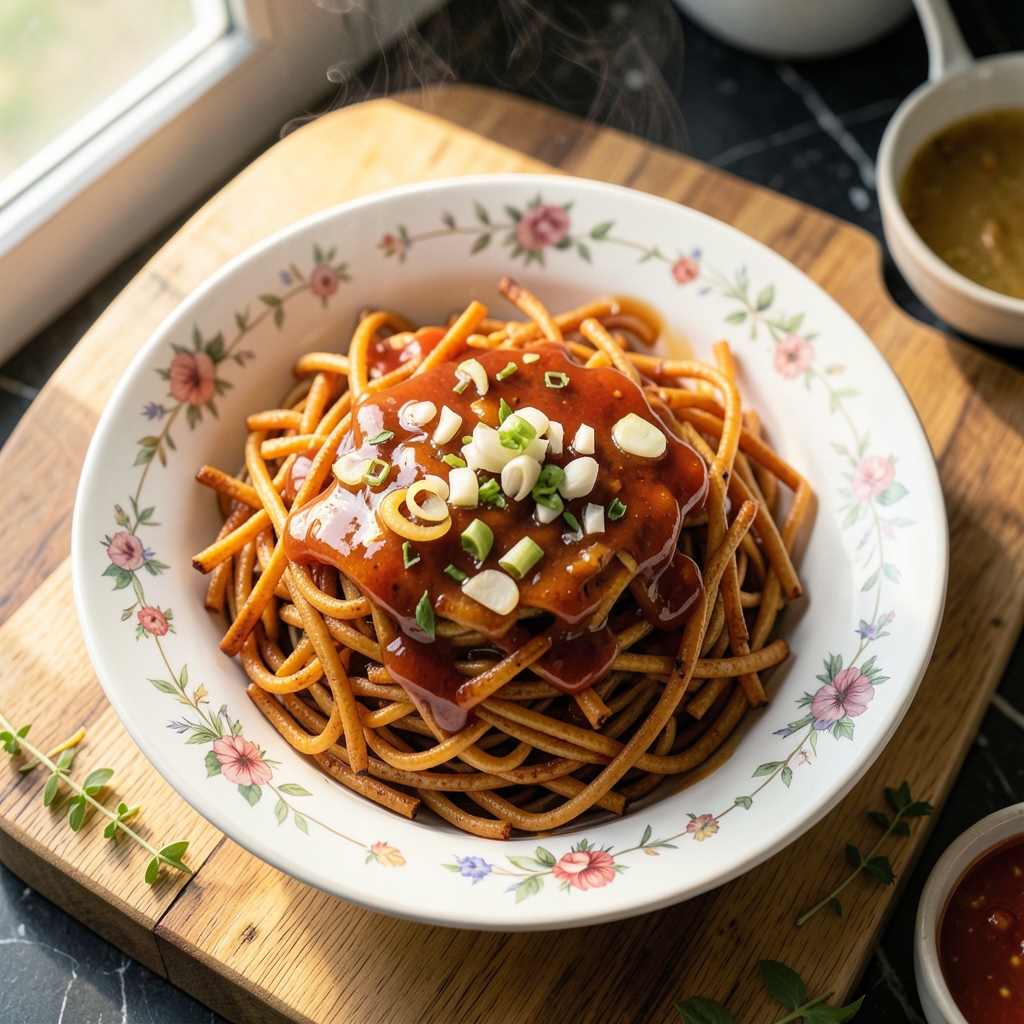
This roasted vermicelli recipe turns humble noodles into crispy, savory bites that’ll make you see leftovers in a whole new light. The key lies in a perfect balance of high-heat roasting and a punchy soy-ginger glaze that caramelizes into a sticky, addictive crunch.
I first tried this after accidentally drying out a batch of noodles—what started as a mistake became my go-to weeknight dish when I need something satisfying without fuss.
This method works with either fresh or dried vermicelli, but the secret lies in the roasting technique: tossing the noodles in oil until they’re golden and crispy around the edges while staying tender inside.
A quick marinade of soy sauce, ginger, garlic, and a touch of honey ensures every bite has that perfect umami-sweet balance. The result? A dish that’s crispy enough to hold its shape but still flexible enough to twirl around your fork.
What makes this recipe particularly versatile is how it pairs with proteins or vegetables—think shredded chicken, tofu, or roasted broccoli. The soy-ginger glaze clings beautifully, turning even simple sides into a flavorful bite.
It’s the kind of meal that feels restaurant-worthy but comes together in under 30 minutes with minimal cleanup.
Whether you’re serving it as a main dish or a side, these crispy noodle bites deliver that satisfying crunch while keeping the texture tender. The best part? Leftovers reheat perfectly, making it an ideal meal prep option. Let’s get started on turning ordinary noodles into something extraordinary.
Ingredients for roasted vermicelli
Eight essential ingredients transform simple noodles into addictive, crispy bites with restaurant-style crunch.
| Ingredient | Amount | Notes |
|---|---|---|
| Vermicelli Noodles 🍜 | 8 oz | Fresh or dried, broken into 4-inch pieces |
| Vegetable Oil 🫒 | ½ cup | High smoke point for roasting |
| Soy Sauce 🥢 | 3 tbsp | Low-sodium preferred for balance |
| Fresh Ginger 🌿 | 1 tbsp | Finely grated, aromatic punch |
| Garlic Cloves 🧄 | 3 cloves | Minced, for bold flavor |
| Honey 🍯 | 1 tbsp | Light variety for subtle sweetness |
| Sesame Oil 🫒 | 1 tsp | Toasted, for nutty aroma |
| Rice Vinegar 🍶 | 1 tbsp | Balances soy sauce richness |
| Salt 🧂 | ½ tsp | Adjust to taste, sea salt preferred |
| Black Pepper 🌶️ | ¼ tsp | Freshly ground, for heat |
| Green Onions 🧅 | 2 whole | Thinly sliced, for garnish |
| Sesame Seeds 🌾 | 1 tbsp | Toasted, for crunchy finish |
| Red Chili Flakes 🌶️ | ½ tsp | Optional, for heat lovers |
The vermicelli is the star—fresh noodles have a delicate texture that crisps beautifully, but dried works too (just soak and drain first). Asian markets often carry the best quality, but any grocery store’s dried noodles will do. Break them into 4-inch pieces before roasting for even crispiness. Pro tip: Toss them in oil immediately after breaking to prevent sticking. The oil matters here too—stick with a high-smoke-point variety like avocado or peanut oil if you’ve got it, but vegetable oil is perfect for weeknight cooking.
No fresh ginger? Powdered works at half the amount, but the flavor’s totally different. Short on sesame oil? Toasted sesame seeds plus a splash of neutral oil gives you that nutty aroma without the overpowering taste. The honey adds just enough sweetness to balance the soy—substitute maple syrup if you prefer. Love heat? Add extra chili flakes or a dash of Sriracha to the glaze. The green onions and sesame seeds are purely for garnish, but they take this dish from good to wow—don’t skip them if you can help it!
These noodles stay crispy for about 2 hours at room temperature if you keep them in an airtight container. For longer storage, refrigerate for up to 3 days—reheat in a dry skillet for 2-3 minutes to restore crispiness. Freeze for 1 month by spreading them on a tray first (so they don’t stick), then transfer to a bag. The glaze reheats beautifully, so these make an amazing meal prep side. Double the batch—they disappear fast!
Why You’ll Love This Recipe
- I’ll be real: this recipe costs me about $3 for a full batch. Vermicelli’s cheap, the oil stretches, and you’re not buying fancy herbs—just what’s already in your spice drawer. It’s the kind of dish that turns a $5 grocery run into a full meal.
- No-Chop Required: I swear by this one—just toss the whole ginger knob and garlic cloves into the oil before toasting. They soften perfectly, no knife skills needed. The noodles caramelize in the same pan, so you’re done in 20 minutes flat.
- Umami Bomb: That soy sauce isn’t just seasoning—it’s the star. When it reduces into the crispy noodles, you get this deep, salty-sweet punch that sticks to your ribs. Honestly, I’ve made this with just oil and soy, and it’s still ridiculously good.
- Lunchbox Hero: Between us, this is my go-to for packed lunches. The noodles stay crispy for days if you store them in an airtight container, and the ginger-garlic oil keeps everything from getting soggy. Throw in a fried egg or quick-pickled veggies, and you’ve got a meal that’ll impress your coworkers.
Step-by-step instructions for crispy roasted vermicelli
Here’s how to transform simple noodles into irresistibly crispy bites with a perfect soy-ginger crunch.
Prepare the Vermicelli for Roasting
Break the 8 oz vermicelli noodles into 4-inch pieces by hand or using kitchen shears. Spread them on a clean kitchen towel and toss gently with the 0.5 cup vegetable oil until every strand is lightly coated. This oil layer is what creates that addictive crispiness when roasted.
Arrange the oiled noodles in a single layer on a parchment-lined baking sheet, spacing them about 1 inch apart. If using dried vermicelli, give them a quick rinse first to remove excess starch that might make them gummy. Pat them dry thoroughly before oiling – any moisture will prevent proper crisping.
Create the Savory Soy-Ginger Seasoning
In a small bowl, whisk together the 3 tbsp soy sauce, 1 tbsp finely grated fresh ginger, 1 tbsp honey, 1 tbsp rice vinegar, 0.5 tsp salt, and 0.25 tsp freshly ground black pepper. This vibrant marinade is the secret to that perfect balance of sweet, salty, and umami flavors that cling to every crispy noodle bite.
Add the 3 minced garlic cloves and 1 tsp sesame oil to the mixture. Stir well to combine, then taste and adjust seasoning if needed – you want it bold but balanced. This seasoning will transform ordinary noodles into irresistible crunchy bites with every flavor packed into each piece.
Roast Until Golden and Crispy
Preheat your oven to 425°F for 10 minutes to ensure even cooking. Spread the oiled vermicelli evenly on the baking sheet, leaving space between each piece. Roast for 12-15 minutes, flipping halfway through, until the noodles are golden brown and crispy around the edges but still tender in the center.
Watch closely after 10 minutes – you’re aiming for that perfect balance between crispy exterior and chewy interior. The noodles should be golden brown with some darker spots forming, but they shouldn’t burn. If they start browning too quickly, reduce heat to 400°F and continue roasting.
Toss with Seasoning and Garnish
Remove the roasted noodles from the oven and immediately toss them with the soy-ginger seasoning mixture. The residual heat will help the flavors meld perfectly with the crispy noodles. Spread them back on the baking sheet and return to the oven for 2-3 minutes to let the seasoning caramelize slightly.
Finish by sprinkling with 1 tbsp toasted sesame seeds and 0.5 tsp red chili flakes (if using). Thinly slice the 2 green onions and scatter them over the top. The contrast of textures – crispy noodles, crunchy seeds, and fresh green onions – makes each bite exciting.
Serve Immediately for Maximum Crunch
Transfer the crispy vermicelli to a serving platter while still hot. Serve immediately while they’re at their crispiest – these won’t wait! The perfect temperature for serving is when the noodles are warm but still maintaining that satisfying crunch.
For extra drama, arrange them on a platter with the green onions fanned out around the edges. The vibrant colors and contrasting textures make this dish as visually appealing as it is delicious. Each bite delivers that perfect combination of crispy, chewy, and flavorful that makes this recipe so addictive.
Pro Tips For Making Roasted Vermicelli
- PRE-SOAK THE NOODLES: Vermicelli dries out fast—soak it in warm water for 10-15 minutes until pliable, then drain and pat thoroughly with a kitchen towel. Wet noodles steam instead of crisp up, and you’ll end up with sad, limp strands. (I learned this the hard way when my first batch turned into a soggy mess.)
- CRISP FIRST, SAUCE LATER: Roast the noodles dry in a single layer at 400°F (200°C) for 8-10 minutes until golden and crisp—then toss with soy sauce and aromatics. Adding sauce early makes them sticky and gummy. Trust me, the crunch is worth the extra step.
- GRATE GINGER FINE: Use a microplane or the smallest holes on a box grater for ginger—you want it almost paste-like, not chunky. Big pieces burn before releasing flavor, and you’ll taste raw ginger in every bite. (Yes, even if you’re impatient like me.)
- GARLIC NEEDS TIME: Sauté minced garlic in oil for 2-3 minutes until just golden—don’t let it brown, or it’ll turn bitter. Add it to the noodles after roasting, so it infuses without overpowering the dish. (I skip this step when I’m lazy, and the dish is noticeably better when I don’t.)
Regional styles of roasted vermicelli
Chinese Stir-Fry Classic
This is how I first encountered roasted vermicelli—crispy, golden noodles tossed with garlic, ginger, and a splash of soy sauce. In Chinese home kitchens, it’s often served as a quick side dish or cold appetizer. The key difference?
Instead of roasting, we’d pan-fry the noodles in a wok until they’re crispy and toss them with a light soy-ginger glaze. I still make this version when I’m craving something fast but flavorful. 🥢
Vietnamese Crunchy Noodle Bites
Vietnamese cuisine takes roasted vermicelli to another level with their bánh phở cuốn or crispy noodle rolls. Here, vermicelli is fried until it’s almost like a chip, then rolled with herbs, pork, and fresh veggies.
For a simpler take, try tossing roasted vermicelli with fish sauce, lime juice, and cilantro—it’s a game-changer. I love adding shredded chicken or tofu for extra protein. The lime keeps everything bright and tangy.
Thai-Inspired Pad Thai Twist
Thai street food culture inspired my favorite variation: roasted vermicelli with a Pad Thai-inspired glaze. Swap the soy sauce for tamari or coconut aminos, add a splash of fish sauce, and toss in crushed peanuts, lime zest, and bean sprouts.
The result? A dish that’s crispy, nutty, and perfectly balanced. Serve it over a bed of fresh lettuce for a deconstructed Pad Thai experience that’s as fun to eat as it is delicious. 🍜
Korean Kimchi Vermicelli
For a bold, fermented kick, Korean-style roasted vermicelli shines. Toss the crispy noodles with 1 cup chopped kimchi, 1 tbsp gochujang (Korean chili paste), and a drizzle of sesame oil. The tangy, spicy kimchi cuts through the richness of the roasted noodles beautifully.
Top with fried egg and sesame seeds for a hearty, protein-packed dish that’s perfect for breakfast or a quick dinner. Trust me, the contrast is addictive. 🌶️
Japanese Tempura Vermicelli
Japanese tempura techniques elevate roasted vermicelli to fine-dining level. Lightly batter the noodles in ice-cold water and flour, then deep-fry until golden and crispy. Toss with a dashi-based glaze** (mix 1 tbsp soy sauce, 1 tbsp mirin, and 1 tsp grated daikon) for a delicate, umami-rich flavor.
Garnish with pickled ginger and bonito flakes for a dish that’s both elegant and satisfying. It’s a showstopper for dinner parties. ✨
Nutrition facts
Frequently asked questions
Can I use any type of noodle for this recipe?
Vermicelli is ideal because its thin strands crisp beautifully, but you can experiment with other thin noodles like rice sticks or angel hair pasta. For best results, stick to noodles that are about 1/8-inch thick—thicker varieties like fettuccine won’t achieve the same crispy texture. If using dried vermicelli, soak it for 5 minutes first to remove excess starch.
How do I store leftovers to keep them crispy?
Store roasted vermicelli in an airtight container at room temperature for up to 2 hours to maintain crispiness. For longer storage, refrigerate for 3 days—reheat in a dry skillet over medium heat for 2-3 minutes to restore crunch. Freeze for 1 month by spreading on a tray first to prevent sticking.
Can I make this recipe vegetarian or vegan?
Skip the optional protein additions and use vegan soy sauce (like tamari) and maple syrup instead of honey. For extra flavor, toss with tofu, mushrooms, or roasted vegetables. The soy-ginger glaze remains perfectly vegan-friendly while delivering bold umami flavors.
Why did my noodles turn out soggy instead of crispy?
Soggy noodles usually mean excess moisture—either from not drying them properly before roasting or using too much oil. For crispy results, pat the noodles completely dry after oiling and ensure they’re spread in a single layer on the baking sheet. Roast at 425°F for 12-15 minutes (not lower heat) and flip halfway through.
What are the best proteins to pair with this dish?
Shredded chicken, tofu, or shrimp work beautifully with the soy-ginger glaze. For a heartier meal, try grilled pork belly or seared scallops. The crispy noodles soak up the protein’s juices perfectly, creating a satisfying texture contrast. For a lighter option, add steamed greens or edamame.

- Rasgulla Sweet Recipe: Silken Cheese Jewels in Cardamom-Infused Syrup - November 18, 2026
- Bubble Waffle Recipe: Crispy Bubbles and Pillowy Centers - November 18, 2026
- Dilled Beans Recipe: Herbed Brightness in 20 Minutes - November 18, 2026