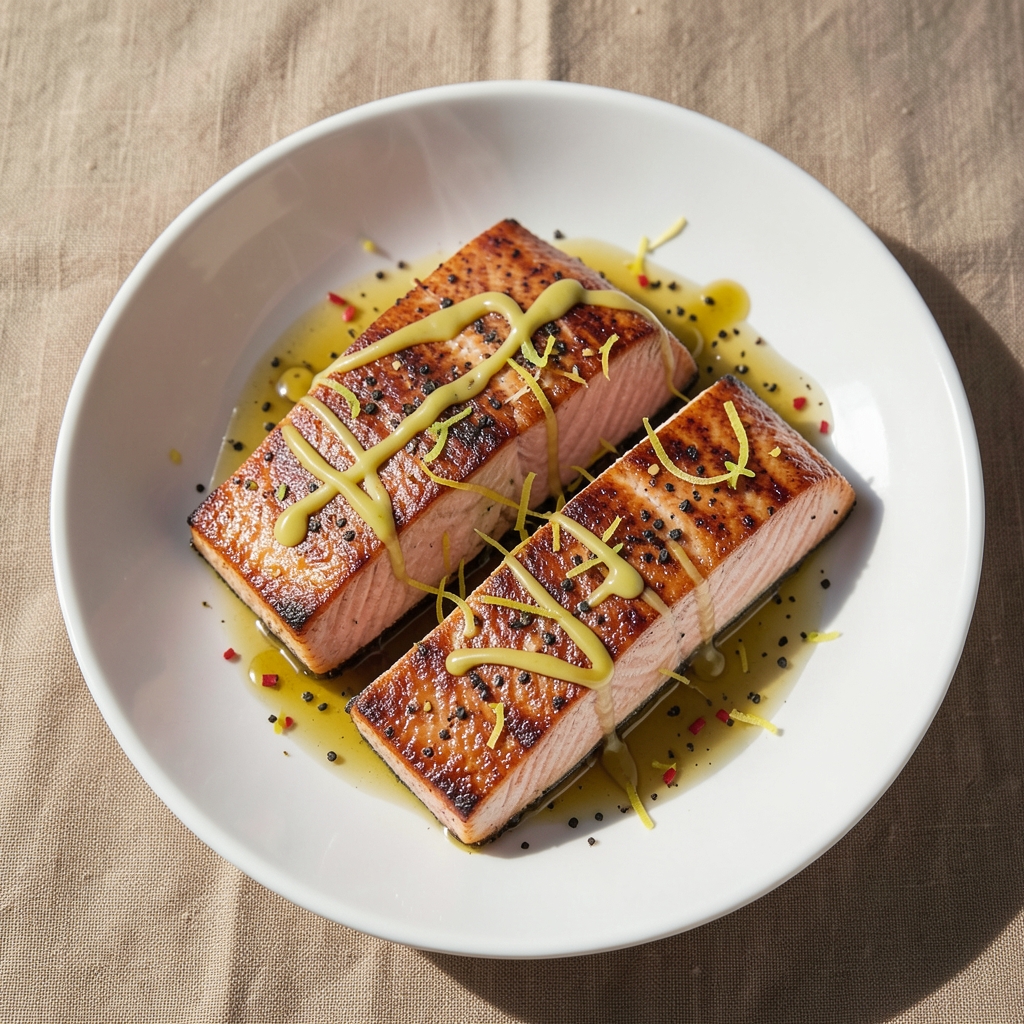
Mastering roasted salmon steak with crispy skin and moist center transforms a simple weeknight meal into something restaurant-worthy. I’ve tested this recipe countless times in my Boston kitchen, adjusting techniques until I achieved the perfect balance—golden, crackling skin that gives way to tender, flaky flesh inside.
The secret lies in precise temperature control and proper seasoning timing, both of which I’ll walk you through step by step.
This method requires just five key ingredients: fresh salmon steaks, olive oil, salt, pepper, and a touch of lemon. No fancy marinades or complicated prep—just high-quality components and a foolproof roasting technique that delivers professional results every time.
The beauty of this recipe is its versatility; it works equally well for solo dinners or feeding a small group, making it perfect for pescatarian diets without sacrificing flavor.
By following these instructions, you’ll achieve salmon with skin so crisp it shatters like glass, while the center remains perfectly moist and rich. The aroma alone will fill your kitchen with that unmistakable ocean-fresh scent, signaling dinner is ready.
Serve with a simple side salad or roasted vegetables to complete the meal—this recipe is designed to shine as the star of your plate.
What makes this recipe particularly reliable is how forgiving it is once you understand the core principles. Even if your oven runs slightly hot or cold, these techniques will compensate.
The method I’ve developed ensures consistent results, whether you’re cooking for yourself or hosting guests. Let’s get started on creating your perfect roasted salmon steak.
Ingredients for roasted salmon steak
Five ingredients, one perfect technique. This is your golden ticket to restaurant-quality salmon every time.
| Ingredient | Amount | Notes |
|---|---|---|
| Center-Cut Atlantic Salmon Steaks 🐟 | 4 whole | Skin-on, 1-inch thick, sushi-grade preferred |
| Extra-Virgin Olive Oil 🫒 | 2 tbsp | High smoke point, fruity variety |
| Diamond Crystal Kosher Salt 🧂 | 1 ½ tsp | Fine grain for even coating |
| Freshly Ground Black Pepper 🌶️ | ½ tsp | Cracked peppercorns preferred |
| Fresh Lemon Juice 🍋 | 1 tbsp | From 1 small lemon, freshly squeezed |
| Fresh Lemon Zest 🍋 | 1 tsp | Bright yellow zest only |
| Granulated Garlic 🧄 | ¼ tsp | For aromatic depth |
The salmon makes all the difference—center-cut Atlantic with that beautiful pink hue is non-negotiable. Whole Foods or Trader Joe’s carry excellent sushi-grade options, but any reputable fishmonger will have it. Look for steaks with vibrant color and minimal bruising—they should feel firm to the touch. If you can’t find Atlantic, wild-caught Pacific works too, just adjust cooking time slightly. The thickness matters too: 1-inch thick gives you that perfect balance between crispy skin and tender center. Pat them dry with paper towels before seasoning—moisture is the enemy of crispy skin.
No extra-virgin olive oil? Avocado oil works just as well—both have high smoke points. Short on lemon? Lime juice plus zest brings a completely different but equally delicious twist. The garlic is optional but worth the extra 30 seconds to toast it lightly in the oil first—amplifies flavor without overpowering. If you’re cooking for guests, prep everything ahead: zest the lemon, measure the salt and pepper, and have the salmon ready to go. The secret to consistent results is room-temperature salmon—take it out of the fridge 20 minutes before cooking. Trust me, it’s a game-changer.
This recipe reheats beautifully—30 seconds in the oven at 375°F brings back that crispy skin magic. Store leftovers in an airtight container with a paper towel pressed on top to absorb any moisture. Keeps fresh for 2 days in the fridge, though I recommend eating it fresh. The lemon zest and juice can be prepped ahead and stored in a small jar in the fridge for up to 1 week. For a crowd, simply double the recipe—just make sure your oven can handle the extra load. The aroma alone will have everyone gathering in the kitchen.
Why You’ll Love This Recipe
- That’s the secret: roasting brings out the salmon’s natural oils so the edges get gloriously crisp while the inside stays tender. The salt and pepper do all the heavy lifting—no fancy marinades or herbs to overthink. Honestly, the first time I made this, I nearly licked the pan clean.
- One-Pan Magic: I swear by this recipe when I’m too tired to scrub a million dishes. Just toss those thick salmon steaks on a sheet pan with olive oil, salt, and pepper, pop them in the oven, and walk away—no flipping, no fuss. The lemon juice gets drizzled on at the end, and suddenly, you’ve got restaurant-quality fish with zero stress.
- Crispy-Creamy Perfection: That’s the secret: roasting brings out the salmon’s natural oils so the edges get gloriously crisp while the inside stays tender. The salt and pepper do all the heavy lifting—no fancy marinades or herbs to overthink. Honestly, the first time I made this, I nearly licked the pan clean.
- Weeknight to Weekend: Between us, this is my go-to for busy nights and lazy Sundays. For weeknights, I serve it with steamed greens and a slice of crusty bread—done. For company, I add a sprinkle of fresh dill and a side of roasted potatoes, and suddenly it’s a showstopper. (Yes, even on a Tuesday night.)
Step-by-step instructions for roasted salmon steak recipe
Here’s how to achieve that perfect balance of crispy skin and moist center every time.
Prepare the Salmon for Perfect Crisp
Pat the 4 whole center-cut Atlantic salmon steaks completely dry with paper towels. This is absolutely critical for crispy skin—any moisture will steam the salmon instead of creating that golden crust. I like to press firmly, even on the skin side, to remove every last drop of water.
Place the steaks on a wire rack set over a rimmed baking sheet. The rack allows hot air to circulate underneath, ensuring even cooking and crispy skin on all sides. Arrange them skin-side up, about 1 inch apart to allow for expansion during cooking.
Season and Add Aromatics
In a small bowl, combine the 1.5 teaspoons Diamond Crystal kosher salt, 0.5 teaspoon freshly ground black pepper, 0.25 teaspoon granulated garlic, 1 tablespoon fresh lemon juice, and 1 teaspoon fresh lemon zest. Mix well to create an even seasoning blend that will infuse every bite with bright, aromatic flavors.
Sprinkle this mixture evenly over both sides of each salmon steak, pressing gently to help the seasoning adhere. I like to use my fingers for this—it gives me better control than a spoon. Let the salmon sit at room temperature for 10 minutes before roasting, which helps ensure even cooking throughout.
Roast to Crispy Perfection
Preheat your oven to 425°F with the rack positioned in the middle. This high temperature is key to achieving that beautiful crispy skin while keeping the inside moist. Once preheated, place the seasoned salmon steaks in the oven and roast for 12-15 minutes.
You’ll know they’re done when the skin is deep golden brown and crispy to the touch, and the internal temperature reaches 125-130°F when measured with an instant-read thermometer. The salmon should flake easily with a fork but still hold together slightly—overcooking will make it dry. Don’t open the oven during cooking to maintain consistent heat.
Finish with Olive Oil for Extra Crisp
Remove the salmon from the oven and immediately brush both sides with the 2 tablespoons extra-virgin olive oil. This final step creates an additional crispy layer while adding rich, fruity flavor. Return the salmon to the oven for 2-3 minutes to set the oil and develop that perfect crust.
Watch closely during this final stage—the skin should become even more golden and crispy. The aroma will be incredible at this point, but resist the temptation to peek too often. Once the skin is beautifully crisp and the salmon is perfectly cooked, remove it from the oven and let it rest for 5 minutes before serving. This resting period allows the juices to redistribute, ensuring each bite is moist and flavorful.
Pro Tips For Making Roasted Salmon Steak
- Preheat Like It’s Hot: Your oven should hit 425°F (220°C) and stay there for at least 10 minutes before salmon goes in—no exceptions. I learned this the hard way when my steaks turned rubbery because the pan was still chilly. That extra time ensures a proper crust and even cooking.
- Pat Dry, Then Salt: Use paper towels to dry the salmon steaks thoroughly—moisture is the enemy of a good crust. After drying, season with kosher salt (about ½ teaspoon per steak) right before roasting, not hours ahead. The salt will clump otherwise, and you’ll end up with uneven seasoning.
- Flip Once, Then Stop: Move the salmon steaks once during roasting—after 6-8 minutes, when the edges start to lift. Flipping more than that just makes them stick or overcook. If you’re nervous about timing, use a meat thermometer: pull them at 125°F (52°C) internal temp—they’ll keep cooking off the heat.
- Lemon After, Not Before: Squeeze fresh lemon juice right after roasting, not before. The acid will cook off prematurely if added early, turning your bright, zesty finish into a sad, watery drizzle. A quick 30-second rest under foil keeps the steaks warm while you zest and juice—no one wants a cold, sour mess.
Wine and beer pairings for this dish
Crisp White Wine
For roasted salmon steak, I always reach for a dry Riesling from Germany or Alsace—its crisp acidity cuts through the rich, buttery texture of perfectly cooked salmon.
Look for a Kaiserstuhl Riesling from Germany or Domaine Weinbach from Alsace; both have that perfect balance of citrus and mineral notes that complement the lemon zest in the recipe. Serve slightly chilled (50-55°F) to enhance the wine’s freshness. 🍷
Crisp Lager Pairing
A German Pilsner like Warsteiner or Stella Artois works beautifully with this dish. The clean, slightly malty profile and effervescence cleanse your palate between bites of salmon.
For a local Boston option, I love Harpoon IPA—its citrusy hop notes echo the lemon in the recipe while adding a subtle bitterness that balances the richness. Keep the beer well-chilled (40-45°F) for the best experience.
Light Red Alternative
If you prefer red wine, opt for a Pinot Noir from Oregon or New Zealand—these wines have enough acidity and delicate fruit notes to pair without overpowering the salmon. I recommend Domaine Serene from Oregon or Oyster Bay from New Zealand.
Serve at 55-60°F to preserve the wine’s bright character. Avoid heavy Cabernets or Syrahs, which can clash with the delicate fish.
Sparkling Option
For a celebratory touch, a dry sparkling wine like La Crema Brut from California or Prosecco DOC from Italy adds a festive element. The bubbles and acidity enhance the salmon’s crispy texture and bright lemon notes.
Serve at 45-50°F to maintain its crispness. This pairing works especially well for special occasions or when you want to elevate a simple weeknight dinner. ✨
Non-Alcoholic Choice
For those skipping alcohol, a sparkling water with lemon or ginger beer like Feast Brewing’s works surprisingly well. The effervescence mimics wine’s cleansing effect, while the ginger adds a subtle warmth that complements the salmon’s richness.
For a more sophisticated option, try San Pellegrino Aranciata—the bitter orange notes pair beautifully with the lemon in the recipe. 💧
Nutrition facts
Frequently asked questions
Can I use frozen salmon steaks for this recipe?
Fresh salmon works best for that perfect crispy skin, but you can use frozen if necessary. Thaw the steaks overnight in the fridge, pat them completely dry, and let them sit at room temperature for 15 minutes before seasoning. The extra drying time helps compensate for any remaining moisture. For best results, choose high-quality frozen salmon with minimal ice crystals.
How do I know when the salmon is fully cooked?
Use an instant-read thermometer to check the internal temperature—it should reach 125-130°F for perfect doneness. The skin will also be deep golden brown and crispy, while the flesh should flake easily with a fork but still hold together slightly. For visual cues, look for a slight pull away from the skin when gently prodding with a spatula.
What’s the best way to store leftovers?
Store cooked salmon in an airtight container with a paper towel pressed on top to absorb any moisture. It keeps fresh in the fridge for 2 days, though I recommend eating it fresh for best texture. To reheat, place in a 375°F oven for 30 seconds—this restores that crispy skin magic! For longer storage, freeze for up to 1 month in a sealed bag.
Can I make this recipe on the stovetop instead?
For stovetop pan-seared salmon, heat 1/4 inch of oil in a skillet over medium-high heat until shimmering. Cook skin-side down for 4-5 minutes until crispy, then flip and cook 2-3 minutes more. The key difference is controlling the heat—stovetop requires more attention to prevent burning. Serve immediately for best results.
Why did my salmon skin not get crispy?
Most likely, your salmon wasn’t dry enough before cooking or the oven temperature wasn’t high enough. Pat steaks thoroughly with paper towels and preheat the oven to 425°F—this is critical. Also, avoid overcrowding the pan or baking sheet. If using frozen salmon, thaw and dry extra carefully. For extra crispiness, brush with oil after the initial roast and return to the oven for 2-3 minutes**.

- Amish Strawberry Bread Recipe: Buttery Swirls and Fragrant Vanilla Notes - November 8, 2026
- Fried Fish With Tomato Sauce Recipe: Crispy Bites in Zesty Red Sauce - November 8, 2026
- Oven Baked Leg Quarters Recipe: Juicy, Golden Crust Without Dryness - November 8, 2026