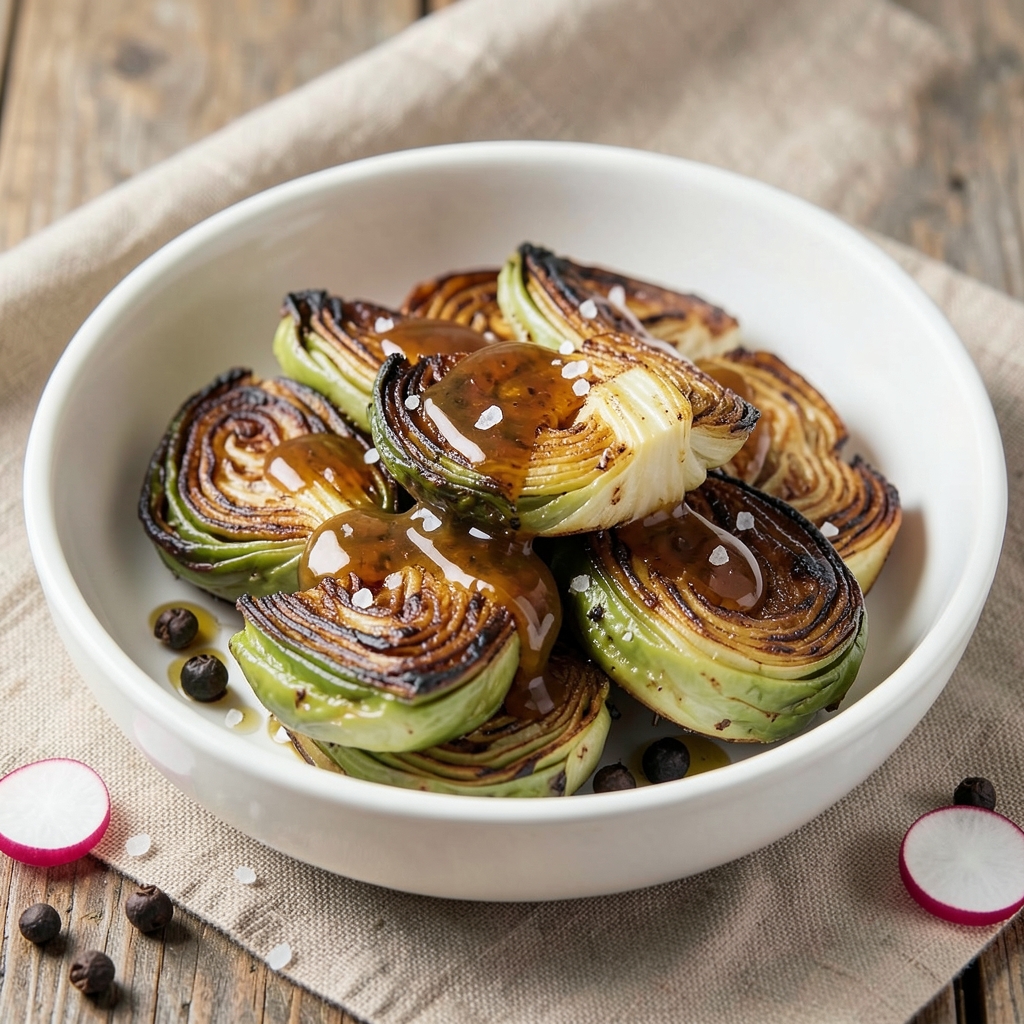
This roasted cabbage vinaigrette recipe transforms caramelized, tender crunch into something extraordinary with just a tangy dressing. The bold balsamic vinaigrette cuts through the richness, creating a perfect balance of sweetness and acidity that elevates every bite.
I first discovered this technique while trying to use up a whole head of cabbage in my tiny Boston kitchen—what started as a practical solution became my go-to side dish for everything from holiday dinners to weeknight suppers.
The secret lies in the roasting process: high heat and a little patience create those signature crispy edges while keeping the centers tender. A simple vinaigrette of balsamic vinegar, olive oil, and Dijon mustard ties everything together with its bright, tangy notes.
This dish delivers restaurant-quality results with minimal effort—just one pan, 45 minutes of hands-off cooking, and a few simple ingredients.
What you’ll end up with is cabbage that’s sweet, caramelized, and irresistibly crispy at the edges, all tossed in a glossy vinaigrette that enhances every flavor. The combination is hearty enough to stand alone but works beautifully alongside grilled meats, roasted chicken, or even as a topping for grain bowls.
It’s the kind of side dish that disappears faster than you can say “second helping.”
Perfect for meal preppers, busy weeknights, or special occasions when you want something impressive without the fuss. The flavors develop as it sits, making it even better the next day. Let’s get started with this crowd-pleasing recipe that proves simple ingredients can create something truly special.
Ingredients for roasted cabbage vinaigrette
One whole cabbage and a handful of pantry staples—this recipe turns humble ingredients into something extraordinary.
| Ingredient | Amount | Notes |
|---|---|---|
| Green Cabbage 🥬 | 1 whole | Cut into 8 wedges, core removed |
| Extra-Virgin Olive Oil 🫒 | ½ cup | High-quality, fruity variety |
| Balsamic Vinegar 🍷 | ¼ cup | Aged, not sweetened |
| Dijon Mustard 🌶️ | 1 tbsp | Mild or classic |
| Granulated Sugar 🍚 | 1 tbsp | For caramelization |
| Diamond Crystal Kosher Salt 🧂 | 1 ½ tsp | For seasoning |
| Freshly Ground Black Pepper 🌶️ | ½ tsp | Freshly cracked |
| Garlic Cloves 🧄 | 3 cloves | Minced for vinaigrette |
| Fresh Thyme Leaves 🌿 | ¼ cup | Chopped, stems removed |
| Red Wine Vinegar 🍷 | 1 tbsp | For brightness |
| Toasted Walnuts 🥜 | ¼ cup | Chopped, optional garnish |
The cabbage is the star here, so grab a firm, heavy head—the kind that feels solid when you lift it. Trader Joe’s and Whole FoodsCalifornia avocado oil works too if you prefer a higher smoke point, but good extra-virgin olive oil is perfect here.
No balsamic vinegar? Red wine vinegar plus 1 tsp maple syrup gets you close. Fresh thyme? Dried works at half the amount, but honestly, I’d rather skip it than use dried. The walnuts are optional but add a nice crunch—pecans or almonds work too if you’re out. For the vinaigrette, I like to whisk everything together right before tossing the cabbage, but making it ahead and storing it separately is fine too. Just shake it up before using. The Dijon mustard adds depth, so don’t sub with regular mustard—it’s not the same.
Roasted cabbage keeps well in the fridge for 4-5 days if stored in an airtight container. The vinaigrette can be made up to 1 week ahead and stored in a sealed jar. I like to reheat leftovers in a skillet with a splash of water to revive the crispiness. For meal prep, roast a big batch and portion the vinaigrette separately—toss before serving. The flavors actually improve overnight, so it’s perfect for making ahead.
Why You’ll Love This Recipe
- One-Pan Magic: I swear by this recipe because it’s all on one sheet pan—no chopping boards, no extra bowls. Just toss the cabbage wedges in olive oil, salt, and pepper, then let the oven do the work while I sip my coffee.
- Sweet-Savory Balance: That balsamic and sugar combo? It’s the secret weapon. The cabbage caramelizes into crispy, tender bites with a tangy-sweet glaze that makes even my picky husband ask for seconds.
- Lunchbox Hero: Between us, this is my go-to for meal prep. Roast a big batch on Sunday, drizzle with the vinaigrette, and you’ve got a crunchy, flavorful side that holds up for days—no soggy lettuce here.
- Budget Crunch: A whole head of cabbage for this? Yes, please. It’s cheaper than pre-cut salad mixes, and the vinaigrette uses pantry staples. Plus, leftovers reheat perfectly for sandwiches or stir-fries.
Step-by-step instructions for roasted cabbage vinaigrette
Here’s how to transform simple cabbage into a showstopping side with deep caramelized flavor and a tangy vinaigrette.
Roast the Cabbage Wedges Until Caramelized
Preheat your oven to 400°F and line a baking sheet with parchment paper. Arrange the 8 cabbage wedges cut-side up on the sheet, leaving space between them. Drizzle each wedge with about 1 teaspoon of the extra-virgin olive oil and sprinkle evenly with 1 teaspoon of the diamond crystal kosher salt and ¼ teaspoon of the freshly ground black pepper.
Roast for 30 minutes, then flip the wedges and roast another 20-25 minutes until the edges are deeply caramelized and crispy. You’ll know it’s ready when the cabbage releases easily from the baking sheet and the edges have turned a beautiful golden-brown. The sugar in the cabbage will melt and caramelize, creating that irresistible sweetness that makes this dish special.
Make the Balsamic-Thyme Vinaigrette
While the cabbage roasts, whisk together the 0.25 cup balsamic vinegar, 1 tablespoon red wine vinegar, 1 tablespoon dijon mustard, 1 tablespoon granulated sugar, the 3 minced garlic cloves, and the 0.25 cup chopped fresh thyme leaves in a small bowl. The sugar will dissolve completely, creating a smooth base for the vinaigrette.
Slowly drizzle in the remaining 0.5 cup extra-virgin olive oil while whisking continuously. This gradual addition prevents the oil from breaking the emulsion. Taste and adjust seasoning with more diamond crystal kosher salt or freshly ground black pepper if needed. The vinaigrette should be tangy, slightly sweet, and well-balanced. Let it sit for 5 minutes to allow the flavors to meld before using.
Assemble and Garnish
Once the cabbage is perfectly caramelized, transfer it to a serving platter. Drizzle the warm cabbage with the prepared vinaigrette, letting it pool in the crevices. The heat from the cabbage will help the vinaigrette cling beautifully, creating a glossy finish.
Sprinkle the 0.25 cup chopped toasted walnuts evenly over the top for a satisfying crunch. The walnuts add a nutty contrast to the sweet cabbage and tangy vinaigrette. Serve immediately while the cabbage is still warm and crispy, with the vinaigrette glistening on top. This dish is best enjoyed fresh, as the cabbage will soften slightly as it cools.
Optional Garnish and Serving
For an extra touch of elegance, garnish with additional chopped fresh thyme leaves or a sprinkle of freshly ground black pepper. The thyme adds a bright, herbal note that complements the rich balsamic flavors. This roasted cabbage vinaigrette pairs beautifully with grilled meats, roasted vegetables, or even as a standalone side dish.
The key to this dish is balance—sweet from the caramelized cabbage, tangy from the vinaigrette, and crunchy from the walnuts. Each bite should deliver a harmonious blend of these flavors, making it a standout addition to any meal. Serve with confidence, knowing every element has been carefully crafted for maximum flavor and texture.
Pro Tips For Making Roasted Cabbage Vinaigrette
- CUT CABBAGE SMALLER THAN YOU THINK: I learned this the hard way—those thick wedges you see in fancy photos take forever to roast and end up uneven. For this recipe, slice the cabbage into 1-inch chunks (or even smaller) so every piece gets caramelized at the same time. You’ll save 15-20 minutes and avoid a sad, undercooked center.
- USE BOTH WHITE AND GREEN CORE: The pale inner leaves of green cabbage are sweeter and tenderize faster—don’t toss them! Halve the cabbage lengthwise, then slice through the core to include those white layers. It makes the vinaigrette’s flavors sing without extra sugar.
- WHISK THE VINAIGRETTE IN STAGES: Dumping all the balsamic vinegar and Dijon at once? You’ll end up with a gloopy mess. Start with just 1 tablespoon of vinegar and mustard, whisk until smooth, then slowly drizzle in the olive oil while whisking like your life depends on it. The emulsion will thank you—no separating later.
- ROAST UNTIL CRISP, NOT SOFT: I used to pull the cabbage out when it looked “done,” only to get a sad, limp pile. Roast it until the edges are deep golden and the leaves pull apart with just a little resistance—about 30-35 minutes at 400°F. Overcooking turns it mushy; undercooking leaves it raw-tasting. Trust the color, not the time.
Best sauces and condiments for these flavors
Classic Balsamic Twist
This balsamic vinaigrette is the star of the show, cutting through the cabbage’s sweetness with its rich, tangy depth. I like to use aged balsamic vinegar (like Balsamic Glaze from Trader Joe’s) because it adds that perfect caramelized sweetness that pairs beautifully with the roasted cabbage.
The Dijon mustard is non-negotiable—it adds a subtle kick and helps emulsify the dressing. For extra richness, I sometimes add a splash of red wine vinegar to brighten it up. 🍷
Honey-Lime Brightener
If you want to lighten things up, swap the balsamic for a honey-lime vinaigrette. Mix 2 tablespoons honey with 3 tablespoons red wine vinegar, 1 tablespoon Dijon mustard, and ½ cup olive oil.
The honey caramelizes slightly when tossed with warm cabbage, creating a sticky, sweet glaze. This version works especially well with green cabbage—the bright acidity balances the natural bitterness. I tested this with my neighbor’s lime tree harvest last summer, and it was a hit.
Herb-Infused Olive Oil
For a more Mediterranean touch, infuse your olive oil with herbs before using it in the vinaigrette. Heat ½ cup olive oil with 2 sprigs fresh rosemary, 2 sprigs fresh thyme, and 1 clove garlic (lightly crushed) until fragrant but not browned.
Strain and use this infused oil in place of plain olive oil in the dressing. The herbs add an aromatic depth that complements the cabbage beautifully. Store any leftover infused oil in a dark glass bottle in the fridge for up to 2 weeks.
Spicy Chili-Lime Dressing
Craving heat? Swap the balsamic for lime juice and add 1 teaspoon chili powder plus ½ teaspoon smoked paprika to the vinaigrette. The lime keeps it fresh while the chili adds a smoky kick.
I like to finish with crumbled cotija cheese and cilantro for a Mexican-inspired twist. This version works surprisingly well with red cabbage too—just add a pinch of ground cumin to the roasting seasoning. 🌶️
Creamy Yogurt Dressing
For a creamy alternative, blend ½ cup Greek yogurt with 2 tablespoons lemon juice, 1 tablespoon honey, and 1 teaspoon garlic powder. Whisk in ¼ cup olive oil until smooth. This dressing adds a cool, tangy contrast to the warm cabbage.
It’s especially good with shredded cabbage (not wedges) because the creamy texture clings better. I first tried this after accidentally leaving yogurt out too long—turns out, it makes a fantastic dressing! ❄️
Store-Bought Shortcut
Short on time? Use store-bought vinaigrette as a base—just check for no added sugar. I like Annie’s Harvest or Primal Kitchen dressings because they’re clean and flavorful. Toss the roasted cabbage with 2 tablespoons of the dressing and finish with 1 teaspoon balsamic glaze for depth.
This is my go-to when I’m prepping meals for the week—I roast a whole cabbage on Sunday and portion the dressing separately. 💡
Nutrition facts
Frequently asked questions
Can I use red cabbage instead of green?
Red cabbage works beautifully and adds vibrant color to your dish. The purple hues will caramelize into rich red tones when roasted. For extra depth, add 1/4 teaspoon ground cumin to the roasting seasoning—it complements the natural sweetness of red cabbage perfectly. The vinaigrette recipe stays exactly the same.
How do I prevent the cabbage from getting soggy?
Roasting at 400°F with proper spacing is key—crowding steams the cabbage instead of caramelizing it. Use two baking sheets if needed, and flip the wedges halfway through cooking. For extra crispiness, broil for 2-3 minutes at the very end (watch closely!). Store leftovers in a single layer in the fridge to maintain texture.
Can I make this ahead of time?
Yes! Roast the cabbage up to 2 days ahead and store it in an airtight container at room temperature. Reheat in a 350°F oven for 10 minutes> to revive crispiness. The vinaigrette can be made 1 week ahead and stored separately. Toss with fresh vinaigrette before serving for maximum flavor.
What’s the best way to reheat leftovers?
For crispy results, spread leftovers on a baking sheet and reheat at 400°F for 8-10 minutes. Add a drizzle of olive oil and sprinkle with salt before reheating. Alternatively, pan-sear with 1 tablespoon butter> for 3 minutes per side>—the butter adds richness that pairs perfectly with the vinaigrette.
Can I make this in an air fryer?
Arrange cabbage wedges in a single layer in your air fryer basket and cook at 375°F for 12-15 minutes, flipping halfway. Spritz with 1 teaspoon olive oil> before air frying for extra crispiness. The air fryer method works especially well for smaller cabbage heads or when you want faster results.

- Gordon Ramsay Tomato Butter Sauce Recipe: Velvety-Smooth Balance in Minutes - November 9, 2026
- Canned French Cut Green Beans Recipe: Blanched Crisp-Tender in 10 Minutes - November 9, 2026
- Lamb Chops and Mashed Potato Recipe: Herb-Crusted Richness Paired Perfectly - November 9, 2026