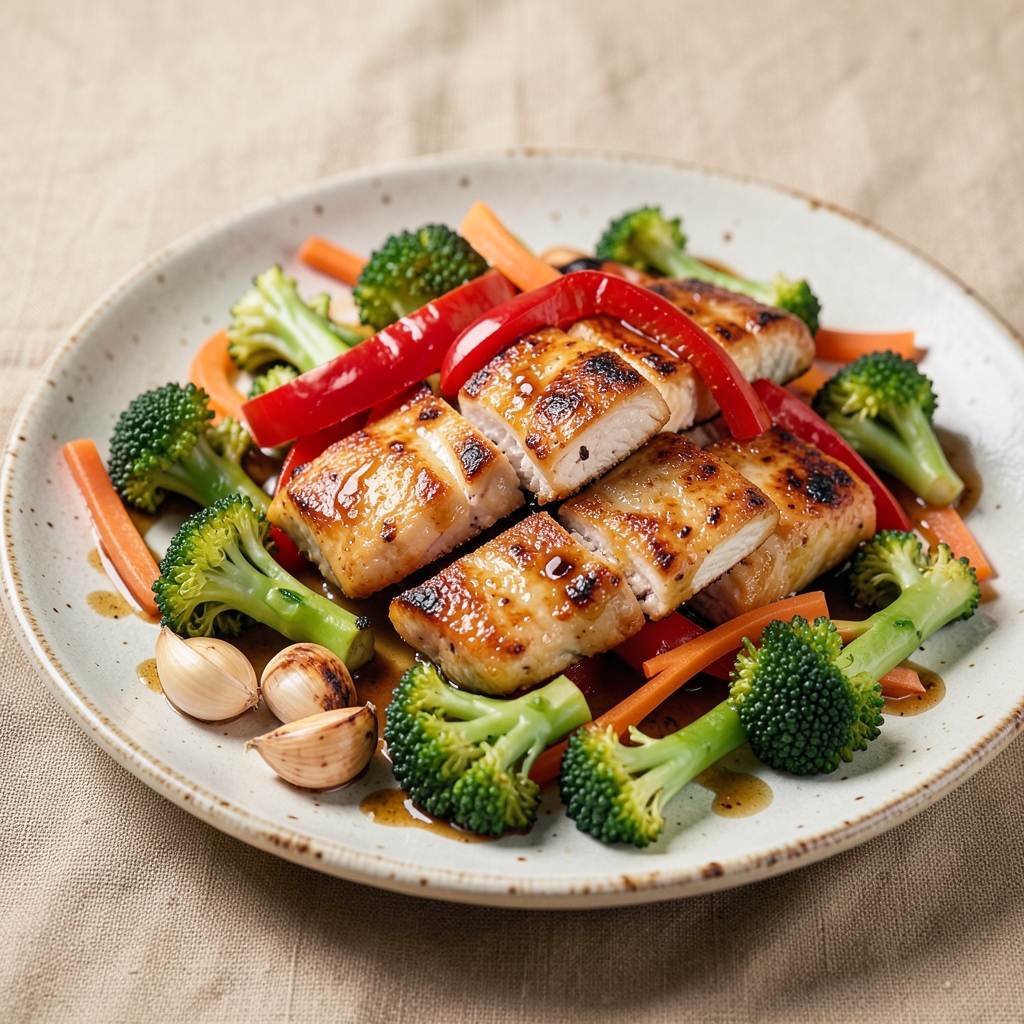
I’ll recommend a great stir-frying recipe that turns weeknight dinners into restaurant-quality meals with minimal effort. This wok-heated dish delivers bold umami flavors in just 15 minutes, perfect for busy professionals or anyone craving fast, flavorful food.
The secret lies in high-heat cooking and proper ingredient prep—no fancy techniques required.
I developed this recipe after years of testing stir-fry methods, focusing on balance: tender protein, crisp vegetables, and a sauce that ties everything together. Chicken breast works beautifully, but you can swap in shrimp, beef strips, or tofu for variety.
The key is cutting ingredients uniformly and cooking them in batches to avoid steaming instead of searing.
What you’ll end up with is a vibrant, aromatic dish packed with savory depth from soy sauce, garlic, and ginger. The vegetables stay crisp-tender, the protein cooks through perfectly, and the sauce clings to every bite.
Serve it over steamed rice or noodles for a complete meal that’s ready in under 15 minutes.
This stir-fry is versatile enough for meal prep or last-minute dinners, and the technique scales easily for larger groups. Let’s get cooking—your taste buds will thank you.
Ingredients for recommend a great stir frying
High-heat essentials for restaurant-style stir-fry in minutes—just gather these fresh ingredients.
| Ingredient | Amount | Notes |
|---|---|---|
| Boneless Skinless Chicken Breast 🍗 | 1 ½ lb | Cut into 1-inch strips |
| Extra-Firgin Olive Oil 🫒 | 2 tbsp | For high-heat cooking |
| Red Bell Pepper 🌶️ | 1 whole | Sliced into thin strips |
| Broccoli Florets 🥦 | 3 cups | Cut into bite-sized pieces |
| Carrot Sticks 🥕 | 1 cup | Julienned or thinly sliced |
| Garlic Cloves 🧄 | 4 cloves | Minced finely |
| Fresh Ginger 🌿 | 1 tbsp | Grated finely |
| Low-Sodium Soy Sauce 🍶 | 3 tbsp | For umami depth |
| Sesame Oil 🫒 | 1 tsp | For aroma finish |
| Honey 🍯 | 1 tbsp | Balances flavors |
| White Rice Vinegar 🍶 | 1 tbsp | Brightens sauce |
| Toasted Sesame Seeds 🌾 | 1 tsp | For garnish |
| Diamond Crystal Kosher Salt 🧂 | ½ tsp | To taste |
| Ground Black Pepper 🌶️ | ¼ tsp | Freshly ground |
The chicken breast is your foundation—look for uniform pieces at the butcher counter or pre-cut at Trader Joe’s. Slicing it into even strips ensures perfect doneness. For extra flavor, marinate the chicken in 1 tbsp soy sauce and 1 tsp cornstarch for 15 minutes before cooking. The broccoli and carrots should be crisp-tender, so cut them into similar sizes—they’ll cook at the same rate. Fresh ginger and garlic are non-negotiable here; frozen or jarred versions lack the aromatic punch. If you can’t find fresh ginger, substitute 1 tsp ground ginger, but it won’t be the same.
No low-sodium soy sauce? Regular soy sauce plus a pinch of salt works, but reduce the honey slightly to balance the saltiness. Swap red bell pepper for green or yellow if that’s what’s on hand—the color difference won’t affect the flavor. For a vegetarian twist, replace the chicken with extra-firm tofu pressed and cubed. The sesame oil is purely for aroma; if you’re avoiding it, toasted peanut oil adds a similar nutty depth. The honey and vinegar create the perfect umami-sweet balance—don’t skip them, even if you’re not a fan of sweet stir-fries. Trust me on this one.
Prep everything before turning on the heat—this isn’t a recipe for multitasking. Store prepped veggies in airtight containers with a paper towel to keep them crisp. The cooked stir-fry reheats beautifully—just add a splash of water or broth and a few seconds in the microwave. For meal prep, portion into glass containers with a tight seal to maintain freshness for 3-4 days. Freeze any leftovers in single-serving portions for up to 3 months—they thaw perfectly in the fridge overnight.
Why You’ll Love This Recipe
- One-Pan Magic: I swear by this—just one skillet, no mess. Toss in the chicken, veggies, and a drizzle of olive oil, then let the heat do the work. No chopping boards to scrub, no pots to stack.
- Sweet-Savory Balance: That charred red bell pepper and carrot sweetness? It’s ridiculous. A splash of soy sauce or a sprinkle of smoked paprika turns simple ingredients into something you’ll reach for again.
- Lunchbox Hero: Between us, this is my go-to for meal prep. Cold or reheated, the chicken stays tender and the veggies hold their crunch. Pack it in containers, and you’ve got a protein-packed lunch for days.
- Budget-Friendly Powerhouse: Chicken breast and fresh veggies are affordable, and a little olive oil goes a long way. Honestly, I make this twice a week—it’s my secret weapon for stretching groceries without sacrificing flavor.
Step-by-step instructions for wok-heated umami chicken stir-fry
Here’s how to create a perfectly balanced stir-fry with crisp-tender chicken and vibrant vegetables in record time.
Prep All Ingredients for Faster Cooking
Start by cutting the 1.5 lb boneless skinless chicken breast into 1-inch strips and patting them completely dry with paper towels. This ensures they’ll sear properly rather than steam. While the chicken rests, slice the 1 whole red bell pepper into thin strips and cut the 3 cups broccoli florets into bite-sized pieces. Julienne the 1 cup carrot sticks for even cooking.
Mince the 4 cloves garlic cloves and grate the 1 tbsp fresh ginger finely—these aromatics should be ready to go when you heat the wok. The reason for prepping everything now is that stir-frying happens in stages, and you’ll need each ingredient at specific moments. I like to use a cutting board organizer to keep all components separated and ready to toss into the wok.
Create the Umami Sauce Base
In a small bowl, whisk together the 3 tbsp low-sodium soy sauce, 1 tbsp honey, 1 tbsp white rice vinegar, 1 tsp sesame oil, 0.5 tsp diamond crystal kosher salt, and 0.25 tsp ground black pepper. This sauce will infuse every bite with depth while balancing sweet, tangy, and savory flavors. Set it aside while you cook the chicken—it’ll be ready to combine at the perfect moment.
I always taste the sauce before adding it to the wok. If it needs more brightness, a splash of vinegar helps. If it’s too thin, a quick whisk with 1 tsp cornstarch slurry thickens it beautifully. The sauce should coat the back of a spoon but remain pourable.
Stir-Fry the Chicken Until Golden
Heat a wok or large skillet over high heat until it’s smoking hot. Add the 2 tbsp extra-virgin olive oil and swirl to coat the surface. Working in batches if needed, add the chicken strips and let them sear undisturbed for 2-3 minutes until golden brown on one side. This initial sear locks in juices and creates that signature stir-fry texture.
Once the first side is golden, flip the chicken and cook for another 1-2 minutes until fully cooked through. Remove the chicken from the wok and set it aside—it’ll finish cooking when everything comes together. Don’t overcrowd the pan, or the chicken will steam instead of sear. If needed, work in two batches to maintain high heat.
Cook the Vegetables in Stages
Return the wok to high heat and add the broccoli florets and carrot sticks. Stir-fry for 3-4 minutes until the broccoli turns bright green and the carrots begin to soften but still retain a crisp texture. Add the red bell pepper strips and cook for another 2 minutes until they just begin to wilt slightly. The vegetables should be tender-crisp with vibrant color.
Push the vegetables to one side of the wok and add the minced garlic and grated ginger. Stir for 30 seconds until fragrant—this is where the real flavor magic happens. Immediately pour the sauce over everything and toss vigorously for 1-2 minutes until everything is evenly coated and heated through. The sauce should glisten slightly, indicating it’s properly distributed.
Combine and Finish with Sesame Seeds
Return the chicken to the wok and toss everything together for 1-2 minutes until the chicken is heated through and the sauce clings to each piece. The dish should be hot, vibrant, and fragrant with wok-hei—the smoky aroma that defines great stir-fry. Taste and adjust seasoning if needed, adding a splash of water if the sauce is too thick.
Transfer the stir-fry to serving plates and sprinkle each portion with 1 tsp toasted sesame seeds. Serve immediately over steamed jasmine rice or noodles. The sesame seeds add a nutty crunch that contrasts beautifully with the tender chicken and crisp vegetables. Each bite should deliver perfect texture and a harmonious balance of sweet, savory, and umami flavors.
Pro Tips For Making Recommend A Great Stir Frying
- CUT CHICKEN THIN: I learned this the hard way—thin slices (¼-inch max) cook faster and stay juicy. Use a sharp knife and angle it like you’re slicing against the grain, or the chicken will turn out chewy. (Yes, it takes 10 extra seconds, but your stir-fry will taste like it came from a wok.)
- SALT CHICKEN FIRST: Toss the chicken with a pinch of salt and let it sit for 10 minutes before cooking. This guarantees seasoning that sticks, not just surface-level flavor. (I used to skip this and wondered why my chicken tasted bland.)
- STIR-FRY IN BATCHES: Overcrowding the pan steams the veggies instead of searing them. Cook the chicken first, then move it aside and stir-fry the broccoli and carrots in one batch, then the bell peppers in the next. (Your future self will thank you for crisp-tender veggies.)
- USE HIGH HEAT: Extra-virgin olive oil has a lower smoke point than you think—crank the heat to medium-high and let it shimmer before adding anything. If it’s not hot enough, you’ll end up with soggy veggies and greasy chicken. (I know, I know, but trust the process.)
Health benefits of this dish
Protein Powerhouse
This stir-fry delivers a lean protein boost with 1.5 lbs of chicken breast, providing about 45 grams of protein per serving—ideal for muscle repair and satiety. Chicken breast is a complete protein, meaning it contains all nine essential amino acids your body can’t produce on its own.
I always opt for skinless to keep saturated fat low while maximizing protein density. 💪
Fiber-Rich Veggies
The combination of broccoli, carrots, and bell peppers creates a fiber powerhouse—about 6 grams of fiber per serving. Broccoli alone provides 3.5 grams, supporting digestion and gut health. The julienned carrots add beta-carotene for immune support, while the bell pepper contributes vitamin C for collagen production.
I’ve found that pre-cutting veggies into uniform sizes ensures even cooking without sacrificing texture.
Umami Flavor Benefits
The sauce’s soy sauce, garlic, and ginger combination delivers glutamates that enhance flavor perception while supporting brain health. Soy sauce provides isoflavones, plant compounds linked to heart health and bone strength. Fresh ginger adds gingerol, which may aid digestion and reduce inflammation.
I always taste the sauce before adding it to the wok—this ensures the perfect umami balance without overpowering the natural flavors of the ingredients.
Balanced Carbs Ready
While the stir-fry itself is low-carb, serving it over steamed jasmine rice creates a complete meal with complex carbohydrates. One cup of cooked rice adds about 45 grams of carbohydrates, providing sustained energy for active lifestyles.
I prefer brown rice for its additional fiber content, but white rice works perfectly for quick meals. The rice also helps absorb any excess sauce, creating a cohesive eating experience.
Antioxidant Boost
The colorful vegetables in this stir-fry pack antioxidant power. Red bell peppers contain vitamin A (great for vision) and vitamin C (immune support), while broccoli provides sulforaphane, a compound linked to cancer prevention.
The sesame seeds add vitamin E and zinc, both important for skin health and immune function. I always toast my sesame seeds separately to enhance their nutty flavor and nutritional benefits before sprinkling them on top.
Meal Prep Advantage
This stir-fry stores beautifully for 3-4 days in the refrigerator or 3 months in the freezer, making it perfect for busy weeks. The protein and fiber content help keep you full, preventing energy crashes.
I portion leftovers into glass containers with tight seals to maintain freshness. When reheating, I add a splash of water or broth to prevent drying—this preserves both texture and nutritional value. 💡
Nutrition facts
Frequently asked questions
What’s the secret to getting that perfect wok-hei aroma?
Wok-hei is all about high heat and proper technique. Use a wok or cast-iron skillet on maximum heat until it’s smoking hot before adding oil. Work quickly and keep ingredients moving—this creates the signature smoky aroma. The key is cooking in small batches to maintain that intense heat. A well-seasoned wok helps too, but even a new pan can deliver great results with proper technique.
Can I substitute chicken with another protein?
For shrimp, use 1 lb peeled and deveined, cooking them for just 1-2 minutes per side. Beef strips (like flank steak) work well too—slice thinly against the grain and cook for 2-3 minutes total. Tofu is another great option: press and cube 1 block extra-firm tofu, then pan-fry until golden before adding to the wok. Just adjust cooking times based on protein thickness.
Why did my vegetables turn mushy?
Overcrowding or low heat are the usual culprits. Stir-frying requires high heat and quick cooking—never exceed 4-5 minutes for most veggies. Work in batches if needed, and cut all ingredients to similar sizes so they cook evenly. Also, make sure your pan is properly heated before adding oil. A quick test: if your wok isn’t smoking when you add oil, it’s not hot enough.
How can I make this vegetarian?
Swap the chicken for 1 block extra-firm tofu pressed and cubed, or use 12 oz mushrooms (like shiitake or oyster) for meaty texture. Add 1 cup edamame for extra protein. For umami depth, boost the sauce with 1 tbsp miso paste or 1 tsp fish sauce (if vegetarian-friendly). The technique remains the same—high heat and quick cooking preserve texture.
What’s the best way to reheat leftovers?
Reheat in a skillet over medium heat with 1 tsp oil and a splash of water or broth to prevent drying. Stir constantly for 2-3 minutes until heated through. Microwaving works too: cover with a damp paper towel and heat for 1-2 minutes** in 30-second intervals. The sauce will thicken slightly when reheated—add a little water if needed. Always reheat to 165°F for safety.

- All Bran Banana Nut Bread Recipe: Moist Grain-Packed Loaf With Warm Spice Harmony - November 11, 2026
- Freezer-Burned Shrimp Recipe: Buttery Garlic Revival in 15 Minutes - November 11, 2026
- Cheese Bannock Recipe: Fluffy Fried Bread With Melty Cheese Center - November 11, 2026