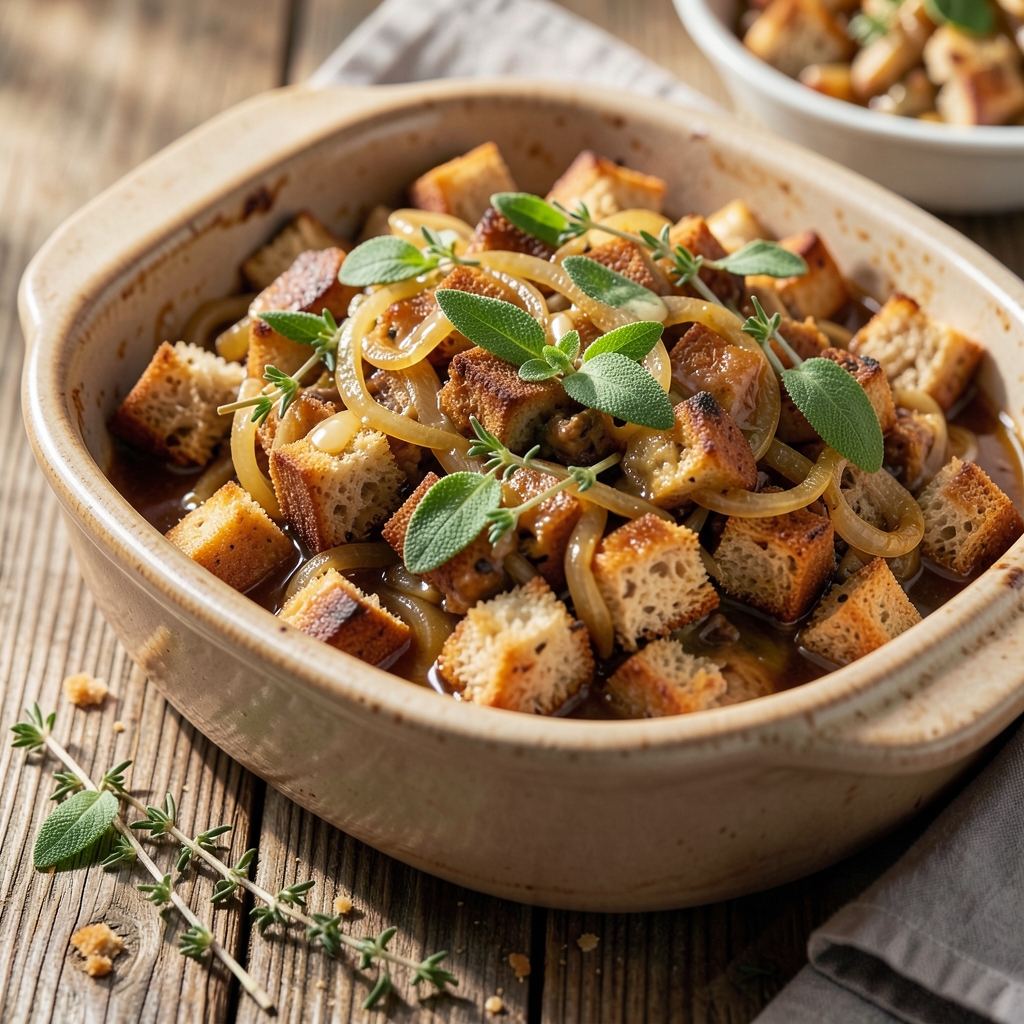
This real simple stuffing recipe delivers the perfect balance of buttery crisp edges and herby soft centers—no fuss, no stress, just classic comfort food that feels like a hug from Nonna. 💛 I developed it after years of testing in my tiny Boston kitchen, where space is tight but flavor can’t be compromised. The secret lies in using a mix of day-old bread (never fresh!) and a precise ratio of butter to broth that creates that signature texture.
What makes this stuffing truly simple is the minimal prep work—just chop your bread, sauté your vegetables if using, and mix everything together before baking. There’s no need for complicated techniques or expensive ingredients; just a few pantry staples and a little patience.
The result is a stuffing that’s crispy on the outside, tender on the inside, and packed with savory herbs that make every bite irresistible.
This recipe is foolproof for beginners and satisfying for experienced cooks, making it the perfect side for holidays or weeknight dinners. The golden-brown edges and fragrant aroma will have everyone at the table asking for seconds.
Whether you’re serving it alongside roast chicken or turkey, this stuffing is the kind of dish that elevates any meal without stealing the spotlight.
Ready in just 45 minutes, this stuffing requires only 8 ingredients and delivers restaurant-quality results. The best part? It reheats beautifully, so you can make a big batch and enjoy it all week. Let’s get started!
Ingredients for real simple stuffing
Eight simple ingredients transform into golden, crispy stuffing that tastes like Nonna’s—no stress, just comfort.
| Ingredient | Amount | Notes |
|---|---|---|
| Day-Old Bread Cubes 🍞 | 8 cups | Stale bread preferred, crusts removed |
| Unsalted Butter 🧈 | ¾ cup | Cold, cubed for crisp edges |
| Chicken Broth 💧 | 2 cups | Low-sodium preferred, room temp |
| Fresh Sage Leaves 🌿 | ½ cup | Chopped, stems removed |
| Fresh Thyme Leaves 🌿 | ¼ cup | Chopped, stems removed |
| Yellow Onion 🧅 | 1 medium | Finely chopped, sautéed first |
| Garlic Cloves 🧄 | 3 cloves | Minced, sautéed with onion |
| Salt 🧂 | 1 ½ tsp | Kosher salt, adjust to taste |
| Black Pepper 🌶️ | ½ tsp | Freshly ground for best flavor |
| Olive Oil 🫒 | 1 tbsp | For greasing baking dish |
The bread is everything here. Day-old bread is non-negotiable—fresh bread gets soggy. I grab a loaf of Italian or sourdough from Whole Foods or Trader Joe’s—their crusty loaves are perfect. Cube it yourself for even size, or use the pre-cubed stuff from the bakery section if you’re in a hurry. The butter needs to be cold when you mix it in—take it straight from the fridge—or you’ll end up with mushy stuffing. For the herbs, fresh is best, but dried thyme at half the amount works in a pinch. Just make sure your sage isn’t wilted—it should be bright green and fragrant.
No fresh sage? Dried sage works at one-third the amount, but it won’t have that same earthy punch. The onion and garlic can be sautéed in butter instead of olive oil if you’re feeling fancy—it adds extra richness. Short on chicken broth? Turkey or vegetable broth works just as well. The key is using low-sodium broth so you can control the saltiness. If you’re making this ahead, make the stuffing up to a day in advance—the flavors meld even better overnight. Store it in an airtight container in the fridge until ready to bake.
This stuffing reheats like a dream—just pop it back in the oven at 350°F for 15-20 minutes. It keeps in the fridge for 4-5 days, and you can freeze portions for up to 3 months. I always make a double batch because it disappears fast. For extra crispiness, broil it for 2-3 minutes at the end. Just watch it like a hawk—it burns fast! The golden edges are worth the effort, though. Trust me.
Why You’ll Love This Recipe
- No-Waste Pantry Magic: I swear by using day-old bread—no crusts, no fancy shapes. Just tear, cube, and toss. That’s it. No extra shopping, no food scraps wasted.
- Herb-Packed Punch: Fresh sage and thyme? Oh, they’re the stars here. The butter melts into the bread while the broth soaks it up, leaving you with that bright, herby aroma that makes your whole kitchen smell like Thanksgiving.
- Leftovers That Don’t Suck: Stuffing reheats like a dream—crispy edges, soft center, no drying out. Honestly, I make a double batch on purpose. It’s the perfect cold sandwich filling or a quick side for busy nights.
- Budget-Friendly Crowd-Pleaser: Butter and herbs sound fancy, but they stretch so far. A single stick of butter and a handful of fresh herbs feed six, and the chicken broth? You’ve got that sitting in your freezer anyway. Solid win.
Step-by-step instructions for buttery crisp stuffing
This is the easiest stuffing you’ll ever make—crispy edges, tender centers, and packed with herby flavor!
👨🍳 Step 1: Sauté the Aromatics
Heat the 1 tablespoon olive oil in a large skillet over medium heat. Add the 1 medium yellow onion, chopped into small pieces, and cook for 5-6 minutes until soft and translucent. You’ll know it’s ready when it smells sweet and the edges start to turn golden.
Add the 3 cloves garlic cloves, minced, and cook for another 30 seconds until fragrant—don’t let it brown or it’ll turn bitter. Remove from heat and let cool slightly. This aromatic base is the flavor foundation for your stuffing, so take your time getting it just right.
🍳 Step 2: Toast the Bread Cubes
In the same skillet (no need to wash it—those onion bits add flavor), melt the 0.75 cup unsalted butter over medium heat until it foams. Add the 8 cups day-old bread cubes and toast them for 5-7 minutes, stirring occasionally, until they’re golden brown and crisp around the edges.
Here’s the thing—you want those bread cubes to get nice and toasty but not burn. If they start to darken too quickly, reduce the heat slightly. The butter should be bubbling gently, coating each cube perfectly. This step is what gives your stuffing that irresistible crunch!
🥘 Step 3: Mix in Herbs and Seasonings
Transfer the toasted bread cubes to a large mixing bowl. Add the sautéed onion and garlic mixture, 0.5 cup fresh sage leaves, 0.25 cup fresh thyme leaves, 1.5 teaspoons salt, and 0.5 teaspoon black pepper. Stir everything together gently with your hands—this helps distribute the butter and herbs evenly throughout the bread.
I like to press down lightly on the mixture to make sure all the bread cubes get coated with that buttery goodness. The herbs should be distributed evenly, and you should be able to smell that amazing herby aroma. If you’re using very fresh herbs, you might want to chop them slightly smaller to release more flavor.
🔥 Step 4: Add Broth and Mix Well
Pour the 2 cups chicken broth (room temperature) over the bread mixture and stir until everything is evenly moistened. You want the bread to be damp but not soggy—it should hold together when pressed gently. If it feels too dry, add a splash more broth.
This is where the magic happens! The broth will soak into the bread, creating that perfect moist texture while keeping the edges crispy. Give it one final mix to make sure all the bread cubes are coated with that herby, buttery goodness. The stuffing should look like it’s ready to go straight into the oven!
⏰ Step 5: Bake to Golden Perfection
Preheat your oven to 350°F. Grease a 9×13-inch baking dish with a bit more olive oil (about 1 teaspoon) and transfer the stuffing mixture to the dish. Press down gently but firmly to create an even surface—this helps it bake more evenly and gives you that perfect sliceable texture.
Bake for 30-35 minutes until the top is golden brown and crispy, and the center feels firm when pressed gently. The edges should be nicely browned, and you should be able to smell that amazing buttery, herby aroma filling your kitchen. If the top isn’t brown enough, broil for 1-2 minutes at the end to get that perfect crispy finish.
Pro Tips For Making Real Simple Stuffing
- TOAST THE BREAD: Spread your day-old cubes in a single layer on a baking sheet, then pop them in a 350°F oven for 10-12 minutes until they’re dry but not browned. I learned this the hard way—skipping this step means soggy stuffing no matter how much broth you use.
- SALT THE BUTTER: Toss the cubed butter with a pinch of salt (about ¼ teaspoon per ¼ cup) before mixing it into the bread. Unsalted butter is neutral, but that doesn’t mean your stuffing should taste bland—this guarantees seasoning from the start.
- SIMMER THE BROTH: Heat your chicken broth until it’s just simmering (tiny bubbles, not a rolling boil) before adding it to the bread mixture. Cold broth cools everything down, and you’ll end up reheating twice—waste of time and energy.
- CHOP THE HERBS FINE: Stack fresh sage and thyme leaves, roll them tightly, and slice into matchsticks for even distribution. Whole leaves turn into bitter clumps, while finely chopped ones melt into the dish—no one wants a mouthful of herb stems.
Creative variations of this dish
Herb Swap Variations
Fresh herbs can be swapped based on what you have on hand. For a Mediterranean twist, replace sage and thyme with 1 tbsp dried oregano and 1 tbsp chopped rosemary.
I’ve also had great luck using ½ cup chopped parsley for a brighter, fresher flavor—just add it after baking. If you’re feeling adventurous, try ½ cup chopped tarragon for a French-inspired version. 🌿
Cheesy Stuffing Upgrade
Add 1 cup shredded sharp cheddar or Parmesan to the bread mixture before baking for a cheesy twist. I like to mix it in after adding the broth so the cheese melts evenly.
For extra richness, use ½ cup cream cheese along with the cheddar. This works especially well with sourdough bread—the tang cuts through the creaminess beautifully.
Vegetable-Packed Stuffing
Sauté 1 cup diced celery and 1 cup mushrooms with the onions for a heartier stuffing. I often add ½ cup chopped walnuts for crunch and texture.
For a roasted veggie version, toss 1 cup diced zucchini and 1 cup corn kernels with olive oil, salt, and pepper, then roast at 400°F for 15 minutes before mixing into the stuffing. These additions add moisture and depth.
Gluten-Free Adaptation
Use 8 cups gluten-free bread cubes (like Schär or Canyon Bakehouse) and add ¼ cup cornstarch to the bread mixture to help bind it. For extra crispiness, toast the cubes in 2 tbsp olive oil instead of butter.
I’ve found that gluten-free stuffing benefits from a slightly longer bake—35-40 minutes—to ensure it’s fully cooked and crispy. 💪
Savory Add-Ins
For a meaty twist, fold in ½ cup cooked sausage or diced ham with the herbs. I love using Italian sausage for a bold flavor. For a seafood-inspired version, add ½ cup chopped cooked shrimp or crabmeat—just mix it in gently at the end to avoid overcooking.
These additions turn stuffing into a hearty main dish.
Sweet Stuffing Twist
Add ½ cup dried cranberries or chopped apples for a sweet-savory balance. I often toss 1 tsp cinnamon into the mix for warmth. This variation pairs perfectly with roast chicken or turkey—the sweetness complements the savory meat beautifully.
For extra richness, drizzle 2 tbsp maple syrup over the top before baking.
Nutrition facts
Frequently asked questions
Can I use fresh bread instead of day-old bread?
Absolutely not! Fresh bread gets soggy and turns mushy when baked. The starches in fresh bread absorb too much moisture from the broth, ruining the texture. For best results, use bread that’s at least 1 day old—or even better, 2 days old. If you’re in a pinch, lightly toast your fresh bread cubes for 5 minutes before mixing with the other ingredients to help them hold up.
How do I make this stuffing extra crispy?
For maximum crispiness, focus on these two key steps: 1) Toast your bread cubes in butter until they’re deep golden brown (don’t skip this!), and 2) Broil for 2-3 minutes at the very end of baking. Also, make sure your baking dish is well-greased and press the stuffing down firmly before baking—this creates better contact with the hot pan for crispier edges.
Can I make this stuffing ahead of time?
Yes! This stuffing actually tastes better when made ahead. Mix all ingredients (except baking) up to 24 hours in advance and store in an airtight container in the fridge. When ready to bake, transfer to your greased dish and bake as directed. The flavors meld beautifully overnight, and it reheats perfectly—just pop it back in the oven at 350°F for 15 minutes.
What’s the best bread for stuffing?
Sturdy breads work best—Italian bread, sourdough, or even a good-quality French bread. Avoid soft sandwich breads like brioche or white bread, as they’ll fall apart. For extra flavor, try a crusty baguette or a hearty rye bread. If you’re gluten-free, look for sturdy gluten-free bread brands like Canyon Bakehouse or Schär—they hold up better during baking.
Why did my stuffing turn out dry?
Most likely, your bread absorbed too much moisture or you overbaked it. To fix this: 1) Make sure your broth is room temperature (cold broth makes bread absorb more moisture), and 2) Bake until just golden—not until it’s deeply browned. If it’s slightly underdone when the edges are crispy, that’s perfect. For next time, try adding 1-2 extra tablespoons of broth if it feels dry during mixing.

- Ritz Cracker Candy Recipe Easy: Crunchy Clusters in 10 Minutes - November 9, 2026
- Air Fry Beef Ribs Recipe: Fall-Off-The-Bone Crunch in 40 Minutes - November 9, 2026
- Rose Water Recipe: Floral-Infused Syrup for Cocktails and Desserts - November 9, 2026