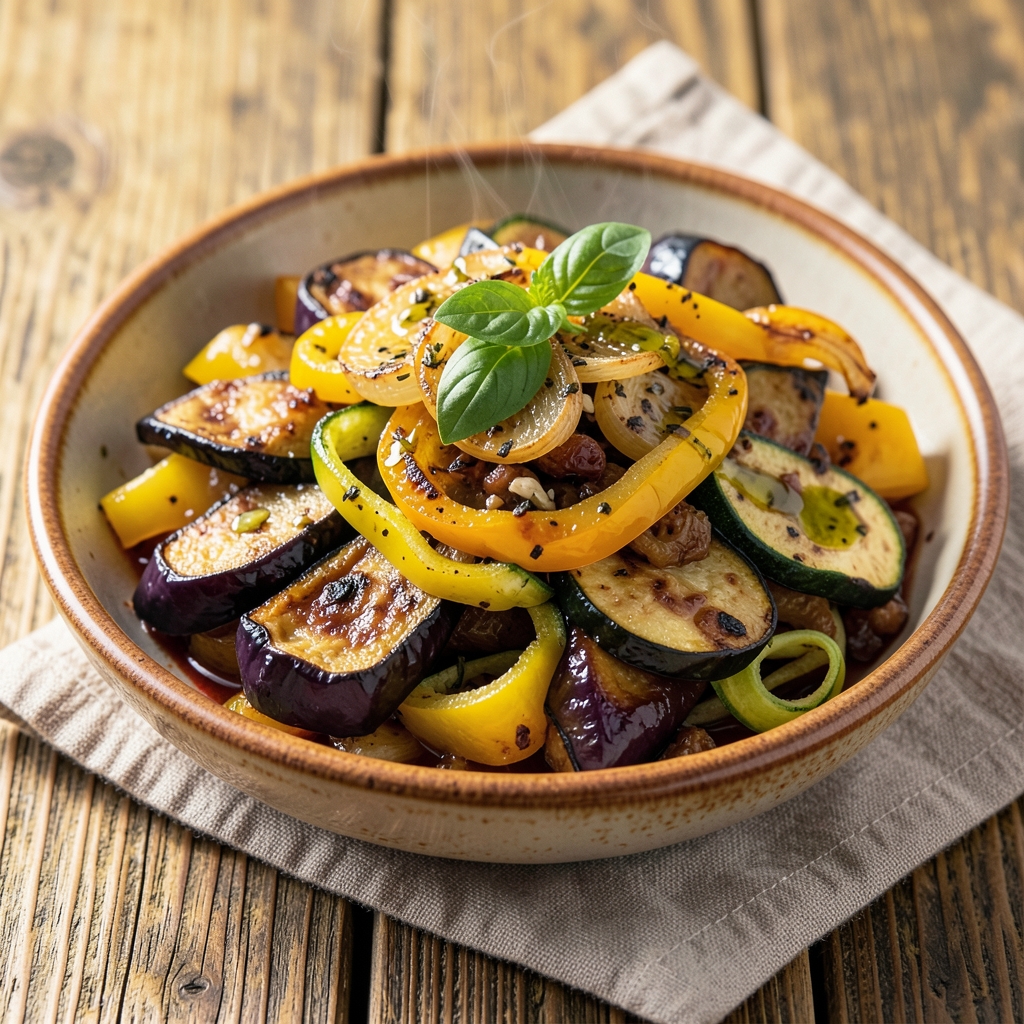
This ratatouille veg recipe transforms humble vegetables into a Provençal herb roast with silky eggplant and deep, layered flavors—proof that plant-based cooking can rival any meat dish.
I first made this during a particularly stubborn stretch of winter when I swore off takeout, and it became my go-to for impressing guests who assumed vegan food meant salads.
The secret lies in slow-cooking the vegetables until they melt into each other, creating a dish that’s both rustic and refined.
What sets this recipe apart is the balance of textures: tender eggplant, crisp bell peppers, and al dente zucchini, all bound together by a fragrant herb blend of thyme, basil, and bay leaf.
Unlike traditional ratatouille, this version uses a wine deglaze to deepen the sauce and a touch of balsamic vinegar for brightness—modern twists that keep the flavors vibrant. The dish comes together in one pot, making it perfect for weeknight dinners or meal prep.
By the time it finishes simmering, you’ll have a rich, herbaceous roast that’s hearty enough to serve as a main course, with vegetables so tender they practically dissolve on your tongue.
The aroma alone—warm herbs, caramelized onions, and sweet eggplant—will have everyone at the table asking for seconds. This is the kind of dish that proves vegan cooking doesn’t require compromise.
Serve it warm with crusty bread to soak up every last bit of the silky sauce, or let it cool slightly for a make-ahead meal that tastes even better the next day. The possibilities are endless—whether you’re feeding a family or treating yourself to a restaurant-quality dinner at home.
Ingredients for ratatouille veg
Humble vegetables and bold flavors—this rustic roast transforms simple ingredients into a restaurant-worthy vegan masterpiece.
| Ingredient | Amount | Notes |
|---|---|---|
| Eggplant 🍆 | 1 ½ lb | Organic preferred, cut into 1-inch cubes |
| Yellow Bell Peppers 🌶️ | 2 whole | Seeds removed, sliced into strips |
| Zucchini 🥒 | 2 whole | Medium size, sliced into half-moons |
| Yellow Onions 🧅 | 2 whole | Medium size, thinly sliced |
| Garlic Cloves 🧄 | 6 cloves | Fresh, minced for depth of flavor |
| Extra-Virgin Olive Oil 🫒 | ½ cup | High-quality, fruity variety |
| Dry Red Wine 🍷 | ½ cup | Bold Cabernet Sauvignon preferred |
| Vegetable Broth 💧 | 1 ½ cups | Low-sodium, homemade or quality store-bought |
| Balsamic Vinegar 🍶 | 1 tbsp | Aged, for brightness |
| Fresh Thyme 🌿 | ¼ cup | Leaves only, stems removed |
| Fresh Basil 🌿 | ¼ cup | Leaves only, torn for garnish |
| Bay Leaves 🍃 | 2 whole | Dried, for aromatic depth |
| Sea Salt 🧂 | 1 ½ tsp | Diamond Crystal preferred |
| Black Peppercorns 🌶️ | ½ tsp | Freshly cracked for heat |
| Tomato Paste 🍅 | 2 tbsp | High-quality, for richness |
The eggplant is the star here, so pick organic if possible—it absorbs flavors better without the waxy skin. I always grab mine from Whole Foods or the farmers’ market, where the produce is consistently vibrant. For the bell peppers, yellow or red work best—they hold their shape better than green during slow cooking. The zucchini should be medium-sized; larger ones can be watery. If you’re short on time, pre-cut veggies from Trader Joe’s save chopping, though fresh is always better. The onions? Yellow or red both work, but yellow caramelizes more beautifully. Store all your veggies in the fridge until ready to use—no need to prep ahead unless you’re meal prepping for the week.
No red wine? Substitute extra vegetable broth with a splash of balsamic vinegar—it mimics the acidity and depth. Fresh thyme and basil are ideal, but dried works at one-third the amount if you’re in a pinch. For the tomato paste, Trader Joe’s squeeze tubes are perfect—they’re convenient and keep for months. The bay leaves add that classic Provençal touch, but if you’re out, a pinch of dried oregano can stand in. The garlic? Fresh is non-negotiable here—powdered just won’t cut it. For extra richness, stir in a tablespoon of nutritional yeast at the end, but it’s optional. The dish is flexible, but these swaps keep it authentic.
This roast tastes even better the next day—plan ahead if you’re serving it as a main course. Store leftovers in an airtight container for up to 5 days in the fridge, or freeze portions for 3 months. The sauce thickens as it cools, so a splash of broth or water revives it beautifully. For meal prep, portion into individual containers with a side of crusty bread. The flavors meld over time, making it perfect for busy weeknights. If you’re serving it immediately, garnish with fresh basil and a drizzle of extra-virgin olive oil—trust me, it makes all the difference.
Why You’ll Love This Recipe
- One-Pan Magic: I swear by this for lazy nights—just slice, toss, and let the oven do the work. No chopping boards to clean, no extra pots, just that golden-brown veggie medley by dinner.
- Garlic-Zucchini Love: That first bite of caramelized eggplant with the bright zucchini and punchy garlic? It’s the kind of flavor that makes you pause mid-spoonful. Honestly, my picky husband actually finishes his plate.
- Meal Prep Hero: Make a big batch on Sunday, and you’ve got lunch for the week. The flavors only get better as it sits—my daughter’s favorite for school lunches (she sneaks extra servings).
- Budget-Friendly Staples: Yellow peppers and zucchini stretch a long way, and eggplant? It’s the unsung hero of cheap, filling meals. I’ve fed four people for under $10 with this—no compromises on taste.
Step-by-step instructions for ratatouille veg recipe
Here’s how to craft this Provençal classic with layers of caramelized vegetables and aromatic herbs.
Prep and Sear the Vegetables
Start by cutting the 1.5 lb eggplant into 1-inch cubes and toss them with 1 teaspoon of the 1.5 teaspoons sea salt. Let them sit for 15 minutes while you prep the rest—this draws out excess moisture for silky texture. Pat them dry thoroughly with paper towels before cooking.
Heat 3 tablespoons of the 0.5 cup extra-virgin olive oil in a large Dutch oven over medium-high heat. Add the eggplant in a single layer and sear undisturbed for 5-6 minutes until golden brown on all sides. This initial browning creates deep flavor and prevents soggy vegetables. Transfer to a plate and set aside.
Build the Flavor Base
In the same Dutch oven, add the remaining 2 tablespoons extra-virgin olive oil and increase heat to medium. Add the 2 whole yellow onions, sliced thinly, and cook for 5 minutes until softened and translucent. Add the 6 cloves minced garlic and cook for 30 seconds until fragrant—don’t let it brown or it’ll become bitter.
Stir in the 2 tablespoons tomato paste and cook for 1 minute to develop its rich flavor. Pour in the 0.5 cup dry red wine and scrape up any browned bits from the bottom of the pot. Let it simmer for 3 minutes until reduced by half. This creates the flavor foundation for the entire dish.
Layer and Simmer the Vegetables
Return the seared eggplant to the pot along with the 2 whole yellow bell peppers sliced into strips, 2 whole zucchini cut into half-moons, and the remaining 0.5 teaspoon sea salt. Stir gently to combine with the flavor base. Add the 1.5 cups vegetable broth, 1 tablespoon balsamic vinegar, 2 whole bay leaves, 0.25 cup fresh thyme, and 0.5 teaspoon cracked black peppercorns.
Bring to a gentle simmer, then reduce heat to low. Cover partially with a lid and let cook for 25-30 minutes, stirring occasionally. The vegetables should be tender but still hold their shape. You’re looking for a sauce that coats the back of a spoon—this indicates the vegetables have absorbed the flavors while maintaining their texture.
Finish with Fresh Herbs
Remove the bay leaves and adjust seasoning if needed. Stir in the 0.25 cup fresh basil leaves just before serving to maintain their vibrant color and fresh flavor. The basil should wilt slightly but still be recognizable—this ensures you get its bright, sweet notes without bitterness.
Let the ratatouille sit uncovered for 5 minutes before serving. This resting time allows the vegetables to absorb any remaining sauce and develop their final texture. Serve warm with crusty bread to soak up every last bit of that herby, caramelized goodness. The dish should have a balance of sweetness from the peppers and zucchini, earthiness from the eggplant, and bright acidity from the balsamic and herbs.
Pro Tips For Making Ratatouille Veg
- SALT THE EGPLANT FIRST: Toss sliced eggplant with 1 teaspoon of salt per pound and let it sit for 20 minutes before rinsing. I learned this the hard way—skipping it means a watery, bland mess that ruins the whole dish. The salt pulls out bitterness and excess moisture, so your ratatouille stays rich and flavorful.
- CHAR THE ONIONS LOW: Cook the yellow onions at medium-low heat for 10-12 minutes until deeply golden, not browned. After burning three batches, I finally figured out that patience here makes all the difference—caramelized onions are the backbone of the flavor, but burnt bits turn bitter.
- CUT PEPPERS AND ZUCCHINI EVEN: Slice bell peppers and zucchini into ¼-inch thick half-moons for even cooking. I was skeptical until I tried it—uneven pieces mean some turn mushy while others stay crunchy, and no one wants that texture fight in their ratatouille.
- STIR THE GARLIC LAST: Add minced garlic only in the final 2 minutes of cooking to avoid burning. Sounds weird, but it works—garlic burns faster than you think, and you’ll end up with a bitter aftertaste instead of that sweet, nutty aroma you want.
Regional styles of this ratatouille veg
Provençal Roots
This dish hails from the sun-drenched region of Provence in southern France, where farmers turned simple vegetables into hearty meals. Traditional ratatouille was often cooked in a heavy clay pot called a “cassoulet”, slow-simmered until the vegetables melted together.
My version keeps that rustic soul but updates it with a wine deglaze—a nod to modern French cooking techniques I learned from a chef friend in Boston. 🌿
Italian-Inspired Twist
My Irish-Italian upbringing means I can’t resist adding layers of flavor. While classic ratatouille uses tomatoes, I often swap them for tomato paste and a splash of balsamic vinegar—inspired by Italian passata techniques. The result?
A deeper, more complex sauce that still lets the vegetables shine. I’ve tested this version with both red and yellow bell peppers, and the yellows add a subtle sweetness that’s pure magic.
Spanish Adaptation
In Spain, this dish becomes pisto—a thinner, sauce-like version often served as a tapa. For a Spanish-inspired ratatouille, I’d reduce the broth by half and add smoked paprika (just ½ teaspoon) and a pinch of saffron threads for color.
The dish becomes more vibrant and slightly smoky, perfect with crusty pan con tomate (toasted bread rubbed with garlic and tomato).
Modern American Makeover
For a quick weeknight version, I’ve adapted this to use a slow cooker on low for 4-5 hours. Just layer the vegetables in order (onions first, then eggplant, peppers, zucchini) with all the herbs and broth.
The result is just as flavorful but requires zero attention—ideal for busy nights when I’m juggling dinner and a Zoom call. I’ve even made it in a Instant Pot on high pressure for 8 minutes, though the texture is slightly less tender.
Mediterranean Meal Prep
In Greece, this dish becomes briam—a baked version where vegetables are layered raw and roasted until caramelized. For a Mediterranean prep-ahead version, I roast all vegetables at 400°F for 25 minutes before adding the sauce.
Store in glass meal prep containers for up to 5 days, and reheat gently to preserve the textures. The flavors actually improve overnight, making this perfect for lunches at work.
Global Fusion Experiment
For a fusion twist, I’ve added 1 teaspoon of harissa paste and a handful of chopped preserved lemon to create a North African-inspired version. The harissa brings heat while the preserved lemon adds bright citrus notes.
Serve with warm couscous or flatbread for a dish that feels both familiar and exciting. This version became a hit at my apartment when I hosted a group of friends who swore they’d never eat vegan food again. 🌍
Nutrition facts
Frequently asked questions
Can I make this ratatouille without wine?
The wine adds depth, but you can substitute with an extra 2 tablespoons of balsamic vinegar plus 0.5 cup extra vegetable broth to maintain acidity and richness. For a non-alcoholic option, try a splash of apple cider vinegar or even a pinch of smoked paprika for complexity.
Why does my eggplant turn mushy?
Mushy eggplant usually means excess moisture wasn’t drained properly. Always salt the cubes and let them sit for 15 minutes before patting them completely dry with paper towels. Also, avoid overcooking—remove the eggplant from the pot when it’s just tender (25-30 minutes total).
What’s the best way to serve this dish?
This hearty vegetable roast works beautifully as a main course with crusty bread or over mashed potatoes. For a lighter option, serve it with quinoa or farro. In France, they’d pair it with crusty baguette, while in Italy, it’s often served with polenta. The sauce thickens as it cools, so a splash of broth revives it when reheating.
Can I use frozen vegetables instead of fresh?
Fresh vegetables give the best texture, but if you must use frozen, thaw and drain them thoroughly first. Frozen veggies work best for the peppers and zucchini (blanch them first to remove excess water), but eggplant should always be fresh. The dish will still be flavorful, though the textures will be slightly less refined.
How do I make this dish ahead of time?
This ratatouille actually tastes better the next day! Let it cool completely, then store in an airtight container in the fridge for up to 5 days. Reheat gently on the stove with a splash of water or broth to restore moisture. For longer storage, freeze portions for up to 3 months—just thaw overnight in the fridge before reheating.

- Lamb Sauce Recipe: Red Wine and Rosemary Reduction for Rich Depth - November 11, 2026
- Petite Sirloin Roast Recipe: Herb-Crusted, Juicy Center Every Time - November 11, 2026
- Basic Vanilla Cookies Recipe: Soft-Centered Chew With Vanilla Bean Depth - November 11, 2026