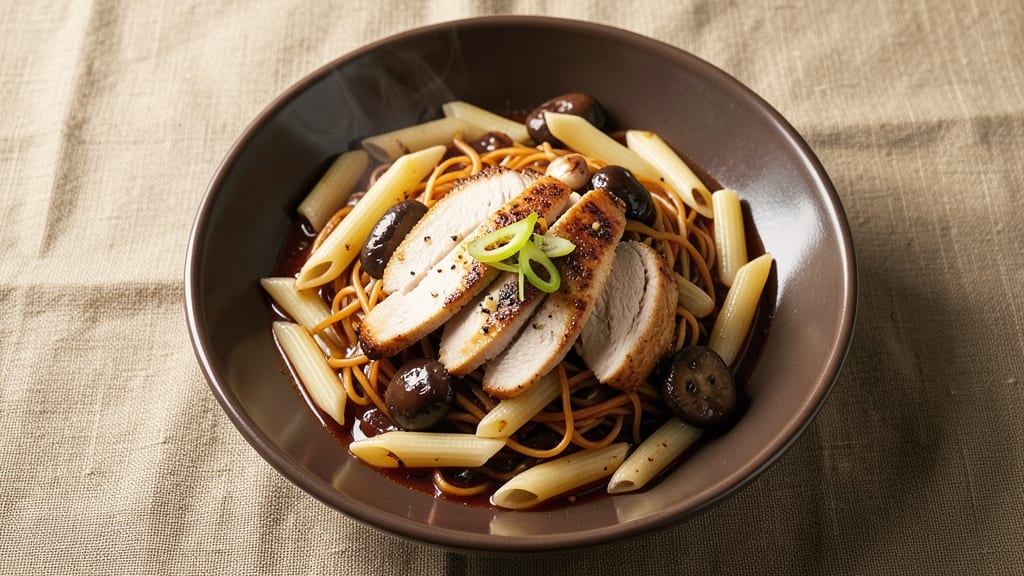
This ramen noodle pasta recipe transforms a simple pantry staple into a restaurant-worthy fusion dish packed with umami depth and silky texture.
After years of experimenting with Asian and Italian noodles in my Boston kitchen, I finally cracked the code for balancing chewy ramen strands with al dente pasta—no food snobbery required.
The secret lies in a dual-cooking method that preserves both textures while layering flavors through a savory broth and crispy toppings.
What makes this dish special is its versatility—ready in just 30 minutes with minimal prep, yet sophisticated enough for weeknight dinners or meal prep. We’re talking perfectly cooked noodles tossed in a rich, aromatic broth that’s customizable for any taste (vegetarian, spicy, or classic).
The fusion technique actually enhances both noodle types, creating a harmony of textures you won’t find in traditional recipes.
By the time you’re done, you’ll have a bowl that’s impossible to resist: tender ramen strands wrapped around al dente pasta, all enveloped in a velvety broth with crispy garlic, fresh herbs, and your choice of protein.
It’s the kind of meal that transforms ordinary ingredients into something extraordinary—just like that redemptive dinner years ago that started it all. Let’s make this fusion dish!
This recipe serves 4 hungry people and scales beautifully for leftovers, making it perfect for busy weeks. The broth can be made ahead, and the noodles cook in minutes—ideal for when you want restaurant-quality without the wait.
Trust me, once you try this umami-packed combination, ramen and pasta will never be the same.
Ingredients for ramen noodle pasta
Pantry staples meet umami magic—just 15 ingredients for a bowl that feels like a Boston ramen house secret.
| Ingredient | Amount | Notes |
|---|---|---|
| Dried Ramen Noodles 🍜 | 2 packages | Discard seasoning packet, any flavor |
| Short Pasta (e.g., Penne or Spaghetti) 🍝 | 8 oz | Al dente texture preferred |
| Chicken Breast 🍗 | 1 ½ lb | Boneless, skinless, sliced thin |
| Dried Shiitake Mushrooms 🍄 | ¼ cup | Rehydrated, sliced thin |
| Garlic Cloves 🧄 | 6 cloves | Minced, fresh preferred |
| Fresh Ginger 🌿 | 1 tbsp | Grated, or 1 tsp ground |
| Low-Sodium Soy Sauce 🥢 | ½ cup | Or tamari for gluten-free |
| Sesame Oil 🫒 | 1 tbsp | Toasted, for aroma |
| Vegetable or Chicken Broth 💧 | 4 cups | Low-sodium preferred |
| Green Onions 🧅 | ¼ cup | Sliced, white and green parts |
| Sesame Seeds 🌾 | 1 tbsp | Toasted for garnish |
| Red Chili Flakes 🌶️ | ½ tsp | Adjust for heat preference |
| Olive Oil 🫒 | 2 tbsp | For crispy garlic |
| Salt 🧂 | 1 tsp | Adjust to taste |
| Black Pepper 🌶️ | ½ tsp | Freshly ground |
The ramen noodles are the star here, so pick the freshest you can find—those little packages with the seasoning packet are fine, but if you’ve got access to dried ramen noodles at an Asian market, they’ll have more depth. The pasta should be short and sturdy (penne or spaghetti work best), and if you’re feeling fancy, grab bronze-die pasta from Trader Joe’s for extra texture. Chicken breast is the protein base, but shrimp or tofu works just as well—just slice it thin for quick cooking. The shiitake mushrooms add that unmistakable umami kick, and they’re a must. If you can’t find dried, fresh shiitakes from the grocery store will do in a pinch, but rehydrating dried gives the most flavor.
No sesame oil? Toasted peanut oil works in a bind, though it’s not quite the same. Short on fresh ginger? Ground ginger at half the amount gets you close, but fresh is worth it for that bright zing. The broth is where the magic happens—low-sodium is key so you can control the saltiness. If you’re vegetarian, mushroom broth with a splash of soy sauce keeps it rich. The red chili flakes are totally optional, but trust me, a pinch at the end makes everything sing. And if you’re cooking for a crowd, double the garlic—it disappears fast, and you’ll want it crispy on top.
This broth keeps for 5 days in the fridge, and honestly, it tastes even better the next day as the flavors meld. The noodles? Cook them fresh when you’re ready to serve—ramen takes 3 minutes, pasta 1 more. For meal prep, cook the noodles separately and toss them with a little oil to keep them from sticking. Store the broth in a sealed container, and the crispy garlic topping can be made fresh in 5 minutes when you’re ready to eat. Freeze the broth for up to 3 months—it’s perfect for quick weeknight dinners.
Why You’ll Love This Recipe
- Pantry Magic: I swear by this when my fridge is bare—just open a few cabinets, and boom. The ramen seasoning packet and shiitake mushrooms add depth without extra shopping trips.
- Umami Bomb: That combo of dried shiitake and garlic? It turns plain chicken into something savory and addictive. The noodles soak up all the flavor like a sponge—no bland bites here.
- Double the Joy: I make half the batch for dinner, then toss the leftovers with a fried egg the next morning. It’s my lazy breakfast hack, and everyone thinks I slaved over it.
- Budget Win: Chicken breast stretches further when paired with ramen noodles and pasta—feeds four for under $10. Honestly, it’s the kind of meal that makes me proud of my grocery game.
Step-by-step instructions for umami-packed ramen noodle pasta
Here’s how to create a perfect fusion of bold Asian flavors with Italian comfort—simple steps for maximum umami.
Prepare the Chicken and Rehydrate Mushrooms
Slice the 1.5 lb chicken breast into thin strips—about ¼-inch thick—for even cooking. Season both sides with ½ tsp black pepper and set aside. In a small bowl, cover the 0.25 cup dried shiitake mushrooms with 1 cup hot water and let soak for 15 minutes until plump. Drain, reserving the soaking liquid, and slice the mushrooms thinly.
I always slice the chicken against the grain for tenderness, and rehydrating the mushrooms this way preserves their meaty texture. Don’t skip draining them—you want the mushrooms to contribute flavor, not water down the sauce.
Build the Umami-Packed Broth Base
Heat 2 tbsp olive oil in a large pot over medium-high heat. Add the sliced chicken and cook for 4-5 minutes until no longer pink in the center. Remove and set aside. In the same pot, add 2 tbsp olive oil and the 6 cloves minced garlic, cooking for 30 seconds until fragrant.
Stir in the 1 tbsp grated fresh ginger and 0.25 cup sliced shiitake mushrooms, cooking for 2 minutes until mushrooms soften. Pour in the 4 cups vegetable or chicken broth and bring to a simmer. Add the 0.5 cup low-sodium soy sauce and 0.5 tsp red chili flakes, stirring to combine. This is where all the umami magic happens—let it simmer for 10 minutes to develop the flavors.
Cook the Pasta and Ramen Noodles
While the broth simmers, cook the 8 oz short pasta in salted boiling water for 1 minute less than package instructions—you want al dente texture. Drain, reserving ½ cup pasta water, and set aside. In the same pot, cook the 2 packages dried ramen noodles (discard seasoning packets) for 2 minutes less than package instructions. Drain and rinse briefly under cold water to stop cooking.
Here’s the thing—cooking the ramen noodles separately prevents them from turning mushy in the broth. The brief cold water rinse removes excess starch that could make the sauce too thick. Keep both pasta and ramen noodles separate until the very end.
Combine and Finish with Sesame Oil
Return the chicken to the pot with the broth and simmer for 3 minutes to heat through. Add the cooked pasta and ramen noodles, tossing gently to combine. Stir in 1 tbsp sesame oil and 0.25 cup sliced green onions. If the sauce seems too thick, add reserved pasta water 1 tablespoon at a time until it reaches your desired consistency.
The sesame oil adds that final aromatic punch—don’t skip this step. The green onions should brighten the dish with freshness, cutting through the richness of the umami flavors. Taste and adjust seasoning with 1 tsp salt if needed, remembering your soy sauce already adds saltiness.
Serve with Toasted Sesame Seeds
Transfer the noodle mixture to serving bowls. Garnish each serving with 1 tablespoon toasted sesame seeds and an extra sprinkle of green onions. Serve immediately while hot, with extra chili flakes on the side if you like it spicier.
This dish is all about balance—salty soy, umami mushrooms, tender chicken, and the nutty crunch of sesame seeds. The ramen noodles add chewiness that pairs perfectly with the al dente pasta. Don’t let anyone tell you fusion food can’t be comforting!
Pro Tips For Making Ramen Noodle Pasta
- COOK PASTA AND RAMEN SEPARATELY: I learned this the hard way—mixing them in the same pot turns your pasta mushy while the ramen stays undercooked. Boil penne in salted water for 2 minutes less than package time, then drain and set aside. Reserve 1 cup of pasta water, then cook ramen in fresh boiling water for its full time. The texture difference is night and day.
- SOAK SHIITAKES IN HOT WATER: Dried shiitakes need a good soak, but cold water just makes them stubborn. Use boiling water for 10 minutes—it rehydrates faster and keeps their meaty texture. Slice them while still hot, and they’ll hold their shape better in the pan. (Yes, even if you’re impatient like me.)
- SALT THE CHICKEN WELL BEFORE SEARING: Chicken breast dries out fast, but salting it 30 minutes ahead makes all the difference. Use about 1 teaspoon of kosher salt per pound, then pat it very dry before searing—this guarantees a crisp crust. Skip this, and you’ll end up with sad, rubbery slices.
- USE THE RAMEN BROTH AS BASE: That salty seasoning packet isn’t trash—it’s flavor gold. After cooking the ramen, save the broth (strain out noodles) and reduce it by half in a pan. Deglaze with a splash of soy sauce, then use it to toss with the pasta and chicken. It’s the shortcut that actually upgrades the dish.
Perfect pairings for these flavors
Crispy Garlic Topping
For that irresistible crunch, I make a quick garlic confit that takes just 5 minutes to prepare. Heat 2 tbsp olive oil in a small pan over low heat, then add 6 thinly sliced garlic cloves (cut horizontally for even cooking).
Let them sizzle gently for 3-4 minutes until golden brown but not burned. The key is patience—rushing this step turns garlic bitter. Transfer to paper towels to drain excess oil, then sprinkle over each bowl just before serving. 🧄
Fresh Herb Garnishes
Brighten the dish with cilantro or Thai basil instead of just green onions for a fresh twist. I chop ¼ cup cilantro finely and mix it with 1 tbsp toasted sesame seeds for a vibrant topping.
For a Thai-inspired fusion, swap in Thai basil and add a squeeze of lime (about 1 tsp juice) to cut through the richness. These herbs add a pop of color and freshness that balances the umami depth.
Spicy Mayo Drizzle
Elevate your bowl with a spicy mayo drizzle that adds creaminess and heat. Mix 2 tbsp mayonnaise with ½ tsp sriracha and ½ tsp honey (or maple syrup for vegan). Drizzle generously over the noodles just before eating—it clings beautifully to the ramen and pasta strands.
For extra richness, add 1 tsp toasted sesame oil to the mix. This is my go-to finishing touch for a restaurant-quality bowl. 🌶️
Pickled Vegetable Slaw
Add a tangy crunch with a quick pickled slaw. Thinly slice ½ cup cabbage and ¼ cup carrot, then toss with 1 tbsp rice vinegar, ½ tsp sugar, and a pinch of salt. Let sit for 10 minutes to soften slightly.
This slaw adds brightness and texture contrast—perfect for cutting through the richness of the umami broth. I often serve it on the side for dipping or sprinkled directly into the bowl.
Protein Swaps
This recipe works with shrimp, tofu, or even crispy chickpeas for vegetarian options. For shrimp, toss 1 lb peeled shrimp with 1 tsp soy sauce and ½ tsp ginger before adding to the broth.
For tofu, press and cube 1 block extra-firm tofu, pan-fry until golden, then add to the broth. The key is keeping proteins thinly sliced or cubed for quick cooking—no one wants rubbery bites in their noodle bowl. 🍤
Dipping Sauces
Set up a dipping sauce station with three options: 1) Sriracha-honey mix (equal parts), 2) Soy-ginger dip (mix 2 tbsp soy sauce with 1 tsp grated ginger), or 3) Yogurt-dill sauce (whisk ¼ cup Greek yogurt with 1 tsp lemon juice and 1 tbsp chopped dill).
These sauces let everyone customize their bowl to taste. I always include a small bowl of each so guests can experiment. 🥄
Nutrition facts
Frequently asked questions
Can I use any type of pasta with ramen noodles?
Short, sturdy pasta like penne or spaghetti works best because they hold up well in broth. Avoid delicate shapes like orzo or angel hair—they’ll turn mushy when combined with ramen. For extra texture, try bronze-die pasta from Trader Joe’s, which adds a nice bite.
How do I prevent the noodles from getting soggy?
Cook the ramen and pasta separately, then toss them together at the end. Rinse the ramen briefly in cold water after cooking to remove excess starch, which can make the sauce too thick. Also, don’t overcrowd the pot when cooking—this keeps the water hot and prevents sogginess.
Can I make this vegetarian?
Swap the chicken for 1 lb shrimp (tossed in soy sauce and ginger) or 1 block extra-firm tofu (pressed and pan-fried). For a fully plant-based broth, use mushroom or vegetable broth with a splash of soy sauce. The dish will still be packed with umami flavor.
What’s the best way to store leftovers?
Store the broth separately in an airtight container for up to 5 days in the fridge. For the noodles, cook them fresh when reheating—ramen takes 3 minutes and pasta 1 minute less than package instructions. Toss with a little oil to prevent sticking. The crispy garlic topping should be made fresh before serving.
Why does my broth taste too salty?
Low-sodium soy sauce and broth are key to control. If it’s still too salty, dilute with ½ cup water or add a splash of lime juice to balance. Taste as you go—remember, the noodles will absorb some of the saltiness. For future batches, reduce soy sauce to ¼ cup if needed.

- Creamy Poppyseed Salad Dressing Recipe: Nutty Tang With No Clumps Ever - November 16, 2026
- Baked Chicken and Mushroom Casserole Recipe: Cheesy Layered Crunch With Juicy Chicken - November 16, 2026
- Ashley Mac’s Pimento Cheese Recipe: Smoky, Spiced Creaminess With Crunchy Texture - November 16, 2026