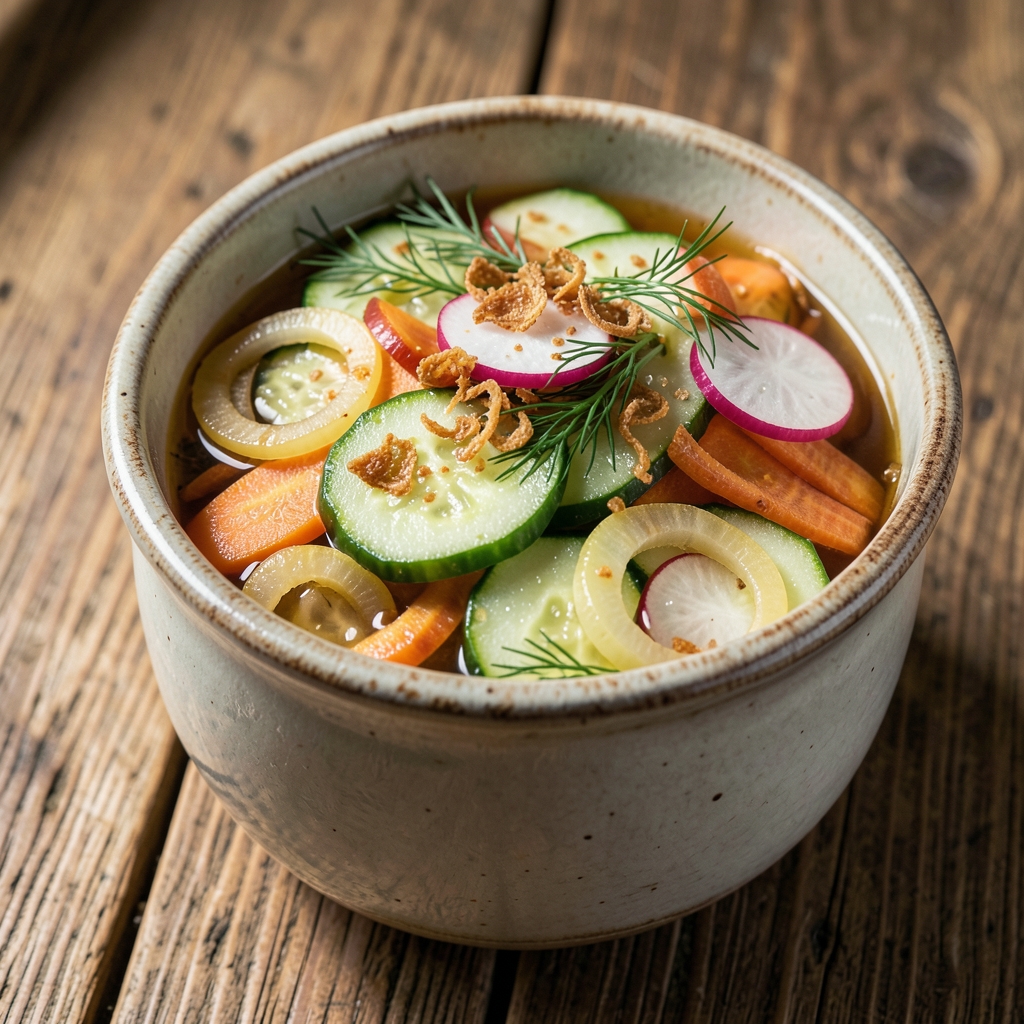
This quick pickle recipe with apple cider vinegar transforms fresh vegetables into tangy, crunchy bites in just 10 minutes—no waiting days for fermentation. The secret lies in balancing sharp apple cider vinegar with just enough sugar and salt to preserve crispness while building bright, complex flavor.
I developed this method after years of testing quick-pickle variations, and it never fails to elevate sandwiches, charcuterie boards, or even tacos.
The process is simpler than you’d think: thinly slice your vegetables—cucumbers, carrots, or onions work perfectly—then combine them with a 1:1 vinegar-to-water ratio, plus a pinch of salt and sugar. A splash of mustard seeds or dill adds depth without complicating the method.
What you’ll end up with is a jar of vibrant, tangy pickles that stay crisp for days, ready to brighten any meal with their sharp, refreshing bite.
This recipe is a game-changer for home cooks who want restaurant-quality pickles without the wait. The acidity of apple cider vinegar doesn’t just preserve—it infuses the vegetables with a bold, fruity tang that cuts through rich foods beautifully.
Plus, the ingredients are budget-friendly and always on hand, making this a foolproof condiment to keep stocked year-round.
Use these pickles as a topping for burgers, a side for grilled meats, or a crunchy addition to salads. The possibilities are endless, and the best part? You’ll have them ready in time for lunch. Let’s get started!
Ingredients for quick pickle recipe with apple cider vinegar
Ten simple ingredients transform fresh vegetables into vibrant, tangy quick pickles in minutes.
| Ingredient | Amount | Notes |
|---|---|---|
| Fresh Cucumber 🥒 | 1 ½ lb | Thinly sliced, skin on |
| Carrots 🥕 | 1 ½ lb | Thinly sliced, baby or regular |
| Yellow Onion 🧅 | 1 whole | Thinly sliced, white or red |
| Apple Cider Vinegar 🍏 | 2 cups | Raw, unfiltered preferred |
| Water 💧 | 2 cups | Filtered or distilled preferred |
| Granulated Sugar 🍚 | ½ cup | White or raw cane sugar |
| Diamond Crystal Kosher Salt 🧂 | ½ tsp | Fine grain preferred |
| Mustard Seeds 🌾 | 1 tsp | Yellow or brown seeds |
| Fresh Dill 🌿 | ¼ cup | Chopped, stems removed |
| Garlic Cloves 🧄 | 2 cloves | Thinly sliced, optional |
The vegetables form the foundation, so prioritize freshness and crispness. Local farmers markets often carry the freshest produce, particularly cucumbers and carrots, which should be firm with vibrant color. For onions, choose yellow or red varieties—they hold their shape better during slicing. The apple cider vinegar should be raw and unfiltered for maximum flavor complexity; brands like Bragg or Texas Pete are excellent choices. If you can’t find fresh dill, dried dill at one-third the amount works, though it lacks the same bright aroma.
Substitutions are flexible, but maintain the 1:1 vinegar-to-water ratio for proper preservation. For sugar, honey or agave nectar can replace granulated sugar at a 1:1 ratio, though the flavor profile will shift slightly. If mustard seeds are unavailable, whole black peppercorns add a similar depth. For garlic lovers, garlic powder at half the amount works in a pinch. The recipe also accommodates radishes or bell peppers—just adjust the total vegetable weight to maintain balance. For a spicier kick, add a pinch of cayenne pepper or red pepper flakes.
Quick pickles maintain crispness for 5-7 days when stored in an airtight glass jar submerged in the brine. For longer storage, transfer to the refrigerator where they’ll keep for up to 2 weeks. To maximize shelf life, ensure all vegetables are fully submerged in the brine. The pickles are best enjoyed within the first week, when they’re at their peak crunch. For meal prep, divide into smaller jars—perfect for lunches or charcuterie boards. Freezing isn’t recommended as it compromises texture.
Why You’ll Love This Recipe
- No-Fuss Ingredients: I keep a bag of carrots, a cucumber, and an onion in my fridge just for this—no special shopping trips. The apple cider vinegar? That’s the magic potion that turns boring veggies into something tangy and bright in minutes.
- Tangy Crunch in Minutes: That first bite—crisp cucumbers with a hint of sweet carrot and just enough vinegar bite—is chef’s kiss. It’s the kind of flavor that makes you reach for seconds without even thinking.
- Meal Prep MVP: I make a big batch on Sundays and toss it into sandwiches, salads, or even tacos all week. The onions mellow out over time, but the crunch stays sharp—perfect for lazy days when I don’t want to chop anything fresh.
- Budget-Friendly Pantry Hero: Honestly, this is the ultimate cheap eats hack. A few bucks for vinegar and seasonal veggies, and I’ve got a jar of pickles that lasts for weeks. No fancy jars or expensive ingredients—just pure, reliable flavor.
Step-by-step instructions for quick pickle recipe with apple cider vinegar
Here’s how to create vibrant, restaurant-quality pickles in under 10 minutes—no waiting, no fuss.
Prepare and Sterilize the Vegetables
Begin by thoroughly washing the 1.5 lb fresh cucumber and 1.5 lb carrots under cold water to remove any dirt or sand. Using a sharp mandoline or thin-slicing knife, cut the cucumber and carrots into ¼-inch thick slices, keeping the skin on for texture. Transfer the sliced vegetables to a large mixing bowl.
Next, peel the 1 whole yellow onion and slice it into ⅛-inch thick rings. Add the onion slices to the bowl with the cucumbers and carrots. The goal is to create uniform slices—this ensures even pickling and consistent texture throughout. For best results, work quickly to prevent the vegetables from oxidizing and turning dull.
Combine Vinegar, Water, and Seasonings
In a separate heatproof container or large jar, combine the 2 cups apple cider vinegar and 2 cups water. Stir in the 0.5 cup granulated sugar, 0.5 tsp diamond crystal kosher salt, 1 tsp mustard seeds, and 2 cloves garlic cloves (if using). Heat the mixture in the microwave for 1 minute 30 seconds or until the sugar and salt fully dissolve. Stir again to ensure everything is well incorporated.
This step is critical for creating a balanced brine. The sugar and salt dissolve completely when heated, while the mustard seeds and garlic infuse their flavors into the liquid. Let the mixture cool for 2-3 minutes—it should be warm but not scorching, as hot liquid can shock the vegetables and affect their texture.
Pack and Infuse the Vegetables
Transfer the sliced vegetables to a clean, sterilized quart-sized mason jar or airtight container. Pack them tightly but gently, ensuring the slices are evenly distributed. Pour the warm vinegar mixture over the vegetables, covering them completely. Add the 0.25 cup chopped fresh dill on top, pressing it down slightly to help it release its aroma into the brine.
The vegetables should be fully submerged in the liquid to prevent mold growth and ensure even pickling. If any slices float to the top, gently press them down with a clean spoon. Seal the jar tightly and let it sit at room temperature for at least 4 hours, or refrigerate immediately for 1 hour if you’re eager to enjoy them sooner. The longer they sit, the more flavorful they become.
Chill and Develop Flavor
After the initial 4-hour infusion, transfer the jar to the refrigerator. This step is where the magic happens—cooling the pickles slows down the fermentation process, preserving their crisp texture while allowing the flavors to meld. Let them chill for at least 2 hours before tasting, but they’ll continue to improve over 24-48 hours. The acidity from the vinegar will soften the vegetables slightly, but they’ll retain their crunch.
To check for readiness, remove a slice and taste it. The pickles should be tangy, slightly sweet, and infused with the dill and mustard seeds. If they taste too mild, let them sit another 4-6 hours in the fridge. Once fully pickled, these vegetables will keep in the refrigerator for up to 2 weeks, making them a perfect quick side dish or snack.
Pro Tips For Making Quick Pickle Recipe With Apple Cider Vinegar
- Slice Thin and Even: I learned this the hard way—uneven slices mean some carrots and onions stay crunchy while others turn mushy in the vinegar. Aim for ¼-inch thickness (about 6mm) so everything gets that perfect tangy bite in the same amount of time. Use a sharp knife or mandoline, and don’t fight it—let the knife do the work.
- Salt Before Soaking: Toss your sliced veggies with ½ teaspoon salt per pound before adding vinegar. This draws out excess water, helping the brine penetrate faster and keeping your pickles crisp. Skip this, and you’ll end up with soggy cucumber slices that taste like sad salad.
- Use Room-Temp Vinegar: Cold apple cider vinegar means your jar will take forever to get to room temp, slowing down the pickling process. Let your vinegar sit out for 10-15 minutes before mixing—it makes a real difference in how quickly the flavor develops. (Yes, even if you’re impatient like me.)
- Add Spices Last: If you’re using garlic, dill, or peppercorns, toss them in right before sealing the jar. They’ll soften faster than the veggies and can turn bitter if left too long in the vinegar. This isn’t the prettiest method, but it’s the tastiest—your pickles will stay bright and flavorful for weeks.
Common mistakes when making this recipe
Uneven Slicing
Thin, uniform slices are key to perfect quick pickles—uneven cuts mean some pieces absorb more brine than others, leading to inconsistent texture. I learned this the hard way when my first batch had thick cucumber chunks that stayed bland while paper-thin slices turned mushy.
Use a mandoline slicer or a sharp chef’s knife to cut vegetables into ¼-inch slices consistently. For onions, aim for ⅛-inch rings to prevent them from turning to mush in the vinegar. 🔪
Skipping Sterilization
Using non-sterilized jars or utensils risks mold growth, especially with fresh vegetables. I once rushed through a batch and ended up with fuzzy green spots within days.
Sterilize your mason jar by running it through a 200°F oven for 10 minutes or washing it with hot, soapy water and rinsing with boiling water. Even your knife and spoon should be sanitized to prevent contamination. This simple step extends shelf life from days to weeks.
Improper Brine Balance
The 1:1 vinegar-to-water ratio is non-negotiable—too much vinegar makes pickles harsh, while too little water dilutes flavor. I once doubled the water by accident, resulting in bland, watery pickles. Always measure carefully: 2 cups vinegar to 2 cups water creates the perfect balance.
The ½ cup sugar and ½ tsp salt should dissolve completely before pouring over vegetables. If your brine looks cloudy, heat it gently to ensure full dissolution.
Not Submerging Vegetables
Vegetables left exposed to air develop mold or ferment unevenly. I’ve seen home cooks pack jars loosely, only to find half their batch ruined. After packing your jar, press down slices with a clean spoon until fully submerged.
If needed, add a small weight like a sterilized glass bead to keep everything underwater. This ensures even flavor infusion and prevents spoilage. 💧
Rushing the Infusion Time
While these pickles develop flavor quickly, rushing the process results in weak taste. I once ate a batch after just 30 minutes—they were crunchy but lacked depth. Let them sit at room temperature for at least 4 hours before refrigerating.
For maximum flavor, wait 24 hours—the longer they steep, the more complex the taste becomes. Patience here makes all the difference.
Using Old Vinegar
Stale vinegar ruins the flavor profile, turning your pickles flat and sour. Always use fresh apple cider vinegar—check the bottle for a production date (most last 1-2 years unopened). For best results, opt for raw, unfiltered vinegar like Bragg or Texas Pete, which contain natural flavor compounds.
If your vinegar smells vinegary but lacks fruity notes, it’s time for a new bottle. The quality of your vinegar directly impacts the final product. 🍏
Nutrition facts
Frequently asked questions
Can I use white vinegar instead of apple cider vinegar?
Apple cider vinegar adds a subtle sweetness and fruity depth that white vinegar lacks. While white vinegar will work, your pickles will taste sharper and less complex. For the best flavor, stick with apple cider—especially if you want that signature tang with hints of apple. If you’re out of options, try adding a splash of honey or maple syrup to compensate.
How long do these quick pickles actually last?
When stored properly in an airtight jar in the fridge, these pickles stay crisp and flavorful for 1-2 weeks. The texture starts to soften after 10 days, but they remain safe to eat for up to 3 weeks. For longer storage, portion into smaller jars—this helps preserve freshness longer by minimizing air exposure. Freezing isn’t recommended as it ruins the crunch.
Can I make this recipe without sugar?
Yes, but your pickles will taste much sharper and less balanced. The sugar helps mellow the acidity and adds subtle sweetness. If you’re avoiding sugar, try using ½ cup honey or agave** instead (1:1 ratio), or add a pinch of stevia to taste. For a savory version, you could omit it entirely, but the flavor profile will be more aggressive.
What vegetables work best for quick pickling?
This recipe works beautifully with cucumbers, carrots, and onions, but you can also try radishes, bell peppers, or cauliflower florets. Just adjust the total vegetable weight to keep the jar balanced. Avoid leafy greens like lettuce—they’ll turn mushy. For extra crunch, try adding green beans or snap peas, but cut them into ½-inch pieces so they cook evenly.
Why did my pickles turn cloudy or slimy?
Cloudiness usually means your vegetables weren’t fully submerged in the brine, while sliminess often indicates mold or bacterial growth. To prevent this, always sterilize your jar, use fresh ingredients, and ensure everything is completely covered with liquid. If you see any fuzzy spots, discard the batch immediately—vinegar pickles shouldn’t ferment like this in just a few days.

- Lamb Sauce Recipe: Red Wine and Rosemary Reduction for Rich Depth - November 11, 2026
- Petite Sirloin Roast Recipe: Herb-Crusted, Juicy Center Every Time - November 11, 2026
- Basic Vanilla Cookies Recipe: Soft-Centered Chew With Vanilla Bean Depth - November 11, 2026