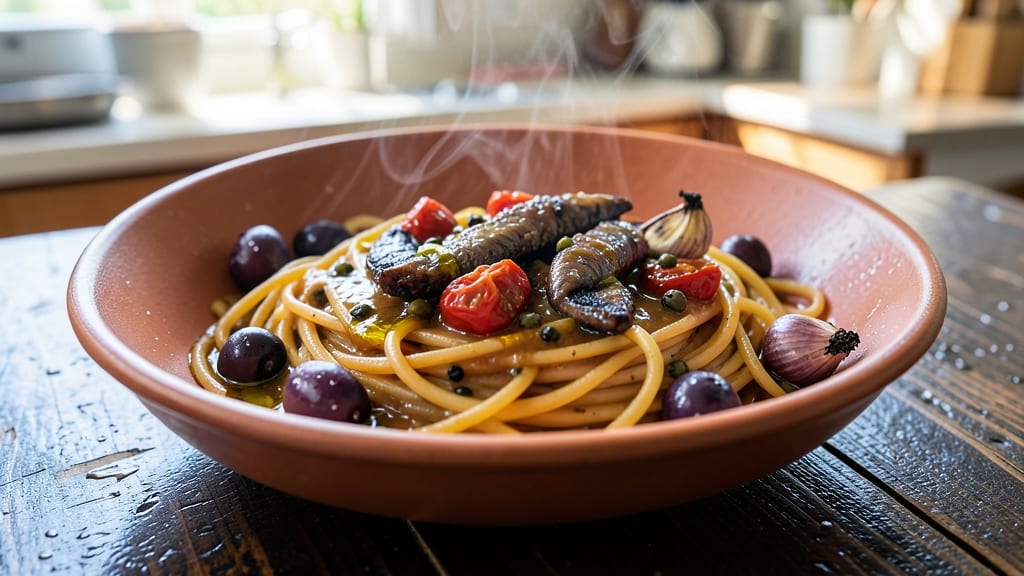
This puttanesca pasta recipe delivers the bold, briny flavors of Sicily in every forkful—where anchovies, capers, and sun-dried tomatoes create a sauce so complex it feels like a restaurant secret.
Standing on a step stool in my grandmother’s kitchen in Sicily, I learned how to transform simple pantry ingredients into something unforgettable. The key? Sautéing anchovies until they dissolve into the oil, unlocking their umami depth before adding garlic and olives.
What makes this dish special is its bold, salty-sweet balance—anchovies provide richness, capers add tang, and tomatoes bring acidity. The sauce simmers just long enough to meld flavors without losing its vibrant character, then clings perfectly to al dente spaghetti.
It’s a recipe that proves great food doesn’t require complicated techniques, just precise timing and quality ingredients.
By the time you twirl that first forkful, you’ll taste layers of garlic, olives, and tomatoes in a sauce that’s both savory and bright, with just a hint of heat from red pepper flakes.
The pasta absorbs the flavors while staying firm, creating a dish that’s hearty enough for a weeknight dinner but elegant enough for company. Serve it with crusty bread to soak up every last drop of that briny, tangy goodness.
This is the kind of pasta that transforms a simple meal into a celebration of Italian heritage—restaurant-quality at home with just 15 minutes of active prep. Let’s get cooking and bring a taste of Sicily to your table.
Ingredients for puttanesca pasta
Bold flavors start with these 13 pantry staples and a few fresh touches.
| Ingredient | Amount | Notes |
|---|---|---|
| Spaghetti 🍝 | 12 oz | Dry, al dente preferred |
| Anchovy Fillets 🐟 | 4 oz | Canned, oil-packed preferred |
| Capers 🫒 | ¼ cup | Packed in brine, drained |
| Sun-Dried Tomatoes 🍅 | ½ cup | Chopped, oil-packed preferred |
| Garlic Cloves 🧄 | 4 cloves | Fresh, minced |
| Kalamata Olives 🫒 | ½ cup | Pitted, sliced |
| Extra-Virgin Olive Oil 🫒 | ½ cup | High quality, fruity |
| Crushed Red Pepper Flakes 🌶️ | ½ tsp | Adjust for heat preference |
| Salt 🧂 | 1 ½ tsp | Kosher or sea salt |
| Black Pepper 🌶️ | ½ tsp | Freshly ground preferred |
| Fresh Basil Leaves 🌿 | ¼ cup | Chopped, for garnish |
| Lemon Juice 🍋 | 1 tbsp | Freshly squeezed |
| Crusty Bread 🍞 | 1 whole | For serving, optional |
Anchovies are the heart of this dish—look for oil-packed fillets at Italian markets or the canned variety in the international aisle. The brine-packed capers from Trader Joe’s are my go-to; they’re sweeter and less salty than the vinegar kind. Sun-dried tomatoes should be oil-packed too—dried ones are too tough. Fresh garlic is non-negotiable here; pre-minced loses flavor fast. The olives? Kalamata for that briny punch, but any pitted variety works. Extra-virgin olive oil matters—use something you’d drizzle on bread—none of that cheap cooking oil nonsense.
No anchovies? Fish sauce at half the amount gets you close, but it’s not the same. Short on capers? Pickle juice or a splash of white wine vinegar adds tang. Sun-dried tomatoes dried out? Soak them in warm water for 10 minutes. The crushed red pepper flakes can be swapped for fresh chili flakes or cayenne, but adjust carefully—this sauce packs heat. Fresh basil is ideal, but dried oregano at one-third the amount works in a pinch. The lemon juice is worth squeezing fresh—bottled stuff tastes like nothing.
This sauce tastes even better the next day—make extra and keep it in the fridge for up to 5 days. The pasta reheats perfectly, just toss with a splash of water. Store the sauce in a jar with a layer of olive oil on top to preserve freshness. Portion the bread separately—it stays crispy best when served on the side. Freeze the sauce without the pasta for up to 3 months—just thaw and reheat before tossing with fresh noodles.
Why You’ll Love This Recipe
- No-Chop Needed: I swear by this—just toss in whole sun-dried tomatoes and minced garlic, no dicing required. The capers and anchovies do all the work while you stir.
- Umami Bomb: That first bite? Salty, tangy, garlicky—like a briny hug from the Mediterranean. The anchovies melt into the sauce, leaving behind this deep, savory magic.
- Lunch or Dinner: Cold the next day? Even better. Toss it with arugula for a quick salad, or reheat it for a fast weeknight meal. It’s the ultimate flexible dish.
- Pantry Powerhouse: Capers and sun-dried tomatoes last forever, so I stock up. A few dollars’ worth of these ingredients stretch into multiple meals—no waste, all flavor.
Step-by-step instructions for puttanesca pasta
This bold sauce comes together faster than you’d think—just follow these simple steps.
Cook the Spaghetti Al Dente
Bring a large pot of water to a rolling boil and add the 12 oz spaghetti. Season generously with 1.5 tsp salt—it should taste like the ocean. Stir immediately to prevent sticking. Cook for 8-10 minutes until the pasta is al dente—firm to the bite but cooked through. Reserve 1 cup of pasta water before draining, then set the spaghetti aside.
Here’s the thing—don’t rinse the pasta. That starchy water is gold for your sauce. And trust me, you’ll need every drop. The pasta water helps emulsify the sauce and gives it that signature silky texture. Taste the pasta before draining to confirm it’s perfectly cooked.
Build the Anchovy-Caper Base
In a large skillet, heat the 0.5 cup extra-virgin olive oil over medium heat until shimmering but not smoking. Add the 4 oz anchovy fillets and let them dissolve completely—this usually takes about 1 minute. You’re not cooking them, just breaking them down into a paste. Stir constantly so they don’t stick.
Next, add the 0.25 cup drained capers and 0.5 cup chopped sun-dried tomatoes. Cook for 2-3 minutes until the tomatoes soften slightly and the capers warm through. This step develops the briny, tangy foundation of your sauce. Don’t rush it—the flavors need time to meld.
Add Aromatics and Simmer
Push the anchovy mixture to one side of the pan and add the 4 cloves minced garlic to the empty space. Cook for 30 seconds until fragrant—you’ll smell that sweet garlic aroma. Then add the 0.5 cup sliced kalamata olives and 0.5 tsp crushed red pepper flakes. Stir everything together and cook for another 2 minutes until everything is heated through.
Now add the drained spaghetti to the pan. Toss everything together, adding ½ cup of reserved pasta water at a time until the sauce coats the pasta evenly. This prevents the sauce from becoming too thick. The pasta should be well-coated with that rich, briny sauce—this is where the magic happens.
Finish with Acid and Freshness
Remove the pan from heat and stir in the 1 tbsp lemon juice and 0.5 tsp black pepper. The acid brightens all the flavors and cuts through the richness. Taste and adjust seasoning—you might need a pinch more salt, depending on your anchovies and capers.
Finally, fold in the 0.25 cup chopped fresh basil leaves. This adds freshness and color. If the sauce is too thick, add more pasta water 1 tablespoon at a time until it reaches your desired consistency. The sauce should cling to the pasta but still be able to coat the back of a spoon.
Serve with Crusty Bread
Divide the puttanesca pasta among plates and serve immediately with the 1 whole crusty bread on the side. The bread is perfect for soaking up any extra sauce. Each bite should deliver that perfect balance of salty anchovies, briny capers, sweet sun-dried tomatoes, and fresh basil.
Don’t skip the bread—it’s essential for this dish. The crusty texture contrasts beautifully with the rich pasta, and it helps clean up every last bit of that incredible sauce. Real talk: this pasta tastes even better the next day when the flavors have had time to meld even more.
Pro Tips For Making Puttanesca Pasta
- Toast Your Garlic: Hit the garlic with a dry pan first—no oil—over medium heat until it’s golden and smells like heaven. This stops it from turning bitter and makes the whole sauce sing (yes, even if you’re impatient like me).
- Rinse Capers First: Drain and rinse those capers under cold water before tossing them in. They’re packed in brine, and skipping this step means your sauce will taste like a salty bath instead of bright, briny perfection.
- Crush Anchovies Properly: Don’t just chop them—use the flat side of your knife to mash them into a paste. This dissolves them fully into the oil, so you get that deep umami flavor instead of fishy bits floating around.
- Finish with Olive Oil: Toss the pasta with a generous glug of good olive oil right at the end. It coats everything, balances the acidity, and makes the dish look (and taste) like it came from a Neapolitan kitchen.
Pro cooking tips for this recipe
Anchovy Magic
This is where the sauce gets its soul—anchovies are non-negotiable in puttanesca. I always use oil-packed fillets from my local Italian deli because they dissolve beautifully without leaving fishy aftertastes. Heat the oil to medium (not high!) and add them whole.
Stir constantly for just 1 minute until they melt into a silky paste. If you skip this step, you’ll miss that umami depth that makes this sauce unforgettable. 🐟
Garlic Timing
Here’s where most home cooks mess up: garlic burns fast. After dissolving the anchovies, push them to one side of the pan and add the minced garlic to the empty space. Cook for only 30 seconds—just until fragrant.
Overcooking turns garlic bitter, and that ruins the whole dish. I learned this the hard way when my first attempt tasted like a chemistry experiment gone wrong. 🧄
Pasta Water Gold
Never rinse your pasta after draining—that starchy water is liquid gold for this sauce. Reserve 1 cup before draining, then add it tablespoon by tablespoon as you toss the sauce.
It helps emulsify the oil and creates that signature silky texture. I promise, you’ll thank me when your sauce clings perfectly to every strand of spaghetti. 💫
Caper Consistency
Capers vary wildly in size and saltiness. I always drain them well and pat them dry with a paper towel before adding to the pan. If they’re too salty, rinse them briefly under cold water.
For extra brininess, add 1 teaspoon of caper brine to the sauce at the end—it’s a secret my Nonna swore by. Trust me, the flavor difference is night and day. 🫒
Acid Balance
The lemon juice at the end isn’t just for flavor—it’s a game-changer. Add it off the heat to brighten all the rich, salty flavors. If your sauce tastes too heavy, squeeze in another ½ teaspoon of lemon.
Pro tip: Use freshly squeezed juice—bottled lemon juice lacks that vibrant punch. The acidity cuts through the fat and makes every bite feel fresh. 🍋
Fresh Basil Finish
This is where the dish comes alive. Fold in the chopped basil at the very end—never cook it or it’ll turn bitter. I like to tear the leaves by hand rather than chopping for a more rustic texture.
For an extra touch, garnish each serving with a few whole leaves. If you don’t have basil, dried oregano works in a pinch (use ⅓ the amount). The herb adds that final fresh note that makes this pasta feel restaurant-worthy. 🌿
Nutrition facts
Frequently asked questions
Can I make puttanesca pasta without anchovies?
Anchovies are traditional, but you can substitute 1 teaspoon of fish sauce or ½ teaspoon of soy sauce for the umami depth. However, the flavor won’t be identical—anchovies dissolve into the oil, creating a rich base that’s hard to replicate. If avoiding anchovies for dietary reasons, add an extra ½ teaspoon of garlic powder to compensate.
How do I adjust the heat level in this recipe?
The crushed red pepper flakes provide mild heat, but you can control the spice by adjusting the amount. For a milder version, reduce to ¼ teaspoon or omit entirely. For extra kick, add ½ teaspoon of cayenne pepper or a pinch of chili flakes at the end. Always taste before serving—you can’t remove heat once it’s added!
What’s the best pasta shape for puttanesca?
While spaghetti is traditional, linguine or bucatini work beautifully too. For extra texture, try rigatoni or penne—the ridges help hold onto the sauce. Avoid thin noodles like angel hair, as they can overcook quickly in the rich sauce. The key is al dente pasta that can stand up to the bold flavors.
Why does my puttanesca sauce separate?
This happens when the sauce lacks enough emulsifiers. The fix? Add 1 tablespoon of reserved pasta water at a time while tossing the pasta. The starch in the water helps bind the oil and create a silky texture. If it still separates, whisk in 1 teaspoon of cornstarch mixed with 1 tablespoon water to thicken. Stir constantly over low heat until smooth.
Can I make this ahead of time?
The sauce tastes even better the next day. Cook the pasta and sauce as directed, then refrigerate in an airtight container for up to 3 days. Reheat gently on the stove with a splash of water or pasta water. For longer storage, freeze the sauce (without pasta) for up to 3 months. Thaw overnight in the fridge before reheating.

- Lamb Shoulder Chops Crock Pot Recipe: Slow-Braised Richness With Fall-Off-Bone Tenderness - November 8, 2026
- Polo Chicken Recipe: One-Pot Herb-Roasted Comfort with Crispy Dumplings - November 8, 2026
- Diners Drive-Ins and Dives Beef Brisket Recipe: Smoky, Slow-Cooked Tenderness Unlocked - November 8, 2026