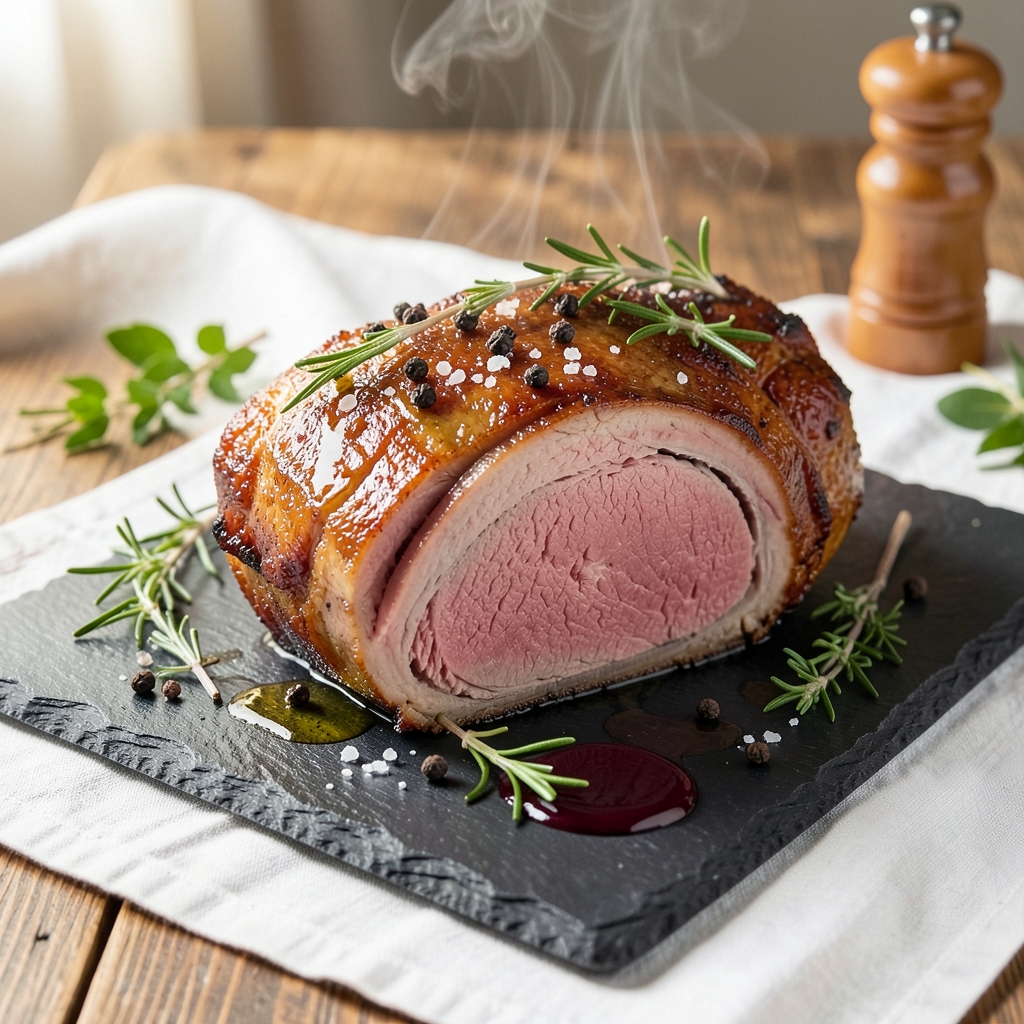
Mastering a bone-out prime rib with crisp herb crust and tender medium-rare perfection is what separates a good roast from a showstopping centerpiece. After years of testing—including one infamous Thanksgiving where the bone refused to budge—I developed this foolproof method that delivers restaurant-quality results without the mess of serving bones.
The secret lies in precise timing, a strategic herb crust, and knowing exactly when to remove that bone.
This recipe transforms a tough cut into melt-in-your-mouth slices with a golden, crackling crust that holds its shape even when sliced. We start with a dry brine overnight (non-negotiable for juiciness), then build flavor with a mix of fresh rosemary, thyme, and garlic that caramelizes beautifully during roasting.
The bone removal happens at the perfect moment—when internal temps hit 120°F—so the meat stays tender while you cleanly extract the bone without losing any precious juices.
What you’ll end up with is a prime rib that looks like it came from a high-end steakhouse: perfectly seared edges, a pink center that yields to the knife, and slices that practically melt on your tongue.
The herb crust adds aromatic depth while staying crisp, and the au jus you’ll make from the pan drippings ties everything together. This isn’t just dinner—it’s an experience that makes your table the most coveted spot in the house.
Serve with classic sides like roasted garlic mashed potatoes or a crisp green salad to let the prime rib shine. The best part? Leftovers reheat beautifully for sandwiches the next day. Let’s get started on your most impressive roast yet.
Ingredients for prime rib roast bone out
Six ingredients transform a tough roast into showstopping slices with crispy herb crust and perfect medium-rare tenderness.
| Ingredient | Amount | Notes |
|---|---|---|
| Prime Rib Roast (Bone-In) 🥩 | 6 lb | Center-cut, 1.5-2 inches thick |
| Kosher Salt 🧂 | 1 ½ cups | For dry brine, coarse grain |
| Fresh Rosemary 🌿 | ½ cup | Stems removed, finely chopped |
| Fresh Thyme 🌿 | ¼ cup | Leaves only, stems removed |
| Garlic Cloves 🧄 | 12 cloves | Peeled, smashed for crust |
| Extra-Virgin Olive Oil 🫒 | ¼ cup | For crust and searing |
| Dijon Mustard 🍯 | 1 tbsp | For herb crust adhesion |
| Unsalted Butter 🧈 | ½ cup | Softened, for crust |
| Black Peppercorns 🌶️ | 1 tbsp | Freshly cracked |
| Beef Tallow or Duck Fat 🍳 | ¼ cup | For extra crispiness |
| Beef Bone Broth 🥫 | 1 cup | Homemade or quality store-bought |
| Red Wine 🍷 | ½ cup | Dry, like Cabernet Sauvignon |
| Worcestershire Sauce 🍶 | 1 tbsp | For au jus depth |
The prime rib is non-negotiable—center-cut from a trusted butcher or Costco delivers the marbling you need. Look for a roast 1.5-2 inches thick so it cooks evenly. I always buy mine from Whole Foods or my local D’Artagnan shop when I want that next-level quality. Fresh herbs are a must here: rosemary and thyme should smell vibrant, not dusty. If you’re using dried, double the amount but fresh gives that aromatic punch that makes your house smell amazing while it roasts. The garlic? Smash those cloves—it releases more flavor into the crust.
No beef tallow? Duck fat or extra olive oil works in a pinch, though tallow gives that unmatched crispiness. Short on red wine? Beef broth with a splash of balsamic keeps the depth. The Dijon mustard is key for the crust sticking—don’t skip it. For the bone broth, homemade is ideal, but Pacific Foods or Kettle & Fire brands are solid shortcuts. The Worcestershire sauce might seem small, but it adds that umami kick that ties everything together. If you’re worried about overpowering, trust me—you need it. And if you’re prepping ahead, make the herb crust mix a day early—it keeps well in the fridge.
This roast deserves respect—dry brine overnight for juiciness that can’t be matched. The herb crust stays crisp for 2 days if stored properly: wrap tightly in parchment, then foil. For leftovers, reheat slices in a skillet with a splash of broth to revive that crust. Freeze portions for up to 3 months—they reheat beautifully for sandwiches. And if you’re serving a crowd, double the crust ingredients—everyone will ask for seconds.
Why You’ll Love This Recipe
- Two-Handed Prep: I swear by this—just salt, herbs, and garlic. That’s it. No fancy marinades, no last-minute chopping. The bone-in cut even adds flavor while you’re roasting, so you’re basically getting a shortcut to restaurant-quality richness.
- Herb-Crusted Magic: Between us, that rosemary-thyme crust with smashed garlic cloves? It’s the kind of flavor that makes people pause mid-bite. The salt caramelizes into a crust so good, you’ll want to lick the pan afterward (don’t, but I won’t judge).
- Holiday or Tuesday: This roast is my secret weapon for everything—Thanksgiving leftovers, a fancy dinner with friends, or even a lazy Sunday when I don’t feel like cooking. Slice it thick for sandwiches, thin for salads, or serve it whole with a side of mashed potatoes. It’s that adaptable.
- Leftovers That Don’t Suck: I make this once, eat it twice, and still have enough for sandwiches the next week. The fat from the bone keeps it juicy for days, and honestly? Cold prime rib on crusty bread is my idea of heaven. No sad, dry leftovers here.
Step-by-step instructions for herb-crusted bone-out prime rib
Here’s how to transform a bone-in prime rib into a perfectly cooked, herb-crusted masterpiece with crisp edges and tender meat.
Prepare the Dry Brine for Maximum Flavor
Remove the prime rib roast from its packaging and pat it dry completely with paper towels, including the cavity. This step is crucial—any moisture will prevent that beautiful crust from forming. Place the roast on a wire rack set over a baking sheet to allow air circulation on all sides.
In a small bowl, combine the 1.5 cups kosher salt with the 1 tbsp freshly cracked black peppercorns. Rub this mixture all over the roast, including inside the cavity. The salt will penetrate the meat and create that perfect balance of flavor and texture. Place the roast on a tray lined with parchment paper and refrigerate uncovered for 24 hours.
This dry brining process is what makes the difference between good and exceptional prime rib. The salt will draw out moisture from the surface, creating an ideal environment for that crispy herb crust later. Don’t skip this step—it’s the foundation of our flavor profile.
Create the Herb Crust Mixture
After the brining period, remove the roast from the refrigerator and let it sit at room temperature for 1 hour. In a food processor, combine the 0.5 cup finely chopped fresh rosemary, 0.25 cup fresh thyme leaves, 12 smashed garlic cloves, 1 tbsp Dijon mustard, 0.5 cup softened unsalted butter, 0.25 cup extra-virgin olive oil, and 0.25 cup beef tallow or duck fat. Process until you achieve a coarse paste that will adhere well to the meat.
This herb mixture is the secret to that incredible crust. The mustard acts as a binder, while the butter and tallow create richness and extra crispiness. Spread this mixture evenly over the roast, pressing it firmly into all surfaces. The mustard will help the crust stick during cooking, preventing any separation.
Sear the Prime Rib for Maximum Flavor
Preheat your oven to 400°F. Place the roast fat-side up on a rack in a roasting pan. This positioning allows the fat to render down and baste the meat as it cooks. Roast for 20 minutes to begin the cooking process and develop that initial crust.
After the initial 20 minutes, increase the oven temperature to 450°F. This higher heat will help create that beautiful crust we’re after. Continue roasting for an additional 20 minutes, basting the roast with its own rendered fat every 10 minutes. You’ll know it’s developing properly when you see the crust turning golden brown and slightly crispy.
Finish Cooking and Create the Au Jus
Reduce the oven temperature to 325°F and continue cooking until the internal temperature reaches 125°F for medium-rare doneness. This typically takes about 1.5 to 2 hours total cooking time, depending on your roast’s thickness. The key is patience—low and slow cooking ensures tender meat throughout.
While the roast finishes cooking, prepare the au jus. In a saucepan, combine the 1 cup beef bone broth, 0.5 cup red wine, and 1 tbsp Worcestershire sauce. Bring to a simmer and let it reduce by half, about 10 minutes. This rich sauce will complement the herb-crusted prime rib perfectly.
Rest and Serve with Confidence
Once the roast reaches the desired temperature, remove it from the oven and transfer it to a cutting board. Tent loosely with foil and let it rest for 30 minutes. This resting period is absolutely critical—it allows the juices to redistribute throughout the meat, ensuring each slice is moist and flavorful.
After resting, remove any remaining bones and slice the prime rib against the grain into 1-inch thick slices. Serve immediately with the reduced au jus spooned over the top. The result should be a beautifully presented dish with a crisp herb crust, tender meat, and rich sauce that ties everything together.
Pro Tips For Making Prime Rib Roast Bone Out
- SEAR UNTIL BLACK: Get that crust dark before you baste—like, charred-steakhouse-tablecloth dark. The first 5 minutes on high heat build flavor you can’t taste otherwise, and yes, it’ll look scary before it gets glorious. I used to pull it too soon, and the crust was just sad.
- SALT THE GARLIC: Toss those garlic cloves in a generous pinch of kosher salt before smashing them—it keeps them from burning while roasting. I learned this the hard way after my first batch turned bitter; salting them first makes all the difference.
- DON’T RUSH THE REST: Give it a solid 15–20 minutes under foil before carving, even if you’re starving. The meat keeps cooking off the heat, and cutting into it too soon means dry slices. (Your future self will thank you.)
- STUFF THE ROSEMARY: Loosely pack the rosemary and thyme inside the fat cap near the bone—it infuses the meat with aroma while it roasts, not just the outside. I skip this when I’m lazy, but the dish is noticeably better when I don’t.
Essential equipment for this recipe
Must-Have Roasting Pan
Start with a heavy-duty roasting pan—I swear by the All-Clad Stainless Steel Roasting Pan (16×12-inch) for even heat distribution and easy cleanup. The deep sides prevent drippings from escaping, which is crucial for making that au jus later.
A wire rack inside the pan keeps the roast elevated for even browning on all sides. If you’re on a budget, the Calphalon Nonstick Roasting Pan works well too, though I avoid nonstick for high-heat crust development. 🌡️
Precision Thermometer
Never guess temperatures again—get a meat thermometer with a probe that reaches the center of your roast. My go-to is the ThermoWorks Smoke (it’s accurate to ±1°F), but the Thermoworks ChefAlarm is a great budget option. Insert the probe into the thickest part of the roast, avoiding the bone.
You’ll need to monitor internal temp carefully, especially during the 325°F finish when it’s easy to overcook. Pro tip: Use a second probe to track oven temperature if your smoker/oven runs hot. 💡
Food Processor for Crust
A high-quality food processor is non-negotiable for the herb crust—it needs to blend the rosemary, thyme, garlic, butter, and tallow into a coarse, sticky paste. I use the Cuisinart DLC-2BC (it handles the job without over-processing).
If you’re short on time, a hand mixer or even a mortar and pestle works, but you’ll need to work harder to get that perfect texture. The goal is a thick, spreadable consistency that clings to the meat like glue. ✨
Bone-Zilla Tool
Removing the bone cleanly is where most home cooks struggle. Invest in a bone-zilla tool—I use the Victorinox Bone Saw (it’s sharp enough to cut through beef bones without crushing the meat).
If you don’t want to buy one, a heavy-duty kitchen shears or even a sharp chef’s knife can work, but you’ll need to be patient. The key is to score around the bone first, then wiggle it free while the meat is still warm and pliable.
Never force it—let the knife do the work. 💪
Oven Thermometer
Your oven’s built-in thermometer is likely way off. Grab an oven thermometer (I recommend the Taylor Precision Products) to ensure your oven is actually at the set temperature. Ovens run hot or cold, and prime rib cooking relies on precise heat control.
Place it on the middle rack while preheating—if it reads 400°F but your oven is actually 380°F, adjust accordingly. This small tool saves you from overcooked or underdone meat. 🔥
Tongs for Basting
Skip the spoon—tongs are your best friend for basting. I use long-handled stainless steel tongs (like the OXO Good Grips) to flip the roast and scoop up rendered fat without piercing the meat. The long handle keeps your hands safe from the hot pan.
Baste every 10 minutes during the high-heat phase to build that crispy herb crust. Pro move: Let the fat pool in the pan for 2-3 minutes before basting—it’ll be hotter and create a better sear. 🍳
Nutrition facts
Frequently asked questions
Why do you recommend bone-out prime rib instead of serving with the bone?
Bone-out prime rib delivers a cleaner, more elegant presentation that’s perfect for slicing and serving. The bone can interfere with even slicing and makes plating less precise. Plus, removing it while the meat is still warm keeps the slices tender. For a restaurant-style look, serve the bone separately on the side if you prefer!
Can I substitute beef tallow for something else in the herb crust?
Use duck fat or extra olive oil for a similar effect, though tallow gives the most authentic crispiness. For a dairy-free option, try coconut oil—just reduce the amount slightly since it’s less stable at high heat. The mustard and butter will still bind everything together beautifully.
How do I know when the prime rib is done without overcooking?
Use a meat thermometer for precision: 125°F for medium-rare (your target), 130°F for medium. The 30-minute rest after removing from the oven is critical—this lets the internal temperature rise another 5°F without overcooking. For a foolproof method, pull it out when it hits 120°F and let it rest.
What’s the best way to reheat leftover prime rib slices?
Reheat in a skillet over medium heat with a splash of beef broth or red wine for 2-3 minutes per side until warmed through. Never microwave—it ruins the crust! For sandwiches, lightly toast the bread and layer with reheated slices, au jus, and a sprinkle of fresh herbs for a restaurant-quality experience.
Can I make this ahead of time for a holiday dinner?
Yes! Prep the herb crust mixture 1 day ahead and store it in the fridge. The dry-brined roast can sit in the fridge for 2 days before roasting. For serving, slice and arrange on a platter, then cover loosely with foil. Reheat slices in the oven at 300°F for 10 minutes to revive the crust before serving.

- Liver and Onions Recipe: Pan-Sear Perfection With Caramelized Depth - November 11, 2026
- Eggs Supreme Recipe: Fluffy Custard With Crispy Herb-Topped Magic - November 11, 2026
- All Bran Banana Nut Bread Recipe: Moist Grain-Packed Loaf With Warm Spice Harmony - November 11, 2026