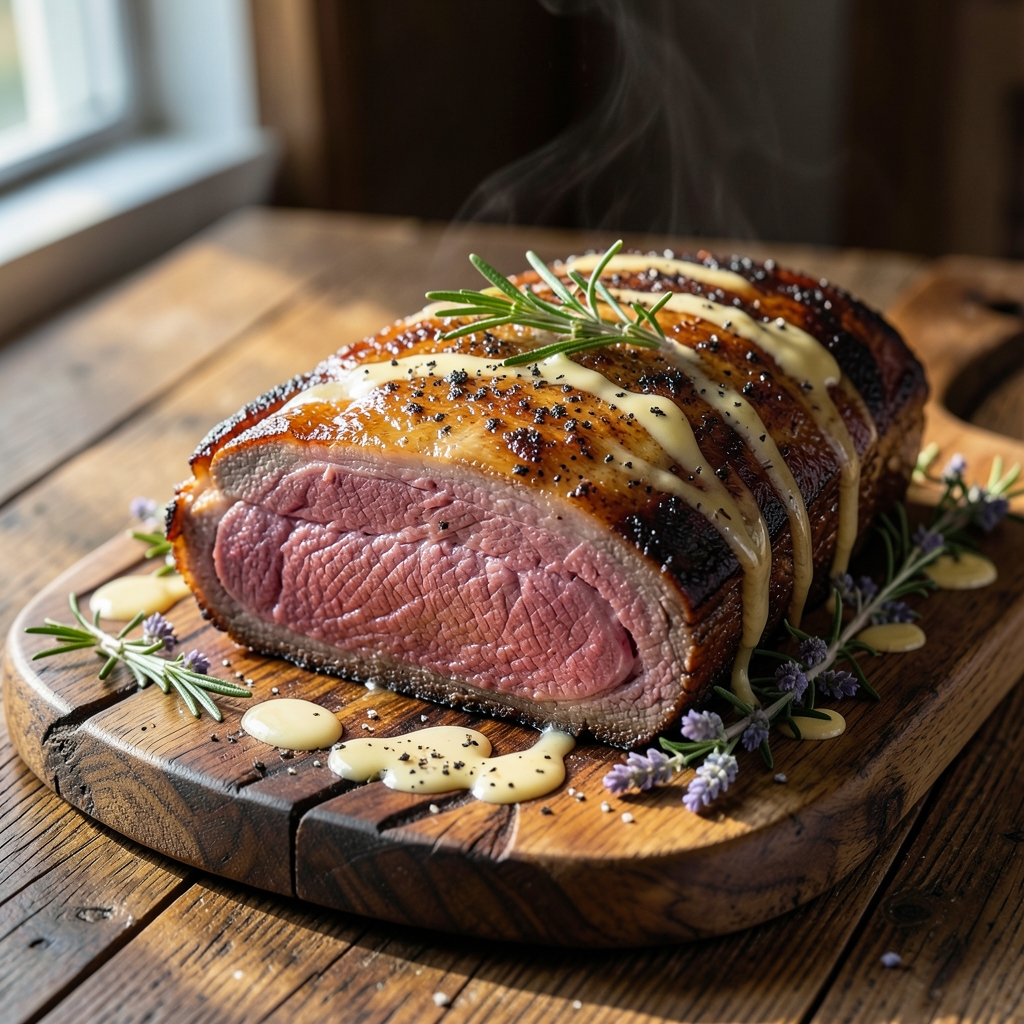
Mastering a prime rib roast recipe with a perfect crust and juicy pink center is the ultimate centerpiece for special occasions—this is the technique I’ve perfected after years of testing in my Boston kitchen.
The secret lies in precise seasoning, high-heat searing, and patient roasting, which transforms a simple cut into a showstopping main course that commands attention at the table.
What makes this recipe work is the balance between technique and timing: a dry rub of coarse salt and pepper creates that coveted crust, while a slow oven finish ensures tender, juicy meat without overcooking.
I’ve tested this method countless times, adjusting for different oven temperatures and resting periods to guarantee consistent results every time—no guesswork, just foolproof execution.
By the time you carve into this prime rib, you’ll have a roast with a deep mahogany crust and a pink center so tender it nearly melts in your mouth.
The aroma alone will have your guests anticipating every bite, and the rich, beefy flavor pairs beautifully with classic sides like horseradish cream, roasted root vegetables, or even a crisp Yorkshire pudding for a modern twist.
The best part? This recipe scales effortlessly, whether you’re feeding a crowd for Thanksgiving or treating yourself to a luxurious Sunday dinner. Let’s get started—your table is about to become the envy of every dinner party.
Ingredients for prime rib rib roast
Six ingredients transform a simple prime rib into a showstopping centerpiece—juicy, crusty, and packed with flavor.
| Ingredient | Amount | Notes |
|---|---|---|
| Prime Rib Roast 🥩 | 4 lb | Bone-in, 1.5-2 inches thick |
| Kosher Salt 🧂 | 1 ½ tbsp | Diamond Crystal preferred, coarse |
| Freshly Ground Black Pepper 🌶️ | 1 ½ tbsp | Freshly cracked for maximum flavor |
| Unsalted Butter 🧈 | ½ cup | Cold, cut into 8 slices |
| Fresh Rosemary 🌿 | ½ cup | Finely chopped, fresh only |
| Fresh Thyme 🌿 | ¼ cup | Leaves only, finely chopped |
| Garlic Cloves 🧄 | 8 cloves | Peeled, smashed flat |
| Extra-Virgin Olive Oil 🫒 | 2 tbsp | High-quality, fruity |
| Beef Tallow 🥩 | ¼ cup | Optional, for extra crust |
| Balsamic Vinegar 🍷 | 2 tbsp | For basting, aged |
| Red Wine 🍷 | 1 cup | Bold Cabernet Sauvignon |
| Beef Stock 🍲 | 1 cup | Homemade or high-quality |
| Au Jus Sauce Mix 🍽️ | 1 package | For serving, optional |
The prime rib is the star, so source it from a trusted butcher—look for a bone-in cut with at least 1.5 inches of fat cap for moisture and flavor. Boston Butcher or your local high-end grocer will have the best quality. A 4-pound roast serves 6 generously, but scale up for larger gatherings. The key is the fat-to-meat ratio: more fat means more flavor and juiciness. If you can’t find prime rib, ribeye roast works in a pinch, but it won’t have the same marbling. Let the roast sit at room temperature for 1-2 hours before cooking—this ensures even cooking and a perfect crust.
No beef tallow? Substitute with extra butter or duck fat—both add incredible richness to the crust. Fresh herbs are non-negotiable here; dried won’t give the same aromatic punch. Short on rosemary? Thyme and bay leaves work together, but fresh is always better. The red wine and beef stock can be swapped for beef broth and a splash of Worcestershire sauce if you’re avoiding alcohol. For the crust, mix the salt, pepper, and herbs in a bowl—don’t skip the garlic or olive oil, as they’re the flavor anchors. If you’re feeling fancy, add a pinch of fennel pollen or smoked paprika to the rub for depth.
This roast is a make-ahead masterpiece. Prep the dry rub and let it sit on the meat overnight for maximum flavor infusion. The roast itself reheats beautifully—warm in the oven at 300°F for 20-30 minutes with a splash of beef stock to keep it moist. Leftovers keep for 3-4 days in the fridge, but honestly, they’ll disappear faster than that. For a crowd, cook it 2-3 hours ahead and hold it in a warm oven until serving—this lets the juices redistribute for maximum tenderness. The au jus sauce can be made ahead and reheated separately.
Why You’ll Love This Recipe
- Two-Ingredient Magic: The secret’s in the salt and butter—just those two things, plus pepper, and you’ve got a crust that’s actually worth the effort. No fancy rubs, no stressing over herbs (though rosemary helps, no shame). It’s the kind of dish where the prep feels like a hug—minimal, but meaningful.
- Crowd-Pleasing Crust: That golden, crackly exterior? It’s the star. The kosher salt draws out the juices, then the butter bastes it into something so rich, your guests will ask for the recipe before dessert. (Between us, I’ve been known to save the leftovers for lunch the next day.)
- Sunday Dinner Ready: Honestly, this is my go-to for holidays or when my in-laws visit—it feels special without requiring a 10-step process. Serve it with roasted potatoes and a simple salad, and suddenly you’re hosting a dinner party. No one needs to know it took me 20 minutes of active time.
- Leftovers That Don’t Suck: Most roasts turn into sad, dry sandwiches. Not this one. The butter keeps it moist, so reheating slices in a pan with a splash of beef broth turns them into better than day-old steak. I’ve even thrown cold slices into a grain bowl—yes, even on a Tuesday.
Step-by-step instructions for prime rib roast mastery
Here’s how to achieve that legendary combination of crispy crust and perfectly pink center every time.
Prepare the Prime Rib with Herb Butter Rub
Begin by removing the prime rib roast from the refrigerator and patting it completely dry with paper towels. This step is absolutely critical—moisture prevents that beautiful crust from forming. I like to work in a cool room or even outdoors if possible, as the fat will soften more quickly in warm conditions.
In a small bowl, combine the 0.5 cup unsalted butter, 0.5 cup finely chopped fresh rosemary, 0.25 cup fresh thyme leaves, 8 smashed garlic cloves, 1.5 tablespoons kosher salt, and 1.5 tablespoons freshly ground black pepper. Use your fingers to work the mixture into a thick paste. Spread this herb butter rub all over the roast, pressing firmly so it adheres to every surface. Don’t forget the fat cap—this is where the most flavor will develop.
For that extra-crusty exterior, mix 2 tablespoons extra-virgin olive oil and 0.25 cup beef tallow together and brush this over the entire surface of the roast. The tallow adds an incredible richness and helps create that coveted dark crust. Let the roast sit at room temperature for 30 minutes before cooking—this ensures even cooking throughout.
Sear the Roast for Maximum Flavor Development
Preheat your oven to 450°F for a hot start. Place the prime rib roast fat-side up on a rack in a roasting pan. The rack is essential—it allows hot air to circulate underneath, preventing soggy bottoms. I always use a heavy-duty roasting pan to ensure even heat distribution.
Place the roast in the preheated oven and sear for 15 minutes. This initial high-heat phase is what creates that incredible crust. After 15 minutes, reduce the oven temperature to 325°F—this lower temperature will allow the roast to cook through to perfection without over-browning the exterior.
Here’s where the magic happens: every 20 minutes during cooking, baste the roast with a mixture of 2 tablespoons balsamic vinegar and any accumulated juices from the pan. The balsamic adds a beautiful depth of flavor and helps keep the meat moist. I like to use a pastry brush for even application, making sure to coat all surfaces including the fat cap.
Cook to Perfect Medium-Rare Doneness
Continue roasting the prime rib at 325°F until it reaches an internal temperature of 120°F for medium-rare doneness. This typically takes 2 to 2.5 hours depending on your oven’s accuracy. I always use a meat thermometer inserted into the thickest part of the roast, avoiding the bone, for the most accurate reading.
The key to juicy prime rib is never overcooking. You want that beautiful pink center that melts in your mouth. If you’re nervous about timing, remember that prime rib continues to cook slightly after removal from the oven (carryover cooking). For a 4 lb roast, I find the sweet spot is usually around 2 hours and 15 minutes at this temperature.
During the final 30 minutes of cooking, I like to tent the roast loosely with aluminum foil. This helps maintain moisture while still allowing the crust to develop. The moment the thermometer hits 120°F, remove the roast from the oven and let it rest for 30 minutes. This resting period is absolutely crucial—it allows the juices to redistribute throughout the meat, ensuring each bite is moist and flavorful.
Prepare the Red Wine Reduction Sauce
While the prime rib rests, prepare the red wine reduction sauce. In a saucepan, combine 1 cup red wine, 1 cup beef stock, and any accumulated pan juices from the roasting pan. Bring to a simmer over medium heat and let reduce by half, which should take about 10 to 15 minutes. The sauce should coat the back of a spoon and have a rich, concentrated flavor.
For added depth, stir in 1 package au jus sauce mix according to package instructions. This step is optional but adds a wonderful umami richness to complement the herb flavors. If you prefer a more traditional approach, you can simply reduce the wine and stock without the sauce mix, then finish with a pat of the herb butter from earlier.
Keep the sauce warm until ready to serve. The prime rib will be at its juiciest and most flavorful after this resting period, and the sauce will perfectly complement its rich, herb-infused profile. The combination of the crispy crust, tender pink center, and velvety sauce creates a dining experience that’s truly unforgettable.
Slice and Serve with Confidence
After the 30-minute rest, carefully transfer the prime rib to a cutting board. Using a sharp carving knife, slice the roast against the grain into ½-inch thick slices. The grain runs lengthwise along the roast, so cutting perpendicular to this direction ensures each bite is tender.
Serve immediately with the red wine reduction sauce spooned generously over each slice. The contrast between the crispy exterior and the juicy pink center is what makes prime rib so extraordinary. For an even more impressive presentation, you can fan the slices slightly before serving, which not only looks beautiful but also makes it easier for guests to serve themselves.
Each serving should be a perfect balance of flavors—rich, herby, and perfectly cooked. The sauce should complement rather than overpower, allowing the natural beefy goodness of the prime rib to shine through. This is the moment you’ve been working toward, and it’s worth every minute of preparation.
Pro Tips For Making Prime Rib Rib Roast
- Sear in Two Stages: Start with a screaming-hot pan—no joke, get it to smoke—then finish the sear at medium-high after flipping. The first blast builds crust, the second locks it in. I used to rush this, and the crust would crack like dry bread. Patience here means flavor payoff.
- Salt the Butter Hard: Mix that unsalted butter with way more kosher salt than you’d use alone—think 1 teaspoon per 2 tablespoons of butter. Spread it thick on the roast before roasting; the salt melts into the crust and seasons the meat from the inside out. Trust me, your first slice will taste like you’ve been doing this for years.
- Skip the Rosemary Sprig: Whole rosemary sprigs on top? They’ll burn before the meat’s done. Instead, finely chop 2-3 sprigs and mix them into the softened butter you’re spreading on the roast. The flavor infuses evenly, and you won’t end up with a sad, charred garnish.
- Rest Under Foil: After pulling the roast from the oven, tent it loosely with foil and let it rest at least 15 minutes—yes, even if you’re starving. The meat keeps cooking off the heat, and slicing too soon turns juicy ribeye into sad, stringy steaks. (I know, I know—waiting sucks, but your guests won’t notice the 15 minutes.)
Creative variations of this prime rib rib roast
Herb-Infused Variations
Swap the classic rosemary-thyme blend for fresh sage and juniper berries—this European twist adds earthy depth. I like to toast 1 tbsp juniper berries in a dry pan for 2 minutes before grinding them into the herb butter.
For a Mediterranean flair, add 1 tsp dried oregano and ½ tsp red pepper flakes to the rub. 🌿
Spice-Rub Twists
For a smoky kick, mix 1 tbsp smoked paprika and ½ tsp cayenne pepper into the dry rub. I’ve also had great success with a French-inspired crust: blend 1 tsp Dijon mustard with the herb butter before applying.
The acidity cuts through the richness beautifully. For heat lovers, add 1 tbsp crushed coriander seeds to the rub for a Middle Eastern-inspired profile.
Wine & Sauce Swaps
Replace the Cabernet Sauvignon with Malbec or Syrah for the red wine reduction—both add bold fruit notes that pair perfectly. For a non-alcoholic option, reduce 1 cup beef stock with 1 tbsp balsamic vinegar and 1 tsp soy sauce for umami depth.
I also love finishing the sauce with 1 tsp honey for a touch of sweetness that balances the richness.
Global Flavor Infusions
Transform this into a Korean-inspired prime rib by adding 1 tbsp gochujang and 1 tsp grated ginger to the herb butter. For a Mexican twist, marinate the roast in ½ cup adobo sauce for 2 hours before cooking.
The smoky, spicy flavors work surprisingly well with beef’s richness. For a British pub-style version, add 1 tbsp Worcestershire sauce to the red wine reduction.
Vegetable & Side Pairings
Swap traditional sides for roasted Brussels sprouts with pancetta or caramelized onions for a sweet contrast. I’ve also served this prime rib with creamy mashed potatoes and a red wine jus for a classic holiday feel.
For a lighter option, pair with sautéed spinach and crusty bread to soak up the sauce.
Make-Ahead & Leftovers
Cook the prime rib 24 hours ahead and reheat in the oven at 300°F for 20 minutes, wrapped in foil with ¼ cup beef broth. The flavors deepen overnight, making leftovers even more delicious.
For a prime rib sandwich, slice the leftovers thinly and pile on ciabatta rolls with horseradish cream and arugula. 💡
Nutrition facts
Frequently asked questions
How do I know when prime rib is fully cooked?
Use a meat thermometer for precision—120°F for medium-rare (pink center), 130°F for medium, or 145°F for well-done. The roast continues cooking 5-10°F after removal, so pull it out slightly early. Never rely on time alone; every oven behaves differently.
Can I cook prime rib without a thermometer?
Yes, but it requires experience. For medium-rare, estimate 20-25 minutes per pound at 325°F after the initial sear. Press your finger gently on the meat—if it feels springy like firm jelly, it’s likely done. For well-done, cook until the edges pull away slightly from the bone. The crust should be deep mahogany brown.
Why does my prime rib turn out dry?
Overcooking is the #1 culprit. Remove the roast when it hits 120°F for medium-rare—it’ll rise to 125°F while resting. Never skip the 30-minute rest; this lets juices redistribute. Also, avoid cutting into it too soon—wait until serving. For extra moisture, baste with beef stock during cooking instead of just balsamic vinegar.
How far ahead can I prepare the herb butter?
Make it 24 hours ahead and store in an airtight container in the fridge. The flavors meld beautifully overnight. Bring it to room temperature before applying to the roast. For best results, let the roast sit at room temp for 30 minutes before cooking, even if you’ve prepped the butter earlier.
What’s the best way to reheat leftover prime rib?
Slice thinly and reheat in a skillet over medium-low heat with a splash of beef stock for 2-3 minutes per side. For whole roasts, wrap in foil with ¼ cup broth and warm at 300°F for 20-30 minutes. Microwaving dries it out—always use gentle, moist heat. Leftovers keep 3-4 days in the fridge.

- Whippy Icing Recipe: Light-as-Air Frosting With Secret Stabilizer Trick - November 16, 2026
- Breakfast Bagel Recipe: Toasted Everything Bagel With Cream Cheese Twist - November 16, 2026
- Butternut Squash Pie Recipe With Evaporated Milk: Silky-Smooth Texture Without Canning - November 16, 2026