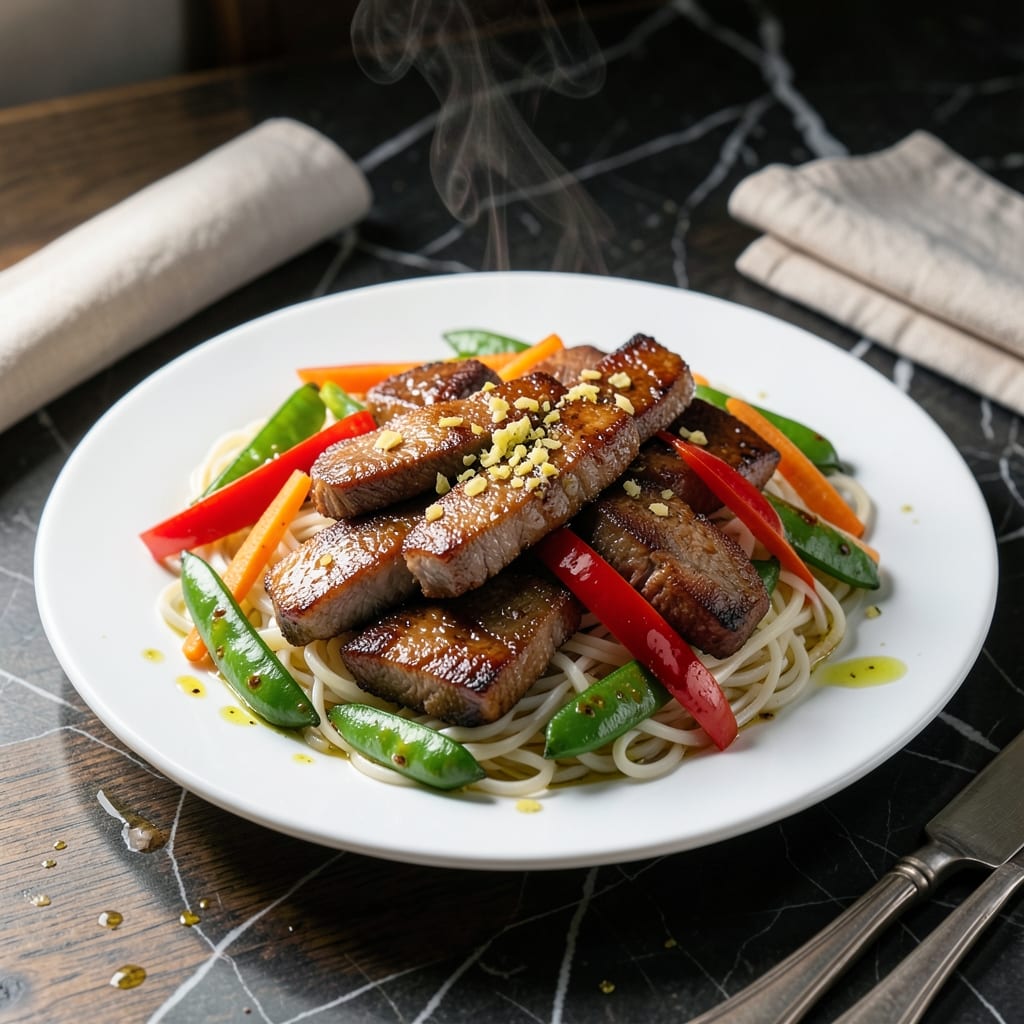
This pork stir fry with rice noodles delivers bold ginger-garlic flavor in every bite. The dish combines tender pork strips, chewy rice noodles, and crisp vegetables for a satisfying meal that comes together quickly in one pan.
The secret lies in the wok technique—high heat, constant motion, and a well-timed sauce addition create that signature restaurant-quality finish. I’ve refined this method to ensure perfectly cooked meat and noodles without sogginess.
What emerges is a balanced plate with savory pork, slippery noodles, and fresh vegetable crunch. The ginger-garlic sauce ties everything together, making each bite more flavorful than the last.
Ready in under 30 minutes, this is a weeknight solution that never compromises on taste. Let’s make it tonight.
Ingredients for Pork Stir Fry with Rice Noodles
Tender pork, chewy noodles, and crisp vegetables come together for bold ginger-garlic flavor in every bite.
| Ingredient | Amount | Notes |
|---|---|---|
| Pork Tenderloin 🥩 | 1 lb | Trimmed, sliced into thin strips |
| Rice Noodles 🍜 | 8 oz | Dried, pad thai style |
| Bell Peppers 🌶️ | 2 whole | Assorted colors, thinly sliced |
| Carrots 🥕 | 2 whole | Julienned or matchstick cut |
| Snap Peas 🫛 | 1 cup | Fresh or frozen, trimmed |
| Fresh Ginger 🌿 | 2 tbsp | Peeled and minced |
| Garlic Cloves 🧄 | 4 cloves | Minced finely |
| Soy Sauce 🫒 | ⅓ cup | Low-sodium preferred |
| Oyster Sauce 💧 | 2 tbsp | Vegan oyster sauce optional |
| Sesame Oil 🫒 | 1 tbsp | Toasted, for finishing |
| Cornstarch 🌾 | 1 tbsp | For velveting pork |
| Neutral Cooking Oil 🫒 | 3 tbsp | High smoke point required |
| Green Onions 🧅 | ½ cup | Thinly sliced for garnish |
| Chili Flakes 🌶️ | ½ tsp | Optional, for heat adjustment |
| Lime 🍋 | 1 whole | Juiced, for brightness |
The pork is the foundation here. Pork tenderloin stays lean yet tender when sliced thin against the grain—avoid shoulder cuts as they release too much moisture. Most Asian grocery stores carry pre-sliced stir-fry pork, which saves significant prep time. For rice noodles, pad thai width (about 1/8-inch) provides the ideal chewy texture without being too thick or thin.
No oyster sauce? Hoisin sauce plus a pinch of sugar works in a pinch, though the flavor profile shifts slightly. Fresh ginger is non-negotiable—ground ginger at half the amount lacks depth. For vegetables, broccoli florets or cabbage can replace snap peas. If using frozen vegetables, thaw and pat dry to prevent steaming the stir-fry. The cornstarch velveting step is worth the extra minute for restaurant-style tenderness.
This reheats surprisingly well for 2-3 days in the fridge, though the noodles soften slightly. Freezing isn’t recommended as rice noodles turn mushy. Store fresh ginger in the freezer—it grates beautifully straight from frozen (worth the extra minute).
Why You’ll Love This Recipe
- 20-Minute Meal: I can slice the pork tenderloin and veggies while the noodles soak, then toss everything in the pan.
- Savory Umami Bomb: The pork caramelizes with soy and garlic, and those snap peas stay crisp—every bite’s packed with flavor.
- Lunchbox Hero: Honestly, the leftovers taste even better cold the next day, and it reheats like a dream.
- Budget Stretcher: Pork tenderloin goes a long way, and rice noodles are cheap—this feeds my family for under $15.
Step-by-Step Instructions for Pork Stir Fry With Rice Noodles
Master the wok technique with precise timing and layering for restaurant-quality results at home.
Step 1: Velvet the Pork and Prep Vegetables
Slice the 1 lb Pork Tenderloin into ¼-inch thick strips against the grain. Toss with 1 tbsp Cornstarch until evenly coated—this velveting technique ensures tender, juicy meat. Let it sit for 10 minutes while you prep the vegetables.
Thinly slice the 2 whole Bell Peppers and 2 whole Carrots into uniform matchsticks. Trim the 1 cup Snap Peas and mince the 2 tbsp Fresh Ginger and 4 cloves Garlic Cloves. Having everything prepped (mise en place) guarantees smooth execution during cooking.
Step 2: Blanch the Rice Noodles
Soak the 8 oz Rice Noodles in warm water for 8-10 minutes until pliable but still slightly firm. Drain and rinse with cold water to stop the cooking process. This partial cooking prevents them from turning mushy when stir-fried.
Toss the noodles with 1 tsp of the 3 tbsp Neutral Cooking Oil to prevent sticking. Set aside. The noodles should be al dente at this stage—they’ll finish cooking in the wok with the other ingredients.
Step 3: Stir-Fry Pork and Aromatics
Heat 2 tbsp of the 3 tbsp Neutral Cooking Oil in a wok or large skillet over high heat until shimmering. Add the cornstarch-coated pork in a single layer and sear undisturbed for 1-2 minutes until the edges turn opaque white.
Stir-fry for another 1-2 minutes until just cooked through. Remove pork to a plate. In the same pan, add the remaining 1 tbsp Neutral Cooking Oil, then the ginger and garlic. Stir-fry for 30 seconds until fragrant—don’t let them burn.
Step 4: Combine Vegetables and Sauce
Add the bell peppers, carrots, and snap peas to the wok. Stir-fry over high heat for 3-4 minutes until the vegetables are tender-crisp and the peppers begin to blister. This high-heat cooking preserves their vibrant color and texture.
Return the pork to the wok. Pour in the 0.33 cup Soy Sauce and 2 tbsp Oyster Sauce. Add the par-cooked rice noodles and toss everything together for 2-3 minutes until the noodles are fully tender and coated in the sauce.
Step 5: Finish and Garnish
Remove from heat and stir in the 1 tbsp Sesame Oil. Taste and adjust seasoning if needed. Transfer to a serving platter and garnish with the 0.5 cup Green Onions, a sprinkle of 0.5 tsp Chili Flakes (if using), and a squeeze of 1 whole Lime.
The dish should have a glossy, lightly caramelized sauce clinging to the noodles and pork, with vegetables that retain a slight bite. Serve immediately while hot.
Pro Tips For Making Pork Stir Fry With Rice Noodles
- Velocity Dicing: Cut the pork into 1/4-inch strips and keep them uniform—this ensures even cooking and prevents chewy bits in your stir fry.
- Soak Noodles First: Rice noodles need a 10-minute soak in warm water before stir-frying, or they’ll stay hard and gummy no matter how long you cook them.
- Skip Overcrowding: Cook the pork in batches if needed; dumping it all in at once steams the meat instead of searing it, and you’ll lose that golden crust.
- Prep Veggies Last: Bell peppers, carrots, and snap peas cook fast, so slice them just before firing up the wok—I learned this the hard way after ending up with mushy carrots.
Storing and Reheating This Recipe
Refrigerator Storage
Let this dish cool for no more than 2 hours before transferring to airtight containers. I use glass containers with snap-tight lids to keep flavors fresh. Store at 40°F or below for up to 3 days. The noodles will soften slightly but retain great texture. ❄️
Freezer Warning
I don’t recommend freezing this dish. Rice noodles tend to turn mushy when thawed, and the vegetables lose their crispness. If you must freeze, portion into single servings and consume within 1 month for best quality.
Stovetop Reheating
My preferred method: Heat a skillet over medium heat with 1 tbsp water or broth. Add the stir fry and cover for 3-4 minutes, stirring occasionally. This restores moisture and revives the noodle texture beautifully. 🔥
Microwave Method
For quick meals, microwave covered portions on 70% power for 2 minutes. Stir, then continue in 30-second bursts until reaching 165°F. Add a splash of water if it looks dry.
Reviving Leftovers
A squeeze of fresh lime juice and sprinkle of green onions can brighten up reheated portions. I often add a drizzle of sesame oil to refresh the flavors.
Nutrition Facts
Frequently Asked Questions
Can I use a different cut of pork?
Yes, but choose lean cuts like pork loin. Avoid fatty cuts like shoulder as they release too much moisture during cooking. For best results, always slice against the grain into ¼-inch thick strips.
How do I prevent the noodles from sticking?
Soak them in warm water for 8-10 minutes until pliable but firm. After draining, toss with 1 tsp oil to create a protective coating. This keeps them separate during stir-frying.
Can I make this ahead of time?
You can prep all ingredients in advance, but cook just before serving. If storing leftovers, keep in airtight containers for up to 3 days. Reheat with a splash of water to restore texture.
What if I don’t have a wok?
A large, deep skillet works fine. Use high heat and cook in batches to avoid steaming the food. The key is maintaining that sizzling temperature throughout.

- Asian Restaurant Salad Dressing Recipe: Bold Sesame-Ginger Swirl With Umami Depth - October 18, 2026
- Asian Restaurant Salad Dressing Recipe: Bold Sesame-Ginger Swirl With Umami Depth - October 18, 2026
- Beef Boneless Chuck Country Style Ribs Crock Pot Recipe: Slow-Simmered Smoky Tenderness - October 18, 2026