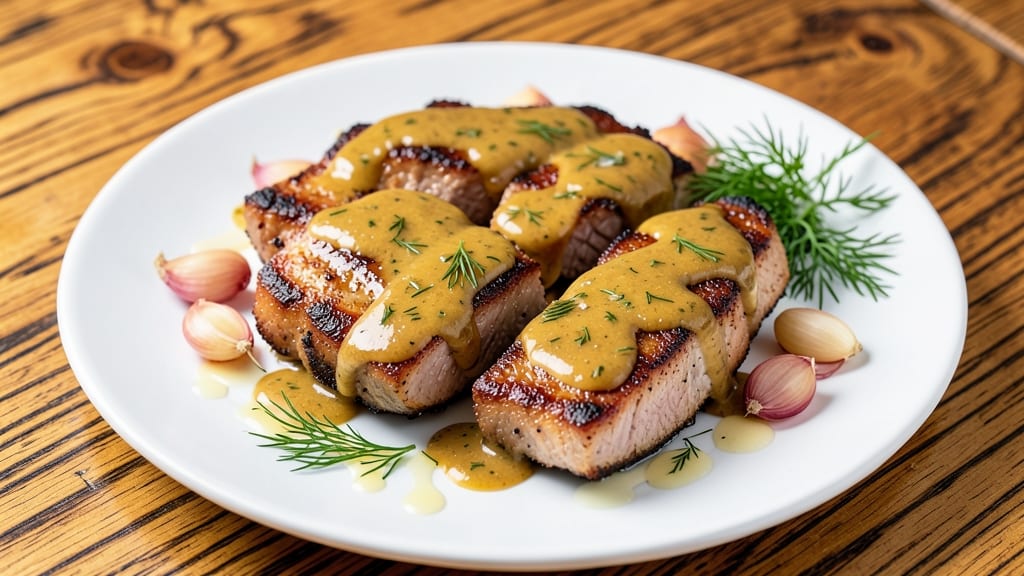
This pork chops with mustard sauce recipe transforms ordinary chops into a restaurant-worthy meal with just a few simple techniques. The tangy-dill pan sauce cuts through the richness of the meat while adding bright, herbaceous depth that elevates every bite.
I developed this method after years of testing—it’s foolproof, delivers perfect doneness every time, and requires only basic pantry staples.
The secret lies in two key steps: searing the chops until golden and developing the sauce directly in the pan. This creates a flavorful crust on the meat while reducing the sauce to a velvety consistency that clings perfectly.
The mustard provides that signature tang, while fresh dill adds a bright herbal note that balances the richness. Ready in under 30 minutes, this dish delivers professional results without requiring advanced skills.
What you’ll end up with is juicy, medium-rare pork chops with a crispy exterior and tender interior, all smothered in a glossy, tangy-dill sauce that’s rich but never heavy. The sauce’s bright acidity cuts through the meat’s richness, creating a harmonious balance in every bite.
Serve with roasted potatoes or a simple green salad to round out the meal.
This recipe works equally well for weeknight dinners or special occasions—just adjust the sauce’s thickness by adding a splash of water or broth. The method scales easily, so you can cook for two or feed a crowd. Let’s get started on creating this simple yet impressive dish.
Ingredients for pork chops with mustard sauce
Eight simple ingredients transform basic pork chops into a restaurant-worthy dish with tangy-dill sauce.
| Ingredient | Amount | Notes |
|---|---|---|
| Bone-In Pork Chops 🥩 | 4 whole | 1-inch thick, center-cut preferred |
| Unsalted Butter 🧈 | ½ cup | Cold, cut into 8 pieces |
| Dijon Mustard 🍯 | ¼ cup | High-quality, smooth variety |
| Fresh Dill 🌿 | ¼ cup | Chopped, stems removed |
| Shallots 🧅 | 2 whole | Minced, or substitute 2 tbsp onion |
| Garlic Cloves 🧄 | 4 cloves | Minced, fresh preferred |
| Dry White Wine 🍷 | ½ cup | Sauvignon Blanc or Pinot Grigio |
| Chicken Broth 💧 | ½ cup | Low-sodium preferred |
| Heavy Cream 🥛 | ¼ cup | Full-fat for richness |
| Fresh Lemon Juice 🍋 | 1 tbsp | From 1 lemon |
| Kosher Salt 🧂 | 1 ½ tsp | Adjust to taste |
| Freshly Ground Black Pepper 🌶️ | ½ tsp | Coarsely ground |
| All-Purpose Flour 🌾 | 1 tbsp | For dredging chops |
The bone-in pork chops are non-negotiable here—they stay juicier and develop a better crust than boneless cuts. Look for center-cut chops at your local butcher or grocery store’s meat counter, where they’ll often cut them to your preferred thickness. I always ask for 1-inch thick chops, which ensures perfect doneness. If you can’t find bone-in, boneless chops work too, but pat them dry thoroughly before cooking. For the best quality, Whole Foods or local butchers often carry higher-grade cuts, but standard supermarket chops work perfectly fine if they’re fresh and properly refrigerated.
No Dijon mustard? Substitute whole-grain mustard at half the amount, though the texture will differ slightly. Fresh dill is ideal, but dried dill at one-third the quantity works in a pinch—just avoid the powdered kind. The white wine can be swapped for additional chicken broth, though the sauce will lose some brightness. For a richer sauce, substitute heavy cream with whole milk, but reduce by one-third. The shallots add depth—if you can’t find them, red onion works too. Always taste the sauce before serving; the lemon juice is your secret weapon for balancing flavors.
Pork chops should rest for 5 minutes after cooking before serving. The sauce thickens as it sits, so if it’s too thin, simmer uncovered for 2-3 minutes to reduce. Store leftovers in an airtight container in the fridge for up to 3 days, though the sauce may separate slightly—just stir before reheating. For a quick weeknight meal, double the sauce ingredients and freeze half for next time. The chops reheat beautifully in a skillet with a splash of broth.
Why You’ll Love This Recipe
- One-Pan Magic: I swear by this recipe when I’m too tired to scrub pots—just sear the chops, toss in shallots and butter, then let the mustard sauce simmer right in the same pan. The dill ties it all together without extra dishes.
- Crave-Worthy Balance: That crispy bone-in crust with the tender inside? Yes. But the real star is the sauce—Dijon mustard cuts through the richness while the butter keeps it luscious, and the fresh dill adds a bright finish that makes it impossible to stop at one.
- Weeknight to Dinner Party: Honestly, I make this for myself on Tuesdays, but it’s also the dish I bring to potlucks because it feels fancy without trying. The sauce is rich enough for a special occasion but simple enough to throw together when you’re starving.
- Budget-Friendly Protein: Bone-in chops stretch further than you’d think, and the sauce uses pantry staples (mustard, butter) plus a handful of shallots and dill. Leftovers reheat beautifully—just a splash of water to loosen the sauce—and taste just as good the next day.
Step-by-step instructions for pork chops with mustard sauce
This method delivers perfectly seared chops with a rich, tangy-dill sauce that takes just minutes to prepare.
Season and Sear the Pork Chops
Pat the 4 whole bone-in pork chops dry with paper towels—this ensures maximum crispiness. Season both sides generously with the 1.5 teaspoons kosher salt and 0.5 teaspoon freshly ground black pepper. Let them sit at room temperature for 10 minutes while you prepare the pan.
Heat a large skillet over medium-high heat until it’s very hot. Add 4 pieces of the cold, cubed unsalted butter and let it melt completely, about 1 minute. Place the pork chops in the pan and cook undisturbed for 3 minutes per side, until they develop a deep golden-brown crust. Avoid moving them too soon—this is when they form that perfect sear.
When the chops are browned and the internal temperature reaches 145°F (measured with an instant-read thermometer), transfer them to a warm plate and tent loosely with foil. Keep them warm while you make the sauce.
Build the Mustard-Dill Sauce Base
In the same skillet (no need to clean it—the browned bits add flavor), reduce heat to medium and add the 2 minced shallots. Cook for 2 minutes until softened but not browned. Add the 4 minced garlic cloves and cook for 30 seconds until fragrant—this prevents bitterness.
Pour in the 0.5 cup dry white wine and scrape up any browned bits from the bottom with a wooden spoon. Let the wine simmer for 2-3 minutes until reduced by half. This step deepens the flavor by concentrating the alcohol.
Finish the Sauce with Cream and Dill
Stir in the 0.25 cup Dijon mustard and the 0.5 cup chicken broth. Let the mixture simmer gently for 2 minutes until slightly thickened. Remove from heat and whisk in the 0.25 cup heavy cream and 1 tablespoon fresh lemon juice. The sauce should be smooth and glossy.
Return the pan to low heat and stir in the 0.25 cup chopped fresh dill. Taste and adjust seasoning with additional salt or pepper if needed. The sauce should balance tangy mustard with creamy richness and bright dill notes.
Coat the Chops and Serve
Return the pork chops to the skillet and spoon the sauce over them, turning gently to coat evenly. Let them sit for 1-2 minutes to absorb the flavors. The chops should reach an internal temperature of 150°F if they weren’t fully cooked earlier.
Serve immediately with the sauce spooned over the top. The chops should be juicy with a crispy exterior, while the sauce delivers a perfect balance of tangy mustard, fresh dill, and creamy richness. Pair with roasted potatoes or steamed vegetables for a complete meal.
Pro Tips For Making Pork Chops With Mustard Sauce
- USE A HEAVY SKILLET: Bone-in chops need space to sear properly. I used to crowd them in a pan and ended up with steamed pork instead of crispy edges—switch to a cast-iron or stainless steel pan and cook them one at a time if needed. The butter should sizzle like a small fire when they hit the pan.
- MINCE SHALLOTS FINE: No one likes to bite into a chunky shallot in sauce. Pulse them in a food processor for 3-4 seconds until they’re almost paste-like, then deglaze with a splash of water. This keeps the sauce silky while letting the flavor shine—no one will guess you took a shortcut.
- DON’T RUSH THE MUSTARD: Whisk the Dijon into the warm butter after the shallots soften, not before. Cold mustard tightens when heated, making the sauce grainy. Let the butter melt first, then add the mustard and a splash of pan juices—this keeps the sauce smooth and emulsified.
- REST CHOPS UNDER FOIL: Skipping this step means juicy pork dripping onto your plate. After searing, transfer the chops to a warm plate, tent loosely with foil, and let them sit for 5 minutes. The bone-in cuts stay juicier, and the mustard sauce gets a chance to thicken slightly—trust me, this makes all the difference.
Perfect pairings for this pork chops with mustard sauce
Classic Side Dishes
Roasted garlic mashed potatoes are my go-to pairing—their creamy texture contrasts beautifully with the sauce’s tangy brightness. Toss 2 lbs Yukon Gold potatoes with 3 tbsp butter, ½ cup warm milk, 3 roasted garlic cloves, and 1 tsp salt.
Roast at 400°F for 45 minutes for extra crispy edges. 🥔
Fresh Green Salad
A simple arugula salad with lemon vinaigrette cleanses the palate between rich bites. Toss 4 cups baby arugula with 2 tbsp olive oil, 1 tbsp fresh lemon juice, 1 tsp honey, and a pinch of flaky sea salt.
Top with ¼ cup shaved Parmesan for a salty crunch. The peppery greens balance the sauce’s creaminess perfectly.
Creamy Polenta
For a comforting alternative, serve with creamy polenta that soaks up the sauce. Cook 1 cup polenta in 4 cups boiling water with 1 tsp salt, stirring constantly for 20 minutes.
Stir in 2 tbsp butter and ¼ cup grated Parmesan off the heat. The mild, buttery texture pairs wonderfully with the bold mustard sauce.
Wine Pairings
A crisp Sauvignon Blanc from New Zealand or Loire Valley is ideal—its citrusy acidity mirrors the lemon in the sauce. For red wine lovers, a Pinot Noir with light tannins and bright fruit notes complements the dish without overpowering.
Avoid heavy, oaky whites or bold reds that would clash with the sauce’s brightness. 🍷
Beer Pairings
A Belgian witbier like Hoegaarden adds effervescence that cuts through the richness. For a lighter option, try a German Helles lager—its subtle malt sweetness balances the mustard’s tang. Avoid heavy stouts or IPAs, which would dominate the dish’s delicate flavors.
Sauce Variations
For a spicier kick, add ½ tsp smoked paprika to the sauce or serve with pickled jalapeños on the side. A herb-infused twist? Swap dill for tarragon or chives—both add a subtle anise note that pairs beautifully.
For a lighter version, reduce the heavy cream to 2 tbsp and add 2 tbsp Greek yogurt for tanginess.
Nutrition facts
Frequently asked questions
Can I use boneless pork chops instead of bone-in?
Yes, but you’ll need to adjust cooking time slightly. Boneless chops cook faster—about 2-3 minutes per side instead of 3 minutes. Pat them extra dry before searing to prevent steaming. The sauce method remains identical, but check for doneness at 145°F internal temp (160°F if fully cooked).
What if I don’t have white wine for the sauce?
No problem! Substitute with 0.5 cup chicken broth or apple cider vinegar (reduce by half first). For depth, add 1 tsp soy sauce or ½ tsp Worcestershire sauce to mimic wine’s umami. The sauce will lose some brightness but still taste delicious—just taste and adjust seasoning afterward.
How do I fix a sauce that’s too thin or too thick?
For thin sauce: Simmer uncovered for 2-3 minutes to reduce. For thick sauce: Whisk in 1 tsp cold water or broth at a time until silky. Never add flour directly—it can make the sauce grainy. The ideal consistency should coat the back of a spoon but still drizzle lightly.
Can I make this recipe ahead of time?
Prepare the sauce up to 1 day ahead—store in an airtight container in the fridge. Reheat gently, stirring in 1 tbsp cream if it thickens too much. For the chops, cook them fresh day-of for best texture. If reheating leftovers, warm in a skillet with 1 tbsp butter for 2-3 minutes to restore crispiness.
What’s the best way to store leftovers?
Keep chops and sauce separate in airtight containers for up to 3 days. Reheat chops in a skillet with 1 tbsp butter to refresh the crust, then warm the sauce separately. For longer storage, freeze the sauce alone (up to 3 months)—it reheats beautifully. Never freeze cooked chops as they’ll become dry.
