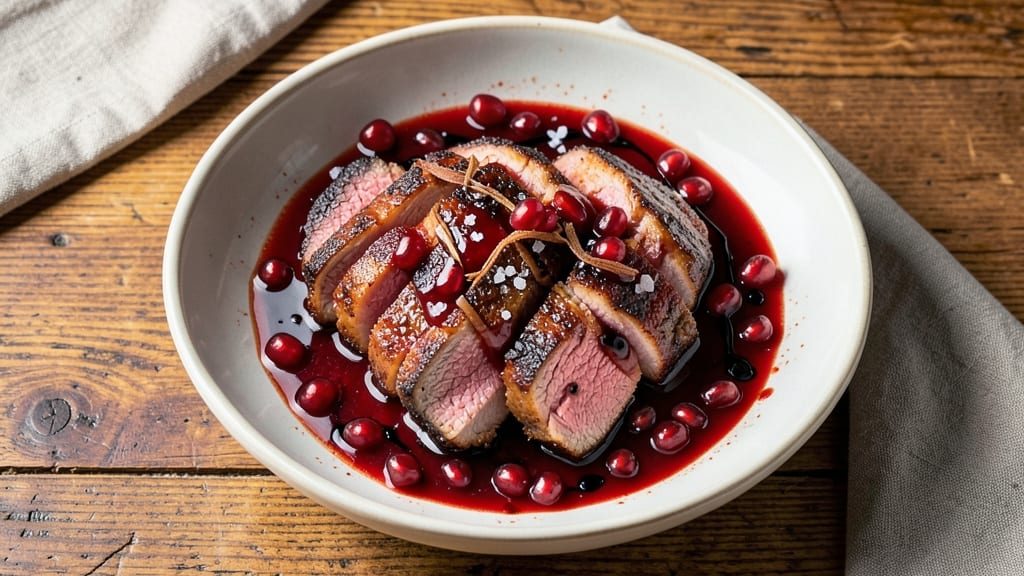
This pomegranate glazed pork tenderloin transforms a simple protein into a showstopping centerpiece that balances sweet, tart, and savory flavors with every bite.
The ruby-red pomegranate reduction caramelizes beautifully while keeping the pork tender and juicy—a technique I perfected after years of experimenting with fruit-based glazes during my grandmother’s Sunday dinners in Sicily.
The secret lies in the slow reduction of pomegranate juice and molasses, which creates a glossy, sticky glaze that clings to the meat without overpowering its natural richness.
The beauty of this recipe is its versatility—whether you’re hosting a dinner party or cooking for your family, the vibrant glaze elevates even the simplest meal. Pork tenderloin cooks quickly, making this dish perfect for weeknight dinners when you still want restaurant-quality results.
The pomegranate not only adds visual appeal but also introduces a bright acidity that cuts through the richness of the meat, creating a perfect balance. Plus, the seeds scattered on top add a delightful crunch that contrasts beautifully with the tender pork.
By the time you serve this dish, your table will be adorned with a golden-brown, glistening pork tenderloin topped with jewel-like pomegranate seeds, drizzled with that glossy reduction. The aroma alone—sweet, smoky, and slightly tangy—will have everyone anticipating the first bite.
This recipe is designed to impress without requiring advanced skills, making it accessible yet undeniably elegant. The sides pair beautifully with roasted vegetables or a simple quinoa salad to round out the meal.
What makes this recipe even more special is how it brings people together—just like my grandmother’s Sunday dinners. The vibrant colors and flavors spark conversation, and the process of reducing the glaze becomes part of the experience.
Whether you’re cooking for a crowd or treating yourself to a special meal, this dish delivers on both taste and presentation. Let’s get started on creating something truly memorable.
Ingredients for pomegranate pork tenderloin
Pork tenderloin meets ruby-red sweetness in this showstopping dish.
| Ingredient | Amount | Notes |
|---|---|---|
| Pork Tenderloin 🥩 | 1 ½ lb | Center-cut, trimmed of fat |
| Pomegranate Juice 🍇 | 1 cup | 100% pure, no additives |
| Molasses 🍯 | ¼ cup | Unsulphured, dark variety |
| Fresh Pomegranate Seeds 🍇 | ½ cup | For garnish, plus extra |
| Honey 🍯 | 2 tbsp | Wildflower preferred |
| Balsamic Vinegar 🍶 | 1 tbsp | Aged 25 years or more |
| Garlic Cloves 🧄 | 4 cloves | Minced, fresh preferred |
| Fresh Rosemary 🌿 | ½ tsp | Finely chopped, fresh |
| Sea Salt 🧂 | 1 ½ tsp | Diamond Crystal preferred |
| Black Peppercorns 🌶️ | ½ tsp | Freshly cracked |
| Olive Oil 🫒 | 2 tbsp | Extra-virgin, fruity |
| Dijon Mustard 🍯 | 1 tbsp | For glaze depth |
| Brown Sugar 🍚 | 1 tbsp | Light or dark |
| Smoked Paprika 🌶️ | ½ tsp | For subtle smokiness |
The pomegranate juice is non-negotiable—look for 100% pure in the juice aisle, not the cocktail section. Trader Joe’s and Whole Foods carry excellent brands, but check the label for no additives. Fresh pomegranates? Crack them open with a hammer and spoon out the seeds—worth the mess for that jewel-toned garnish. The molasses should be unsulphured (no funny sulfites) and dark—think Grandma’s or Bragg—for that deep, caramelized flavor. For the pork, center-cut is key—it stays juicy, and the fat trim ensures even cooking. If your butcher doesn’t specify, ask for the most tender section of the loin.
No pomegranate juice? Cranberry juice cocktail works in a pinch (but add 1 tbsp extra molasses to balance), or pomegranate molasses at half the amount. Short on fresh rosemary? Dried at one-quarter the amount is fine, but toast it first in a dry pan for 30 seconds to wake up the flavor. The balsamic vinegar should be aged 25+ years—Barone Fattori or Colavita are my go-tos, but any good one will do. Smoked paprika adds depth without overpowering; if you’re feeling fancy, toast it with the garlic for a nutty aroma. The Dijon mustard is for that tangy backbone—don’t skip it, even if you’re not a mustard lover.
This glaze keeps 3 days in the fridge, but the pork itself? Cook fresh for best texture—it reheats like cardboard. Store the glaze in a jar with a thin layer of olive oil on top to preserve its vibrant color. For a crowd, double the glaze ingredients and reduce it in batches. The seeds? Buy a pre-seeded pomegranate from Costco—it’s cheaper than cracking your own and lasts weeks in the fridge. Leftovers? Slice the pork thin and serve on ciabatta with extra glaze—game-day magic.
Why You’ll Love This Recipe
- One-Pan Magic: I swear by this recipe when I’m too tired to scrub pots—just sear the pork, pour in the pomegranate juice and molasses mix, and let the oven do the work. The sticky glaze practically falls off the knife, and cleanup is just wiping one sheet pan.
- Sweet-Savory Balance: That molasses and honey combo with tart pomegranate juice? It’s the kind of flavor that makes you pause mid-bite. The pork stays juicy inside while the edges caramelize into this irresistible, slightly chewy crust—like a cross between a glaze and a crust you can’t stop eating.
- Weeknight to Dinner Party: Honestly, this is my go-to for both lazy Tuesdays and when I’m hosting. For weeknights, I slice it over rice with a handful of fresh pomegranate seeds. For company, I serve it with roasted potatoes and a simple salad—looks fancy, zero stress.
- Leftovers That Don’t Suck: Between us, most pork tenderloin leftovers end up in the trash. Not this one. The glaze keeps it tender for days, and I’ll repurpose it into sandwiches, grain bowls, or even breakfast hash. Plus, the pomegranate juice reduces into a thicker sauce that freezes like a dream.
Step-by-step instructions for pomegranate glazed pork tenderloin
This method delivers melt-in-your-mouth tenderness with a jewel-toned glaze that’s both sweet and tangy.
Prepare the Pork and Glaze Base
Pat the 1.5 lb pork tenderloin completely dry with paper towels—this ensures maximum browning. In a small bowl, whisk together the 1 cup pomegranate juice, 0.25 cup molasses, 2 tbsp honey, 1 tbsp balsamic vinegar, 1 tbsp Dijon mustard, 1 tbsp brown sugar, 0.5 tsp smoked paprika, 0.5 tsp finely chopped fresh rosemary, 0.5 tsp freshly cracked black peppercorns, and 1.5 tsp sea salt. This glaze should be thick but pourable—if it’s too stiff, whisk in 1-2 teaspoons of water.
Let the glaze mixture sit at room temperature for 10 minutes while you prep the pork. This resting period allows the flavors to meld and the spices to bloom fully. Meanwhile, preheat your oven to 375°F and position a rack in the center position for even cooking.
Sear and Roast the Pork
Heat 2 tbsp extra-virgin olive oil in an oven-safe skillet over medium-high heat until shimmering. Add the pork tenderloin and sear on all sides for 2-3 minutes per side until golden brown with a deep caramelization. The reason for this sear is to develop a flavorful crust that locks in juices during roasting.
Transfer the skillet to the preheated oven and pour the glaze mixture evenly over the pork. Roast uncovered for 20-25 minutes, basting the pork with pan juices every 8 minutes, until the internal temperature reaches 145°F. You’ll know it’s done when the pork pulls away cleanly from the skillet edges and the glaze has thickened to a glossy consistency.
Rest and Garnish for Perfect Presentation
Remove the pork from the oven and transfer it to a cutting board. Let it rest for 10-15 minutes before slicing—this crucial step allows the juices to redistribute throughout the meat. While it rests, carefully skim any excess fat from the roasting juices in the skillet, leaving behind a rich, ruby-hued reduction.
Slice the pork into ½-inch thick medallions and arrange on a warmed platter. Spoon the reduced glaze evenly over the top and garnish with the 0.5 cup fresh pomegranate seeds and any remaining minced garlic cloves. The contrast of the jewel-toned seeds against the golden pork creates a visually stunning presentation that’s just as delicious as it looks.
Serve with Complementary Sides
Serve immediately with sides that balance the rich, sweet-savory flavors. I recommend a simple arugula salad with lemon vinaigrette or roasted sweet potatoes tossed with fresh thyme. The acidity of the salad cuts through the richness of the pork, while the earthy sweetness of the potatoes complements the molasses and honey in the glaze.
Each bite should deliver perfectly tender, juicy pork with a glossy glaze that bursts with pomegranate brightness. The combination of sweet, tangy, and slightly smoky flavors makes this dish unforgettable—just don’t be surprised if your guests ask for seconds.
Pro Tips For Making Pomegranate Pork Tenderloin
- Sear Before Sauce: Hit the pork with a dry sear in a screaming-hot pan first—no oil needed, just the meat’s natural fats. This locks in juices and builds flavor before you add the pomegranate-molasses mix, so it doesn’t turn into a stew. (Yes, even if you’re impatient like me.)
- Reduce That Juice: Don’t pour the pomegranate juice straight from the bottle—simmer it with the molasses and honey first until it’s syrupy. I used to skip this, and the sauce ended up watery. Five minutes on medium heat thickens it enough to cling to the meat instead of pooling.
- Toast the Seeds: Toss the fresh pomegranate seeds in a dry pan for 30 seconds until they darken slightly. Their bitterness mellows and the crunch sharpens—perfect for garnish. (Save the leftover arils for salads; they’re too precious to waste.)
- Salt the Molasses: Mix a pinch of flaky salt into the molasses while reducing—it cuts through the sweetness and balances the tart pomegranate. I learned this the hard way after a batch tasted like dessert instead of savory. Trust me, it’s worth the extra 10 seconds.
Make-ahead tips for this recipe
Prep Ahead Glaze
Make the glaze 24 hours ahead for deeper flavor development. Combine all glaze ingredients in a small saucepan and simmer over medium-low heat for 15-20 minutes, stirring frequently, until reduced by half. Let it cool completely, then store in an airtight container in the fridge.
The flavors intensify overnight, and you’ll save time on cooking day. I like to taste it after reducing—if it needs balance, add a pinch of salt or a splash of water. 🍯
Marinate the Pork
For extra tenderness, marinate the pork in half the glaze mixture for 4-6 hours (overnight is best). Place the tenderloin in a resealable plastic bag with ½ cup glaze, seal tightly, and refrigerate.
This step infuses the meat with flavor and ensures a juicy result. When ready to cook, pat the pork dry before searing—this prevents the marinade from steaming off during cooking. 🥩
Partial Cook Option
Cook the pork halfway in advance for busy schedules. Sear the tenderloin as directed, then transfer it to a baking dish with ½ cup reserved glaze. Cover tightly with aluminum foil and refrigerate.
When ready to finish, return it to 375°F oven for 10-15 minutes until reaching 145°F internal temperature. This method works beautifully for meal prep—just reheat the glaze separately if needed. ✨
Glaze Storage
The reduced glaze keeps for 5 days in the fridge or 3 months in the freezer. For freezing, portion into ice cube trays, cover with plastic wrap, and transfer to a freezer bag.
Thaw overnight in the fridge before using. I always double the glaze when cooking for a crowd—it’s perfect for drizzling over roasted vegetables or grilled chicken later. 🍇
Pork Prep Shortcut
Buy pre-sliced pork tenderloin from a family-owned butcher shop to save time. Ask for ½-inch thick medallions—they cook faster and are easier to serve.
If using whole tenderloin, trim excess fat and score the surface lightly with a knife in a crosshatch pattern (about ¼-inch deep) to help the glaze penetrate. This step isn’t mandatory but adds visual appeal. 🔪
Garnish Assembly
Prep the garnish the night before for a stress-free cooking day. Pick over ½ cup pomegranate seeds to remove any white pith, and store them in a small bowl covered with plastic wrap. Keep the minced garlic and fresh rosemary in separate containers.
When ready to serve, simply sprinkle the seeds and herbs over the sliced pork—it takes 2 minutes and makes the dish look restaurant-worthy. 💫
Nutrition facts
Frequently asked questions
Can I substitute pomegranate juice with something else?
If you’re short on pomegranate juice, cranberry juice cocktail works well (add 1 extra tablespoon of molasses to balance the tartness), or use pomegranate molasses at half the amount. For a different fruit profile, try 1 cup of reduced apple juice with 1 tablespoon lemon juice—it adds a subtle sweetness that pairs beautifully with the pork.
How do I keep the pork tenderloin from drying out?
Pork tenderloin cooks quickly, so avoid overcooking! Use a meat thermometer to check for 145°F internal temperature—never go beyond 150°F. Pat the meat dry before searing to create a flavorful crust, and let it rest for 10-15 minutes after cooking to redistribute juices. For extra moisture, brush the pork with olive oil before roasting.
Can I make this recipe in a slow cooker?
Yes, but with adjustments! Sear the pork first, then transfer it to a slow cooker with the glaze ingredients. Cook on low for 4-5 hours or high for 2-3 hours, basting occasionally. The glaze may need extra reduction time—simmer it separately on the stovetop after cooking to achieve the same thick consistency. The slow cooker method works well for meal prep but may yield slightly less caramelization.
What’s the best way to reheat leftovers?
Reheat sliced pork tenderloin in a skillet over medium-low heat for 2-3 minutes per side until warmed through. For the glaze, reheat it separately in a small saucepan over low heat, stirring constantly until warmed. Avoid microwaving—the pork can dry out, and the glaze may become grainy. Pro tip: Add a splash of water or broth to the glaze if it thickens too much while reheating.
How can I make this dish more festive for holidays?
Elevate the presentation with edible gold leaf or a sprinkle of toasted pine nuts for crunch. Serve the pork on a bed of warm polenta or herbed mashed potatoes> for a heartier feel. Pair with a sparkling rosé wine or dry sparkling cider> to complement the sweet-tart flavors. For a holiday centerpiece, arrange the sliced pork in a circular pattern on a platter with pomegranate seeds forming a border.

- Yeast Bake Recipe: Flaky, Golden Crust With Herbed Cheese Magic - November 8, 2026
- Cook’s Illustrated Macaron Recipe: Swiss Meringue Secrets for Perfect Shells - November 8, 2026
- Southern Cheese Straws Recipe: Crispy, Shatterproof Layers of Gooey Cheddar - November 8, 2026