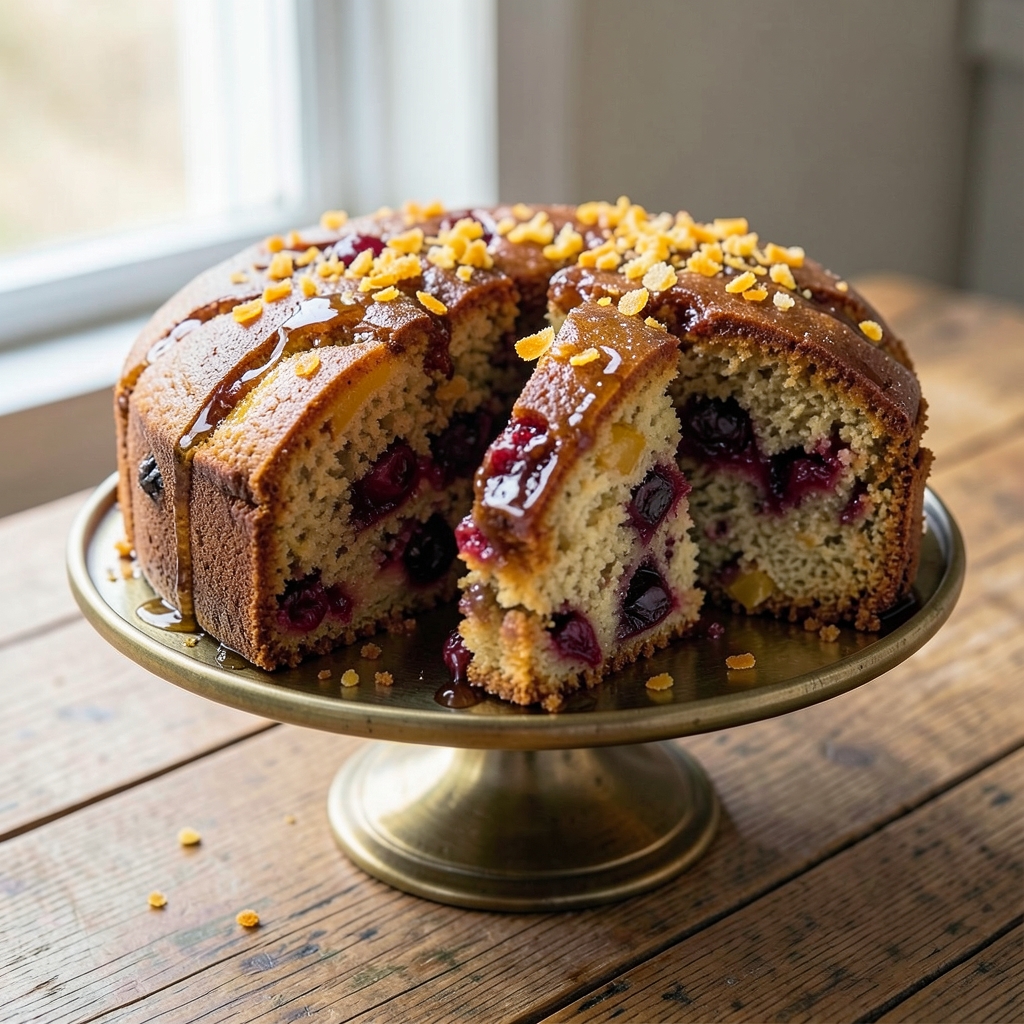
This Polish fruit cake recipe delivers the kind of rich, moist texture that makes every slice worth saving for days. 🌟 Growing up in a Boston apartment where my Nonna’s kitchen was always filled with the scent of spiced cakes, I learned that the secret lies in carefully layered candied fruits and a rum-soaked batter that keeps it tender for weeks.
The technique of steaming the fruit and layering it between rich cake batter creates that signature dense yet moist crumb that Polish fruit cakes are famous for.
The beauty of this recipe is in its balance—sweet candied fruits like cherries and citrus peel cut through the richness of the cake, while the spiced rum infusion adds warmth and depth.
Unlike many fruit cakes that dry out quickly, this method ensures your cake stays moist for days, making it perfect for holidays or gifts that last. The slow baking process allows the flavors to meld beautifully, resulting in a dessert that’s both impressive and comforting.
What you’ll end up with is a moist, flavorful fruit cake with layers of candied fruits visible in every slice, all held together by a tender, spiced crumb. The aroma alone will have everyone asking for seconds, and the texture—dense yet soft—is exactly what makes this cake a classic.
Whether you’re baking for a special occasion or simply craving a taste of tradition, this recipe delivers.
Serve with a dusting of powdered sugar or a dollop of whipped cream for an extra touch of elegance. The cake keeps well at room temperature for up to a week, making it ideal for meal prep or gifting.
Let’s get started on creating a dessert that’s as much about tradition as it is about taste.
Ingredients for polish fruit cake
Sweet candied fruits, spiced rum, and tender layers—this classic Polish fruit cake recipe delivers rich, moist texture perfect for holidays or gifting.
| Ingredient | Amount | Notes |
|---|---|---|
| All-Purpose Flour 🌾 | 4 cups | Sifted for even texture |
| Granulated Sugar 🍚 | 2 cups | White or light brown |
| Light Brown Sugar 🍚 | 1 cup | Packed firmly for moisture |
| Unsalted Butter 🧈 | 1 ½ cups | Room temperature, cubed |
| Large Eggs 🥚 | 4 whole | Room temperature for blending |
| Spiced Rum 🍹 | ½ cup | Dark rum for depth of flavor |
| Vanilla Extract 🌸 | 2 tsp | Pure, high-quality extract |
| Ground Cinnamon 🌿 | 1 tsp | Freshly ground preferred |
| Ground Nutmeg 🌿 | ½ tsp | Freshly grated for warmth |
| Ground Cloves 🌶️ | ¼ tsp | Lightly toasted for aroma |
| Salt 🧂 | ½ tsp | Fine sea salt for balance |
| Candied Cherries 🍒 | 2 cups | Homemade or high-quality jarred |
| Candied Citrus Peel 🍊 | 1 ½ cups | Orange or lemon peel, chopped |
| Almond Flour 🌰 | ½ cup | For added texture and richness |
| Powdered Sugar 🍚 | ¼ cup | For dusting finished cake |
The candied fruits are the heart of this cake, so quality matters. Homemade candied cherries and citrus peel elevate the flavor, but high-quality jarred options work too—look for brands like Smucker’s or Welch’s for reliable texture. If making your own, simmer the fruit in sugar syrup until translucent for that signature chewy bite. The rum should be dark and spiced—Captain Morgan or Bacardi are solid choices. For the spices, Penzeys or bulk bins at natural food stores offer the freshest ground cinnamon and nutmeg, but standard grocery store brands are fine if labeled ‘freshly ground.’
No spiced rum? Apple cider or brandy works in a pinch, though the flavor profile shifts slightly. Short on candied fruit? Dried apricots or pineapple add sweetness, but they won’t hold the same texture. The almond flour can be swapped for extra all-purpose flour if needed, though it adds a subtle nuttiness that complements the rum. For the butter, European-style brands like Plugrá or Kerrygold melt more smoothly, but any unsalted butter works. If your cake batter seems too thick, add 1-2 tbsp of milk or rum to loosen it—just don’t overmix once the flour is added.
This cake keeps beautifully at room temperature for up to 1 week, wrapped tightly in plastic or foil. For longer storage, freeze slices wrapped individually for up to 3 months. The flavors deepen over time, so it’s perfect for making ahead. Dust with powdered sugar just before serving to highlight the moisture and richness. If gifting, slice and wrap in parchment paper with a ribbon—it’s a showstopper that tastes even better the next day.
Why You’ll Love This Recipe
- No-Fuss Mixing: I swear by the creamy butter-and-sugar base—just cream, then fold in eggs until it’s light. No electric mixer needed, and the brown sugar keeps it from being too sweet.
- Spiced Moisture Magic: That combo of granulated and brown sugar? It creates a tender crumb that stays soft for days. Honestly, the eggs and butter make it rich without being heavy—like a hug in cake form.
- Holiday or Snack: Slice it for potlucks or serve whole at Christmas—it’s the one dessert that feels special but isn’t fussy. (Yes, even on a Tuesday night.)
- Budget-Friendly Stretch: Flour, sugar, butter, eggs—basic pantry staples that cost pennies. Bake one, and you’ll have leftovers for weeks. My secret weapon for parties where I don’t want to stress.
Step-by-step instructions for Polish fruit cake
This classic recipe delivers rich, moist layers with candied fruits and warming spices—every step ensures perfect texture.
👨🍳 Step 1: Prepare the Wet Ingredients
In a large mixing bowl, combine the 1.5 cups unsalted butter and both sugars (2 cups granulated sugar and 1 cup light brown sugar). Cream together using an electric mixer on medium speed for 5-7 minutes until light and fluffy. You’ll see the mixture nearly double in volume and become pale—this incorporates air for a tender crumb.
Add the 4 whole large eggs, one at a time, mixing well after each addition. Then stir in the 0.5 cup spiced rum and 2 teaspoons vanilla extract until fully incorporated. The rum adds moisture and depth, while the vanilla rounds out the spices. Set this mixture aside while you prepare the dry ingredients.
👨🍳 Step 2: Mix Dry Ingredients and Fold in Fruits
In a separate bowl, whisk together the 4 cups all-purpose flour, 1 teaspoon ground cinnamon, 0.5 teaspoon ground nutmeg, 0.25 teaspoon ground cloves, 0.5 teaspoon salt, and 0.5 cup almond flour. Sift the mixture into the wet ingredients in three additions, mixing on low speed after each to avoid developing gluten.
Gently fold in the 2 cups candied cherries and 1.5 cups candied citrus peel using a spatula. Distribute them evenly throughout the batter—this ensures every slice has bursts of fruity sweetness. The cherries should be evenly coated in batter, not clumped together.
🍳 Step 3: Bake in Layers for Moisture
Preheat your oven to 325°F. Grease two 9-inch round cake pans and line the bottoms with parchment paper. Divide the batter evenly between the pans, spreading it into the corners. Bake for 40-45 minutes until a toothpick inserted in the center comes out clean with just a few moist crumbs.
I like to bake both layers simultaneously for even cooking. Let the cakes cool in the pans for 10 minutes, then transfer to a wire rack to cool completely. This gradual cooling prevents cracking as the cake shrinks.
🥘 Step 4: Assemble and Dust with Powdered Sugar
Place one cake layer on a serving plate. Spread a thin layer of rum-soaked syrup (made by simmering 0.25 cup spiced rum with 0.25 cup powdered sugar until slightly thickened) over the layer. Top with the second cake layer and dust the entire cake generously with the remaining 0.25 cup powdered sugar using a fine-mesh sieve.
The powdered sugar creates a delicate, snowy finish that contrasts beautifully with the rich fruit cake. Serve at room temperature for the best texture—this cake keeps well for up to 5 days when stored in an airtight container.
Pro Tips For Making Polish Fruit Cake
- Cream Butter Slowly: Polish fruit cake lives or dies by its texture—don’t rush the butter. Beat it with the sugars on medium-low for at least 5 minutes until it’s pale, fluffy, and almost ribbony. High heat here means air pockets, and that’s a dry cake waiting to happen.
- Sift That Flour: I learned this the hard way—lumpy flour = uneven crumb. Sift the all-purpose flour twice before folding it in, especially if you’re using cake flour or whole-wheat substitutions. A wire mesh strainer works in a pinch, but a proper sifter saves you from dense pockets.
- Don’t Overmix Eggs: Polish fruit cake relies on tender layers, not toughness. After adding eggs one at a time, mix just until combined—no streaks, no overbeating. Overworked eggs turn the batter gummy, and that’s a cake no one wants to slice.
- Bake Low and Slow: Polish fruit cakes need patience—bake at 325°F (not 350°F) for the full time, even if the top looks set early. The center should spring back slowly when pressed (not instantly). Rushing = a cake that collapses or stays raw inside.
Regional styles of this polish fruit cake
Polish Tradition
This fruit cake traces its roots to Polish Christmas traditions, where it was known as “placki owocowe”—a dense, spiced cake layered with candied fruits. 🌟 In my Nonna’s kitchen, we’d bake it for Wigilia (Christmas Eve), when families gathered for twelve meatless dishes.
The rum-soaked batter wasn’t just for flavor; it preserved the cake for weeks, making it a practical centerpiece for holiday feasts.
Polish fruit cakes often feature dried apricots, pineapple, and citrus peel alongside cherries, but cherries remain the star. The spices—cinnamon, nutmeg, and cloves—reflect Poland’s medieval trade routes, where warm, aromatic flavors were prized.
I’ve found that using homemade candied fruits (simmered in sugar syrup with a splash of rum) elevates the dish further, just like Nonna did.
Silesian Influence
The region of Silesia, straddling Poland and Germany, is famous for its fruit cake variations, often enriched with almond flour and a touch of cardamom. My first attempt at this recipe included cardamom, but the classic Polish version relies on cinnamon and nutmeg for warmth.
Silesian bakers also sometimes add a layer of whipped cream or mascarpone between cake layers—a nod to Austrian influences.
If you want to experiment, try swapping 1 teaspoon of cardamom for half the nutmeg. The flavor shifts to a floral, slightly citrusy note that pairs beautifully with the rum.
For extra decadence, brush the assembled cake with a rum glaze—mix 2 tablespoons rum with 1 cup powdered sugar—before dusting with sugar.
Carpathian Mountain Twist
In the Carpathian Mountains, fruit cakes often incorporate wild berries—like blackcurrants or raspberries—alongside traditional candied fruits. I once made a version with frozen blackcurrants (thawed and tossed in sugar) and was surprised by how well they held their shape.
The tartness cuts through the richness of the cake beautifully.
For a mountain-inspired touch, add 1 teaspoon of ground ginger to the spice mix. The ginger adds a subtle kick that complements the rum and berries. If you’re using wild berries, reduce the candied fruit by ½ cup to balance the moisture in the cake.
Modern Polish Adaptations
Today’s Polish fruit cakes often include chocolate or coffee—think of them as a cross between a fruit cake and a tiramisu.
For a contemporary twist, fold ½ cup strong brewed coffee into the batter (after mixing in the dry ingredients) and add ½ cup dark chocolate chunks to the fruit layer. The coffee deepens the flavor, while the chocolate adds richness.
Another modern adaptation is using infused rum—like vanilla or coffee-infused rum—to enhance the batter. I’ve had great success with vanilla-infused rum (simmer 1 cup rum with 2 vanilla beans for 10 minutes, then cool).
The extra vanilla flavor makes the cake taste like a dessert from a Parisian café.
Regional Fruit Choices
Northern Poland often uses sour cherries (like Morello cherries), while southern regions favor sweet cherries and apricots.
If you can’t find candied fruits, make your own: simmer 2 cups cherries in 1 cup sugar and ½ cup water for 15 minutes, then drain and dry on parchment paper. This method gives you control over sweetness and texture.
For a regional twist, try dried plums (prunes) in place of cherries—they add a deeper, earthier sweetness. Pair them with orange zest for a bright contrast. The plums work especially well if you reduce the sugar in the batter by 2 tablespoons** to balance their natural sweetness.
Nutrition facts
Frequently asked questions
Why does Polish fruit cake stay moist for days?
The secret lies in the rum-soaked batter and layered candied fruits. The rum adds moisture and prevents drying, while the fruits distribute juices throughout the cake. Baking at 325°F ensures slow, even cooking that locks in moisture. Store it in an airtight container to preserve freshness for up to 5 days.
Can I make this cake without alcohol?
Yes! Replace the 0.5 cup spiced rum with 0.5 cup apple cider or orange juice for moisture. For depth, add 1 teaspoon vanilla extract and 1 teaspoon almond extract. The cake will be slightly less rich but still delicious. The key is maintaining the 1:1 liquid-to-fruit ratio for proper texture.
How do I prevent my cake from cracking?
Cracking usually happens from uneven cooling or overmixing. Let the cake cool in the pan for 10 minutes before transferring to a wire rack. Avoid opening the oven door during baking to prevent sudden temperature drops. Also, don’t overmix the batter—fold dry ingredients in 3 additions on low speed.
What’s the best way to store leftover cake?
Wrap tightly in plastic wrap or aluminum foil and store at room temperature for up to 5 days. For longer storage, slice and freeze individual portions in parchment-lined bags for up to 3 months. Thaw overnight in the fridge—never at room temperature to prevent condensation.
Can I use fresh fruit instead of candied?
Fresh fruit won’t work the same way—they release too much moisture and won’t hold their shape. For a similar effect, candied dried fruit (like apricots or pineapple) is your best bet. If you must use fresh, pat them dry thoroughly and reduce the batter’s liquid by 2 tablespoons to compensate. The texture won’t be identical, but it’ll still be flavorful!

- Chocolate Gnache Recipe: Silky Smooth Pour With Perfect Snap - November 18, 2026
- Rasgulla Sweet Recipe: Silken Cheese Jewels in Cardamom-Infused Syrup - November 18, 2026
- Bubble Waffle Recipe: Crispy Bubbles and Pillowy Centers - November 18, 2026